Juan José Lahuerta – författare
Visar alla böcker från författaren Juan José Lahuerta. Handla med fri frakt och snabb leverans.
9 produkter
Estudios antiguos
E-bok, 2015
113 kr
Lägg i varukorg
Siguiendo el hilo conductor de la relación entre el cuerpo y la pintura, "Estudios antiguos" se detiene en el análisis de obras de muy diversa condición (de Tiziano, Pontormo, Velázquez, Vermeer, Courbet, Manet y Dalí, además de láminas de tratados del Renacimiento y viñetas de prensa del siglo …
Photography or Life / Popular Mies – Columns of Smoke, Volume 1
Häftad, 2015
305 kr
Lägg i varukorg
Columns of Smoke is a two-volume collection. The first volume includes "Photography or Life" and "Popular Mies," which illuminate overlooked aspects of modern architecture and photography and reveal a more nuanced-and plausible-conception of the modern world. In "Photography or Life," Juan Jose …
Antoni Gaudí – Ornament, Fire and Ashes
Av Juan José Lahuerta, Joana Teixidor m. fl.
Häftad, 2016
321 kr
Lägg i varukorg
Juan José Lahuerta’s Columns of Smoke series offers bold new readings of modernity and its key figures while redefining the connections between architecture, ornamentation, and the portrayal of both in print media. The third volume focuses on the Spanish architect Antoni Gaudí (1852–1926), whose …
Religious Painting
Pablo Picasso and Max Von Moos
Häftad, 2015
269 kr
Tillfälligt slut
Das religiöse Sujet steht nicht im Zentrum der Kunst des 2 . Jahrhunderts. Man könnte deshalb vermuten, dass etwa der Spanische Bürgerkrieg ( 93 - 939) die Religion aus dem Bewusstsein der Avantgarde vollends getilgt hat. Juan José Lahuerta zeigt jedoch in seinem Buch, dass bestimmte Themen der …
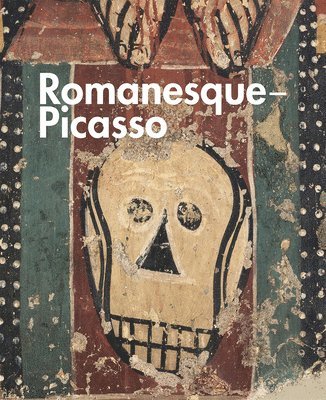
Romanesque - Picasso
Av Juan Jose Lahuerta, Emilia Philippot
Häftad, 2017
350 kr
Tillfälligt slut
This beautifully illustrated book, the catalog for an exhibition on view at the National Museum of Art of Catalonia in Barcelona and coorganized with the Picasso Museum in Paris, explores important affinities between Picasso and Romanesque art. Using two key moments as starting points, Juan Jose …
On Loos, Ornament and Crime – Columns of Smoke: Volume II
Av Juan José Lahuerta, Graham Thomson
Häftad, 2015
264 kr
Tillfälligt slut
In his Columns of Smoke series, Juan Jose Lahuerta takes on the enormously ambitious task of re-reading modernity, offering us fresh ways of looking at it while drawing new links between the ideas of architecture and ornamentation, with a special focus on how they have been treated in print. While …
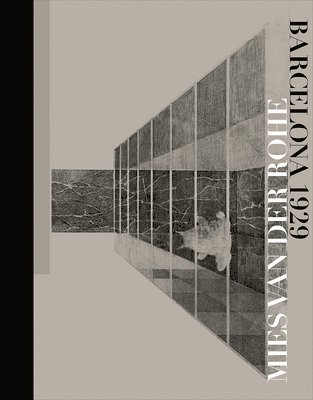
Mies Van Der Rohe: Barcelona-1929
Av Remei Capdevila-Werning, Beatriz Colomina m. fl.
Inbunden, 2018
474 kr
Tillfälligt slut
The expert contributors to this lavishly illustrated volume, devoted entirely to Mies van der Rohe's Barcelona Pavilion of 1929, address here for the first time the forgotten contexts of the Pavilion's genesis. Habitually thought of as an abstract, unpolluted, and splendidly isolated building--a …
Adolf Loos - Private Spaces
Av Beatriz Colomina, Markus Kristan m. fl.
Häftad, 2018
299 kr
Tillfälligt slut
Adolf Loos held that a building should have a soberly discreet exterior, reserving all its riches for its interior. Given that, any real appreciation of the spatial complexity of the work of one of the most misunderstood architects of the twentieth century requires engagement with his interiors, …