Joana Teixidor - Böcker
Visar alla böcker från författaren Joana Teixidor. Handla med fri frakt och snabb leverans.
2 produkter
2 produkter
349 kr
Skickas inom 7-10 vardagar
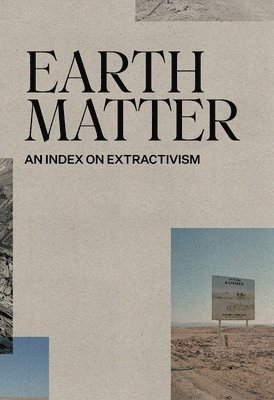
The culmination of over a decade of collaborative research exploring the global impact of extractivism, tied to the Traces of Nitrate project. Earth Matter delves into the history of extractivism in Chile, beginning with the nitrate mines in the Atacama Desert in the nineteenth century and extending to the ongoing extraction of copper, lithium, and water. Through photography, video, archival research, and personal interviews, artist-researchers Xavier Ribas, Ignacio Acosta, and activist-writer Louise Purbrick examine the interconnected forces that bind Chile’s natural resources to global capital, particularly in the financial district of London.This publication offers a critical analysis of how extractivist practices have shaped both historical and contemporary life, while anticipating future forms of exploitation. An index of terms explores past and present facts, documents, sites, projects, politicians, activists, NGOs, and critical writings, forming a Benjaminian constellation that readers can connect and decipher at their own pace.The book includes essays by scientist Cristina Dorador on life in extreme climates, politician and environmentalist Sara Larraín on the legal protection of glaciers, political theory professor Robert Nichols on the history of land expropriation related to extractivism, and art curator Carles Guerra. Earth Matter provides a comprehensive map of the forces driving the increasingly hegemonic system of resource extraction. It reflects not only on past struggles but also on the ongoing fight for justice in the face of an unrelenting global economy.Traces of Nitrate is an arts research collective led by Ignacio Acosta, Louise Purbrick, and Xavier Ribas, committed to documenting the extraction of minerals from Chile and their transformation in global capitalist systems. Through writing, photography, video, and sound, they seek to reveal the ecological and colonial legacies of mining and advocate for environmental justice.
302 kr
Skickas inom 7-10 vardagar
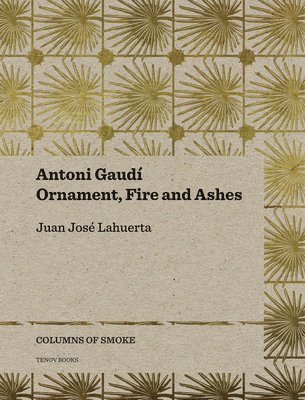
Juan José Lahuerta’s Columns of Smoke series offers bold new readings of modernity and its key figures while redefining the connections between architecture, ornamentation, and the portrayal of both in print media. The third volume focuses on the Spanish architect Antoni Gaudí (1852–1926), whose spectacular fin-de-siècle bohemian modernism stood in revolutionary contrast to the leading approaches of the day.With the rise of Le Corbusier’s modern style of architecture in the early twentieth century, architects who favored ornamentation and a strong bond with nature, like Gaudí, were relegated to the sidelines. Lahuerta draws on first-hand documents, many previously unpublished, to show that Gaudí, far from being the isolated eccentric seen in other accounts, was keenly aware of the major theories and works of his time and cleverly used industrial processes to produce ornamental details that appear today to be almost handmade. Equally impressive was Gaudí’s ability to capitalize on his fame once in the public eye, as both the architect and his buildings appeared in illustrations in the popular press. His influence on avant-garde artists like Salvador Dalí, who admired the edible appearance of Gaudí’s Casa Milà in Barcelona, and Pablo Picasso, who was fascinated by the eroticism of the Casa Batlló, attests to the architect’s impact far beyond his field.Richly illustrated with rare images from a variety of sources, this highly visual take on Gaudí is also a spirited commentary on the roots of modernism more generally. Entertaining and perceptive, Antoni Gaudí challenges us to reconsider what we thought we knew about this pioneering architect and his distinctive work.