Julia Adeney Thomas - Böcker
Visar alla böcker från författaren Julia Adeney Thomas. Handla med fri frakt och snabb leverans.
8 produkter
8 produkter
Del 12 - Twentieth Century Japan: The Emergence of a World Power
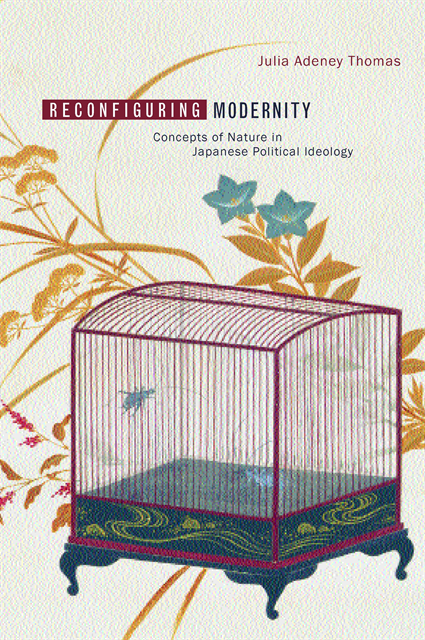
Reconfiguring Modernity
Concepts of Nature in Japanese Political Ideology
Inbunden, Engelska, 2002
955 kr
Skickas inom 3-6 vardagar
Julia Adeney Thomas turns the concept of nature into a powerful analytical lens through which to view Japanese modernity, bringing the study of both Japanese history and political modernity to a new level of clarity. She shows that nature necessarily functions as a political concept and that changing ideas of nature's political authority were central during Japan's transformation from a semifeudal world to an industrializing colonial empire. In political documents from the nineteenth to the early twentieth century, nature was redefined, moving from the universal, spatial concept of the Tokugawa period, through temporal, social Darwinian ideas of inevitable progress and competitive struggle, to a celebration of Japan as a nation uniquely in harmony with nature. The so-called traditional 'Japanese love of nature' masks modern state power. Thomas' theoretically sophisticated study rejects the supposition that modernity is the ideological antithesis of nature, overcoming the determinism of the physical environment through technology and liberating denatured subjects from the chains of biology and tradition.In making 'nature' available as a critical term for political analysis, this book yields new insights into prewar Japan's failure to achieve liberal democracy, as well as an alternative means of understanding modernity and the position of non-Western nations within it.
727 kr
Skickas inom 10-15 vardagar
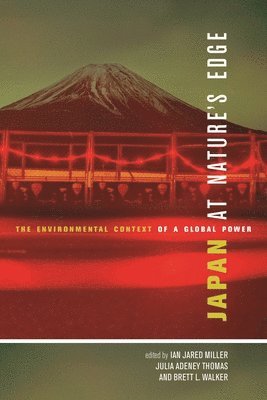
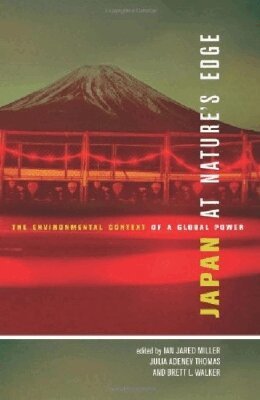
Japan at Nature’s Edge is a timely collection of essays that explores the relationship between Japan’s history, culture, and physical environment. It greatly expands the focus of previous work on Japanese modernization by examining Japan’s role in global environmental transformation and how Japanese ideas have shaped bodies and landscapes over the centuries. The immediacy of Earth’s environmental crisis, a predicament highlighted by Japan’s March 2011 disaster, brings a sense of urgency to the study of Japan and its global connections. The work is an environmental history in the broadest sense of the term because it contains writing by environmental anthropologists, a legendary Japanese economist, and scholars of Japanese literature and culture. The editors have brought together an unparalleled assemblage of some of the finest scholars in the field who, rather than treat it in isolation or as a unique cultural community, seek to connect Japan to global environmental currents such as whaling, world fisheries, mountaineering and science, mining and industrial pollution, and relations with nonhuman animals. The contributors assert the importance of the environment in understanding Japan’s history and propose a new balance between nature and culture, one weighted much more heavily on the side of natural legacies. This approach does not discount culture. Instead, it suggests that the Japanese experience of nature, like that of all human beings, is a complex and intimate negotiation between the physical and cultural worlds.
322 kr
Skickas inom 7-10 vardagar
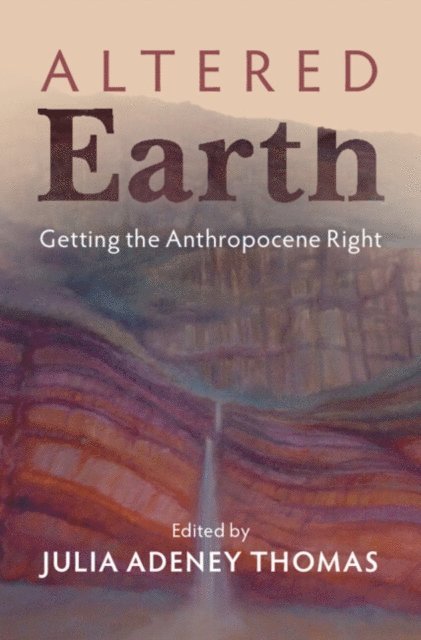
Altered Earth aims to get the Anthropocene right in three senses. With essays by leading scientists, it highlights the growing consensus that our planet entered a dangerous new state in the mid-twentieth century. Second, it gets the Anthropocene right in human terms, bringing together a range of leading authors to explore, in fiction and non-fiction, our deep past, global conquest, inequality, nuclear disasters, and space travel. Finally, this landmark collection presents what hope might look like in this seemingly hopeless situation, proposing new political forms and mutualistic cities. 'Right' in this book means being as accurate as possible in describing the physical phenomenon of the Anthropocene; as balanced as possible in weighing the complex human developments, some willed and some unintended, that led to this predicament; and as just as possible in envisioning potential futures.
1 034 kr
Skickas inom 7-10 vardagar
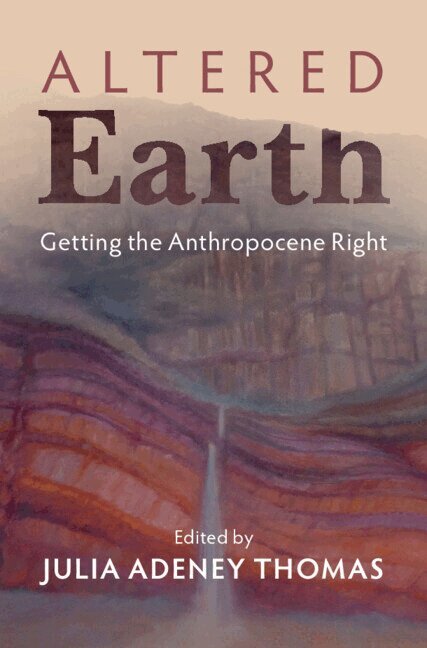
Altered Earth aims to get the Anthropocene right in three senses. With essays by leading scientists, it highlights the growing consensus that our planet entered a dangerous new state in the mid-twentieth century. Second, it gets the Anthropocene right in human terms, bringing together a range of leading authors to explore, in fiction and non-fiction, our deep past, global conquest, inequality, nuclear disasters, and space travel. Finally, this landmark collection presents what hope might look like in this seemingly hopeless situation, proposing new political forms and mutualistic cities. 'Right' in this book means being as accurate as possible in describing the physical phenomenon of the Anthropocene; as balanced as possible in weighing the complex human developments, some willed and some unintended, that led to this predicament; and as just as possible in envisioning potential futures.
1 510 kr
Skickas inom 7-10 vardagar
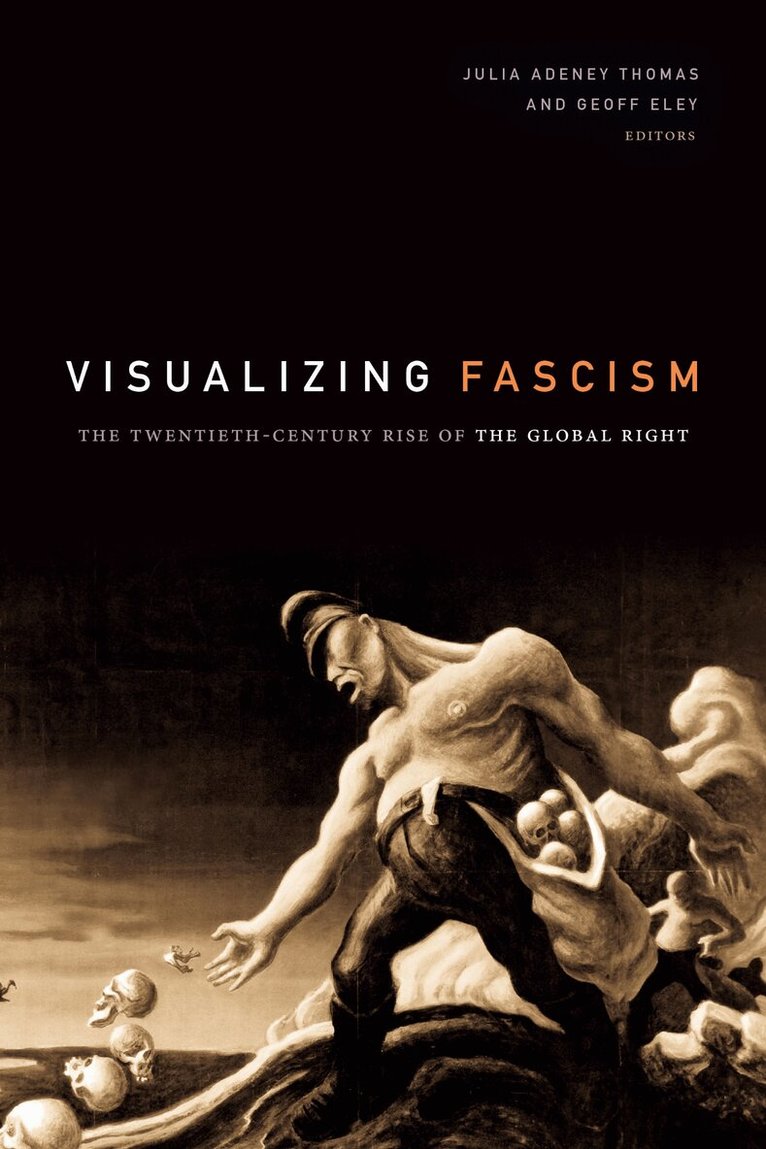
Visualizing Fascism argues that fascism was not merely a domestic menace in a few European nations, but arose as a genuinely global phenomenon in the early twentieth century. Contributors use visual materials to explore fascism's populist appeal in settings around the world, including China, Japan, South Africa, Slovakia, and Spain. This visual strategy allows readers to see the transnational rise of the right as it fed off the agitated energies of modernity and mobilized shared political and aesthetic tropes. This volume also considers the postwar aftermath as antifascist art forms were depoliticized and repurposed in the West. More commonly, analyses of fascism focus on Italy and Germany alone and on institutions like fascist parties, but that approach truncates our understanding of the way fascism was indebted to colonialism and internationalism with all their attendant grievances and aspirations. Using photography, graphic arts, architecture, monuments, and film-rather than written documents alone-produces a portable concept of fascism, useful for grappling with the upsurge of the global right a century ago-and today.Contributors. Nadya Bair, Paul D. Barclay, Ruth Ben-Ghiat, Maggie Clinton, Geoff Eley, Lutz Koepnick, Ethan Mark, Bertrand Metton, Lorena Rizzo, Julia Adeney Thomas, Claire Zimmerman
373 kr
Skickas inom 7-10 vardagar
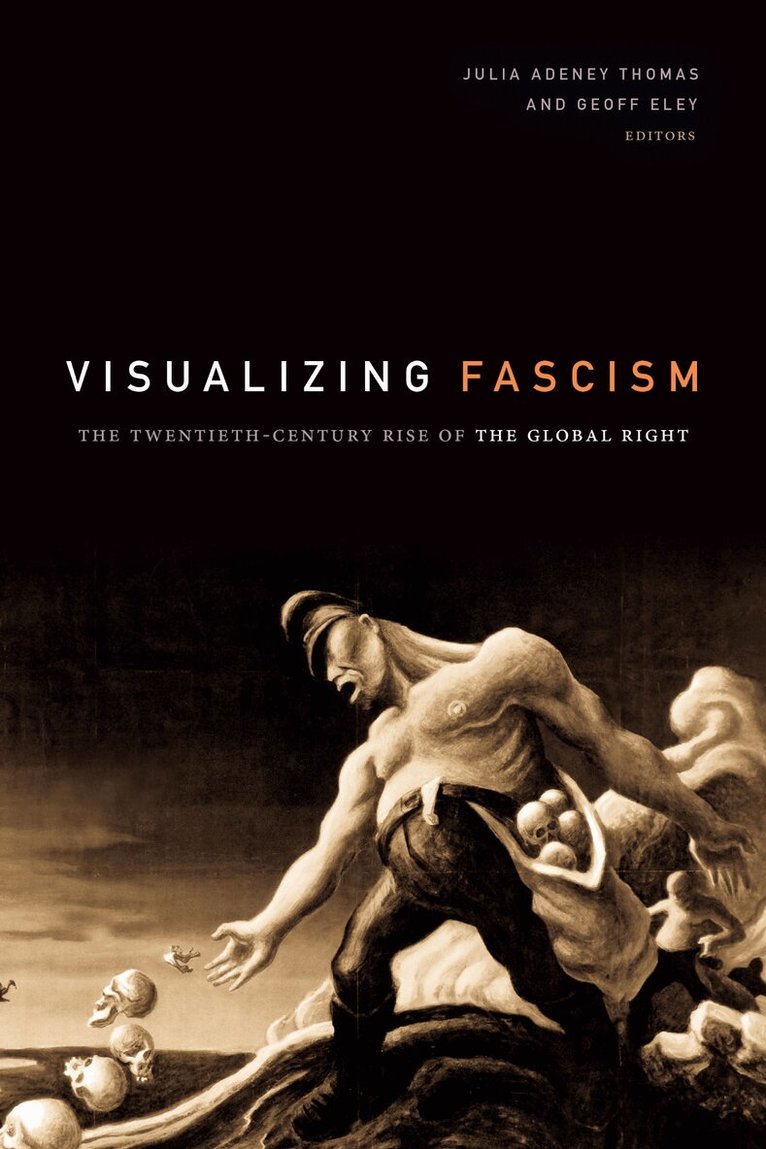
Visualizing Fascism argues that fascism was not merely a domestic menace in a few European nations, but arose as a genuinely global phenomenon in the early twentieth century. Contributors use visual materials to explore fascism's populist appeal in settings around the world, including China, Japan, South Africa, Slovakia, and Spain. This visual strategy allows readers to see the transnational rise of the right as it fed off the agitated energies of modernity and mobilized shared political and aesthetic tropes. This volume also considers the postwar aftermath as antifascist art forms were depoliticized and repurposed in the West. More commonly, analyses of fascism focus on Italy and Germany alone and on institutions like fascist parties, but that approach truncates our understanding of the way fascism was indebted to colonialism and internationalism with all their attendant grievances and aspirations. Using photography, graphic arts, architecture, monuments, and film-rather than written documents alone-produces a portable concept of fascism, useful for grappling with the upsurge of the global right a century ago-and today.Contributors. Nadya Bair, Paul D. Barclay, Ruth Ben-Ghiat, Maggie Clinton, Geoff Eley, Lutz Koepnick, Ethan Mark, Bertrand Metton, Lorena Rizzo, Julia Adeney Thomas, Claire Zimmerman
867 kr
Skickas inom 5-8 vardagar
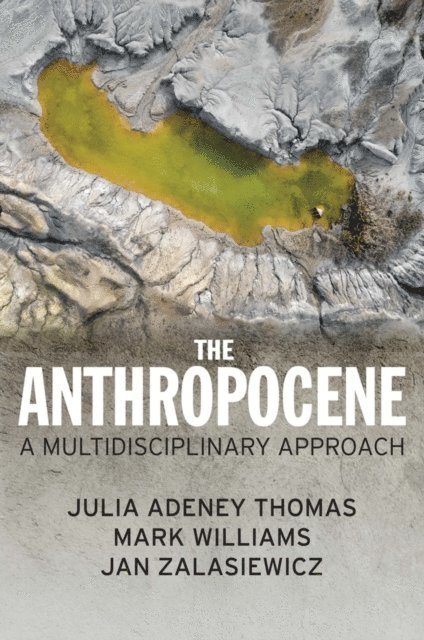
Humans rank with the powerful forces of nature transforming Earth. Since the mid-20th century, population growth, industrialization, and globalization have had such deep and wide-ranging impacts that our planet no longer functions as it did during the previous eleven millennia. So distinctive is this collective human intervention that a new geological interval has been proposed; it is called the Anthropocene. The Anthropocene is intriguing scientifically, fascinating intellectually, and deeply disturbing politically, socially, economically, and ethically. We must learn how to co-exist sustainably with the rest of nature in what is emerging as a new planetary state. To do so, we must first understand what "Anthropocene" means in all its dimensions. This book adopts a multidisciplinary approach, starting with an exploration of the Anthropocene as a geological concept: ranging across the physical changes to the landscape, to the rapidly heating climate, to a biosphere undergoing transformation. And what of the "anthropos" in the Anthropocene? While geoscience does not normally address political and ethical issues of justice and equity, or economics and culture, Anthropocene studies in the humanities and social sciences investigate the complexities of the human activity driving global change. Here the book looks at human history, both in the deep past and more recently, the politics and economics of growth spurring the Anthropocene, and potential ways of mitigating its cruel effects. Our fragile, still beautiful, planet is finite. The new realities of the Anthropocene will need our best efforts, across disciplinary divides, at effective hope and action.
244 kr
Skickas inom 7-10 vardagar
Humans rank with the powerful forces of nature transforming Earth. Since the mid-20th century, population growth, industrialization, and globalization have had such deep and wide-ranging impacts that our planet no longer functions as it did during the previous eleven millennia. So distinctive is this collective human intervention that a new geological interval has been proposed; it is called the Anthropocene. The Anthropocene is intriguing scientifically, fascinating intellectually, and deeply disturbing politically, socially, economically, and ethically. We must learn how to co-exist sustainably with the rest of nature in what is emerging as a new planetary state. To do so, we must first understand what "Anthropocene" means in all its dimensions. This book adopts a multidisciplinary approach, starting with an exploration of the Anthropocene as a geological concept: ranging across the physical changes to the landscape, to the rapidly heating climate, to a biosphere undergoing transformation. And what of the "anthropos" in the Anthropocene? While geoscience does not normally address political and ethical issues of justice and equity, or economics and culture, Anthropocene studies in the humanities and social sciences investigate the complexities of the human activity driving global change. Here the book looks at human history, both in the deep past and more recently, the politics and economics of growth spurring the Anthropocene, and potential ways of mitigating its cruel effects. Our fragile, still beautiful, planet is finite. The new realities of the Anthropocene will need our best efforts, across disciplinary divides, at effective hope and action.