Justin L. Barrett - Böcker
Visar alla böcker från författaren Justin L. Barrett. Handla med fri frakt och snabb leverans.
11 produkter
11 produkter
2 858 kr
Skickas inom 3-6 vardagar
Why have religious beliefs and behaviors been nearly universal in human societies? What accounts for similarities and differences across time and across cultures? Could the answer lie in the human brain? Scholars in the cognitive science of religion (CSR) believe that it can- the prevalence of religion is a result of the way our minds work. CSR advances in psychology explain various patterns in religious thought and action. This scientific approach has grown rapidly over the past couple of decades. However, it has often been conflated with related subjects such as evolution and neuroscience. CSR is neither: it straddles the line between cognitive sciences and the study of religion. The Oxford Handbook of the Cognitive Science of Religion directly identifies CSR's unique contributions and clarifies its relationship to neighboring disciplines. With contributions from the field's founders and its rising stars, this volume offers a critical overview of more than 25 years of research. From discussions of human nature to the role of ritual, the contributors offer comprehensive and in-depth analysis of key questions in CSR. Readers will have a variety of entry points to truly grasp where CSR has been, where it is, and where it might go.
16 464 kr
Skickas inom 7-10 vardagar
Psychology of religion is essentially as old as psychology itself, with over a hundred years of history and claiming some of psychology’s most notable characters as contributors, including William James, Sigmund Freud, Gordon Allport, and Jean Piaget. In recent years, this subfield of psychology has risen in prominence. Sectarian violence, secularization, the ‘culture wars’, and increase in cross-cultural and cross-religious contact through migration, urbanization, and globalization have all contributed to heightened interest in questions such as: where do religious beliefs come from? Why do they seem to motivate behaviour so powerfully? Is religious belief and practice good or bad for us? Does religious belief assist or hinder morality? Increasingly discussed by journalists and science-popularisers such as Richard Dawkins, Daniel Dennett, A.C. Grayling, Sam Harris, Christopher Hitchens, and Lewis Wolpert, these sorts of questions are psychological questions with psychological answers emerging through the work of psychologists of religion. Social and cultural factors have provided some motivation for renewed interest in psychology of religion, and additional impetus has been provided by new advances in psychological subfields, particularly cognitive, developmental, and evolutionary psychology. These three areas, previously only marginal contributors to psychology of religion, have begun making more substantial contributions concerning how and why human minds come to represent certain religious ideas and beliefs. Not surprisingly, psychology of religion is becoming a more prominent focus of psychological research and teaching. This collection presents the most up-to-date and comprehensive presentation of the psychology of religion available. The first volume focuses on psychological explanations of religion (that is, religion as something to be explained), the second concerning religious psychology, the third representing the impact of religion on thought, feelings, and behaviour, and the final volume considering implications of religious perspectives and findings for the practice of psychology, both scientific and applied. Historical and contemporary perspectives are integrated into thematically arranged sections. An extended introduction surveying the field begins the collection and an index increases the collection’s utility as a reference resource.Available at a special introductory price. This price is applicable until 3 months after publication. For more information, please contact us (reference@routledge.com).
434 kr
Skickas inom 10-15 vardagar
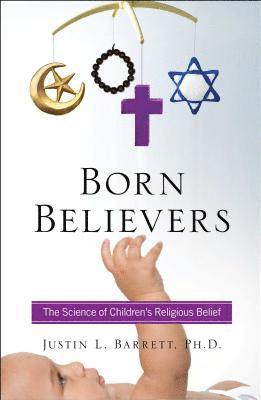
Because of the design of our minds. That is Justin Barrett's simple answer to the question of his title. With rich evidence from cognitive science but without technical language, psychologist Barrett shows that belief in God is an almost inevitable consequence of the kind of minds we have. Most of what we believe comes from mental tools working below our conscious awareness. And what we believe consciously is in large part driven by these unconscious beliefs. Barrett demonstrates that beliefs in gods match up well with these automatic assumptions; beliefs in an all-knowing, all-powerful God match up even better. Barrett goes on to explain why beliefs like religious beliefs are so widespread and why it is very difficult for our minds to think without them. Anyone who wants a concise, clear, and scientific explanation of why anyone would believe in God should pick up Barrett's book.
Thriving with Stone Age Minds – Evolutionary Psychology, Christian Faith, and the Quest for Human Flourishing
Häftad, Engelska, 2021
267 kr
Skickas inom 3-6 vardagar
712 kr
Skickas inom 10-15 vardagar
The cognitive science of religion is a new discipline that looks at the roots of religious belief in the cognitive architecture of the human mind. The Roots of Religion deals with the philosophical and theological implications of the cognitive science of religion which grounds religious belief in human cognitive structures: religious belief is ’natural’, in a way that even scientific thought is not. Does this new discipline support religious belief, undermine it, or is it, despite many claims, perhaps eventually neutral? This subject is of immense importance, particularly given the rise of the ’new atheism’. Philosophers and theologians from North America, UK and Australia, explore the alleged conflict between truth claims and examine the roots of religion in human nature. Is it less ’natural’ to be an atheist than to believe in God, or gods? On the other hand, if we can explain theism psychologically, have we explained it away. Can it still claim any truth? This book debates these and related issues.
185 kr
Skickas inom 5-8 vardagar
857 kr
Skickas inom 7-10 vardagar
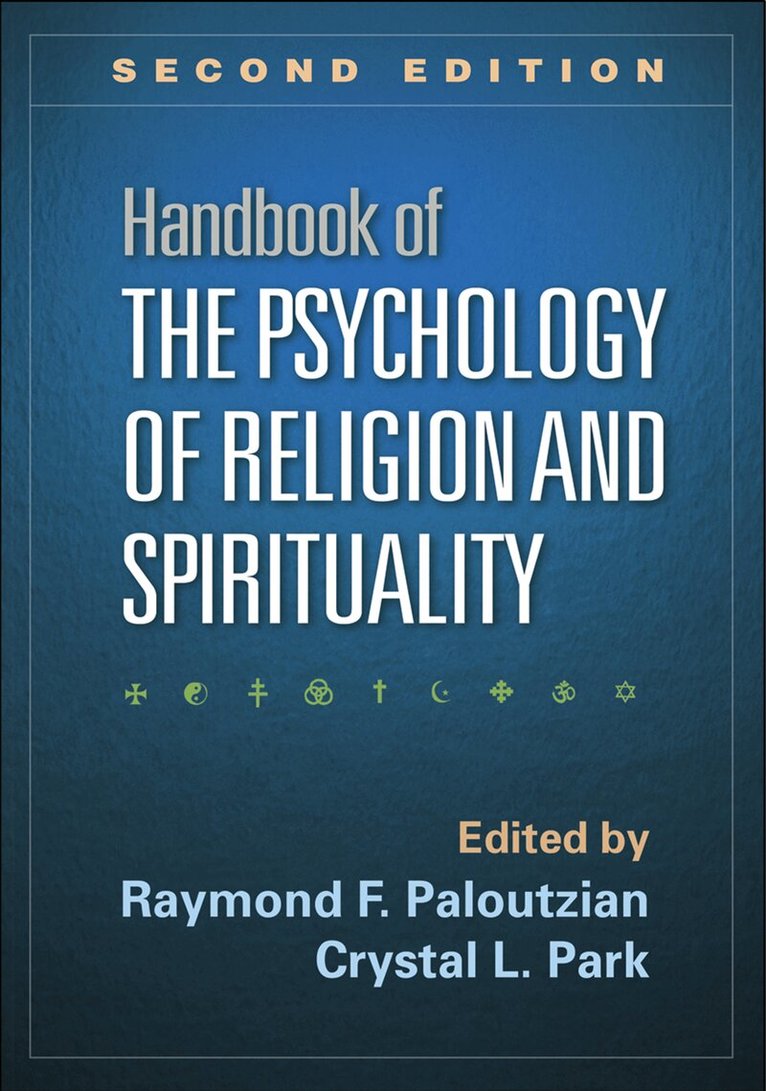
Widely regarded as the definitive reference, this volume comprehensively examines the psychological processes associated with religion and spirituality. Leading scholars from multiple psychological subdisciplines present developmental, cognitive, social psychological, cultural, and clinical perspectives on this core aspect of human experience. The forms and functions of religious practices and rituals, conversion experiences, and spiritual struggles are explored. Other key topics include religion as a meaning system, religious influences on prosocial and antisocial behavior, and connections to health, coping, and psychotherapy.New to This EditionTwo chapters on cross-cultural issues. Chapters on spiritual goals, emotional values, and mindfulness. Reflects significant theoretical and empirical developments in the field. Many new authors and extensively revised chapters. Robust index amplifies the volume's usefulness as a reference tool. A Choice Outstanding Academic Title
2 088 kr
Skickas inom 10-15 vardagar
The cognitive science of religion is a new discipline that looks at the roots of religious belief in the cognitive architecture of the human mind. The Roots of Religion deals with the philosophical and theological implications of the cognitive science of religion which grounds religious belief in human cognitive structures: religious belief is ’natural’, in a way that even scientific thought is not. Does this new discipline support religious belief, undermine it, or is it, despite many claims, perhaps eventually neutral? This subject is of immense importance, particularly given the rise of the ’new atheism’. Philosophers and theologians from North America, UK and Australia, explore the alleged conflict between truth claims and examine the roots of religion in human nature. Is it less ’natural’ to be an atheist than to believe in God, or gods? On the other hand, if we can explain theism psychologically, have we explained it away. Can it still claim any truth? This book debates these and related issues.
Del 2 - New Approaches to the Scientific Study of Religion
Religious Cognition in China
“Homo Religiosus” and the Dragon
Inbunden, Engelska, 2017
959 kr
Skickas inom 10-15 vardagar
Addressing this empirical gap, the studies discussed in this volume support core naturalness theory predictions for human reasoning about supernatural agency, intelligent design, the efficacy of rituals, andvitalistic causality.
Del 2 - New Approaches to the Scientific Study of Religion
Religious Cognition in China
“Homo Religiosus” and the Dragon
Häftad, Engelska, 2018
959 kr
Skickas inom 10-15 vardagar
Addressing this empirical gap, the studies discussed in this volume support core naturalness theory predictions for human reasoning about supernatural agency, intelligent design, the efficacy of rituals, andvitalistic causality.
How Can Your Faith Fuel Scientific Discovery?
Questions and Reflections for Becoming an Integrated Scientist
Häftad, Engelska, 2025
167 kr
Skickas inom 5-8 vardagar