Crystal L. Park - Böcker
Visar alla böcker från författaren Crystal L. Park. Handla med fri frakt och snabb leverans.
7 produkter
7 produkter
2 082 kr
Skickas inom 10-15 vardagar
That which does not kill us makes us stronger. (Nietzsche) The phenomenon of positive personal change following devastating events has been recognized since ancient times, but given little attention by contemporary psychologists and psychiatrists, who have tended to focus on the negative consequences of stress. In recent years, evidence from diverse fields has converged to suggest the reality and pervasive importance of the processes the editors sum up as posttraumatic growth. This volume offers the first comprehensive overview of these processes. The authors address a variety of traumas--among them bereavement, physical disability, terminal illness, combat, rape, and natural disasters--following which experiences of growth have been reported. How can sufferers from posttraumatic stress disorder best be helped? What does "resilience" in the face of high risk mean? Which personality characteristics facilitate growth? To what extent is personality change possible in adulthood? How can concepts like happiness and self-actualization be operationalized? What role do changing belief systems, schemas, or "assumptive worlds" play in positive adaptation? Is "stress innoculation" possible? How do spiritual beliefs become central for many people struck by trauma, and how are posttraumatic growth and recovery from substance abuse or the crises of serious physical illnesses linked? Such questions have concerned not only the recently defined and expanding group of "traumatologists," but also therapists of all sorts, personality and social psychologists, developmental and cognitive researchers, specialists in health psychology and behavioral medicine, and those who study religion and mental health. Overcoming the challenges of life's worst experiences can catalyze new opportunities for individual and social development. Learning about persons who discover or create the perception of positive change in their lives may shed light on the problems of those who continue to suffer. Posttraumatic Growth will stimulate dialogue among personality and social psychologists and clinicians, and influence the theoretical foundations and clinical agendas of investigators and practitioners alike.
677 kr
Skickas inom 10-15 vardagar
That which does not kill us makes us stronger. (Nietzsche) The phenomenon of positive personal change following devastating events has been recognized since ancient times, but given little attention by contemporary psychologists and psychiatrists, who have tended to focus on the negative consequences of stress. In recent years, evidence from diverse fields has converged to suggest the reality and pervasive importance of the processes the editors sum up as posttraumatic growth. This volume offers the first comprehensive overview of these processes. The authors address a variety of traumas--among them bereavement, physical disability, terminal illness, combat, rape, and natural disasters--following which experiences of growth have been reported. How can sufferers from posttraumatic stress disorder best be helped? What does "resilience" in the face of high risk mean? Which personality characteristics facilitate growth? To what extent is personality change possible in adulthood? How can concepts like happiness and self-actualization be operationalized? What role do changing belief systems, schemas, or "assumptive worlds" play in positive adaptation? Is "stress innoculation" possible? How do spiritual beliefs become central for many people struck by trauma, and how are posttraumatic growth and recovery from substance abuse or the crises of serious physical illnesses linked? Such questions have concerned not only the recently defined and expanding group of "traumatologists," but also therapists of all sorts, personality and social psychologists, developmental and cognitive researchers, specialists in health psychology and behavioral medicine, and those who study religion and mental health. Overcoming the challenges of life's worst experiences can catalyze new opportunities for individual and social development. Learning about persons who discover or create the perception of positive change in their lives may shed light on the problems of those who continue to suffer. Posttraumatic Growth will stimulate dialogue among personality and social psychologists and clinicians, and influence the theoretical foundations and clinical agendas of investigators and practitioners alike.
Medical Illness and Positive Life Change
Can Crisis Lead to Personal Transformation?
Inbunden, Engelska, 2009
440 kr
Tillfälligt slut
The idea that people experience positive change through their struggles with adversity is very old. However, only recently has this idea generated widespread empirical research attention.People often claim to experience improved relationships with family and friends, a clearer sense of their own strengths and resilience, changed priorities about what is important in life, and various other positive changes after struggling with stressful or traumatic events. What are we to make of these claims? Can we determine whether perceptions of change reflect real, varifiable change - that is, is it possible for someone to believe that he or she has grown while still exhibiting the same old self-defeating thoughts and behaviors? Or, is the perception of change itself an important meaning reconstruction process? What factors influence personal growth, and what effect does growth have on physical and mental health?This book examines these issues in-depth and draws out implications for research and clinical practice. Because medical illness has been one of the primary contexts in which researchers have studied the phenomenon of positive life change, this book focuses on how positive life change might be fostered in the context of medical illness.
1 129 kr
Skickas
This is the fully updated second edition teaches the skills therapists need to understand and empathize with clients, develop strong therapeutic alliances, make accurate contextualized assessments, and facilitate positive change.Empathy is fundamental to therapeutic change. This engaging and accessible text teaches students the clinical skills they will need as therapists to communicate empathy and help clients change. Slattery and Park begin by outlining a framework for understanding how clients think-what meaning they give to difficult situations-and how those meaning systems are connected to cultural and other contextual factors. Chapters that follow discuss how their empathic framework can be factored into assessment, intervention, ending treatment, and even case reporting and ethical concerns. Throughout they emphasize that effective therapists possess not only strong observational, listening, and critical thinking skills, but that they also put their clients amp rsquo worldviews, meaning‑making, culture, and change processes at the heart of their practice.This second edition features new case studies, research, and clinical applications, as well as a streamlined presentation that better mirrors the process of mental health treatment. With extensive case material, reflection questions, and other practical tools, the book will help budding mental health practitioners understand and empathize with a diverse range of clients, develop strong therapeutic alliances, make accurate assessments that reflect clients amp rsquo contexts and worldviews, and facilitate positive change.
1 054 kr
Tillfälligt slut
510 kr
Tillfälligt slut
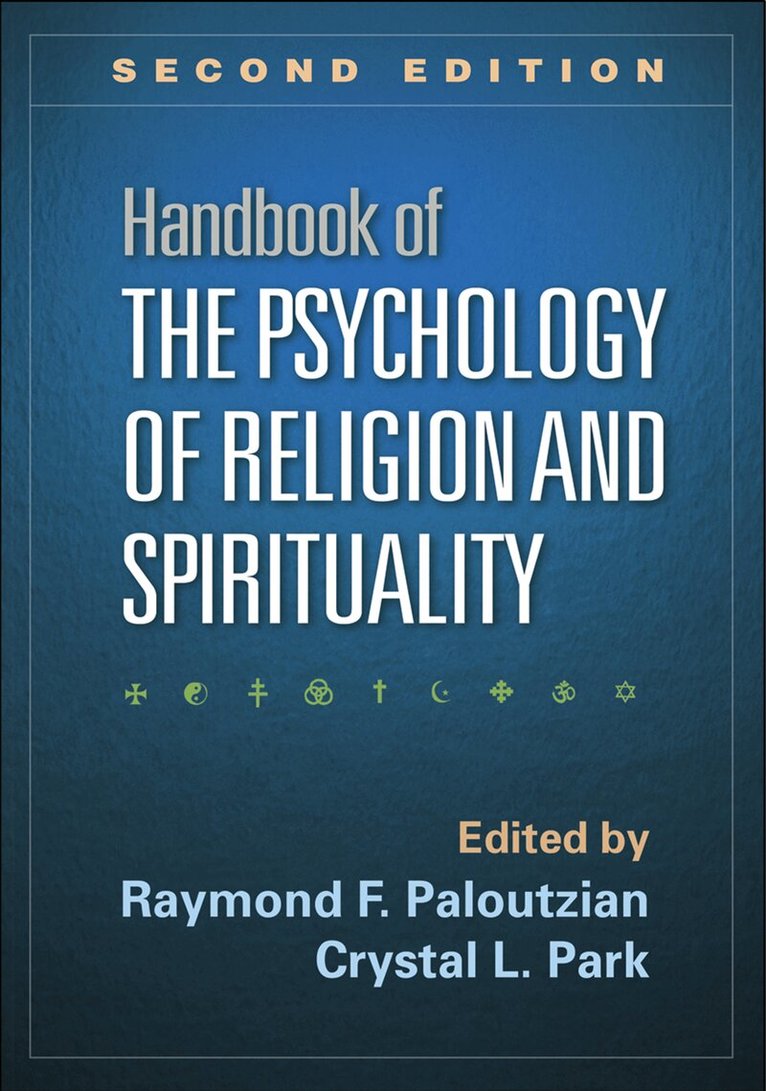
Widely regarded as the definitive reference, this volume comprehensively examines the psychological processes associated with religion and spirituality. Leading scholars from multiple psychological subdisciplines present developmental, cognitive, social psychological, cultural, and clinical perspectives on this core aspect of human experience. The forms and functions of religious practices and rituals, conversion experiences, and spiritual struggles are explored. Other key topics include religion as a meaning system, religious influences on prosocial and antisocial behavior, and connections to health, coping, and psychotherapy.New to This EditionTwo chapters on cross-cultural issues. Chapters on spiritual goals, emotional values, and mindfulness. Reflects significant theoretical and empirical developments in the field. Many new authors and extensively revised chapters. Robust index amplifies the volume's usefulness as a reference tool. A Choice Outstanding Academic Title
767 kr
Tillfälligt slut
Meeting a growing need, this authoritative reference and text comprehensively examines the interplay of biological, psychological, and social factors in health and illness in older adults. The volume explores how and why some people adapt more successfully than others to age-related stressors such as chronic illness, disability, and loss, and identifies ways to promote coping and resilience. With contributions from leading researchers in health psychology and gerontology, the Handbook integrates state-of-the-science theories and methods from both fields. Key topics include how aging affects the cardiovascular, neuroendocrine, and immune systems; the influences on adult development and health of personality, emotions, social support, and religiousness; and effective interventions in healthcare settings.