Karen Morrow - Böcker
Visar alla böcker från författaren Karen Morrow. Handla med fri frakt och snabb leverans.
6 produkter
6 produkter
2 214 kr
Skickas inom 7-10 vardagar
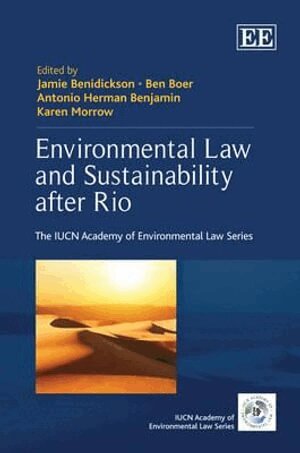
This book examines the development of environmental law in the period since the ground-breaking 1992 United Nations Conference on Environment and Development or 'Earth Summit' in Rio de Janeiro. It demonstrates that a great deal has been achieved in the field of environmental law since the 1990s. However, the extraordinary environmental crises facing humanity in the 21st century indicate a continuing urgent need for the generation of robust policies and frameworks concerning ecological, socio-cultural and economic sustainability, implemented through appropriately innovative legal mechanisms. The book is divided into five sub-themes of sustainability: history, principles and concepts; environmental rights; access to justice and liability issues; natural resources, energy and climate change; and nature conservation. It includes expert legal opinion on developments to date, engaging with key themes from a broad selection of jurisdictions and perspectives. The analyses extend across public and private law to reflect the manifold areas which are rightly and necessarily the concern of environmental and sustainability law. Its contents offer not only critiques of developments to date, but also constructive engagement with matters of pressing concern to all. Written from a global perspective, this book will be an invaluable reference for academics, postgraduate students, practitioners and policy-makers concerned with environmental law and sustainability.Contributors: J. Benidickson, A.H. Benjamin, B. Boer, M.N. Camargos, M.A. Cohen, J.A.F. Costa, A. Daibert, J. de Cendra de Larragán, A. de Garay Sánchez, F. de Salles Cavedon, J.W. Dellapenna, A. du Plessis, W. du Plessis, J.J. González, D. Hodas, E. Kasimbazi, R. Kibugi, F.R. Loures, N. Lugaresi, K. Morrow, C. Odidi Okidi, A. Paterson, N.A. Robinson, W. Scholtz, F. Sola, R. Stanziola Vieira, M.B. Tekle, S. Teles da Silva
791 kr
Skickas inom 7-10 vardagar
This book examines the development of environmental law in the period since the ground-breaking 1992 United Nations Conference on Environment and Development or 'Earth Summit' in Rio de Janeiro. It demonstrates that a great deal has been achieved in the field of environmental law since the 1990s. However, the extraordinary environmental crises facing humanity in the 21st century indicate a continuing urgent need for the generation of robust policies and frameworks concerning ecological, socio-cultural and economic sustainability, implemented through appropriately innovative legal mechanisms. The book is divided into five sub-themes of sustainability: history, principles and concepts; environmental rights; access to justice and liability issues; natural resources, energy and climate change; and nature conservation. It includes expert legal opinion on developments to date, engaging with key themes from a broad selection of jurisdictions and perspectives. The analyses extend across public and private law to reflect the manifold areas which are rightly and necessarily the concern of environmental and sustainability law. Its contents offer not only critiques of developments to date, but also constructive engagement with matters of pressing concern to all. Written from a global perspective, this book will be an invaluable reference for academics, postgraduate students, practitioners and policy-makers concerned with environmental law and sustainability.Contributors: J. Benidickson, A.H. Benjamin, B. Boer, M.N. Camargos, M.A. Cohen, J.A.F. Costa, A. Daibert, J. de Cendra de Larragán, A. de Garay Sánchez, F. de Salles Cavedon, J.W. Dellapenna, A. du Plessis, W. du Plessis, J.J. González, D. Hodas, E. Kasimbazi, R. Kibugi, F.R. Loures, N. Lugaresi, K. Morrow, C. Odidi Okidi, A. Paterson, N.A. Robinson, W. Scholtz, F. Sola, R. Stanziola Vieira, M.B. Tekle, S. Teles da Silva
Feminist Climate Policy in Industrialised States
A Gender-Just Climate Emergency Response
Häftad, Engelska, 2025
579 kr
Skickas inom 10-15 vardagar
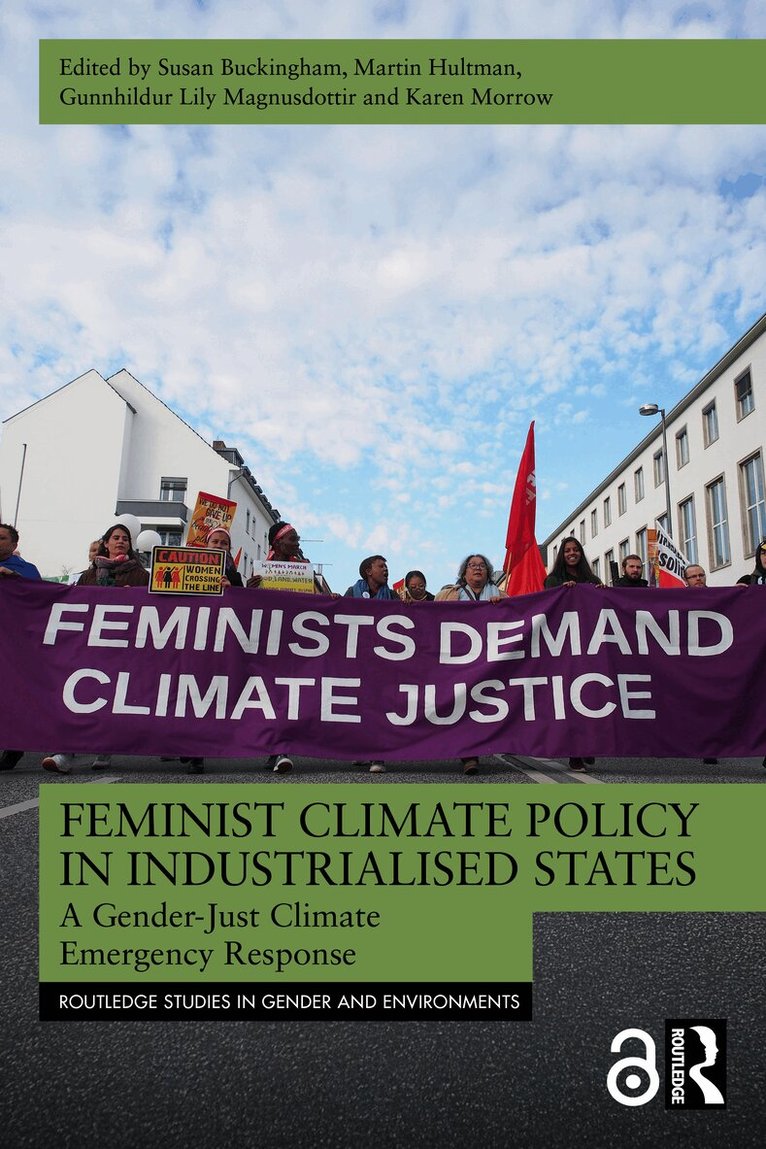
Feminist Climate Policy in Industrialised States explores ways in which policymakers can overcome institutional barriers and conventions in pursuit of the radical changes necessary for a gender-just climate emergency response.In 2021, the Intergovernmental Panel on Climate Change acknowledged that addressing the climate emergency must involve social justice and equality. Feminist approaches to decision-making, policy-making, community organising and their underpinning methodologies can enable this. The authors draw critically on case studies, research and interviews with feminist practitioners, legislators and leaders who have implemented significant changes, to signal how change might be achieved and ask what lessons can be drawn. The book posits that we need to ultimately move beyond the gender mainstreaming and gender equality issues which have been integrated into existing – and failing – structures, to more transformative feminist approaches. It concludes by identifying key strands of feminist-oriented praxis that offer the potential to expedite responses to climate change across multiple levels of governance.With industrialised states shifting rightwards to a politics which diminishes the importance and urgency of gender equality, diversity, human rights and the need for climate action, this volume will inspire, guide, and provide tools for policymakers, politicians, community activists, academics, and students to take transformative action to address the climate emergency.The Open Access version of this book, available at http://www.taylorfrancis.com, has been made available under a Creative Commons [Attribution-Non Commercial-No Derivatives (CC BY-NC-ND)] 4.0 license.
Feminist Climate Policy in Industrialised States
A Gender-Just Climate Emergency Response
Inbunden, Engelska, 2025
2 098 kr
Skickas inom 10-15 vardagar
Feminist Climate Policy in Industrialised States explores ways in which policymakers can overcome institutional barriers and conventions in pursuit of the radical changes necessary for a gender-just climate emergency response.In 2021, the Intergovernmental Panel on Climate Change acknowledged that addressing the climate emergency must involve social justice and equality. Feminist approaches to decision-making, policy-making, community organising and their underpinning methodologies can enable this. The authors draw critically on case studies, research and interviews with feminist practitioners, legislators and leaders who have implemented significant changes, to signal how change might be achieved and ask what lessons can be drawn. The book posits that we need to ultimately move beyond the gender mainstreaming and gender equality issues which have been integrated into existing – and failing – structures, to more transformative feminist approaches. It concludes by identifying key strands of feminist-oriented praxis that offer the potential to expedite responses to climate change across multiple levels of governance.With industrialised states shifting rightwards to a politics which diminishes the importance and urgency of gender equality, diversity, human rights and the need for climate action, this volume will inspire, guide, and provide tools for policymakers, politicians, community activists, academics, and students to take transformative action to address the climate emergency.The Open Access version of this book, available at http://www.taylorfrancis.com, has been made available under a Creative Commons [Attribution-Non Commercial-No Derivatives (CC BY-NC-ND)] 4.0 license.
1 235 kr
Skickas inom 10-15 vardagar
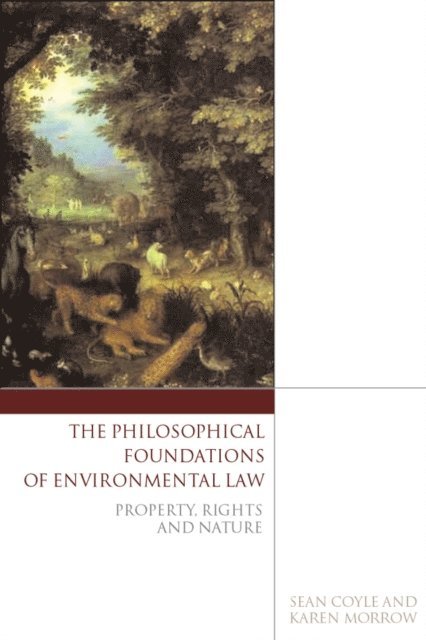
Legal regulation of the environment is often construed as a collection of legislated responses to the problems of modern living. Treated as such,'environmental law' refers not to a body of distinctive juristic ideas (such as one might find in contract law or tort) but to a body of black-letter rules out of which a distinct jurisprudence might grow. This book challenges the accepted view by arguing that environmental law must be seen not as a mere instrument of social policy, but as a historical product of surprising antiquity and considerable sophistication. Environmental law, it is argued, is underpinned by a series of tenets concerning the relationship of human beings to the natural world, through the acquisition and use of property. By tracing these ideas to their roots in the political philosophy of the seventeenth century, and their reception into the early law of nuisance, this book seeks to overturn the perception that environmental law's philosophical significance is confined to questions about the extent to which a state should pursue collective well-being and public health through deliberate manipulation and restriction of private property rights.Through a close re-examination of both early and modern statutes and cases, this book concludes that, far from being intelligible in exclusively instrumental terms, environmental law must be understood as the product of sustained reflection upon fundamental moral questions concerning the relationship between property, rights and nature.
449 kr
Skickas inom 10-15 vardagar
Legal regulation of the environment is often construed as a collection of legislated responses to the problems of modern living. Treated as such,'environmental law' refers not to a body of distinctive juristic ideas (such as one might find in contract law or tort) but to a body of black-letter rules out of which a distinct jurisprudence might grow. This book challenges the accepted view by arguing that environmental law must be seen not as a mere instrument of social policy, but as a historical product of surprising antiquity and considerable sophistication. Environmental law, it is argued, is underpinned by a series of tenets concerning the relationship of human beings to the natural world, through the acquisition and use of property. By tracing these ideas to their roots in the political philosophy of the seventeenth century, and their reception into the early law of nuisance, this book seeks to overturn the perception that environmental law's philosophical significance is confined to questions about the extent to which a state should pursue collective well-being and public health through deliberate manipulation and restriction of private property rights.Through a close re-examination of both early and modern statutes and cases, this book concludes that, far from being intelligible in exclusively instrumental terms, environmental law must be understood as the product of sustained reflection upon fundamental moral questions concerning the relationship between property, rights and nature.