Kayt Hawkins - Böcker
Visar alla böcker från författaren Kayt Hawkins. Handla med fri frakt och snabb leverans.
3 produkter
3 produkter
173 kr
Skickas
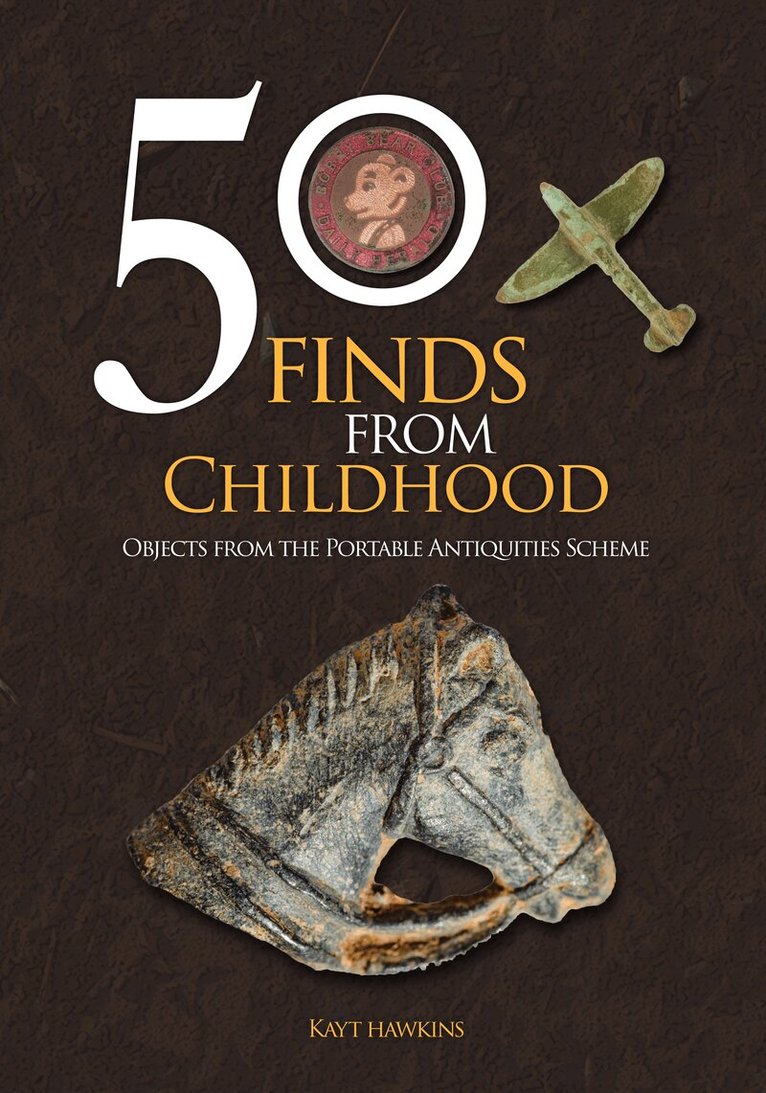
The many artefacts discovered by members of the public and recorded by the Portable Antiquities Scheme (PAS) provide an unparalleled resource for information relating to childhood in the past. The fifty objects presented here have been selected from across England and Wales; they span prehistory through to the modern age and include items both of national significance and those of everyday use. This unique and diverse collection by the PAS illustrates a variety of beliefs around childhood, including activities relating to childbirth, infant care, clothing, work and play. Each object, whether made for children or adapted by them, has been chosen to explore past expectations towards children and their relationships with the wider world. Collectively, these artefacts provide an insight into, and a connection with, childhood across the ages, much of which still has relevance today.
680 kr
Skickas
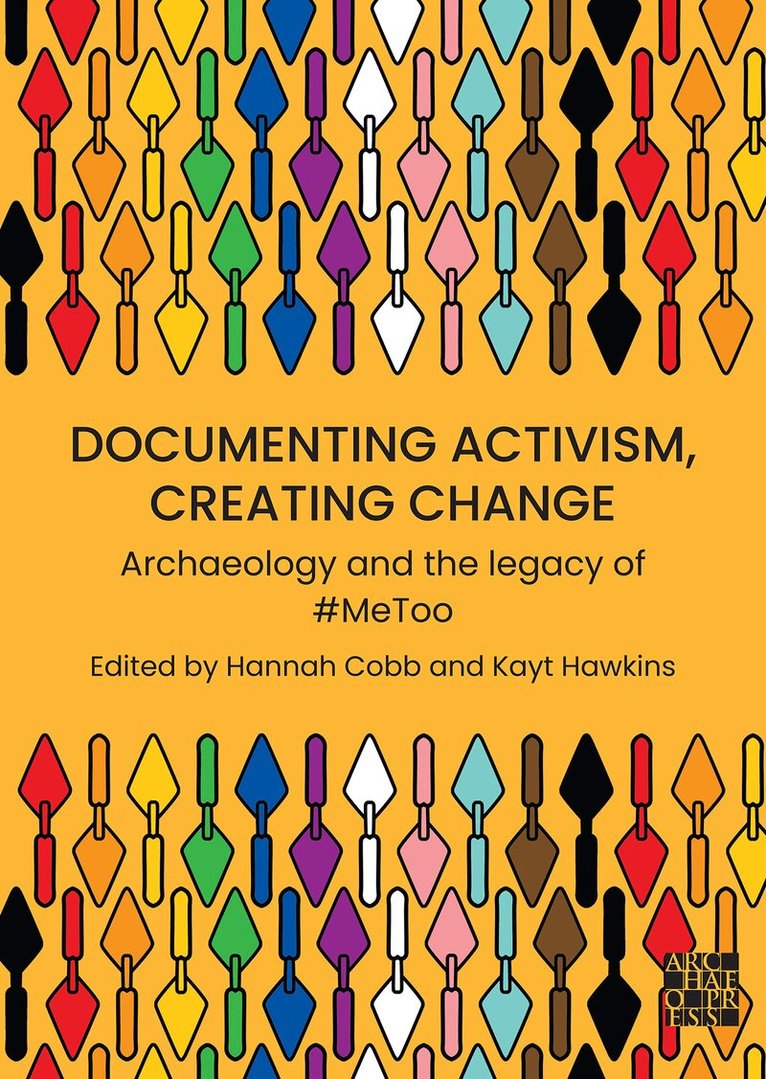
A powerful wave of feminist, intersectional, anti-harassment, anti-discrimination activism has swept archaeology and heritage since at least 2010, and unlike any other time in archaeology’s short history, much of this has taken place online. In some places this has created a space to have open conversations that previously only existed in whisper networks, meaning that sexism, misogyny and harassment can no longer be ignored or dismissed. This has forced our sector to listen, and organisations have had to confront hard truths and, in some instances, begin to make changes to their practice. As this volume shows, the picture is not necessarily consistent or global, but none the less the ubiquity of social media has brought activism around gendered inequalities and violence against women and minorities to the fore in archaeological practice around the world.Yet the activism that has unfolded over the last fifteen years has almost always occurred in temporary, transient spaces, through social media, conference sessions, symposia and protests. This means there have been few permanent spaces where this important work and its impacts have been documented. This volume transforms that picture, bringing together the insights of 43 different archaeologists to provide a permanent record of this work, sharing good practice and highlighting positive changes. In doing so, it both captures a moment in time, documents positive changes, and provides a resource to enable practitioners to continue to advocate for transformation in their own context.
618 kr
Skickas
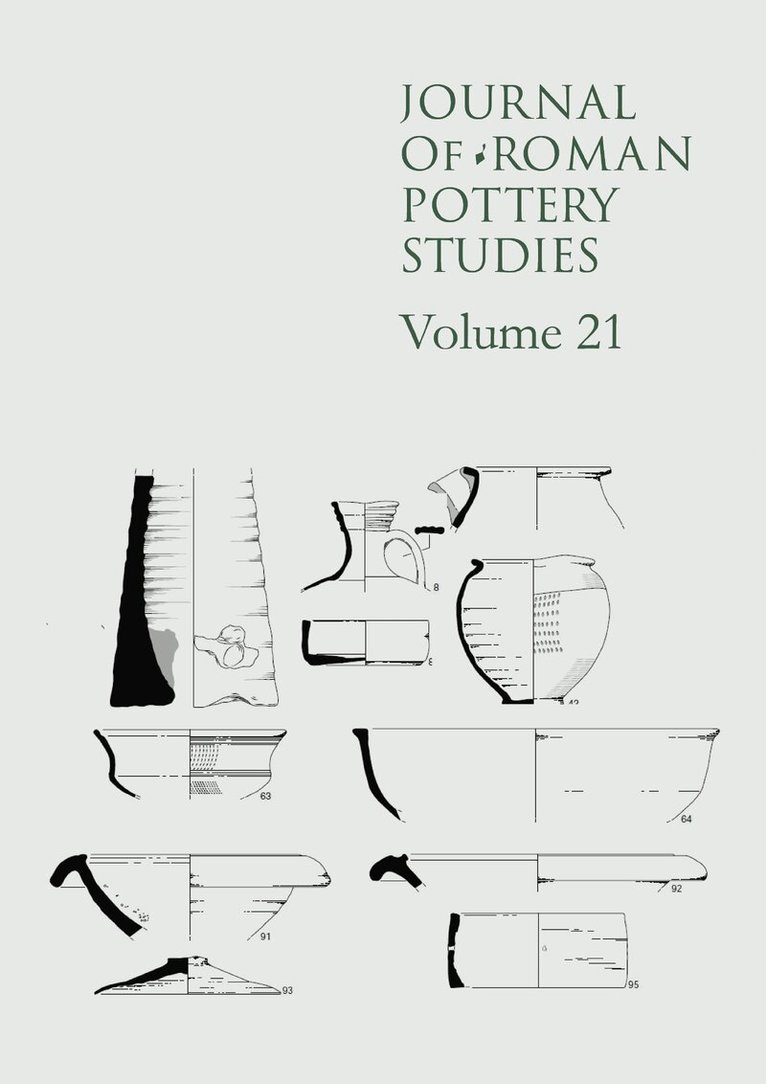
This issue of the Journal of Roman Pottery Studies focuses primarily on new data for early Roman pottery production and techniques. Three early Roman kilns were discovered at Longford, Gloucestershire associated with an originally Iron Age enclosure that was remodelled. Unusual features of the kilns included the use of ceramic tubes in one, and stacked pots to form the walls probably in all three. The associated pottery is closely linked to products of kilns known in Gloucester itself and is consistent with production for military-related communities rather than the wider Romano-British population of the region. The production may relate to an early stage of exploitation of the landscape consequent on establishment of the colonia at Gloucester by AD 98 if not rather earlier. Production probably did not continue after c. AD 120 at the very latest. At Brampton, Cambridgeshire in 2016, a cluster of eight previously unknown early Roman pottery kilns was recorded and subsequently published. Further analysis identified intriguing variation within the pottery assemblage, which provided an opportunity to investigate the chaîne opératoire. Technical and stylistic groups were examined in hand-specimen, thin-section petrography determined the fabric groups present and portable X-ray fluorescence helped to establish the geochemical composition of the sample. The data collected allowed for glimpses at the choices made by the potters and helped to unpick their making process, from which a characterising assessment of the organisation of production and its variations emerged. A kiln complex discovered at Elmswell, Suffolk close to the suggested course of a Roman road included two adjacent, single flue kilns associated with pottery forms dating to the later 1st–early 2nd centuries AD. The large pottery assemblage comprised primarily buff coloured flagons and black-surfaced jar forms and wasters, together with fragments of kiln furniture and associated environmental evidence and is discussed here in relation to the contemporary pattern of early Roman pottery production in this area of East Anglia, with particular regard to the question of itinerant, immigrant potters working out of Colchester.A new study of Upper Nene Valley Wares employed ceramic radiography to examine the embedding of potter’s wheel technology in the British craft. The data show that among certain Upper Nene Valley Wares the potter’s wheel was used to its greatest potential, to throw pots, thus marking a step-change relative to the heterogenous forming practices evident in earlier traditions. Discussion of the significance of this new understanding focuses on implications for narrative accounts of technological change during the Late Iron Age and early Roman periods and uses the development of parallel technological trajectories as a framework for understanding the emergence of diversity in early Roman pottery assemblages.Pottery associated with a Late Roman kiln of mid-3rd to early 4th century date in New Marston, Oxford was associated with large amounts of Oxfordshire white ware mortaria and red/brown slipped wares. A nummus of Constantine I (AD 310–313) recorded in the backfill of the kiln suggests that it is likely to have been retired during the early 4th century AD.