Kazuaki Nishioka – författare
Visar alla böcker från författaren Kazuaki Nishioka. Handla med fri frakt och snabb leverans.
12 produkter
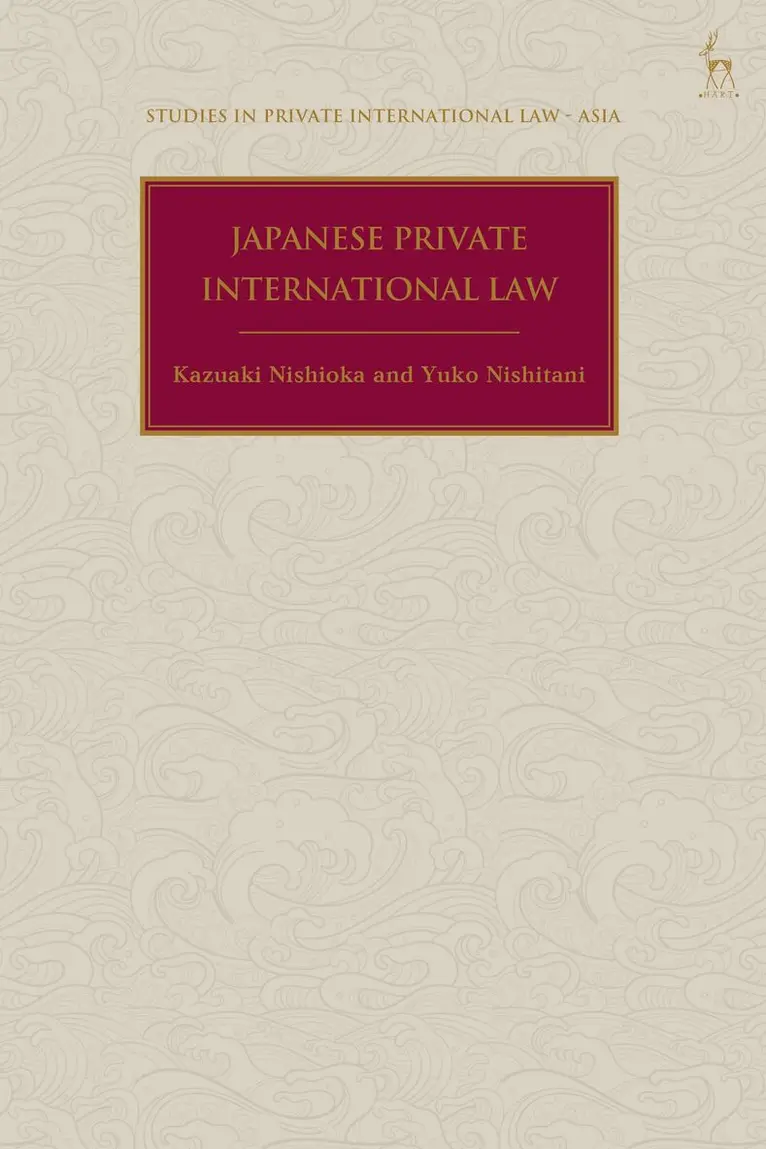
Japanese Private International Law
Av Kazuaki Nishioka, Yuko Nishitani m. fl.
Inbunden, 2021
2089 kr
Lägg i varukorg
This is the leading reference on Japanese private international law in English. The chapters systematically cover the whole of Japanese private international law, not just questions likely to arise in commercial matters, but also in family, succession, cross-border insolvency, intellectual …
Japanese Private International Law
Av Kazuaki Nishioka, Yuko Nishitani
E-bok, 2021
2245 kr
Lägg i varukorg
This is the leading reference on Japanese private international law in English. The chapters systematically cover the whole of Japanese private international law, not just questions likely to arise in commercial matters, but also in family, succession, cross-border insolvency, intellectual …
Japanese Private International Law
Av Kazuaki Nishioka, Yuko Nishitani
E-bok, 2021
2294 kr
Lägg i varukorg
This is the leading reference on Japanese private international law in English. The chapters systematically cover the whole of Japanese private international law, not just questions likely to arise in commercial matters, but also in family, succession, cross-border insolvency, intellectual …
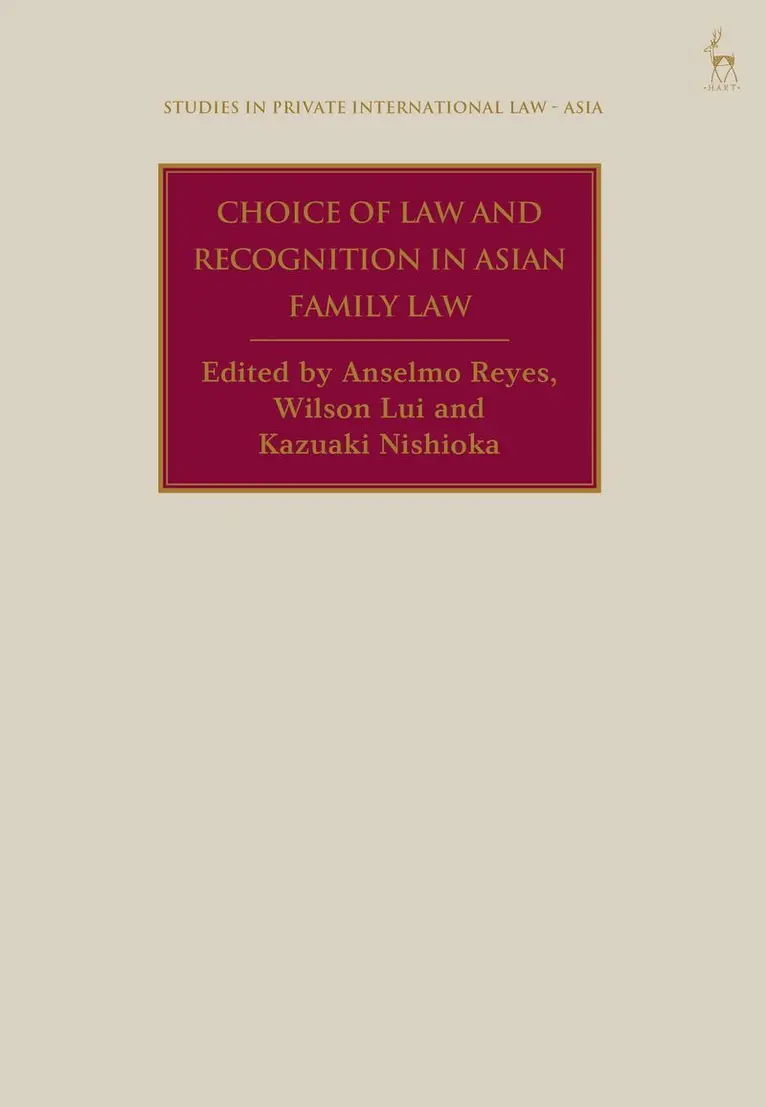
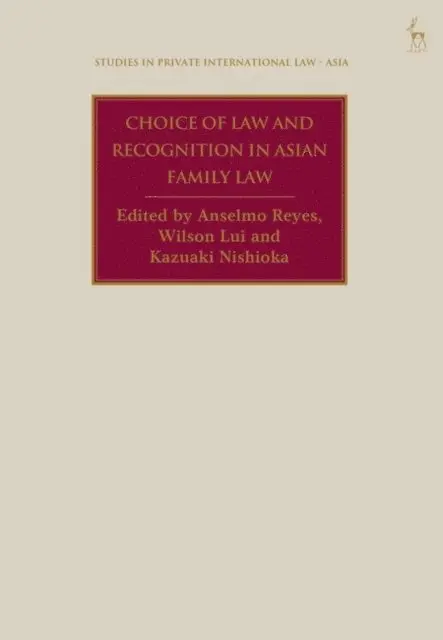
Choice of Law and Recognition in Asian Family Law
Av Anselmo Reyes, Wilson Lui m. fl.
Inbunden, 2023
1829 kr
Lägg i varukorg
This thematic volume in the series Studies in Private International Law – Asia outlines the general choice of law and recognition rules relating to family matters of 15 Asian jurisdictions: Mainland China, Hong Kong, Taiwan, Japan, South Korea, Singapore, Malaysia, Vietnam, Cambodia, Myanmar, the …
Choice of Law and Recognition in Asian Family Law
Av Anselmo Reyes, Wilson Lui m. fl.
E-bok, 2023
2007 kr
Lägg i varukorg
This thematic volume in the series Studies in Private International Law – Asia outlines the general choice of law and recognition rules relating to family matters of 15 Asian jurisdictions: Mainland China, Hong Kong, Taiwan, Japan, South Korea, Singapore, Malaysia, Vietnam, Cambodia, Myanmar, the …
Choice of Law and Recognition in Asian Family Law
Av Anselmo Reyes, Wilson Lui m. fl.
E-bok, 2023
1964 kr
Lägg i varukorg
This thematic volume in the series Studies in Private International Law – Asia outlines the general choice of law and recognition rules relating to family matters of 15 Asian jurisdictions: Mainland China, Hong Kong, Taiwan, Japan, South Korea, Singapore, Malaysia, Vietnam, Cambodia, Myanmar, the …
Treatment of Foreign Law in Asia
Inbunden, 2023
1747 kr
Lägg i varukorg
How do Asian courts ascertain, interpret, and apply a foreign law as the law governing the merits of the case? What should judges do if parties do not raise or disagree on the content of foreign law? This thematic volume in the Studies in Private International Law – Asia series analyses the …
Treatment of Foreign Law in Asia
E-bok, 2023
1936 kr
Lägg i varukorg
How do Asian courts ascertain, interpret, and apply a foreign law as the law governing the merits of the case? What should judges do if parties do not raise or disagree on the content of foreign law? This thematic volume in the Studies in Private International Law – Asia series analyses the …
Treatment of Foreign Law in Asia
E-bok, 2023
1936 kr
Lägg i varukorg
How do Asian courts ascertain, interpret, and apply a foreign law as the law governing the merits of the case? What should judges do if parties do not raise or disagree on the content of foreign law? This thematic volume in the Studies in Private International Law – Asia series analyses the …
Multinationals and Human Rights in Asia
Av Jason Ho Ching Cheung, Kazuaki Nishioka
E-bok, 2026
1434 kr
Lägg i varukorg
This book investigates the availability in Asian jurisdictions of civil remedies against multinational businesses for human rights abuses. Various means have been developed in Europe and elsewhere to hold businesses accountable to victims for human rights abuses. Techniques include legislating due …
Multinationals and Human Rights in Asia
Av Jason Ho Ching Cheung, Kazuaki Nishioka
E-bok, 2026
1434 kr
Lägg i varukorg
This book investigates the availability in Asian jurisdictions of civil remedies against multinational businesses for human rights abuses. Various means have been developed in Europe and elsewhere to hold businesses accountable to victims for human rights abuses. Techniques include legislating due …
Multinationals and Human Rights in Asia
Av Jason Ho Ching Cheung, Kazuaki Nishioka
Inbunden, 2026
1308 kr
Lägg i varukorg
This book investigates the availability in Asian jurisdictions of civil remedies against multinational businesses for human rights abuses. Various means have been developed in Europe and elsewhere to hold businesses accountable to victims for human rights abuses. Techniques include legislating due …