Kevin G. Guerrieri – författare
Visar alla böcker från författaren Kevin G. Guerrieri. Handla med fri frakt och snabb leverans.
3 produkter
3 produkter
742 kr
Skickas inom 10-15 vardagar
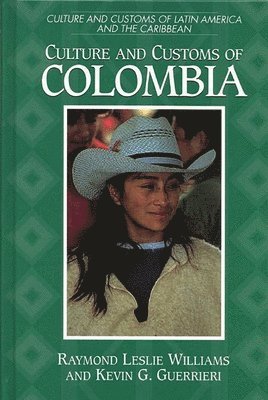
This insider's account of Colombia's culture and customs helps the reader develop a balanced view of Colombian life today. Colombia has the longest-standing democratic political system in Latin America, but it is also one of the most violent nations in the world. The full gamut of its culture—both positive and negative—is revealed in this insightful book that is ideal for student research. The authors highlight the most notable aspects of contemporary Colombian culture including coffee production, Nobel Laureate Gabriel García Márquez, painter Fernando Botero, vallenato music, and the notorious drug cartels.Colombia is one of the most diverse, regionalistic, and tradition-bound nations in Latin America. Culture and Customs of Colombia offers a thorough examination of those features of national life that make Colombia unique. The book begins by introducing the reader to Colombia's history, geography, and economy. Subsequent chapters discuss the profound importance of the formalities of Catholicism in daily and civic life, as well as the significance of traditional foods and clothing. Colombia's increasingly dynamic cultural scene is detailed in chapters on the performing arts and the plastic arts. The discussion of Colombian literature culminates in a special chapter devoted to the luminary Gabriel GarcÍa Márquez, known the world over for his magical novels, and whose influence and cultural participation in Colombian society are wide-ranging.
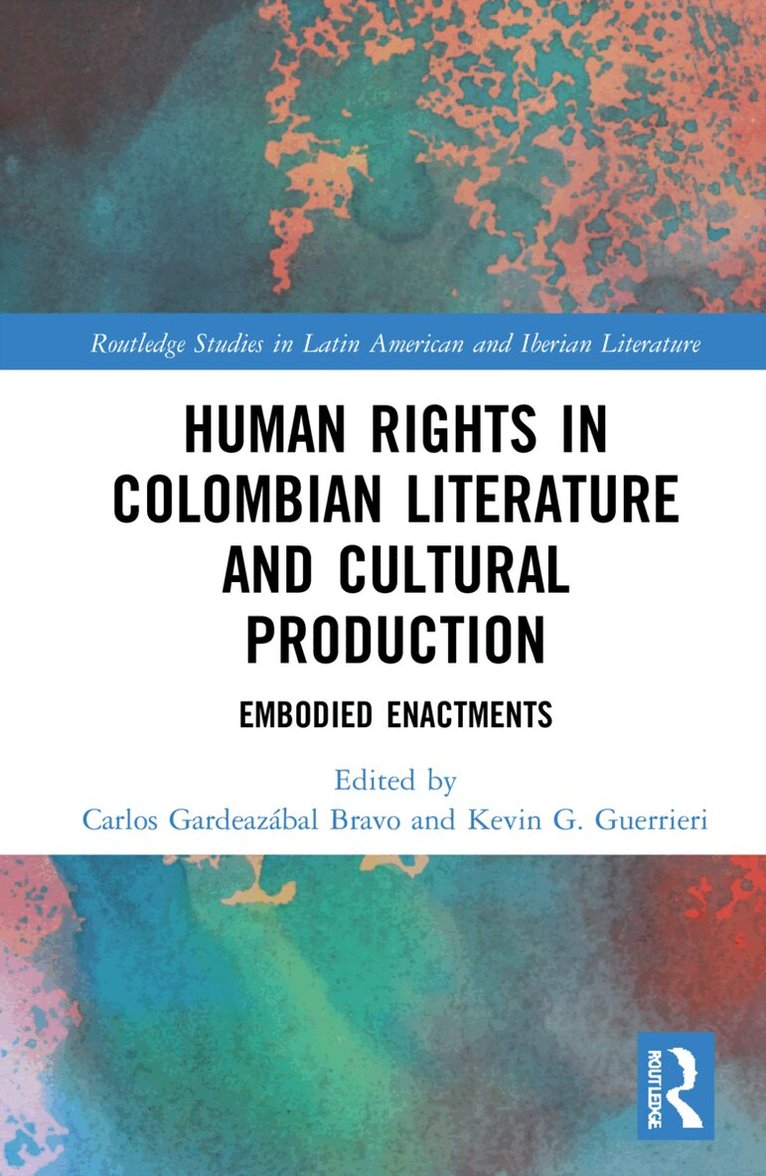
Human Rights in Colombian Literature and Cultural Production
Embodied Enactments
Inbunden, Engelska, 2022
2 664 kr
Skickas inom 10-15 vardagar
This volume explores how Colombian novelists, artists, performers, activists, musicians, and others seek to enact—to perform, to stage, to represent—human rights situations that are otherwise enacted discursively, that is, made public or official, in juridical and political realms in which justice often remains an illusory or promised future. In order to probe how cultural production embodies the tensions between the abstract universality of human rights and the materiality of violations on individual human bodies and on determined groups, the volume asks the following questions: How does the transmission of historical traumas of Colombia’s past, through human rights narratives in various forms, inform the debates around the subjects of rights, truth and memory, remembrance and forgetting, and the construction of citizenship through solidarity and collective struggles for justice? What are the different roles taken by cultural products in the interstices among rights, laws, and social justice within different contexts of state violence and states of exception? What are alternative perspectives, sources, and (micro)histories from Colombia of the creation, evolution, and practice of human rights? How does the human rights discourse interface with notions of environmental justice, especially in the face of global climate change, regional (neo)extractivism, the implementation of megaprojects, and ongoing post-accord thefts and (re)appropriations of land? Through a wide range of disciplinary lenses, the different chapters explore counter-hegemonic concepts of human rights, decolonial options struggling against oppression and market logic, and alternative discourses of human dignity and emancipation within the pluriverse.
Human Rights in Colombian Literature and Cultural Production
Embodied Enactments
Häftad, Engelska, 2024
789 kr
Skickas inom 10-15 vardagar
This volume explores how Colombian novelists, artists, performers, activists, musicians, and others seek to enact—to perform, to stage, to represent—human rights situations that are otherwise enacted discursively, that is, made public or official, in juridical and political realms in which justice often remains an illusory or promised future. In order to probe how cultural production embodies the tensions between the abstract universality of human rights and the materiality of violations on individual human bodies and on determined groups, the volume asks the following questions: How does the transmission of historical traumas of Colombia’s past, through human rights narratives in various forms, inform the debates around the subjects of rights, truth and memory, remembrance and forgetting, and the construction of citizenship through solidarity and collective struggles for justice? What are the different roles taken by cultural products in the interstices among rights, laws, and social justice within different contexts of state violence and states of exception? What are alternative perspectives, sources, and (micro)histories from Colombia of the creation, evolution, and practice of human rights? How does the human rights discourse interface with notions of environmental justice, especially in the face of global climate change, regional (neo)extractivism, the implementation of megaprojects, and ongoing post-accord thefts and (re)appropriations of land? Through a wide range of disciplinary lenses, the different chapters explore counter-hegemonic concepts of human rights, decolonial options struggling against oppression and market logic, and alternative discourses of human dignity and emancipation within the pluriverse.