Kevin Newmark – författare
Visar alla böcker från författaren Kevin Newmark. Handla med fri frakt och snabb leverans.
4 produkter
4 produkter
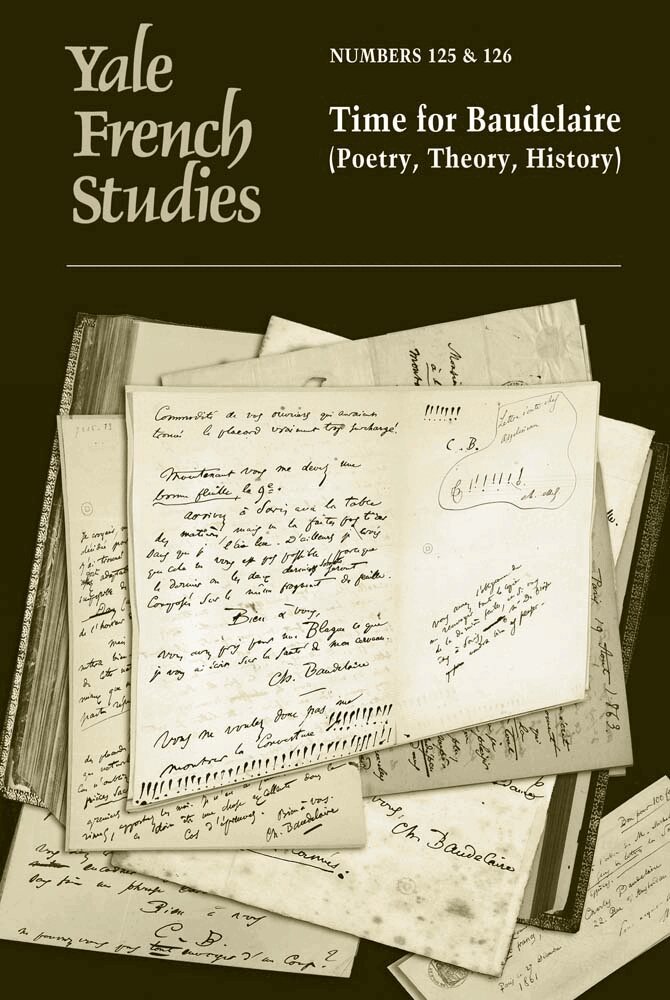
Yale French Studies, Number 125/126
Time for Baudelaire (Poetry, Theory, History)
Häftad, Engelska, 2014
518 kr
Skickas inom 5-8 vardagar
Time for Baudelaire suggests it’s time that Yale French Studies devote an issue to the poet who more than any other inaugurated the unfinished epoch of modernity. It also urges that we take or make time for thinking about the specific ways in which poetry—and perhaps poetry alone—allows a historical concept like modernity to become accessible in the first place. Finally, it asks what time means when it comes to reading the relation between Baudelaire’s writings and the moment, the event, the era—and our capacity to experience them together or in isolation from one another.
1 300 kr
Skickas inom 10-15 vardagar
What is it about irony—as an object of serious philosophical reflection and a literary technique of considerable elasticity—that makes it an occasion for endless critical debate? This book responds to this question by focusing on several key moments in German Romanticism and its afterlife in twentieth-century French thought and writing. It includes chapters on Friedrich Schlegel, Søren Kierkegaard, Friedrich Nietzsche, Thomas Mann, Jean Paulhan, Maurice Blanchot, Jacques Derrida, and Paul de Man. A coda traces the way unresolved tensions inherited from Romanticism resurface in a novelist like J. M. Coetzee. But this book is neither a historical nor a thematic study of irony. To the degree that irony initiates a deflection of meaning, it also entails a divergence from historical and thematic models of understanding. The book therefore aims to respect irony's digressive force by allowing it to emerge from questions that sometimes have little or nothing to do with the ostensible topic of irony. For if irony is the possibility that whatever is being said does not coincide fully with whatever is being meant, then there is no guarantee that the most legitimate approach to the problem would proceed directly to those places where "irony" is named, described, or presumed to reside. Rather than providing a history of irony, then, this book examines particular occasions of ironic disruption. It thus offers an alternative model for conceiving of historical occurrences and their potential for acquiring meaning.
469 kr
Skickas inom 10-15 vardagar
What is it about irony—as an object of serious philosophical reflection and a literary technique of considerable elasticity—that makes it an occasion for endless critical debate? This book responds to this question by focusing on several key moments in German Romanticism and its afterlife in twentieth-century French thought and writing. It includes chapters on Friedrich Schlegel, Søren Kierkegaard, Friedrich Nietzsche, Thomas Mann, Jean Paulhan, Maurice Blanchot, Jacques Derrida, and Paul de Man. A coda traces the way unresolved tensions inherited from Romanticism resurface in a novelist like J. M. Coetzee. But this book is neither a historical nor a thematic study of irony. To the degree that irony initiates a deflection of meaning, it also entails a divergence from historical and thematic models of understanding. The book therefore aims to respect irony's digressive force by allowing it to emerge from questions that sometimes have little or nothing to do with the ostensible topic of irony. For if irony is the possibility that whatever is being said does not coincide fully with whatever is being meant, then there is no guarantee that the most legitimate approach to the problem would proceed directly to those places where "irony" is named, described, or presumed to reside. Rather than providing a history of irony, then, this book examines particular occasions of ironic disruption. It thus offers an alternative model for conceiving of historical occurrences and their potential for acquiring meaning.
1 117 kr
Kommande
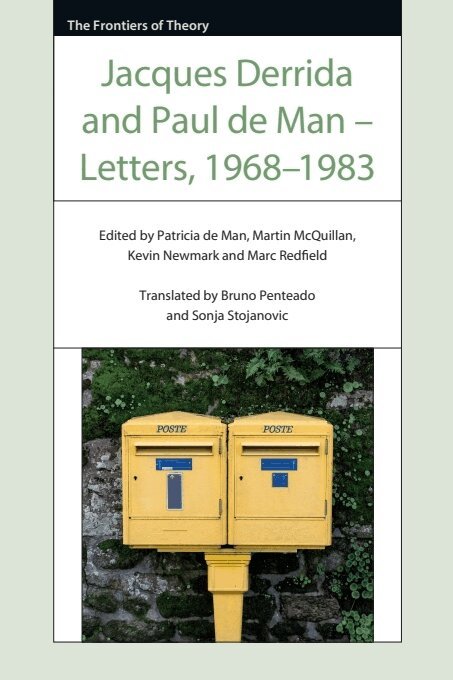
Spanning sixteen years, these letters chart a profound intellectual friendship at the heart of deconstruction, traversing philosophy, literature and the institutional life of theory from Yale to Paris. The exchange offers new insights into the private and professional worlds of Derrida and de Man as they navigate their writing, teaching and the intellectual crises of their era. Previously unseen material redefines our understanding of the Derrida-de Man relationship and illuminates the development of late-twentieth-century critical theory at its pivotal moment. Transcribed and translated with scholarly apparatus and a substantial contextual introduction, this volume is essential for understanding the evolution of modern thought and the ethics of reading and friendship.