Kimerer L. LaMothe – Författare
Visar alla böcker från författaren Kimerer L. LaMothe. Handla med fri frakt och snabb leverans.
4 produkter
4 produkter
260 kr
Skickas inom 7-10 vardagar
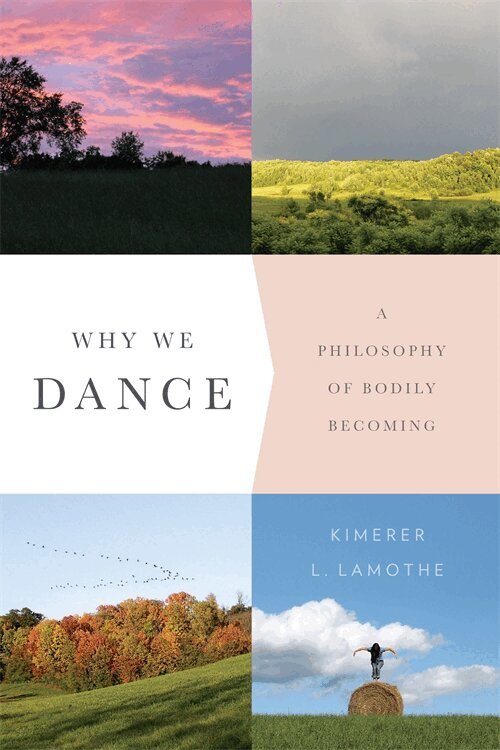
Within intellectual paradigms that privilege mind over matter, dance has long appeared as a marginal, derivative, or primitive art. Drawing support from theorists and artists who embrace matter as dynamic and agential, this book offers a visionary definition of dance that illuminates its constitutive work in the ongoing evolution of human persons. Why We Dance introduces a philosophy of bodily becoming that posits bodily movement as the source and telos of human life. Within this philosophy, dance appears as an activity that humans evolved to do as the enabling condition of their best bodily becoming. Weaving theoretical reflection with accounts of lived experience, this book positions dance as a catalyst in the development of human consciousness, compassion, ritual proclivity, and ecological adaptability. Aligning with trends in new materialism, affect theory, and feminist philosophy, as well as advances in dance and religious studies, this work reveals the vital role dance can play in reversing the trajectory of ecological self-destruction along which human civilization is racing.
1 981 kr
Skickas inom 3-6 vardagar
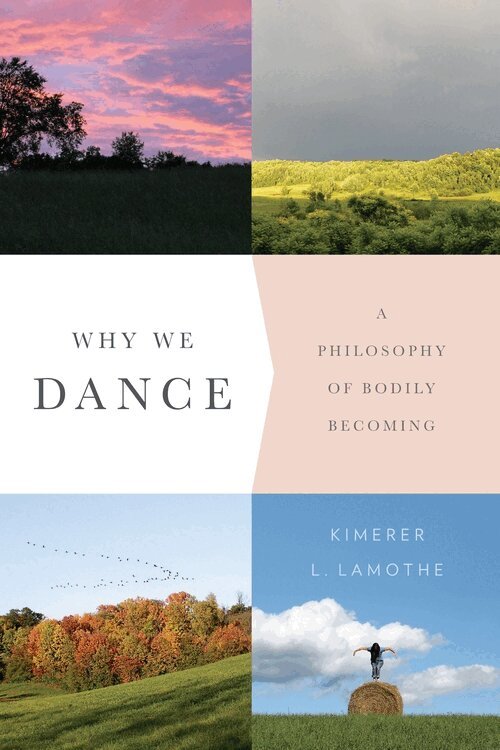
Within intellectual paradigms that privilege mind over matter, dance has long appeared as a marginal, derivative, or primitive art. Drawing support from theorists and artists who embrace matter as dynamic and agential, this book offers a visionary definition of dance that illuminates its constitutive work in the ongoing evolution of human persons. Why We Dance introduces a philosophy of bodily becoming that posits bodily movement as the source and telos of human life. Within this philosophy, dance appears as an activity that humans evolved to do as the enabling condition of their best bodily becoming. Weaving theoretical reflection with accounts of lived experience, this book positions dance as a catalyst in the development of human consciousness, compassion, ritual proclivity, and ecological adaptability. Aligning with trends in new materialism, affect theory, and feminist philosophy, as well as advances in dance and religious studies, this work reveals the vital role dance can play in reversing the trajectory of ecological self-destruction along which human civilization is racing.
809 kr
Skickas inom 10-15 vardagar
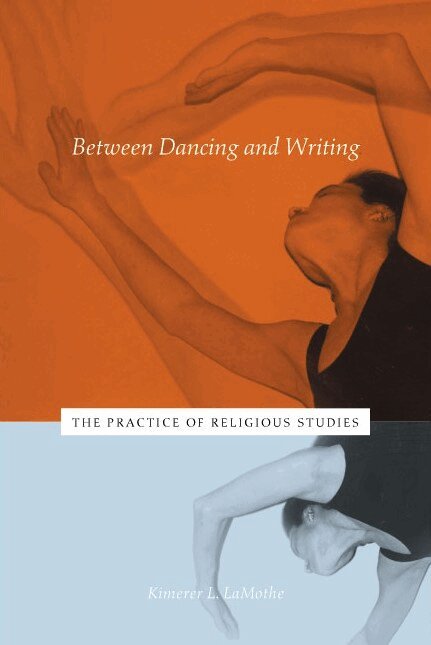
This book provides philosophical grounds for an emerging area of scholarship: the study of religion and dance. In the first part, LaMothe investigates why scholars in religious studies have tended to overlook dance, or rhythmic bodily movement, in favor of textual expressions of religious life. In close readings of Descartes, Kant, Schleiermacher, Hegel, and Kierkegaard, LaMothe traces this attitude to formative moments of the field in which philosophers relied upon the practice of writing to mediate between the study of "religion," on the one hand, and "theology," on the other.In the second part, LaMothe revives the work of theologian, phenomenologist, and historian of religion Gerardus van der Leeuw for help in interpreting how dancing can serve as a medium of religious experience and expression. In so doing, LaMothe opens new perspectives on the role of bodily being in religious life, and on the place of theology in the study of religion.
History of Theory and Method in the Study of Religion and Dance
Past, Present, and Future
Häftad, Engelska, 2018
1 180 kr
Skickas inom 5-8 vardagar
The relationship between religion and dance is as old as humankind. Contemporary methods for studying this relationship date back a century. The difference between these two time frames is significant: scholars are still developing theories and methods capable of illuminating this vast history that take account of their limited place within it. A History of Theory and Method in the Study of Religion and Dance takes on a primary challenge of doing so: overcoming a conceptual dichotomy between “religion” and “dance” forged in the colonial era that justified western Christian hostility towards dance traditions across six continents over six centuries. Beginning with its enlightenment roots, LaMothe narrates a selective history of this dichotomy, revealing its ongoing work in separating dance studies from religious studies. Turning to the Bushmen of the African Kalahari, LaMothe introduces an ecokinetic approach that provides scholars with conceptual resources for mapping the generative interdependence of phenomena that appear as “dance” and/or “religion.”