• Fri frakt över 249 kr
  • •
  • Snabba leveranser
  • •
  • Billiga böcker
Kundservice

Du är på sajten för privatpersoner.

Företag, bibliotek eller offentlig verksamhet?

Du handlar på classic.bokus.com, där alla dina funktioner finns intakta.
Till classic.bokus.com
Bokus logotyp. Gå till startsidan.
  • Erbjudanden
  • Student
  • Topplistor
  • Barn & ungdom
  • Bokus Play
  • E-böcker
  • Ljudböcker
  • Pocketböcker
  • Spel och pussel

5% studentrabatt – använd koden KURSBOK27 →

Sidfot

Mina sidor

    Hjälp

    • Kundservice
    • Vanliga frågor och svar
    • Frakt och leverans
    • Retur vid ångerrätt
    • Reklamera vara
    • Betalning
    • Köpvillkor
    • Allmänna villkor
    • Information om webbplatsens tillgänglighet

    Om Bokus

    • Om oss
    • Pressrum
    • För studenter
    • För företag
    • För bibliotek och offentlig verksamhet
    • För leverantörer
    • Hållbarhet

    Populärt

    • Aktuella erbjudanden
    • Presentkort
    • Studentlitteratur
    • Nya böcker
    • Topplistor
    • Signerade böcker
    • Engelska böcker

    Inspiration

    • Boktips
    • BookTok
    • Barnbokskaraktärer
    • Populära författare
    Logotyp för Bokus
    Följ oss på Facebook (extern länk)Följ oss på Instagram (extern länk)Följ oss på YouTube (extern länk)Följ oss på TikTok (extern länk)
    bokus @ CookiesAnpassa cookiesIntegritetspolicyKöpvillkor
    Till Citymail hemsida (extern länk)Till Budbee hemsida (extern länk)Till Postnord hemsida (extern länk)Till Schenker hemsida (extern länk)Till Early Bird hemsida (extern länk)Till Walleys hemsida (extern länk)
    1. Filosofi och religion
    2. Filosofi
    3. Filosofiska discipliner

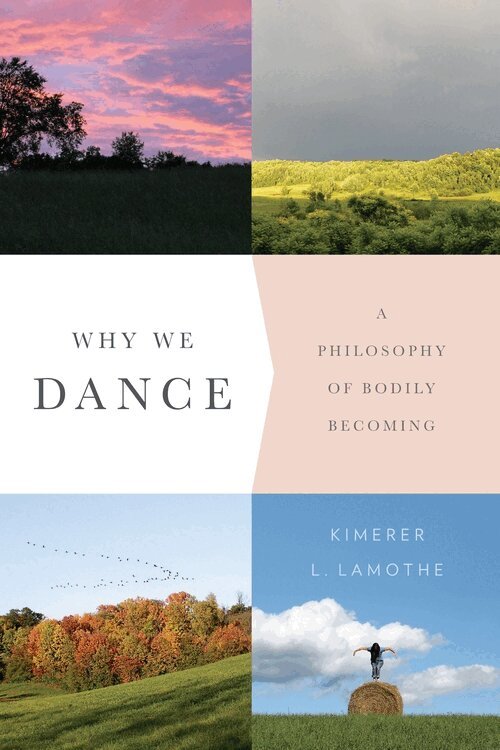
    Why We Dance

    A Philosophy of Bodily Becoming

    AvKimerer L. LaMothe

    Inbunden, Engelska, 2015

    1 991 kr

    Beställningsvara. Skickas inom 3-6 vardagar. Fri frakt över 249 kr.

    Fler format och utgåvor

    Häftad

    267 kr

    Beskrivning

    Within intellectual paradigms that privilege mind over matter, dance has long appeared as a marginal, derivative, or primitive art. Drawing support from theorists and artists who embrace matter as dynamic and agential, this book offers a visionary definition of dance that illuminates its constitutive work in the ongoing evolution of human persons. Why We Dance introduces a philosophy of bodily becoming that posits bodily movement as the source and telos of human life. Within this philosophy, dance appears as an activity that humans evolved to do as the enabling condition of their best bodily becoming. Weaving theoretical reflection with accounts of lived experience, this book positions dance as a catalyst in the development of human consciousness, compassion, ritual proclivity, and ecological adaptability. Aligning with trends in new materialism, affect theory, and feminist philosophy, as well as advances in dance and religious studies, this work reveals the vital role dance can play in reversing the trajectory of ecological self-destruction along which human civilization is racing.

    Produktinformation

    • Utgivningsdatum:2015-04-07
    • Mått:152 x 229 x 19 mm
    • Vikt:508 g
    • Format:Inbunden
    • Språk:Engelska
    • Antal sidor:304
    • Förlag:Columbia University Press
    • ISBN:9780231171045

    Utforska kategorier

    • Filosofiska discipliner inom Filosofi och religion

    Mer om författaren

    Kimerer L. LaMothe is a dancer, philosopher, and scholar of religion who lives in upstate New York. She is the award-winning author of five books, including Nietzsche's Dancers and Between Dancing and Writing: The Practice of Religious Studies.

    Recensioner i media

    A brilliant, pioneering work. Readers join a rich, deeply informed, erudite conversation and are rewarded with LaMothe's original insights and vision of the purpose and promise of dance to transform individuals, communities, and the world we create together. -- Miranda Shaw, author of Buddhist Goddesses of India A rare and welcome book. LaMothe offers a view of the world from one who has woven together three experiential bodies of knowledge crucial to gaining insight into the terrible fractures eroding human life. A dancer and a scholar of dance, she is also a mother and a farmer. Her writing has the feel of the kinds of wisdom cultivated in older cultures, through rituals rooted in the ancient patterns of the cosmos. She brings her considerable experience of moving to bear on the basic questions that engage us all: mattering, meaning, connecting, healing, loving, and caring for the earth. -- Don Hanlon Johnson, author of Body, Spirit, and Democracy LaMothe gracefully reminds us that every part of our life is in motion and that when we dance we are healed, renewed, and made whole by the natural movement of our moving nature. This book brings an extraordinary wake-up call, an energized jolt reminding us that all professions and practices need to give birth to 'movement-oriented ways of knowing.' Why We Dance holds a moving answer that will touch the heart and intellect of all. -- Bradford Keeney and Hillary Keeney, coeditors of Way of the Bushman: Spiritual Teachings and Practices of the Kalahari Ju/'hoansi LaMothe's book breaks new ground... Philosophers interested in writing about dance may find this book as a source of thoughtful provocation. -- Edyta J. Kuzian Metapsychology Highly recommended. Journal of Dance Movement and Spiritualities Kimerer L. LaMothe has danced her way into the creating of an ambitious and important book that answers the question of why we dance. Journal of Religion The author supports her argument for embodied scholarship by employing experiential and reflective writing throughout the book. Every chapter punctuates nuggets of theoretical reflection with rich descriptive accounts from her lived experience in ways that tinge this philosophical treatise with personal investment. Dance Chronicle

    Innehållsförteckning

    • Acknowledgments Why Dance? 1. To Dance Is to Matter 2. To Dance Is to Evolve 3. To Dance Is to Know 4. To Dance Is to Be Born 5. To Dance Is to Connect 6. To Dance Is to Heal 7. To Dance Is to Love Earth Within Notes Bibliography Index