Klaus von Gadow - Böcker
Visar alla böcker från författaren Klaus von Gadow. Handla med fri frakt och snabb leverans.
8 produkter
8 produkter
1 593 kr
Skickas inom 10-15 vardagar
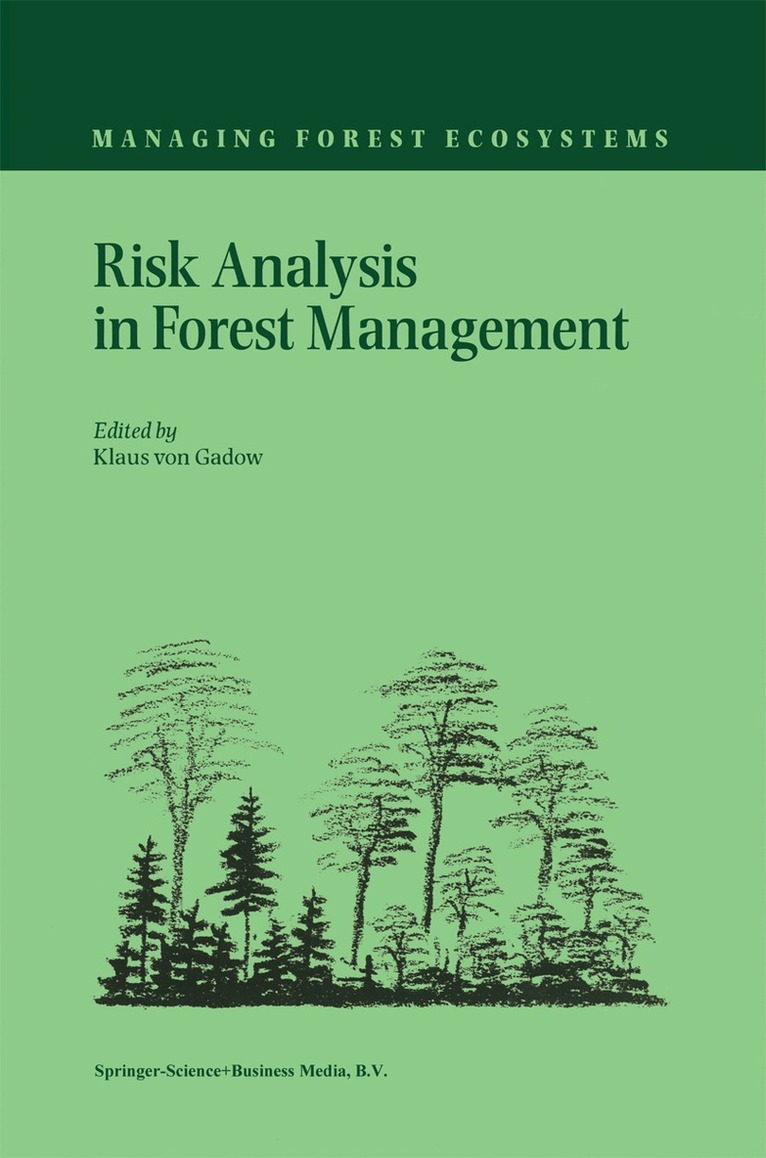
Due to the long-term planning horizons and the great variety of natural, economic, and operational hazards affecting forest ecosystems, uncertainty and multiple risk are typical aspects of forest management. Applications of risk analysis are surprisingly rare, in spite of the rich assortment of sophisticated forest planning tools that are available today. The objective of this particular volume within the book series "Managing Forest Ecosystems" is to present state-of-the-art research results, concepts, and techniques regarding the assessment and evaluation of natural hazards and the analysis of risk and uncertainty relating to forest management. Various aspects of risk analysis are covered, including examples of specific modelling tools. The book is divided into three sections covering ecological perspectives, applications in engineering and planning, and methods applicable to economics and policy.
534 kr
Skickas inom 10-15 vardagar
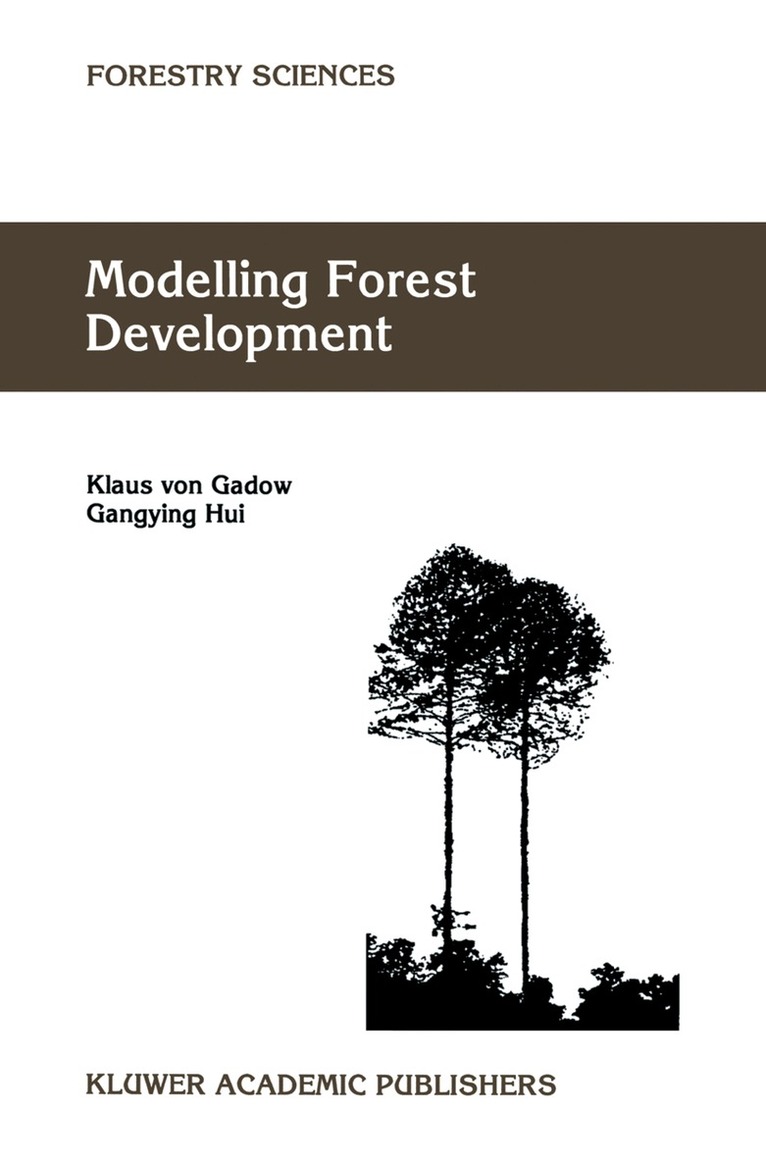
In an lUlffianaged woodland, forest development follows a succession of periods of undisturbed natural growth, interrupted by intermediate loss or damage of trees caused by fire or wind or other natural hazards. In a managed woodland, the most important periodic disturbances are the thinning operations, which are often carried out at regular intervals and which usually have a significant effect on the future evolution of the resource. Thus, a realistic model of forest development includes both natural growth and thinnings. The key to successful timber management is a proper understanding of growth processes, and one of the objectives of modelling forest development is to provide the tools that enable foresters to compare alternative silvicultural treatments. Foresters need to be able to anticipate the consequences of a particular thinning operation. In most cases, total timber volume is not a very appropriate measure for quantifying growth or yields, or changes caused by thinning operations. Yield in economic terms is defined by the dimensions and quality attributes of the harvestable logs, and estimating timber products is a central issue of production-oriented growth and yield research. Introduction 2 Growth modelling is also an essential prerequisite for evaluating the consequences of a particular management action on the future development of an important natural resource, such as a woodland ecosystem.
2 115 kr
Skickas inom 10-15 vardagar
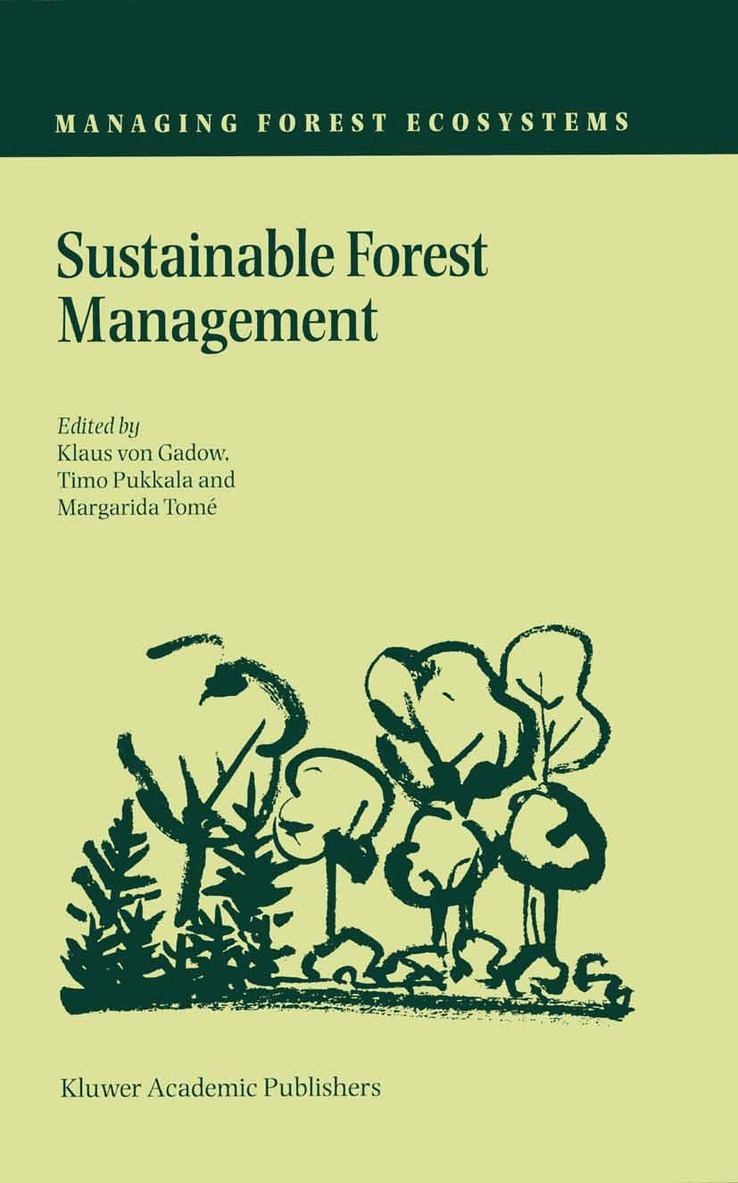
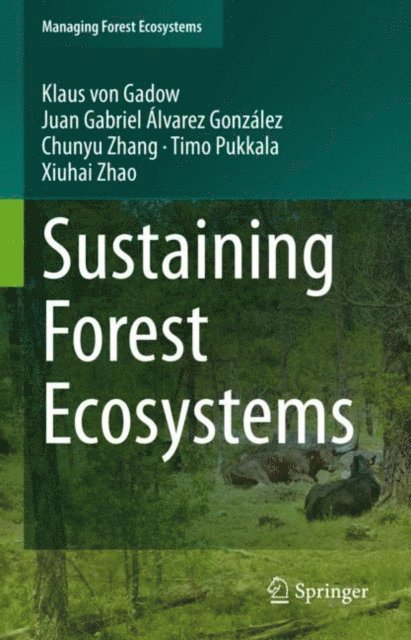
During its 200-year history the concept of sustainable forest ecosystem management has been the object of scientific and political discussion, with varying degrees of intensity - promoted with vehement fervour during periods of social or economic crisis, and less intensely during periods of stability. This volume, which forms part of the book series Managing Forest Ecosystems, presents state-of-the-art contributions presented by 9 leading authors from North America, Europe, Australia, and Southern Africa. If technical knowledge is a constraint to the implementation of sustainable management, this book contains a wealth of information which may be useful to students and practitioners alike. The specific target readership includes company management, the legal and policy environment, and forestry administrators. This book's unique feature is its holistic approach which includes ecological, socio-political, and timber supply issues.
1 588 kr
Skickas inom 10-15 vardagar
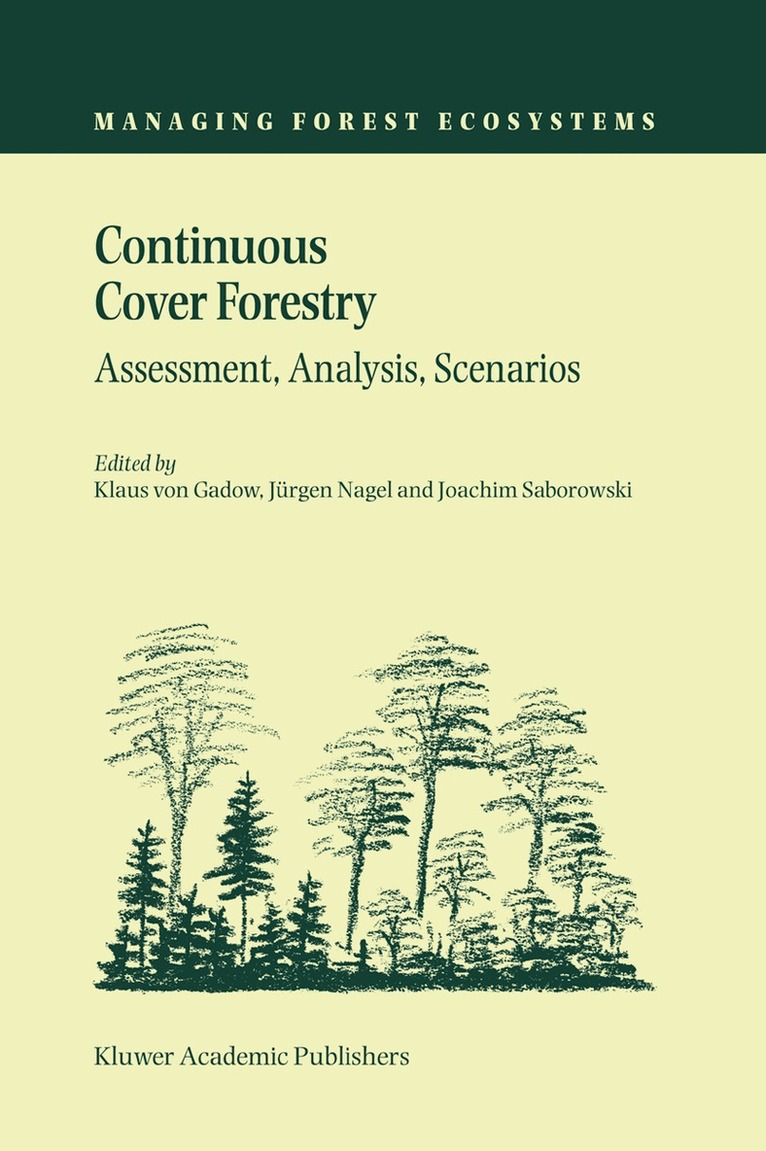
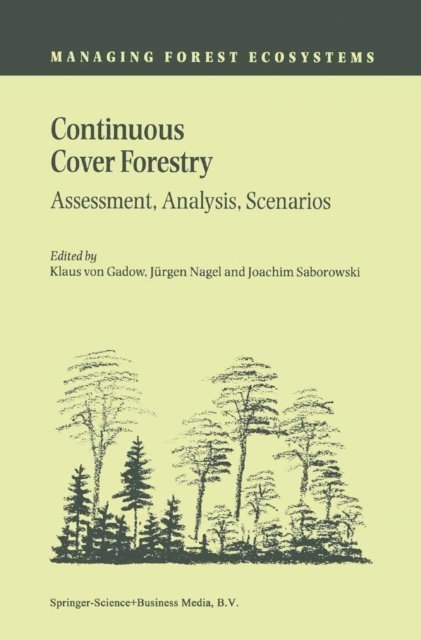
The large-scale application of silvicultural systems has become a political reality in many parts of the world. This involves a gradual transformation of traditional silvicultural practice towards "continuous cover forestry" (CCF), also known as near-natural forest management, favouring mixed uneven-aged stands, site-adapted tree species and selective harvesting. Today, CCF systems are encountered in many parts of the world, but forest managers often lack the technical support for generating and evaluating treatment options for complex forest structures. Specific CCF-related resource assessment, forecasting and sustainable harvest control techniques have been developed, but details about their use are not widely known. The emphasis in this text is on quantitative methods and modelling.
1 166 kr
Skickas inom 10-15 vardagar
Forest ecosystems include a great variety of communities of organisms interacting with their physical environment: multi-aged natural forests, even-aged monocultures, and secondary forests invaded by foreign species.
850 kr
Skickas inom 7-10 vardagar
1 593 kr
Skickas inom 10-15 vardagar
Due to the long-term planning horizons and the great variety of natural, economic, and operational hazards affecting forest ecosystems, uncertainty and multiple risk are typical aspects of forest management. Applications of risk analysis are surprisingly rare, in spite of the rich assortment of sophisticated forest planning tools that are available today. The objective of this particular volume within the book series Managing Forest Ecosystems is to present state-of-the-art research results, concepts, and techniques regarding the assessment and evaluation of natural hazards and the analysis of risk and uncertainty relating to forest management. Various aspects of risk analysis are covered, including examples of specific modelling tools. The book is divided into three sections covering ecological perspectives, applications in engineering and planning, and methods applicable to economics and policy.
1 593 kr
Skickas inom 10-15 vardagar
The large-scale application of new silvicultural systems has become a political reality in many parts of the world. This involves a gradual tarnsformation of traditional silvicultural practice towards Continuous Cover Forestry (CCF), also know as near-natural forest management, favouring mixed uneven-aged stands, site-adapted tree species and selective harvesting. Today, CCF systems are encountered in many parts of the world, but forest managers often lack the technical support for generating and evaluating treatment options for complex forest structures. Specific CCF-related resource assessment, forecasting and sustainable harvest control techniques have been developed, but details about their use are not widely known. The emphasis in the book is on quantitative methods and modelling.