Koenraad Verboven - Böcker
Visar alla böcker från författaren Koenraad Verboven. Handla med fri frakt och snabb leverans.
9 produkter
9 produkter
2 662 kr
Skickas inom 5-8 vardagar
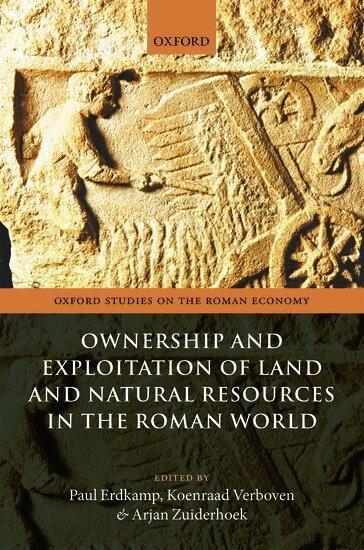
Explanation of the success and failure of the Roman economy is one of the most important problems in economic history. As an economic system capable of sustaining high production and consumption levels, it was unparalleled until the early modern period.This volume focuses on how the institutional structure of the Roman Empire affected economic performance both positively and negatively. An international range of contributors offers a variety of approaches that together enhance our understanding of how different ownership rights and various modes of organization and exploitation facilitated or prevented the use of land and natural resources in the production process. Relying on a large array of resources - literary, legal, epigraphic, papyrological, numismatic, and archaeological - chapters address key questions regarding the foundations of the Roman Empire's economic system. Questions of growth, concentration and legal status of property (private, public, or imperial), the role of the state, content and limitations of rights of ownership, water rights and management, exploitation of indigenous populations, and many more receive new and original analyses that make this book a significant step forward to understanding what made the economic achievements of the Roman empire possible.
1 810 kr
Skickas inom 5-8 vardagar
Investment in capital, both physical and financial, and innovation in its uses are often considered the linchpin of modern economic growth, while credit and credit markets now seem to determine the wealth - as well as the fate - of nations. Yet was it always thus? The Roman economy was large, complex, and sophisticated, but in terms of its structural properties did it look anything like the economies we know and are familiar with today? Through consideration of the allocation and uses of capital and credit and the role of innovation in the Roman world, the individual essays comprising this volume go straight to the heart of the matter, exploring such questions as how capital in its various forms was generated, allocated, and employed in the Roman economy; whether the Romans had markets for capital goods and credit; and whether investment in capital led to innovation and productivity growth. Their authors consider multiple aspects of capital use in agriculture, water management, trade, and urban production, and of credit provision, finance, and human capital, covering different periods of Roman history and ranging geographically across Italy and elsewhere in the Roman world. Utilizing many different types of written and archaeological evidence, and employing a range of modern theoretical perspectives and methodologies, the contributors, an expert international team of historians and archaeologists, have produced the first book-length contribution to focus exclusively on (physical and financial) capital in the Roman world; a volume that is aimed not only at specialists in the field, but also at economic historians and archaeologists specializing in other periods and places.
1 523 kr
Skickas inom 10-15 vardagar
Economic archaeology and ancient economic history have boomed the past decades. There is no reliable method to convert ancient proxy-data into the economic indicators used in economic history.
1 523 kr
Skickas inom 10-15 vardagar
Economic archaeology and ancient economic history have boomed the past decades. There is no reliable method to convert ancient proxy-data into the economic indicators used in economic history.
Climate Change and Ancient Societies in Europe and the Near East
Diversity in Collapse and Resilience
Inbunden, Engelska, 2021
1 037 kr
Skickas inom 5-8 vardagar
Climate change over the past thousands of years is undeniable, but debate has arisen about its impact on past human societies. This book explores the link between climate and society in ancient worlds, focusing on the ancient economies of western Eurasia and northern Africa from the fourth millennium BCE up to the end of the first millennium CE.This book contributes to the multi-disciplinary debate between scholars working on climate and society from various backgrounds. The chronological boundaries of the book are set by the emergence of complex societies in the Neolithic on the one end and the rise of early-modern states in global political and economic exchange on the other. In order to stimulate comparison across the boundaries of modern periodization, this book ends with demography and climate change in early-modern and modern Italy, a society whose empirical data allows the kind of statistical analysis that is impossible for ancient societies. The book highlights the role of human agency, and the complex interactions between the natural environment and the socio-cultural, political, demographic, and economic infrastructure of any given society. It is intended for a wide audience of scholars and students in ancient economic history, specifically Rome and Late Antiquity.
Climate Change and Ancient Societies in Europe and the Near East
Diversity in Collapse and Resilience
Häftad, Engelska, 2022
1 037 kr
Skickas inom 5-8 vardagar
Climate change over the past thousands of years is undeniable, but debate has arisen about its impact on past human societies. This book explores the link between climate and society in ancient worlds, focusing on the ancient economies of western Eurasia and northern Africa from the fourth millennium BCE up to the end of the first millennium CE.This book contributes to the multi-disciplinary debate between scholars working on climate and society from various backgrounds. The chronological boundaries of the book are set by the emergence of complex societies in the Neolithic on the one end and the rise of early-modern states in global political and economic exchange on the other. In order to stimulate comparison across the boundaries of modern periodization, this book ends with demography and climate change in early-modern and modern Italy, a society whose empirical data allows the kind of statistical analysis that is impossible for ancient societies. The book highlights the role of human agency, and the complex interactions between the natural environment and the socio-cultural, political, demographic, and economic infrastructure of any given society. It is intended for a wide audience of scholars and students in ancient economic history, specifically Rome and Late Antiquity.
Legal and Economic Practice in the Roman World, Volume I
Perspectives on Standardization and Localism
Inbunden, Engelska, 2026
2 011 kr
Kommande
This edited volume examines the legal and economic world of the Romans through concepts, structures, and objects that reveal practices of standardization and localism. It explores the myriad ways in which the Roman Empire became an integrated political, social and economic system. Split across two volumes, the collection addresses the dynamic interaction between Rome and its provinces in developing institutions crucial to societal and economic development. It challenges notions of uniformity, demonstrating how tensions between imperial standardization and local cultures could both drive innovative legal and economic practices and hinder empire-wide integration. The chapters explore broad questions from various disciplinary perspectives, including ancient economic history, law, papyrology, epigraphy and archaeology. Contributions cover diverse topics such as weights, measures, and coinage, legal practices, taxation, and cultural symbols. Each chapter investigates how, even as local communities adopted practices associated with Rome as a ruling power, local customs could, in turn, influence practices across the Empire. By illuminating these reciprocal relationships, this book recontextualizes Roman standardization—not merely as a tool of imperial domination but as evidence of diverse socioeconomic practices and cross-cultural exchanges. It will be a valuable resource for scholars of ancient economic history, classical archaeology, and ancient law, as well as anyone interested in the economy and culture of Ancient Rome.
Legal and Economic Practice in the Roman World, Volume II
Perspectives on Standardization and Localism
Inbunden, Engelska, 2026
2 793 kr
Kommande
This edited volume examines the legal and economic world of the Romans through concepts, structures, and objects that reveal practices of standardization and localism. It explores the myriad ways in which the Roman Empire became an integrated political, social and economic system. Split across two volumes, the collection addresses the dynamic interaction between Rome and its provinces in developing institutions crucial to societal and economic development. It challenges notions of uniformity, demonstrating how tensions between imperial standardization and local cultures could both drive innovative legal and economic practices and hinder empire-wide integration. The chapters explore broad questions from various disciplinary perspectives, including ancient economic history, law, papyrology, epigraphy and archaeology. Contributions cover diverse topics such as weights, measures, and coinage, legal practices, taxation, and cultural symbols. Each chapter investigates how, even as local communities adopted practices associated with Rome as a ruling power, local customs could, in turn, influence practices across the Empire. By illuminating these reciprocal relationships, this book recontextualizes Roman standardization—not merely as a tool of imperial domination but as evidence of diverse socioeconomic practices and cross-cultural exchanges. It will be a valuable resource for scholars of ancient economic history, classical archaeology, and ancient law, as well as anyone interested in the economy and culture of Ancient Rome.
2 258 kr
Skickas inom 5-8 vardagar
The economic success of the Roman Empire was unparalleled in the West until the early modern period. While favourable natural conditions, capital accumulation, technology and political stability all contributed to this, economic performance ultimately depended on the ability to mobilize, train and co-ordinate human work efforts. In Work, Labour, and Professions in the Roman World, the authors discuss new insights, ideas and interpretations on the role of labour and human resources in the Roman economy. They study the various ways in which work was mobilised and organised and how these processes were regulated. Work as a production factor, however, is not the exclusive focus of this volume. Throughout the chapters, the contributors also provide an analysis of work as a social and cultural phenomenon in Ancient Rome.