• Fri frakt över 249 kr
  • •
  • Snabba leveranser
  • •
  • Billiga böcker
Kundservice

Du är på sajten för privatpersoner.

Företag, bibliotek eller offentlig verksamhet?

Du handlar på classic.bokus.com, där alla dina funktioner finns intakta.
Till classic.bokus.com
Bokus logotyp. Gå till startsidan.
  • Erbjudanden
  • Nyheter
  • Student
  • Topplistor
  • Barn & ungdom
  • Bokus Play
  • E-böcker
  • Pocketböcker
  • Spel & pussel

10% rabatt på allt med kod NYSTART10 →

Sidfot

Mina sidor

    Hjälp

    • Kundservice
    • Vanliga frågor och svar
    • Frakt och leverans
    • Retur vid ångerrätt
    • Reklamera vara
    • Betalning
    • Köpvillkor
    • Allmänna villkor
    • Information om webbplatsens tillgänglighet

    Om Bokus

    • Om oss
    • Pressrum
    • För studenter
    • För företag
    • För bibliotek och offentlig verksamhet
    • För leverantörer
    • Hållbarhet

    Populärt

    • Aktuella erbjudanden
    • Presentkort
    • Studentlitteratur
    • Nya böcker
    • Topplistor
    • Signerade böcker
    • Engelska böcker

    Inspiration

    • Boktips
    • BookTok
    • Populära bokserier
    • Barnbokskaraktärer
    • Populära författare
    Logotyp för Bokus
    Följ oss på Facebook (extern länk)Följ oss på Instagram (extern länk)Följ oss på YouTube (extern länk)Följ oss på TikTok (extern länk)
    bokus @ CookiesAnpassa cookiesIntegritetspolicyKöpvillkor
    Till Citymail hemsida (extern länk)Till Budbee hemsida (extern länk)Till Postnord hemsida (extern länk)Till Schenker hemsida (extern länk)Till Early Bird hemsida (extern länk)Till Walleys hemsida (extern länk)
    1. Naturvetenskap och teknik
    2. Matematik och naturvetenskap
    3. Matematik
    4. Optimering

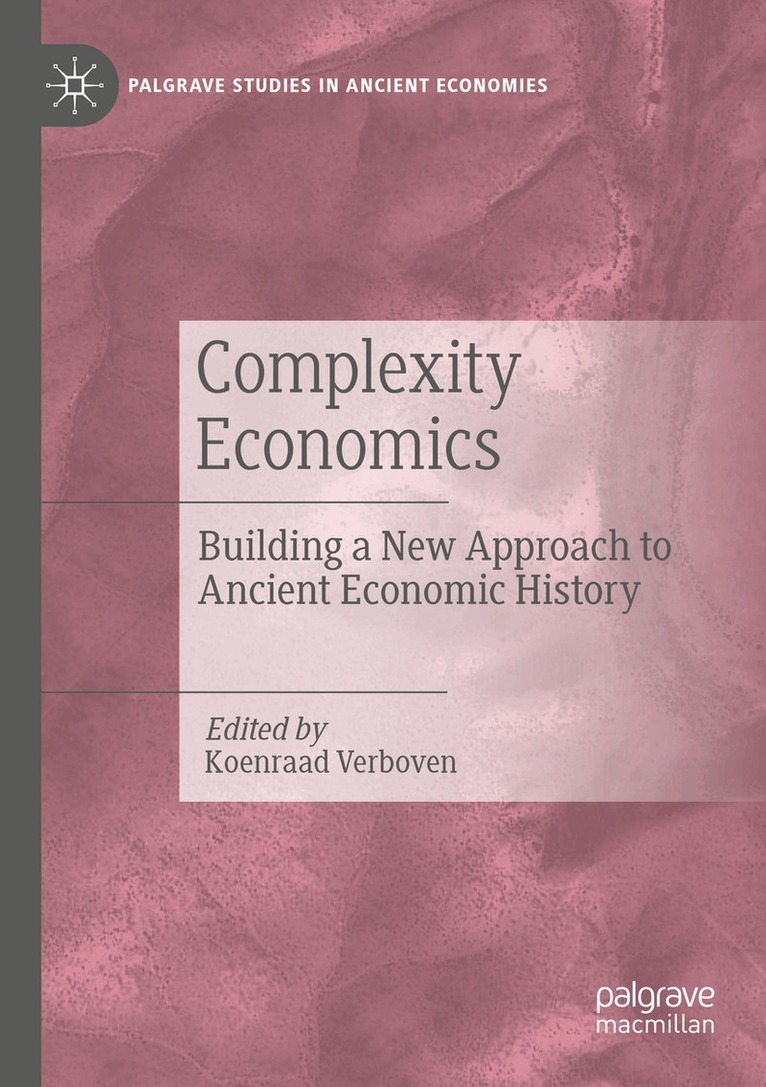
    Complexity Economics

    Building a New Approach to Ancient Economic History

    AvKoenraad Verboven

    Häftad, Engelska, 2021

    Del i serien Palgrave Studies in Ancient Economies

    1 562 kr

    Beställningsvara. Skickas inom 10-15 vardagar. Fri frakt över 249 kr.

    Beskrivning

    Economic archaeology and ancient economic history have boomed the past decades. The former thanks to greatly enhanced techniques to identify, collect, and interpret material remains as proxies for economic interactions and performance; the latter by embracing the frameworks of new institutional economics. Both disciplines, however, still have great difficulty talking with each other. There is no reliable method to convert ancient proxy-data into the economic indicators used in economic history. In turn, the shared cultural belief-systems underlying institutions and the symbolic ways in which these are reproduced remain invisible in the material record. This book explores ways to bring both disciplines closer together by building a theoretical and methodological framework to evaluate and integrate archaeological proxy-data in economic history research. Rather than the linear interpretations offered by neoclassical or neomalthusian models, we argue that complexity economics, based on system theory, offers a promising way forward.

    Produktinformation

    • Utgivningsdatum:2021-11-27
    • Mått:148 x 210 x 21 mm
    • Vikt:496 g
    • Format:Häftad
    • Språk:Engelska
    • Serie:Palgrave Studies in Ancient Economies
    • Antal sidor:363
    • Förlag:Springer Nature Switzerland AG
    • ISBN:9783030479008

    Utforska kategorier

    • Optimering inom Naturvetenskap och teknik
    • Europas historia inom Historia och arkeologi
    • Ekonomisk historia inom Ekonomi och Ledarskap

    Mer om författaren

    Koenraad Verboven is Professor of Ancient History at Ghent University, Belgium. He has published extensively on ancient social and economic history, including the monograph The Economy of Friends: Economic Aspects of Amicitia and Patronage in the Late Republic and six edited volumes on Roman economic and legal history.

    Innehållsförteckning

    • Chapter 1: Introduction: Finding a new approach to ancient proxy data.- Part I- Theoretical Frameworks and Methodologies.- Chapter 2: Playing by whose rules? Institutional resilience, conflict and change in the Roman economy.- Chapter 3: Networks as Proxies: a relational approach towards economic complexity in the Roman period.- Chapter 4: Evaluating the potential of computational modelling for informing debates on Roman economic integration.- Chapter 5: Visualising Roman institutional environments for exchange as a complex system.- PART II- Urban Systems.- Chapter 6: Social complexity and complexity economics. Studying socio-economic systems at Düzen Tepe and Sagalassos (SW Turkey).-  Chapter 7: A method for estimating Roman population sizes from urban survey contexts: an application in central Adriatic Italy.-  Chapter 8: Complexity and urban hierarchy of ancient urbanism: the cities of Roman Asia Minor.- PART III-Epidemics.- Chapter 9: Disease proxies and the diagnosis of the late Antonine economy.- Chapter 10: Measuring and Comparing Economic Interaction Based on the Paths and Speed of Infections. The Case Study of the Spread of the Justinianic Plague and Black Death.