Kris Lane - Böcker
Visar alla böcker från författaren Kris Lane. Handla med fri frakt och snabb leverans.
11 produkter
11 produkter
1 227 kr
Skickas inom 3-6 vardagar
Featuring a renowned author team and the best recent scholarship, World in the Making: A Global History explores both the global and local dimensions of world history. Abundant full-color maps and images, along with other special pedagogical features that highlight the lives and voices of the world's peoples, make this synthesis accessible and memorable for students--all at an affordable low price.
1 227 kr
Skickas inom 3-6 vardagar
Featuring a renowned author team and the best recent scholarship, World in the Making: A Global History explores both the global and local dimensions of world history. Abundant full-color maps and images, along with other special pedagogical features that highlight the lives and voices of the world's peoples, make this synthesis accessible and memorable for students--all at an affordable low price.
Del 4 - Latin American Originals
Defending the Conquest
Bernardo de Vargas Machuca's Defense and Discourse of the Western Conquests
Häftad, Engelska, 2010
370 kr
Skickas inom 11-20 vardagar
Of great benefit for scholars and teachers, this is the first English translation and critical edition of a rare refutation of Bartolomé de las Casas’s famous 1552 Brief Account of the Destruction of the Indies, one of the most influential texts of the sixteenth century. The Defense and Discourse of the Western Conquests, written by the Spanish soldier Bernardo de Vargas Machuca about 1603, provides valuable insights into the other side of the debate over the morality of the Spanish conquest.
Del 18 - Latin American Originals
Pandemic in Potosí
Fear, Loathing, and Public Piety in a Colonial Mining Metropolis
Häftad, Engelska, 2022
224 kr
Skickas inom 7-10 vardagar
In 1719, a deadly and highly contagious disease took hold of the Imperial Villa of Potosí, a silver mining metropolis in what is now Bolivia. Within a year, the pathogen had killed some 22,000 people, just over a third of the city’s residents. Victims collapsed with fever, body aches, and effusions of blood from the nose and mouth. Most died within days. The great Andean pandemic of 1717–22 was likely the most destructive disease to strike South America since the days of the Spanish conquest.Pandemic in Potosí features the single longest narrative of this nearly forgotten period, penned by local historian Bartolomé Arzáns de Orsúa y Vela, along with shorter treatments of the disease’s ravages in Cuzco, Arequipa, and the outskirts of Lima. The “Gran Peste,” as it was called, was a pivotal event about which Arzáns wrote at length because he lived through it, but also because it was believed to have cosmic significance. Kris Lane translates and contextualizes Arzáns’s account, which is rich in local detail that sheds light on a range of topics—from therapeutics, devotional life, class relations, gender, and race to conceptions of illness, sin, and human will and responsibility during a major public health crisis.Original narratives of the pandemic, translated here for the first time, help readers see commonalities and differences between past and present disease encounters. Designed for use in courses on Latin American history, this concise work will also interest scholars and students of the history of religion, history of medicine, urban studies, and epidemiology.
Del 27 - California World History Library
Potosi
The Silver City That Changed the World
Inbunden, Engelska, 2019
579 kr
Skickas inom 3-6 vardagar
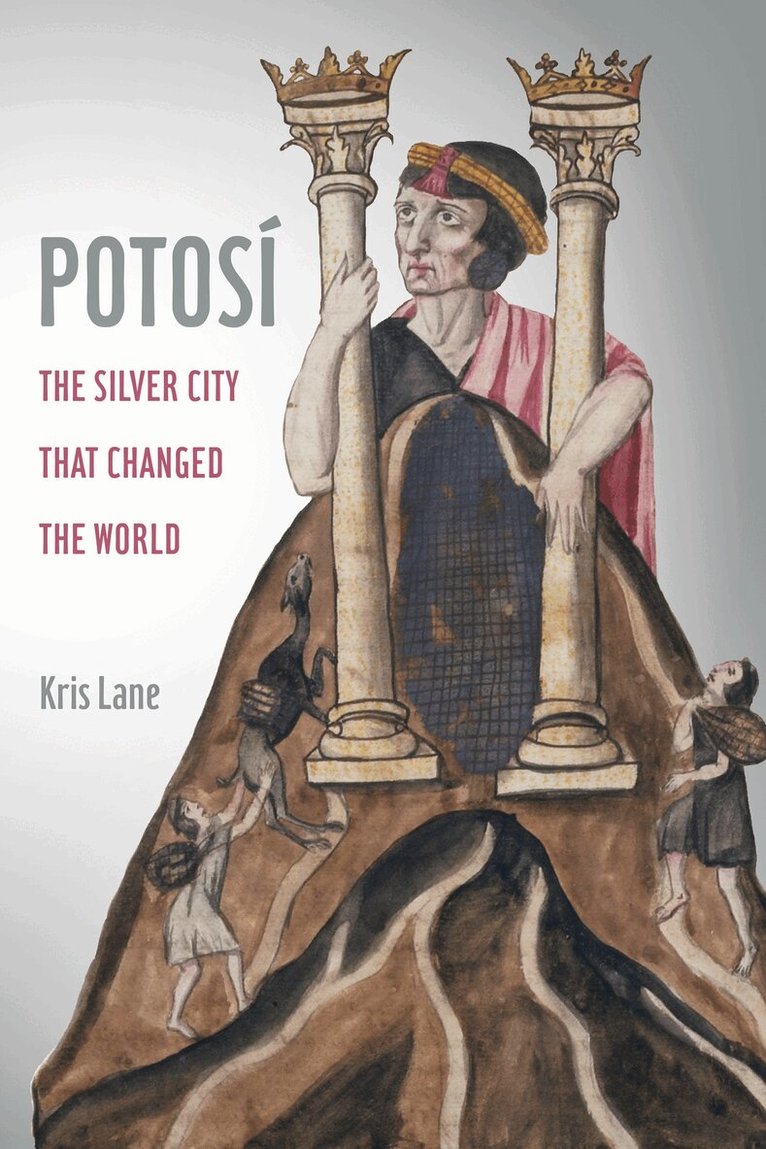
"For anyone who wants to learn about the rise and decline of Potosí as a city . . . Lane's book is the ideal place to begin."—New York Review of BooksIn 1545, a native Andean prospector hit pay dirt on a desolate red mountain in highland Bolivia. There followed the world’s greatest silver bonanza, making the Cerro Rico, or “Rich Hill,” and the Imperial Villa of Potosí instant legends, famous from Istanbul to Beijing. The Cerro Rico alone provided over half of the world’s silver for a century, and even in decline, it remained the single richest source on Earth.Potosí is the first interpretive history of the fabled mining city’s rise and fall. From Potosí’s startling emergence in the sixteenth century to its collapse in the nineteenth, Kris Lane tells the story of global economic transformation and the environmental and social impact of rampant colonial exploitation. Lane’s invigorating narrative offers rare details of this thriving city and its promise of prosperity. A new world—native workers, market women, African slaves, and other ordinary residents living alongside elite merchants, refinery owners, wealthy widows, and crown officials—emerges in lively, riveting stories from the original sources. An engrossing depiction of excess and devastation, Potosí reveals the relentless human tradition in boom times and bust.
Del 27 - California World History Library
Potosi
The Silver City That Changed the World
Häftad, Engelska, 2021
227 kr
Skickas inom 7-10 vardagar
"For anyone who wants to learn about the rise and decline of Potosí as a city . . . Lane’s book is the ideal place to begin."—The New York Review of BooksIn 1545, a native Andean prospector hit pay dirt on a desolate red mountain in highland Bolivia. There followed the world's greatest silver bonanza, making the Cerro Rico or "Rich Hill" and the Imperial Villa of Potosí instant legends, famous from Istanbul to Beijing. The Cerro Rico alone provided over half of the world's silver for a century, and even in decline, it remained the single richest source on earth. Potosí is the first interpretive history of the fabled mining city’s rise and fall. It tells the story of global economic transformation and the environmental and social impact of rampant colonial exploitation from Potosí’s startling emergence in the sixteenth century to its collapse in the nineteenth. Throughout, Kris Lane’s invigorating narrative offers rare details of this thriving city and its promise of prosperity. A new world of native workers, market women, African slaves, and other ordinary residents who lived alongside the elite merchants, refinery owners, wealthy widows, and crown officials, emerge in lively, riveting stories from the original sources. An engrossing depiction of excess and devastation, Potosí reveals the relentless human tradition in boom times and bust.
624 kr
Skickas inom 3-6 vardagar
Sometimes referred to as the first published manual of guerrilla warfare, Bernardo de Vargas Machuca’s Indian Militia and Description of the Indies is actually the first known manual of counterinsurgency, or anti-guerrilla warfare. Published in Madrid in 1599 by a Spanish-born soldier of fortune with long experience in the Americas, the book is a training manual for conquistadors. The Aztec and Inca Empires had long since fallen by 1599, but Vargas Machuca argued that many more Native American peoples remained to be conquered and converted to Roman Catholicism. What makes his often shrill and self-righteous treatise surprising is his consistent praise of indigenous resistance techniques and medicinal practices.Containing advice on curing rattlesnake bites with amethysts and making saltpeter for gunpowder from concentrated human urine, The Indian Militia is a manual in four parts, the first of which outlines the ideal qualities of the militia commander. Addressing the organization and outfitting of conquest expeditions, Book Two includes extended discussions of arms and medicine. Book Three covers the proper behavior of soldiers, providing advice on marching through peaceful and bellicose territories, crossing rivers, bivouacking in foul weather, and carrying out night raids and ambushes. Book Four deals with peacemaking, town-founding, and the proper treatment of conquered peoples. Appended to these four sections is a brief geographical description of all of Spanish America, with special emphasis on the indigenous peoples of New Granada (roughly modern-day Colombia), followed by a short guide to the southern coasts and heavens. This first English-language edition of The Indian Militia includes an extensive introduction, a posthumous report on Vargas Machuca’s military service, and a selection from his unpublished attack on the writings of Fray BartolomÉ de Las Casas.
462 kr
Skickas inom 7-10 vardagar
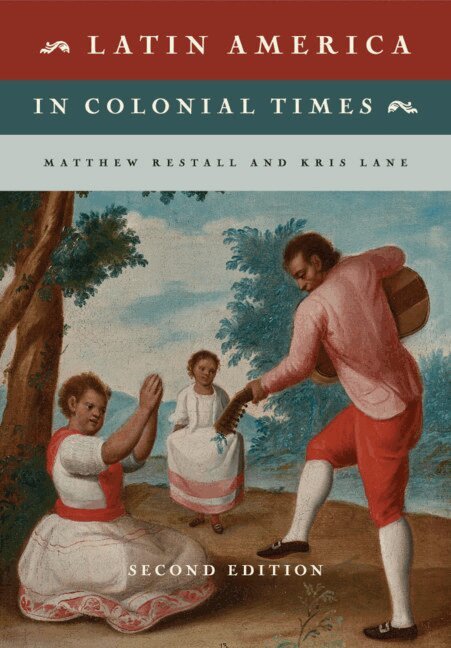
Few milestones in human history are as momentous as the meeting of three great civilizations on American soil in the sixteenth century. The fully revised textbook Latin America in Colonial Times presents that story in an engaging but informative new package, revealing how a new civilization and region - Latin America - emerged from that encounter. The authors give equal attention to the Spanish and Portuguese conquerors and settlers, to the African slaves they brought across the Atlantic, and to the indigenous peoples whose lands were invaded. From the dawn of empires in the fifteenth century, through the conquest age of the sixteenth and to the end of empire in the nineteenth, the book combines broad brushstrokes with anecdotal details that bring the era to life. This new edition incorporates the newest scholarship on Spain, Portugal, and Atlantic Africa, in addition to Latin America itself, with indigenous and African views and women's experiences and contributions to colonial society highlighted throughout.
1 049 kr
Skickas inom 7-10 vardagar
Few milestones in human history are as momentous as the meeting of three great civilizations on American soil in the sixteenth century. The fully revised textbook Latin America in Colonial Times presents that story in an engaging but informative new package, revealing how a new civilization and region - Latin America - emerged from that encounter. The authors give equal attention to the Spanish and Portuguese conquerors and settlers, to the African slaves they brought across the Atlantic, and to the indigenous peoples whose lands were invaded. From the dawn of empires in the fifteenth century, through the conquest age of the sixteenth and to the end of empire in the nineteenth, the book combines broad brushstrokes with anecdotal details that bring the era to life. This new edition incorporates the newest scholarship on Spain, Portugal, and Atlantic Africa, in addition to Latin America itself, with indigenous and African views and women's experiences and contributions to colonial society highlighted throughout.
254 kr
Skickas
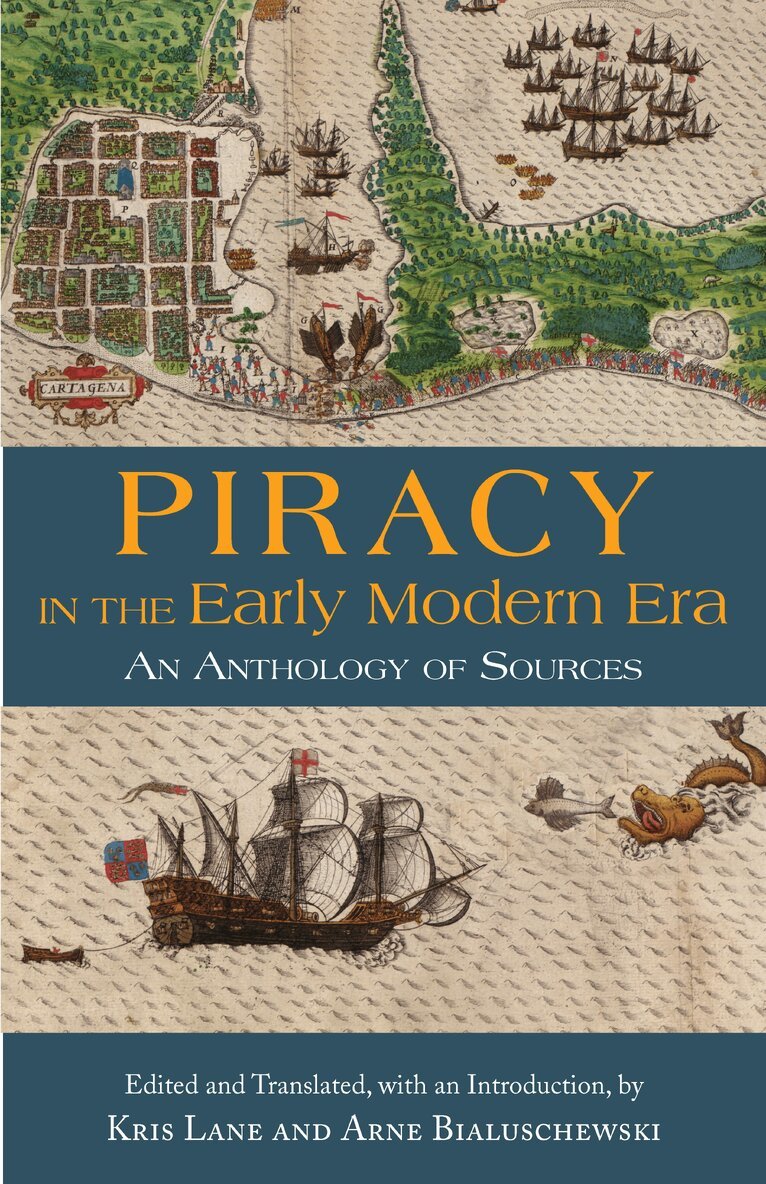
"This volume represents a sea change in educational resources for the history of piracy. In a single, readable, and affordable volume, Lane and Bialuschewski present a wonderfully diverse body of primary texts on sea raiders. Drawn from a variety of sources, including the authors' own archival research and translations, these carefully curated texts cover over two hundred years (1548–1726) of global, early-modern piracy. Lane and Bialuschewski provide glosses of each document and a succinct introduction to the historical context of the period and avoid the romanticized and Anglo-centric depictions of maritime predation that often plague work on the topic."—Jesse Cromwell, The University of Mississippi
Basques and Vicuñas at the Mouth of Hell
A Documentary History of Potosí in the Early 1620s
Inbunden, Engelska, 2024
987 kr
Skickas inom 7-10 vardagar
In June 1622, the silver mining metropolis of PotosÍ, Bolivia, erupted in gangland violence, only halted three years later by a viceroy’s blanket amnesty. Basque immigrants were at the center of the controversy, squaring off against nearly a dozen other nations known collectively as VicuÑas. At stake were the world’s richest silver mines, a means to wealth and power in the Americas, Europe, and beyond.As mines flooded and Indigenous workers died or fled, the city descended into a maelstrom of swordfights, gun battles, ambushes, sniper attacks, and summary executions. Though its roots were economic, the Basque-VicuÑa conflict strained the sinews of Habsburg global governance even as it exposed festering local tensions, only some of which were unique to PotosÍ.This rich collection of original sources, all of them archival documents housed in Bolivia, Spain, the United Kingdom, and the United States, consists of contemporary eyewitness accounts from several perspectives, allowing readers to play historian. All sources have been expertly translated and carefully annotated in a manner that will engage students and scholars alike. Basques and VicuÑas at the Mouth of Hell includes an extensive introduction, seven vital documents in translation, and appendices on everyday life in 1620s PotosÍ and on the historiography of this watershed episode of colonial violence.