Bonnie G. Smith – författare
637 kr
Skickas inom 3-6 vardagar
7 298 kr
Skickas inom 7-10 vardagar
418 kr
Skickas inom 5-8 vardagar
1 315 kr
Skickas inom 3-6 vardagar
1 315 kr
Skickas inom 3-6 vardagar
294 kr
Skickas inom 5-8 vardagar
247 kr
Skickas inom 5-8 vardagar
227 kr
Skickas
364 kr
Skickas inom 5-8 vardagar
705 kr
Skickas inom 10-15 vardagar
2 195 kr
Skickas inom 10-15 vardagar
755 kr
Skickas inom 10-15 vardagar
2 261 kr
Skickas inom 10-15 vardagar
705 kr
Skickas inom 10-15 vardagar
264 kr
Skickas inom 7-10 vardagar
333 kr
Skickas inom 5-8 vardagar
512 kr
Skickas inom 5-8 vardagar
661 kr
Läs direkt efter köp
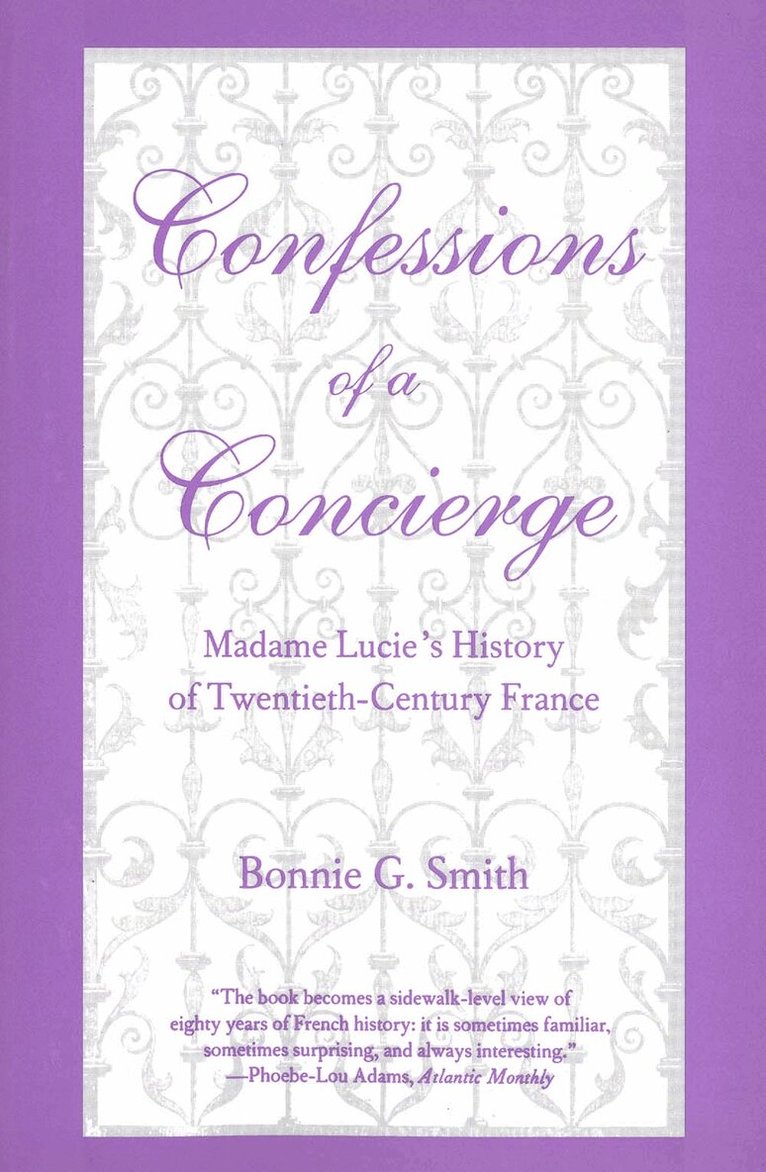
In a social and cultural study of nineteenth-century bourgeois women in northern France, Bonnie Smith shows how the advent of industrialization removed women from the productive activity of the middle class and confined them to a largely reproductive experience. Out of this, she suggests, they created their own world, centered on domesticity, family, and religion. To understand these women, the author argues, it is necessary to examine their world on its own terms as a coherent whole.Professor Smith draws on demographic, psychoanalytic, anthropological, linguistic, as well as historical insights and uses a variety of evidence that includes personal interviews, photographs, letters, genealogical records, and traditional archival sources. Part One outlines the transition from mercantile to industrial manufacturing that terminated the relationship between home and business and that separated the sexes according to their respective functions. Part Two concentrates on the lives of the women following their acceptance of an exclusively reproductive function and shows how the interdependence and fusion of household chores, religious values, and social conscience fostered a unified cultural system. Part Three, then, explores the propagation of this domesticity by the convent, as the primary educational system, and by the sentimental novel, as the vehicle most suited for an ideological expression of domestic life.
751 kr
Skickas inom 10-15 vardagar
403 kr
Skickas inom 5-8 vardagar
218 kr
Skickas inom 3-6 vardagar
831 kr
Läs direkt efter köp
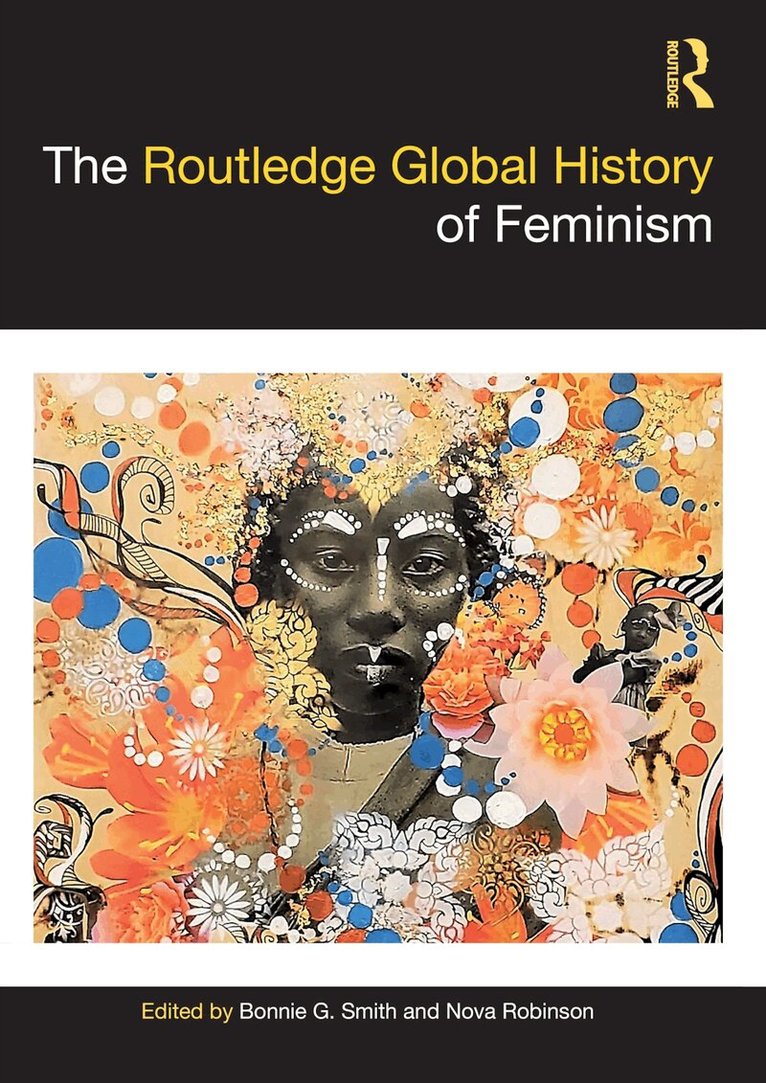
Based on the scholarship of a global team of diverse authors, this wide-ranging handbook surveys the history and current status of pro-women thought and activism over millennia.
The book traces the complex history of feminism across the globe, presenting its many identities, its heated debates, its racism, discussion of religious belief and values, commitment to social change, and the struggles of women around the world for gender justice. Authors approach past understandings and today’s evolving sense of what feminism or womanism or gender justice are from multiple viewpoints. These perspectives are geographical to highlight commonalities and differences from region to region or nation to nation; they are also chronological suggesting change or continuity from the ancient world to our digital age. Across five parts, authors delve into topics such as colonialism, empire, the arts, labor activism, family, and displacement as the means to take the pulse of feminism from specific vantage points highlighting that there is no single feminist story but rather multiple portraits of a broad cast of activists and thinkers.
Comprehensive and properly global, this is the ideal volume for students and scholars of women’s and gender history, women’s studies, social history, political movements and feminism.
831 kr
Läs direkt efter köp
Based on the scholarship of a global team of diverse authors, this wide-ranging handbook surveys the history and current status of pro-women thought and activism over millennia.
The book traces the complex history of feminism across the globe, presenting its many identities, its heated debates, its racism, discussion of religious belief and values, commitment to social change, and the struggles of women around the world for gender justice. Authors approach past understandings and today’s evolving sense of what feminism or womanism or gender justice are from multiple viewpoints. These perspectives are geographical to highlight commonalities and differences from region to region or nation to nation; they are also chronological suggesting change or continuity from the ancient world to our digital age. Across five parts, authors delve into topics such as colonialism, empire, the arts, labor activism, family, and displacement as the means to take the pulse of feminism from specific vantage points highlighting that there is no single feminist story but rather multiple portraits of a broad cast of activists and thinkers.
Comprehensive and properly global, this is the ideal volume for students and scholars of women’s and gender history, women’s studies, social history, political movements and feminism.
807 kr
Läs direkt efter köp
Women and Gender in Postwar Europe charts the experiences of women across Europe from 1945 to the present day. Europe at the end of World War II was a sorry testimony to the human condition; awash in corpses, the infrastructure devastated, food and fuel in such short supply. From Soviet Union to the United Kingdom and Ireland the vast majority of citizens on whom survival depended, in the postwar years, were women. This book charts the involvement of women in postwar reconstruction through the Cold War and post Cold-War years with chapters on the economic, social, and political dynamism that characterized Europe from the 1950s onwards, and goes on to look at the woman’s place in a rebuilt Europe that was both more prosperous and as tension-filled as before.
The chapters both look at broad trends across both eastern and western Europe; such as the horrific aftermath of World War II, but also present individual case studies that illustrate those broad trends in the historical development of women’s lives and gender roles. The case studies show difference and diversity across Europe whilst also setting the experience of women in a particular country within the broader historical issues and trends, in such topics as work, professionalization, sexuality, consumerism, migration, and activism. The introduction and conclusion provide an overview that integrates the chapters into the more general history of this important period.
This will be an essential resource for students of women and gender studies and for post 1945 courses.
807 kr
Läs direkt efter köp
Women and Gender in Postwar Europe charts the experiences of women across Europe from 1945 to the present day. Europe at the end of World War II was a sorry testimony to the human condition; awash in corpses, the infrastructure devastated, food and fuel in such short supply. From Soviet Union to the United Kingdom and Ireland the vast majority of citizens on whom survival depended, in the postwar years, were women. This book charts the involvement of women in postwar reconstruction through the Cold War and post Cold-War years with chapters on the economic, social, and political dynamism that characterized Europe from the 1950s onwards, and goes on to look at the woman’s place in a rebuilt Europe that was both more prosperous and as tension-filled as before.
The chapters both look at broad trends across both eastern and western Europe; such as the horrific aftermath of World War II, but also present individual case studies that illustrate those broad trends in the historical development of women’s lives and gender roles. The case studies show difference and diversity across Europe whilst also setting the experience of women in a particular country within the broader historical issues and trends, in such topics as work, professionalization, sexuality, consumerism, migration, and activism. The introduction and conclusion provide an overview that integrates the chapters into the more general history of this important period.
This will be an essential resource for students of women and gender studies and for post 1945 courses.
1 489 kr
Skickas inom 10-15 vardagar
346 kr
Skickas inom 10-15 vardagar
3 569 kr
Skickas inom 10-15 vardagar
1 240 kr
Kommande
1 795 kr
Skickas inom 10-15 vardagar