Krysta Ryzewski – författare
Visar alla böcker från författaren Krysta Ryzewski. Handla med fri frakt och snabb leverans.
4 produkter
4 produkter
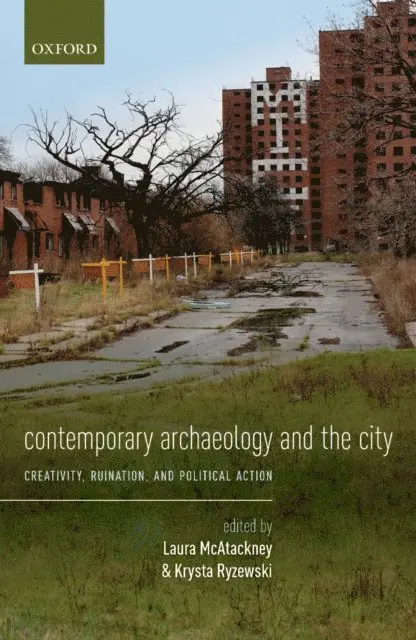
Contemporary Archaeology and the City
Creativity, Ruination, and Political Action
Inbunden, Engelska, 2017
2 658 kr
Skickas inom 3-6 vardagar
Contemporary Archaeology and the City foregrounds the archaeological study of post-industrial and other urban transformations through a diverse, international collection of case studies. Over the past decade contemporary archaeology has emerged as a dynamic force for dissecting and contextualizing the material complexities of present-day societies. Contemporary archaeology challenges conventional anthropological and archaeological conceptions of the past by pushing temporal boundaries closer to, if not into, the present.The volume is organized around three themes that highlight the multifaceted character of urban transitions in present-day cities - creativity, ruination, and political action. The case studies offer comparative perspectives on transformative global urban processes in local contexts through research conducted in the struggling, post-industrial cities of Detroit, Belfast, Indianapolis, Berlin, Liverpool, Belém, and post-Apartheid Cape Town, as well as the thriving urban centres of Melbourne, New York City, London, Chicago, and Istanbul. Together, the volume contributions demonstrate how the contemporary city is an urban palimpsest comprised by archaeological assemblages - of the built environment, the surface, and buried sub-surface - that are traces of the various pasts entangled with one another in the present.This volume aims to position the city as one of the most important and dynamic arenas for archaeological studies of the contemporary by presenting a range of theoretically-engaged case studies that highlight some of the major issues that the study of contemporary cities pose for archaeologists.
999 kr
Skickas inom 10-15 vardagar
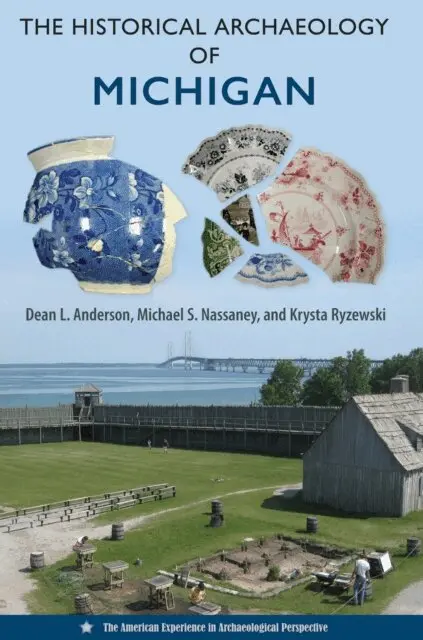
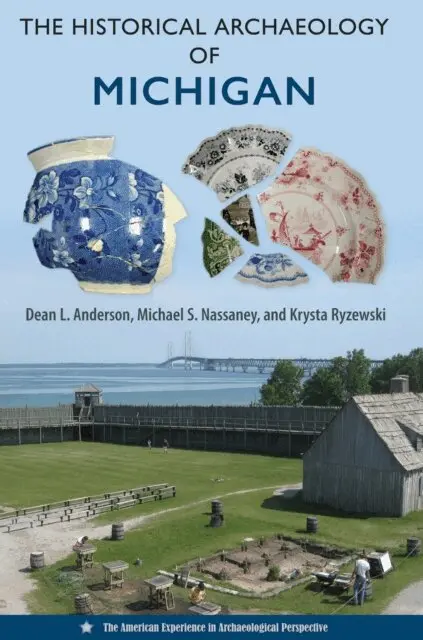
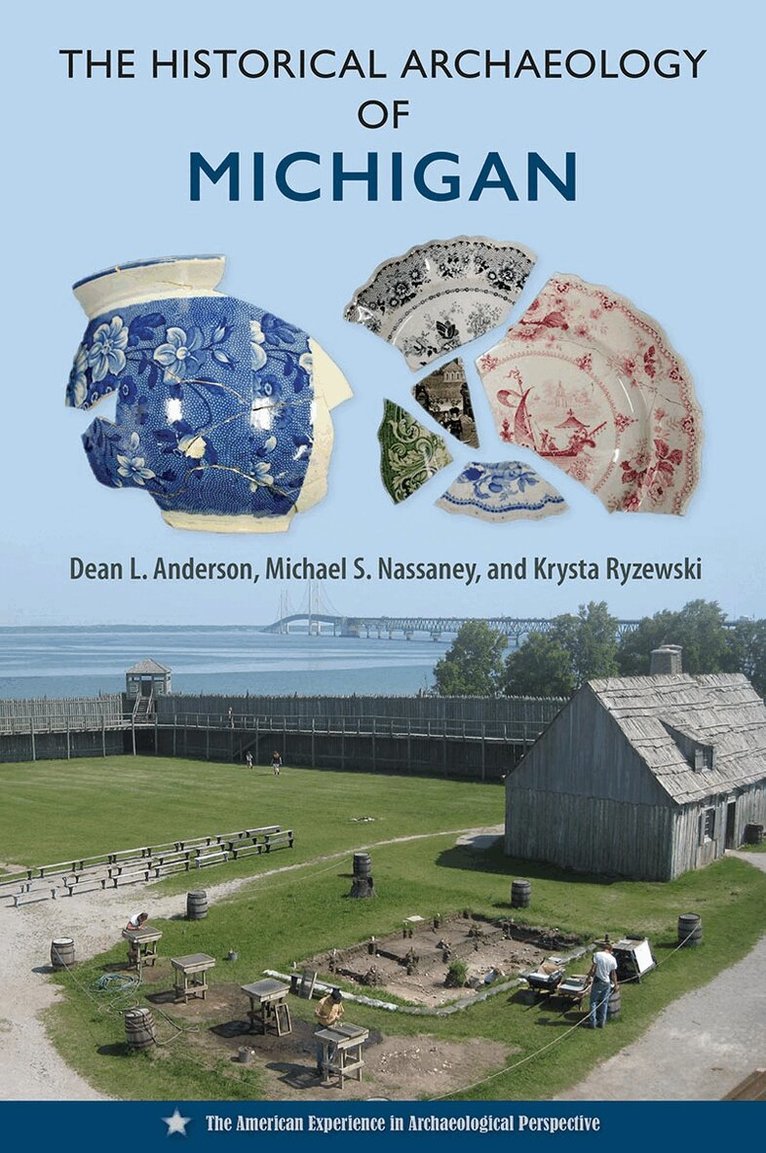
An overview of archaeological research in Michigan that reveals the history of the state during the past four hundred yearsMichigan has long been an incubator for invention, technology, and creativity. This book explores this legacy through the historical archaeology of the past four hundred years in the state, illustrating how Michigan’s history reflects the broader American experience through themes of entrepreneurship, immigration, capitalism, and civil rights.Written by three archaeologists who have dedicated more than 75 years to research in the state, the chapters in this book describe the construction of encampments and fortifications that facilitated seventeenth-century European colonization, the rise of the fur trade and natural resource extraction, and the impact of land acquisition by white settlers who built farmsteads and logging camps in the nineteenth century. The authors examine Detroit’s urban development, revealing how industrial capitalism led to inequality and segregation. They also highlight the pivotal role of Michigan archaeologists within the discipline of historical archaeology.The archaeological findings discussed here, associated with Anishinaabe peoples, settler colonialism, immigrants, agriculture, industry, and urbanization, illustrate the distinct ways in which the American experience was lived in Michigan. The Historical Archaeology of Michigan brings together a wealth of information to show how Michigan’s people have maintained their sense of belonging and embraced their citizenship while adapting to economic, political, social, and cultural challenges.
876 kr
Skickas inom 7-10 vardagar
An archaeologically grounded history of six legendary places in Detroit.The city of Detroit has endured periods of unprecedented industrial growth, decline, and revitalization between the late nineteenth century and the present. In Detroit Remains: Archaeology and Community Histories of Six Legendary Places, Krysta Ryzewski presents six archaeological case studies of legendary Detroit institutions—Little Harry speakeasy, the Ransom Gillis house, the Blue Bird Inn, Gordon Park, the Grande Ballroom, and the Halleck Street log cabin—that trace the contours of the city’s underrepresented communities and their relationship to local currents of capitalism and social justice. Through a combination of rigorous historical archaeological research and narrative storytelling, Ryzewski deftly contextualizes the cases within the city’s current struggles, including recovery from bankruptcy, and future-oriented recovery efforts.This is the first historical archaeology book focused on Detroit and one of the few to foreground the archaeology of the Great Migration era (ca. 1915–1970). The archaeological scholarship is rooted in collaborative, community-involved, and public-facing initiatives. The case studies examine how power is and has been exercised in Detroit’s communities over the past century: how it was stripped from the city’s twentieth- and twenty-first-century residents, but also how they acquired alternative sources of agency by establishing creative and illicit economies, most of which still operated within the city’s capitalist framework.Throughout this book, connections run deep between archaeology, heritage, politics, historic preservation, and storytelling. Detroit Remains demonstrates how the city’s past, present, and future lie not in ruins but in the tangible archaeological traces of the everyday lives of Detroiters and their legacies.
428 kr
Skickas inom 7-10 vardagar
An archaeologically grounded history of six legendary places in Detroit.The city of Detroit has endured periods of unprecedented industrial growth, decline, and revitalization between the late nineteenth century and the present. In Detroit Remains: Archaeology and Community Histories of Six Legendary Places, Krysta Ryzewski presents six archaeological case studies of legendary Detroit institutions—Little Harry speakeasy, the Ransom Gillis house, the Blue Bird Inn, Gordon Park, the Grande Ballroom, and the Halleck Street log cabin—that trace the contours of the city’s underrepresented communities and their relationship to local currents of capitalism and social justice. Through a combination of rigorous historical archaeological research and narrative storytelling, Ryzewski deftly contextualizes the cases within the city’s current struggles, including recovery from bankruptcy, and future-oriented recovery efforts.This is the first historical archaeology book focused on Detroit and one of the few to foreground the archaeology of the Great Migration era (ca. 1915–1970). The archaeological scholarship is rooted in collaborative, community-involved, and public-facing initiatives. The case studies examine how power is and has been exercised in Detroit’s communities over the past century: how it was stripped from the city’s twentieth- and twenty-first-century residents, but also how they acquired alternative sources of agency by establishing creative and illicit economies, most of which still operated within the city’s capitalist framework.Throughout this book, connections run deep between archaeology, heritage, politics, historic preservation, and storytelling. Detroit Remains demonstrates how the city’s past, present, and future lie not in ruins but in the tangible archaeological traces of the everyday lives of Detroiters and their legacies.