L. Bengtsson - Böcker
Visar alla böcker från författaren L. Bengtsson. Handla med fri frakt och snabb leverans.
4 produkter
4 produkter
1 064 kr
Skickas inom 10-15 vardagar
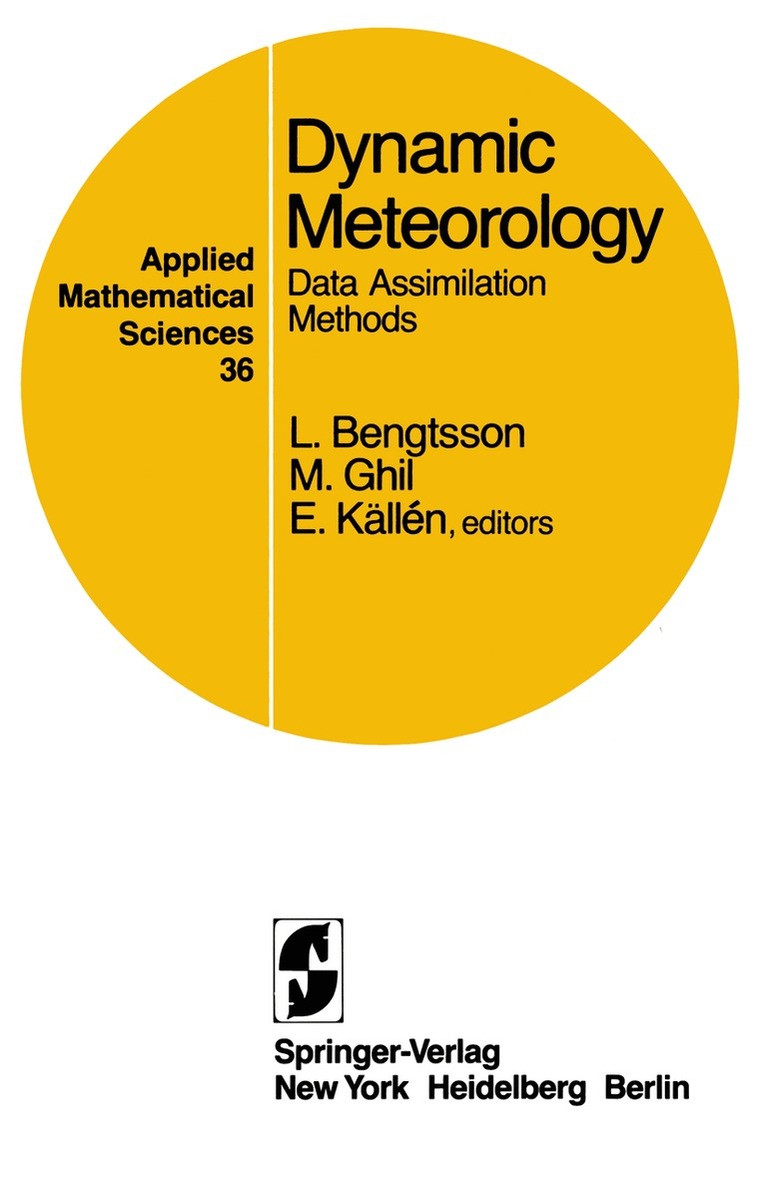
One of the main reasons we cannot tell what the weather will be tomorrow is that we do not know accurately enough what the weather is today. Mathematically speaking, numerical weather prediction (NWP) is an initial-value problem for a system of nonlinear partial differential equations in which the necessary initial values are known only incompletely and inaccurately. Data at the initial time of a numerical forecast can be supplemented, however, by observations of the atmos phere over a time interval preceding it. New observing systems, in particular polar-orbiting and geostationary satellites, which are providing observations continuously in time, make is absolutely necess ary to find new and more satisfactory methods of assimilating meteorological observations - for the dual purpose of defining atmospheric states and of issuing forecasts from the states thus defined. FUndamental progress in this area has been made in recent years and this book attempts to give a review and some suggestions for further improvements in the field of meteorological data assimila tion methods. The European Centre for Medium Range Weather Forecasts (ECMWF) every year organises seminars for the benefit of meteorologists and geophysicists of the ECMWF Member states. The 1980 Seminar was devoted to data assimilation methods, and this book contains selected lectures from that seminar. The purpose of the seminar was twofold: it was intended to give a basic introduction to the subject, as well as an overview of the latest developments in the field.
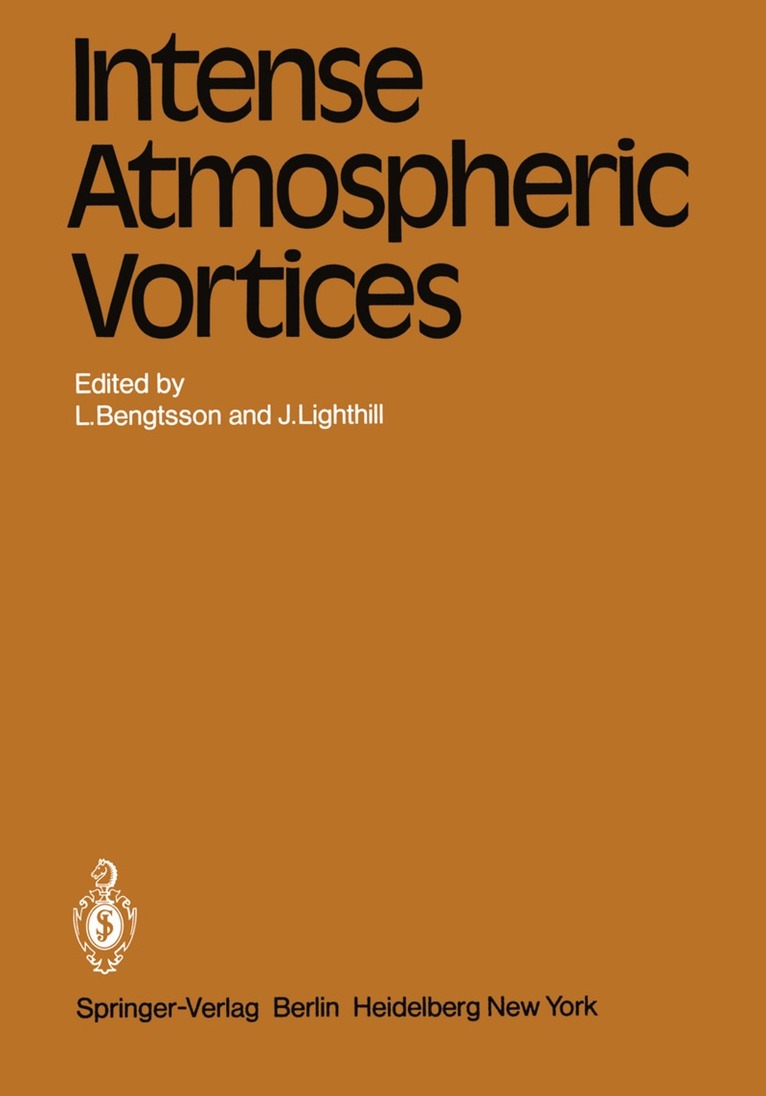
Intense Atmospheric Vortices
Proceedings of the Joint Symposium (IUTAM/IUGG) held at Reading (United Kingdom) July 14–17, 1981
Häftad, Engelska, 1982
1 698 kr
Skickas inom 10-15 vardagar
The concept of vorticity is of central importance in fluid mechanics and the change and variability of atmospheric flow is dominated by transient vortices of different time- and space scales. Of particular importance are the most in- tense vortices such as hurricanes, typhoons and tornadoes which are associated with extreme and hazardous weather events of great concern to society. In recent years the un- derstanding of these phenomena has grown due to increased and improved surveillance by satellites and aircraft as well as by numerical modelling and simulation, theoretical studies and laboratory experiments. The symposium on "Intense Atmospheric Vortices" was held at the European Centre for Medium Range Weather Forecasts (ECMWF), Reading, England, July 14-17, 1981. The subject area of the Symposium was concerned with observational work, experimental models, theoretical and numerical studies in- volving hurricanes, typhoons, tornadoes and related pheno- mena. The aim was to bring together experts on these meteo- rological processes and on the fundamental fluid-dynamic mechanisms for vorticity intensification from all parts of the world.Thirtyfour scientists participated in the Sympo- sium, including more than half of those leading world ex- perts in the field whom the organizers had invited.
1 064 kr
Skickas inom 10-15 vardagar
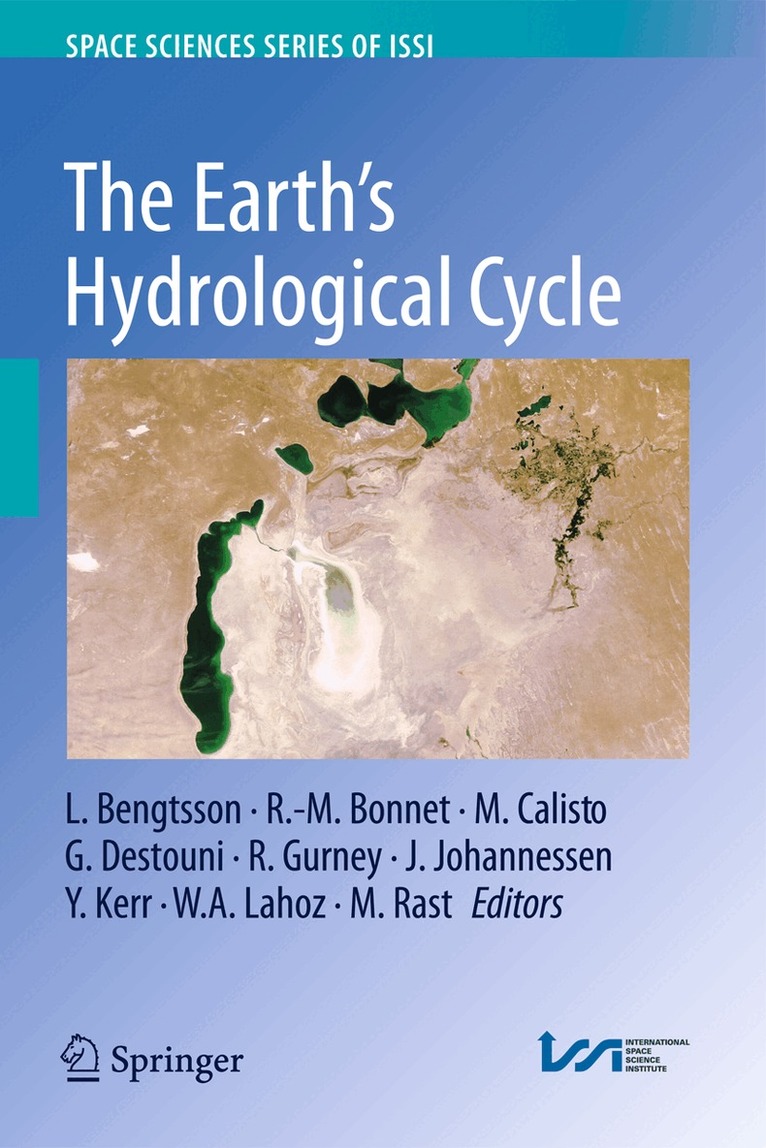
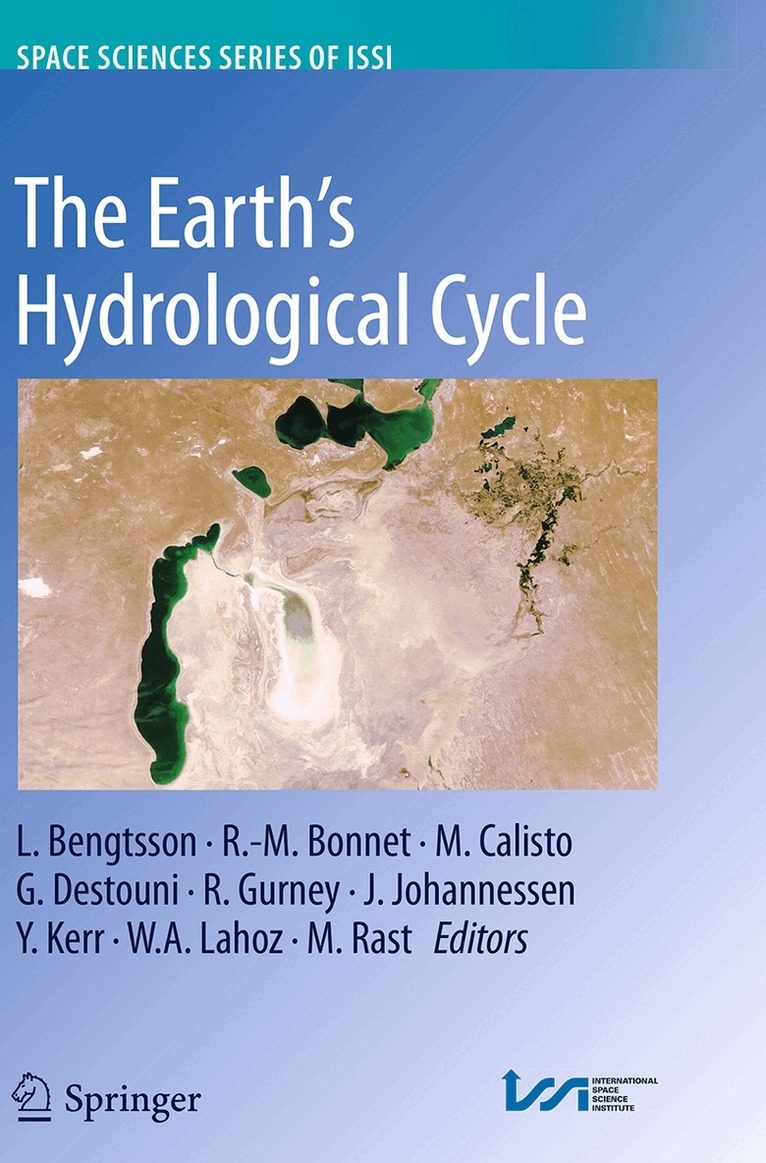
This book gives a comprehensive presentation of our present understanding of the Earth's Hydrological cycle and the problems, consequences and impacts that go with this topic. Water is a central component in the Earth's system. It is indispensable for life on Earth in its present form and influences virtually every aspect of our planet's life support system. On relatively short time scales, atmospheric water vapor interacts with the atmospheric circulation and is crucial in forming the Earth's climate zones. Water vapor is the most powerful of the greenhouse gases and serves to enhance the tropospheric temperature. The dominant part of available water on Earth resides in the oceans. Parts are locked up in the land ice on Greenland and Antarctica and a smaller part is estimated to exist as groundwater. If all the ice over the land and all the glaciers were to melt, the sea level would rise by some 80 m. In comparison, the total amount of water vapor in the atmosphere is small; it amounts to ~ 25 kg/m2, or the equivalent of 25 mm water for each column of air. Yet atmospheric water vapor is crucial for the Earth’s energy balance. The book gives an up to date presentation of the present knowledge.Previously published in Surveys in Geophysics, Volume 35, No. 3, 2014
1 064 kr
Skickas inom 10-15 vardagar
This book gives a comprehensive presentation of our present understanding of the Earth's Hydrological cycle and the problems, consequences and impacts that go with this topic. Water is a central component in the Earth's system. It is indispensable for life on Earth in its present form and influences virtually every aspect of our planet's life support system. On relatively short time scales, atmospheric water vapor interacts with the atmospheric circulation and is crucial in forming the Earth's climate zones. Water vapor is the most powerful of the greenhouse gases and serves to enhance the tropospheric temperature. The dominant part of available water on Earth resides in the oceans. Parts are locked up in the land ice on Greenland and Antarctica and a smaller part is estimated to exist as groundwater. If all the ice over the land and all the glaciers were to melt, the sea level would rise by some 80 m. In comparison, the total amount of water vapor in the atmosphere is small; it amounts to ~ 25 kg/m2, or the equivalent of 25 mm water for each column of air. Yet atmospheric water vapor is crucial for the Earth’s energy balance. The book gives an up to date presentation of the present knowledge.Previously published in Surveys in Geophysics, Volume 35, No. 3, 2014