Laleh Khalili - Böcker
Visar alla böcker från författaren Laleh Khalili. Handla med fri frakt och snabb leverans.
10 produkter
10 produkter
127 kr
Essential reading for the Iran Crisis - what happens when the seas close, and oil stops flowing? 'Urgent and polemical' Financial Times'A brilliant explainer of how the world works' Simon Kuper, author of Chums'The real stuff of the economy - blood, dirt, oil and violence' Dan Davies, author of The Unaccountability Machine'Profound and compelling ... A book that I couldn't put down' Adam Hanieh, author of Crude CapitalismWhether it's pumping oil, mining resources or shipping commodities across oceans, the global economy runs on extraction. Promises of frictionless trade and lucrative speculation are the hallmarks of our era, but the backbone of globalisation is still low-cost labour and rapacious corporate control. Extractive capitalism is what made - and is still making - our unequal world.Professor Laleh Khalili reflects on the hidden stories behind late capitalism, from seafarers abandoned on debt-ridden container ships to the nefarious reach of consultancy firms and the cronyism that drives record-breaking profits. Piercing, wry and constantly revealing, Extractive Capitalism brings vividly to light the dark truths behind the world's most voracious industries.
16 958 kr
Skickas inom 7-10 vardagar
This new four-volume collection of cutting-edge and canonical scholarship counters the oft-cited opinion that studies of Middle Eastern politics are devoid of social scientific theory and method by providing an overview of the state of the scholarship in the field, innovations therein, and the debates that have advanced knowledge in the field.The collection covers the Arab world, from Morocco to the borders of Iran, with the focus primarily on the twentieth century, and especially the post-Second World War era. By choosing a wide array of authors, many of whom are from the region or from the non-Anglophone world, the full breadth of worldwide scholarship on the modern Arab world is on display. The collection defines politics broadly—in line with the most innovative current works in the field of political studies—to include not only politics at the state level, but also the public, social, and popular domains that define and shape (and are in turn defined and shaped by) politics.
Del 27 - Cambridge Middle East Studies
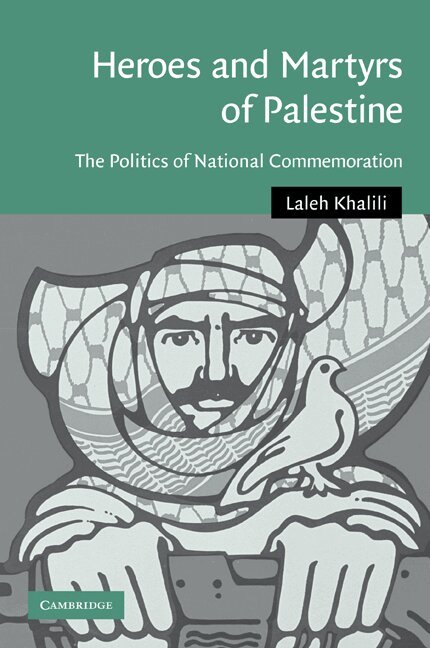
Heroes and Martyrs of Palestine
The Politics of National Commemoration
Häftad, Engelska, 2009
305 kr
Skickas inom 7-10 vardagar
Many decades have passed since the Palestinian national movement began its political and military struggle. In that time, poignant memorials at massacre sites, a palimpsest of posters of young heroes and martyrs, sorrowful reminiscences about lost loved ones, and wistful images of young men and women who fought as guerrillas, have all flourished in Palestinian refugee camps in Lebanon and in the Occupied Palestinian Territories. Heroes and Martyrs of Palestine tells the story of how dispossessed Palestinians have commemorated their past, and how through their dynamic everyday narrations, their nation has been made even without the institutional memory-making of a state. Bringing ethnography to political science, Khalili invites us to see Palestinian nationalism in its proper international context and traces its affinities with Third Worldist movements of its time, while tapping a rich and oft-ignored seam of Palestinian voices, histories, and memories.
Del 27 - Cambridge Middle East Studies
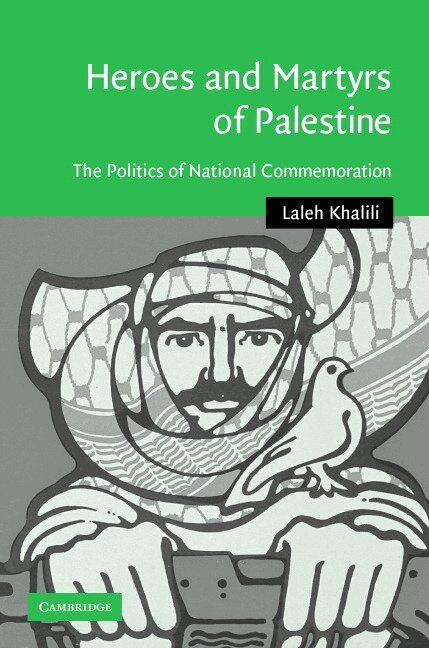
Heroes and Martyrs of Palestine
The Politics of National Commemoration
Inbunden, Engelska, 2007
1 282 kr
Skickas inom 7-10 vardagar
Many decades have passed since the Palestinian national movement began its political and military struggle. In that time, poignant memorials at massacre sites, a palimpsest of posters of young heroes and martyrs, sorrowful reminiscences about lost loved ones, and wistful images of young men and women who fought as guerrillas, have all flourished in Palestinian refugee camps in Lebanon and in the Occupied Palestinian Territories. Heroes and Martyrs of Palestine tells the story of how dispossessed Palestinians have commemorated their past, and how through their dynamic everyday narrations, their nation has been made even without the institutional memory-making of a state. Bringing ethnography to political science, Khalili invites us to see Palestinian nationalism in its proper international context and traces its affinities with Third Worldist movements of its time, while tapping a rich and oft-ignored seam of Palestinian voices, histories, and memories.
1 271 kr
Skickas inom 7-10 vardagar
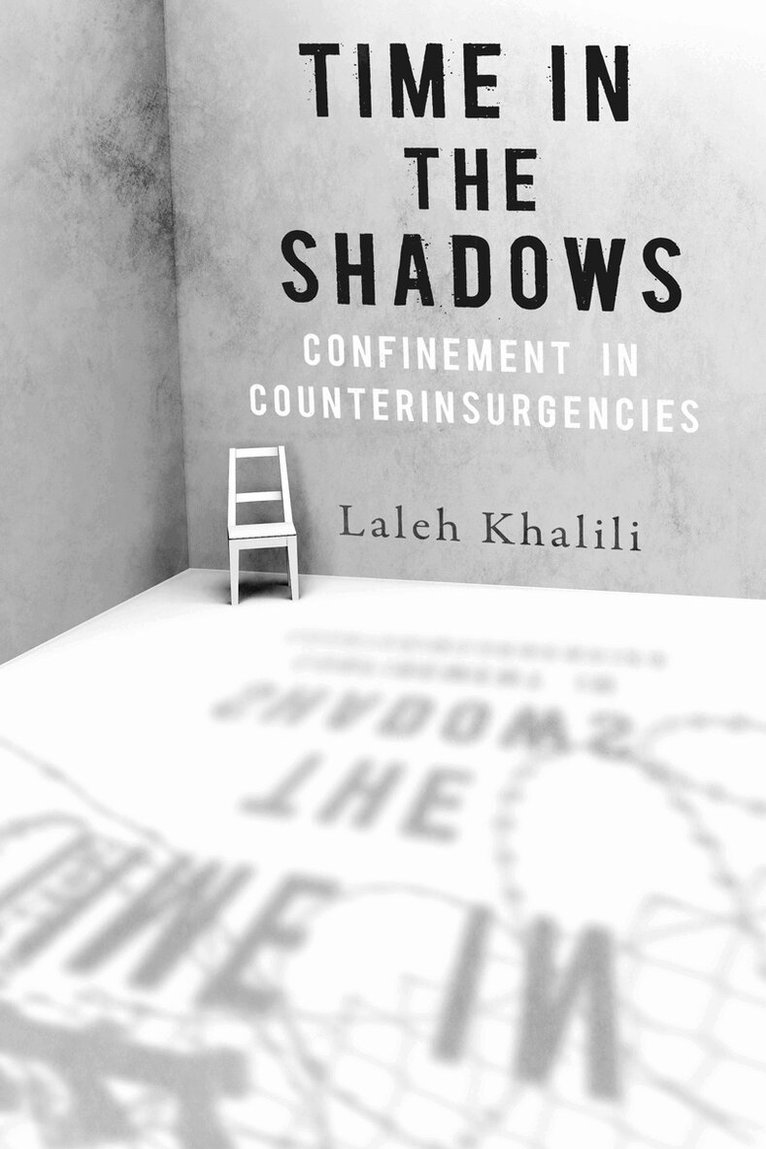
Detention and confinement—of both combatants and large groups of civilians—have become fixtures of asymmetric wars over the course of the last century. Counterinsurgency theoreticians and practitioners explain this dizzying rise of detention camps, internment centers, and enclavisation by arguing that such actions "protect" populations. In this book, Laleh Khalili counters these arguments, telling the story of how this proliferation of concentration camps, strategic hamlets, "security walls," and offshore prisons has come to be.Time in the Shadows investigates the two major liberal counterinsurgencies of our day: Israeli occupation of Palestine and the U.S. War on Terror. In rich detail, the book investigates Abu Ghraib, Guantánamo Bay, CIA black sites, the Khiam Prison, and Gaza, among others, and links them to a history of colonial counterinsurgencies from the Boer War and the U.S. Indian wars, to Vietnam, the British small wars in Malaya, Kenya, Aden and Cyprus, and the French pacification of Indochina and Algeria.Khalili deftly demonstrates that whatever the form of incarceration—visible or invisible, offshore or inland, containing combatants or civilians—liberal states have consistently acted illiberally in their counterinsurgency confinements. As our tactics of war have shifted beyond slaughter to elaborate systems of detention, liberal states have warmed to the pursuit of asymmetric wars. Ultimately, Khalili confirms that as tactics of counterinsurgency have been rendered more "humane," they have also increasingly encouraged policymakers to willingly choose to wage wars.
309 kr
Skickas
Detention and confinement—of both combatants and large groups of civilians—have become fixtures of asymmetric wars over the course of the last century. Counterinsurgency theoreticians and practitioners explain this dizzying rise of detention camps, internment centers, and enclavisation by arguing that such actions "protect" populations. In this book, Laleh Khalili counters these arguments, telling the story of how this proliferation of concentration camps, strategic hamlets, "security walls," and offshore prisons has come to be.Time in the Shadows investigates the two major liberal counterinsurgencies of our day: Israeli occupation of Palestine and the U.S. War on Terror. In rich detail, the book investigates Abu Ghraib, Guantánamo Bay, CIA black sites, the Khiam Prison, and Gaza, among others, and links them to a history of colonial counterinsurgencies from the Boer War and the U.S. Indian wars, to Vietnam, the British small wars in Malaya, Kenya, Aden and Cyprus, and the French pacification of Indochina and Algeria.Khalili deftly demonstrates that whatever the form of incarceration—visible or invisible, offshore or inland, containing combatants or civilians—liberal states have consistently acted illiberally in their counterinsurgency confinements. As our tactics of war have shifted beyond slaughter to elaborate systems of detention, liberal states have warmed to the pursuit of asymmetric wars. Ultimately, Khalili confirms that as tactics of counterinsurgency have been rendered more "humane," they have also increasingly encouraged policymakers to willingly choose to wage wars.
231 kr
Skickas inom 7-10 vardagar
1 100 kr
Skickas inom 7-10 vardagar
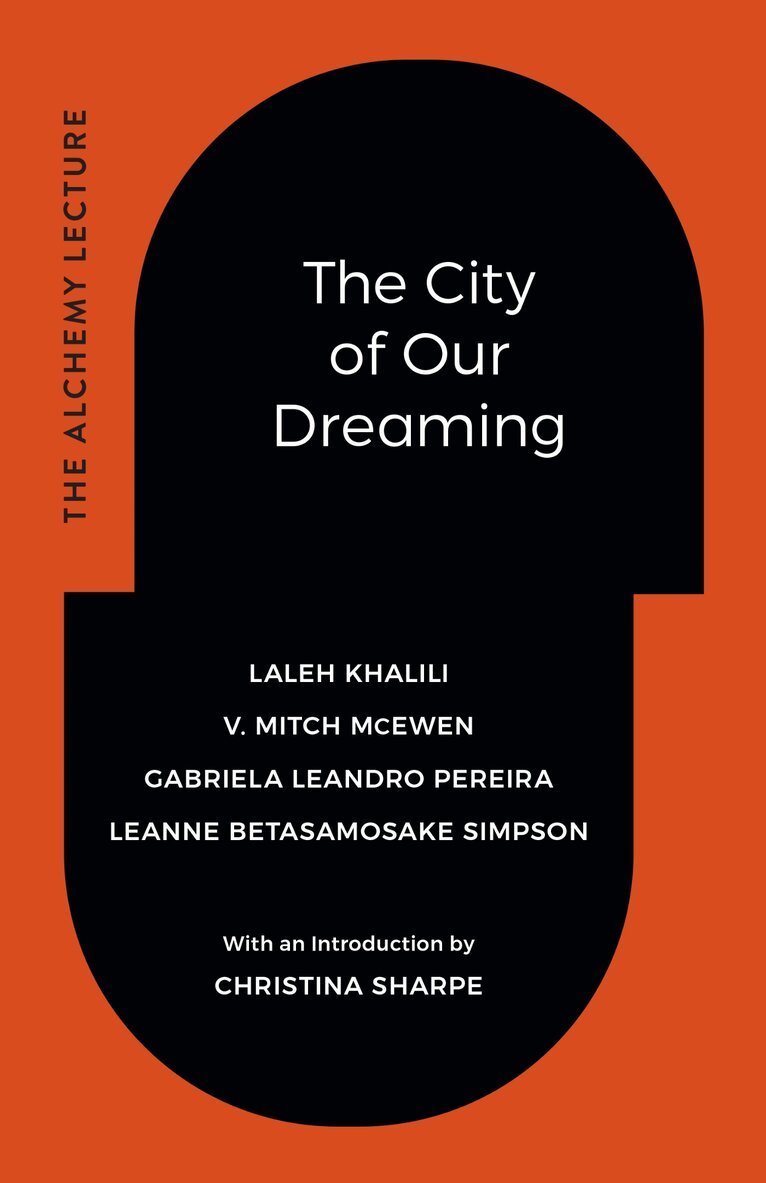
The second annual Alchemy Lecture brought together four “Alchemists”—thinkers and practitioners working across disciplines and geographies—to share a constellation of ideas for the future. Their urgent, poignant and inventive lectures comprise The City of Our Dreaming, which shares their ideas for cities and how to shape them according to community needs. Together, V. Mitch McEwen, Laleh Khalili, Gabriela Leandro Pereira, and Michi Saagiig Nishnaabeg writer and musician Leanne Betasamosake Simpson, offer new models for crafting architectures of freedom in disparate imaginative spaces. From suggesting a city modeled on buoyancy that reconsiders displacement and a dream of radical kinship and bonds through reciprocal giving, to “projects paved by the audacity to inhabit” that are built from dreams—the site from which all Black emancipation begins—and the ways collectives form at the thresholds between things, The City of our Dreaming is a clarion calls for new conceptions of city life. The Alchemists imagine the architectures and infrastructures that make possible, inevitable and irresistible gestures of freedom, modes of sustenance, and the necessity and pleasure of breaking bread, together.
270 kr
Skickas inom 7-10 vardagar
149 kr
Skickas inom 7-10 vardagar
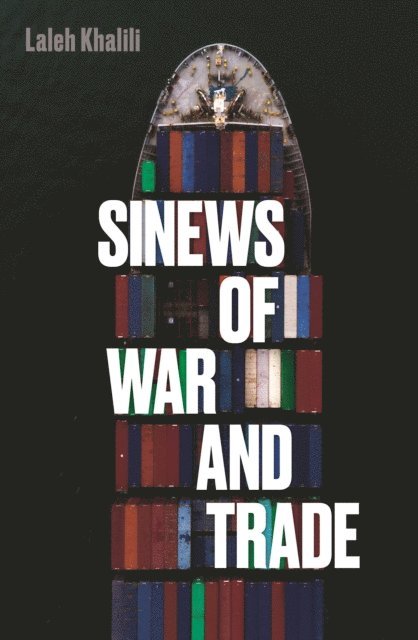
On the map of global trade, China is now the factory of the world. A parade of ships full of raw commodities-iron ore, coal, oil-arrive in its ports, and fleets of container ships leave with manufactured goods in all directions. The oil that fuels China's manufacturing comes primarily from the Arabian peninsula. Much of the material shipped from China are transported through the ports of Arabian peninsula, Dubai's Jabal Ali port foremost among them. China's 'maritime silk road' flanks the peninsula on all sides.Sinews of War and Trade is the story of what the making of new ports and shipping infrastructure has meant not only for the Arabian peninsula itself, but for the region and the world beyond. The book is an account of how maritime transportation is not simply an enabling companion of trade, but central to the very fabric of global capitalism. The ports that serve maritime trade, logistics, and hydrocarbon transport create racialised hierarchies of labour, engineer the lived environment, aid the accumulation of capital regionally and globally, and carry forward colonial regimes of profit, law and administration.