Larry Eugene Rivers - Böcker
Visar alla böcker från författaren Larry Eugene Rivers. Handla med fri frakt och snabb leverans.
6 produkter
6 produkter
1 199 kr
Skickas inom 7-10 vardagar
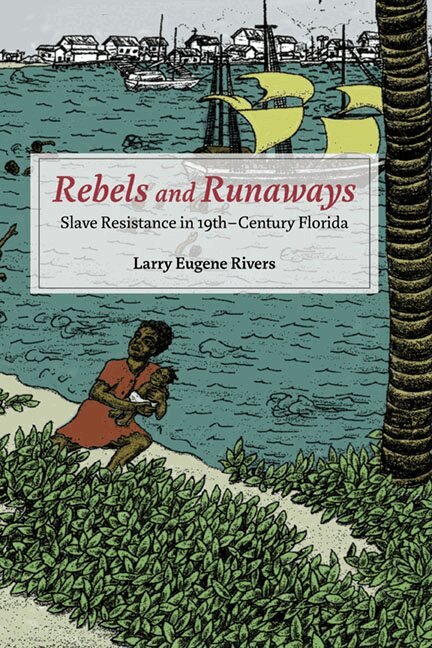
This gripping study examines slave resistance and protest in antebellum Florida and its local and national impact from 1821 to 1865. Using a variety of sources such as slaveholders' wills and probate records, ledgers, account books, court records, oral histories, and numerous newspaper accounts, Larry Eugene Rivers discusses the historical significance of Florida as a runaway slave haven dating back to the seventeenth century and explains Florida's unique history of slave resistance and protest. In moving detail, Rivers illustrates what life was like for enslaved blacks whose families were pulled asunder as they relocated from the Upper South to the Lower South to an untamed place such as Florida, and how they fought back any way they could to control small parts of their own lives. Against a smoldering backdrop of violence, this study analyzes the various degrees of slave resistance--from the perspectives of both slave and master--and how they differed in various regions of antebellum Florida. In particular, Rivers demonstrates how the Atlantic world view of some enslaved blacks successfully aided their escape to freedom, a path that did not always lead North but sometimes farther South to the Bahama Islands and Caribbean. Identifying more commonly known slave rebellions such as the Stono, Louisiana, Denmark (Telemaque) Vesey, Gabriel, and the Nat Turner insurrections, Rivers argues persuasively that the size, scope, and intensity of black resistance in the Second Seminole War makes it the largest sustained slave insurrection ever to occur in American history.Meticulously researched, Rebels and Runaways offers a detailed account of resistance, protest, and violence as enslaved blacks fought for freedom.
319 kr
Skickas inom 7-10 vardagar
This gripping study examines slave resistance and protest in antebellum Florida and its local and national impact from 1821 to 1865. Using a variety of sources such as slaveholders' wills and probate records, ledgers, account books, court records, oral histories, and numerous newspaper accounts, Larry Eugene Rivers discusses the historical significance of Florida as a runaway slave haven dating back to the seventeenth century and explains Florida's unique history of slave resistance and protest. In moving detail, Rivers illustrates what life was like for enslaved blacks whose families were pulled asunder as they relocated from the Upper South to the Lower South to an untamed place such as Florida, and how they fought back any way they could to control small parts of their own lives. Against a smoldering backdrop of violence, this study analyzes the various degrees of slave resistance--from the perspectives of both slave and master--and how they differed in various regions of antebellum Florida. In particular, Rivers demonstrates how the Atlantic world view of some enslaved blacks successfully aided their escape to freedom, a path that did not always lead North but sometimes farther South to the Bahama Islands and Caribbean. Identifying more commonly known slave rebellions such as the Stono, Louisiana, Denmark (Telemaque) Vesey, Gabriel, and the Nat Turner insurrections, Rivers argues persuasively that the size, scope, and intensity of black resistance in the Second Seminole War makes it the largest sustained slave insurrection ever to occur in American history.Meticulously researched, Rebels and Runaways offers a detailed account of resistance, protest, and violence as enslaved blacks fought for freedom.
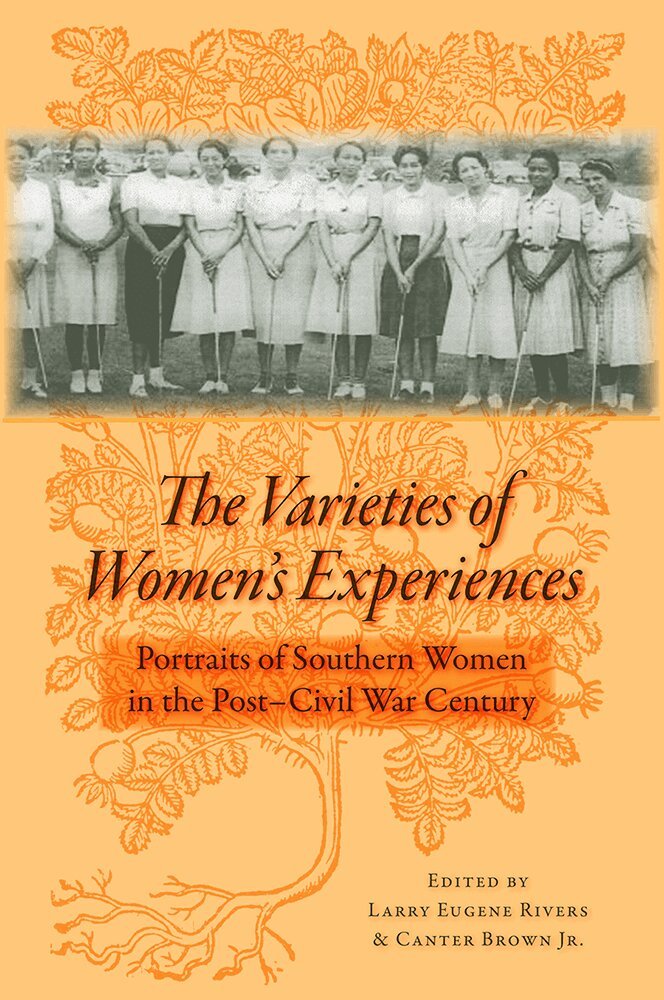
Varieties of Women's Experiences
Portraits of Southern Women in the Post-Civil War Century
Häftad, Engelska, 2010
323 kr
Skickas inom 10-15 vardagar
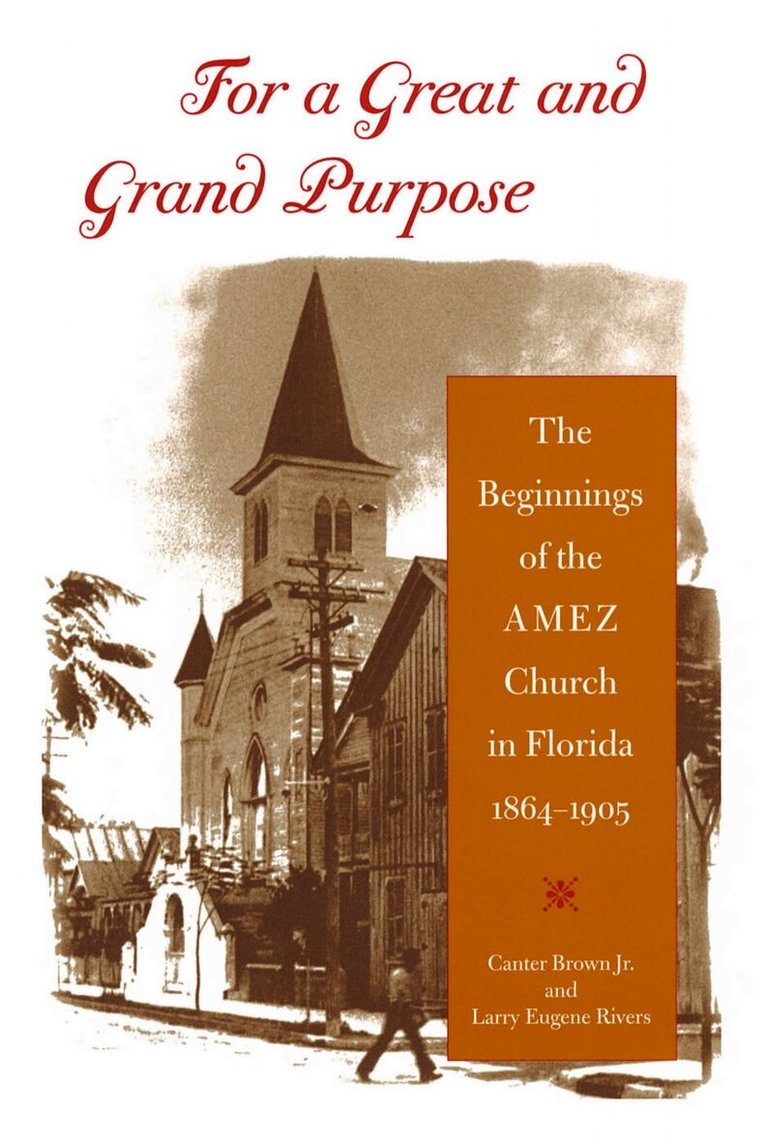
For a Great and Grand Purpose
The Beginnings of the AMEZ Church in Florida, 1864-1905
Häftad, Engelska, 2025
287 kr
Skickas inom 10-15 vardagar
The story of a church that became influential within the Black community in Florida after the Civil WarThis history of the African Methodist Episcopal Zion (AMEZ) Church in Florida tells how dedicated members of one of the oldest and most prominent black religious institutions created a forceful presence within the African-American community—against innumerable odds and constant challenges.The African Methodist Episcopal Zion denomination established an official presence in the state one year before its better-known cousin and rival, the African Methodist Episcopal Church. When Connecticut native Wilbur Garrison Strong arrived in Key West in 1864, he stood out as the first black ordained minister in all of peninsular Florida. He brought with him the northern Methodist tradition of joyful praise and preaching, an ethos of a plain and simple gospel that emphasized "righteous living" and an unbending commitment to emancipation and hope. With Key West under the control of Union forces during much of the Civil War, slaves and free Black people were able to express their desire for independence from white churches more easily there than throughout the rest of the state, and they gravitated to the church that Strong established.During its formative years, the AMEZ became one of the first mainline churches to ordain women to full clerical status. Its ministers commanded great strength in certain cities, and its membership included more of the urban and middle-class population than was typical for southern religious organizations, which were predominantly rural. At its zenith, the AMEZ was one of the largest African-American churches in the state. But it faced difficulties—gender issues, idiosyncratic leadership, rivalries between local ministers and Episcopal authorities, and political dissension at a point when the church was attempting to address larger social issues. In addition, the scourge of hurricanes and yellow fever and citrus crop freezes affected church fortunes. By 1905, when the governor urged the expulsion of all African-Americans from Florida and when state laws mandated racial segregation on public transportation, the era of lynching, discrimination, and disfranchisement already had begun and the period of AMEZ decline had commenced.In this remarkable yet virtually unknown story, the coauthors capture the mood of the post-Civil-War period in Florida, when Black people faced the obstacles and the opportunities that accompanied their new freedom. This work adds significantly to the growing body of literature on African-Americans in Florida and offers keen insights into the nature of institution building within the black community and the greater society.
312 kr
Kommande
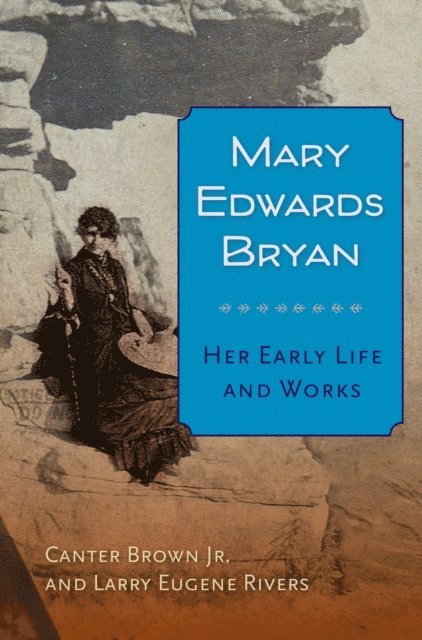
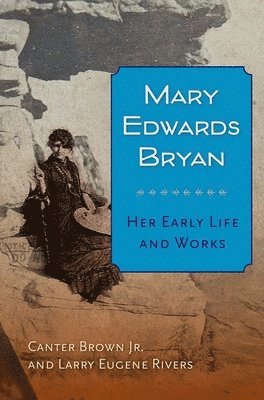
The overlooked story of one of nineteenth-century America's popular writers of mass market fictionThe publication of Manch in 1880 marked the beginning of Mary Edwards Bryan's rise to prominence as one of nineteenth-century America's best-known writers of mass-market fiction. At a time when women were discouraged from having jobs of their own, she made a name for herself as a thoughtful—and well-paid—editor. Despite her cultivated image as editor of Fashion Bazar and Sunny South, Bryan's early life was fraught with obstacles.In this finely crafted literary biography, Canter Brown, Jr. and Larry Eugene Rivers examine Bryan's formative years in Florida, Georgia, and Louisiana, pairing historical insights with selections of her best writing to illustrate how the obstacles she overcame shaped what she wrote. She grew up on a frontier plantation and later lived through the upheavals of secession and war, disruptive affairs with authors and politicians, the tensions of emancipation, and pervading post-war economic disorder.Despite the oppressive men in her life—her abusive father and husband—as well as unabashed limitations regarding the role of women, Bryan ultimately achieved extraordinary literary accomplishments in New York and Atlanta. A story of celebrity amid scandal, success amid disaster, ambition amid despair, this book reintroduces to the world a courageous and creative talent who yearned to express herself while navigating the restrictive morals and conventions of Victorian society.
519 kr
Skickas inom 7-10 vardagar
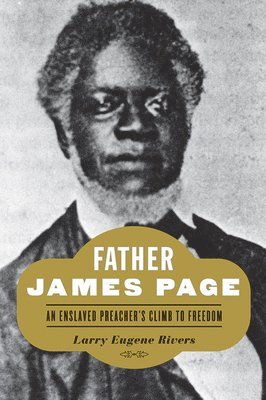
This first-of-its-kind biography tells the story of Rev. James Page, who rose from slavery in the nineteenth century to become a religious and political leader among African Americans as well as an international spokesperson for the cause of racial equality.Winner of the Rembert Patrick Award by The Florida Historical Society, Florida Non-Fiction Book Award by the Florida Book Awards, Harry T. and Harrietter V. Moore Award by the Florida Historical SocietyJames Page spent the majority of his life enslaved—during which time he experienced the death of his free father, witnessed his mother and brother being sold on the auction block, and was forcibly moved 700 miles south from Richmond, VA, to Tallahassee, FL, by his enslaver, John Parkhill. Page would go on to become Parkhill's chief aide on his plantation and, unusually, a religious leader who was widely respected by enslaved men and women as well as by white clergy, educators, and politicians. Rare for enslaved people at the time, Page was literate—and left behind ten letters that focused on his philosophy as an enslaved preacher and, later, as a free minister, educator, politician, and social justice advocate. In Father James Page, Larry Eugene Rivers presents Page as a complex, conflicted man: neither a nonthreatening, accommodationist mouthpiece for white supremacy nor a calculating schemer fomenting rebellion. Rivers emphasizes Page's agency in pursuing a religious vocation, in seeking to exhibit "manliness" in the face of chattel slavery, and in pushing back against the overwhelming power of his enslaver. Post-emancipation, Page continued to preach and to advocate for black self-determination and independence through black land ownership, political participation, and business ownership. The church he founded—Bethel Missionary Baptist Church in Tallahassee—would go on to be a major political force not only during Reconstruction but through today. Based upon numerous archival sources and personal papers, as well as an in-depth interview of James Page and a reflection on his life by a contemporary, this deeply researched book brings to light a fascinating life filled with contradictions concerning gender, education, and the social interaction between the races. Rivers' biography of Page is an important addition, and corrective, to our understanding of black spirituality and religion, political organizing, and civic engagement.