Lawrence D. Bobo – författare
Visar alla böcker från författaren Lawrence D. Bobo. Handla med fri frakt och snabb leverans.
3 produkter
3 produkter
2 617 kr
Skickas inom 5-8 vardagar
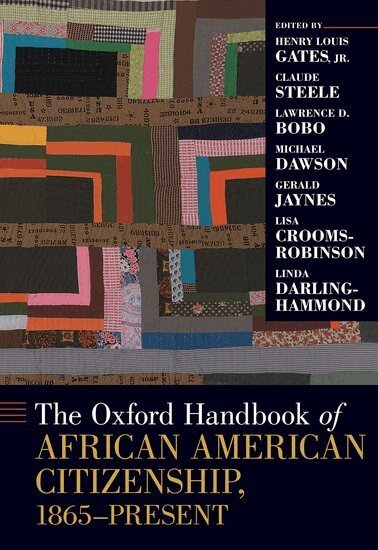
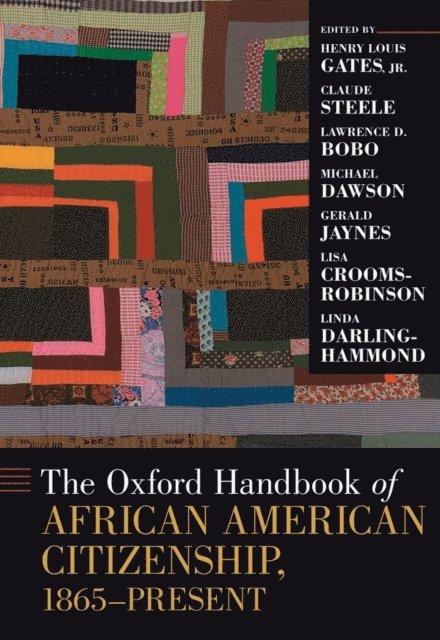
When newly-liberated African American slaves attempted to enter the marketplace and exercise their rights as citizens of the United States in 1865, few, if any, Americans expected that, a century and a half later, the class divide between black and white Americans would be as wide as it is today. The United States has faced several potential key turning points in the status of African Americans over the course of its history, yet at each of these points the prevailing understanding of African Americans and their place in the economic and political fabric of the country was at best contested and resolved on the side of second-class citizenship. The Oxford Handbook of African American Citizenship, 1865-Present seeks to answer the question of what the United States would look like today if, at the end of the Civil War, freed slaves had been granted full political, social and economic rights. It does so by tracing the historical evolution of African American experiences, from the dawn of Reconstruction onward, through the perspectives of sociology, political science, law, economics, education and psychology. As a whole, the book is the first systematic study of the gap between promise and performance of African Americans since 1865. Over the course of thirty-four chapters, written by some of the most eminent scholars of African American studies and across every major social discipline, this Handbook presents a full and powerful portrait of the particular hurdles faced by African Americans and the distinctive contributions African Americans have made to the development of U.S. institutions and culture. As such, it tracks where African Americans have been in order to better illuminate the path ahead.
Prejudice in Politics
Group Position, Public Opinion, and the Wisconsin Treaty Rights Dispute
Inbunden, Engelska, 2006
600 kr
Skickas inom 10-15 vardagar
This book presents a sociological study of how and why racial prejudice against members of a minority group comes to shape what happens to important political claims and aspirations of the group. Lawrence Bobo and Mia Tuan explore a lengthy controversy surrounding the fishing, hunting, and gathering rights of the Chippewa Indians in Wisconsin. The controversy started in 1974, when two Chippewa Indians were arrested for off-reservation fishing, and persisted into the 1990s. It involved the efforts of the Chippewa to assert their traditional spearfishing rights, which met with angry, racially charged responses from whites.Bobo and Tuan develop a "group position" perspective on racial attitudes that takes account of the complex interplay of racial stereotypes and negative group feelings as well as the vested interests, collective privileges, and political threats that form the basis of racialized political disputes. They explore whether theories that explain race politics in the case of black-white relations are applicable to understanding Indian-white relations. The book uses a carefully designed survey of public opinion to explore the dynamics of prejudice and political contestation, and to further our understanding of how and why racial prejudice enters into politics in the United States.
407 kr
Skickas inom 10-15 vardagar
This new edition brings fully up-to-date a book widely praised for its clear and objective presentation of changes in American racial attitudes during the second half of the twentieth century.The book retains the division of racial attitudes into principles of equality, government implementation of those principles, and social distance, but adds questions concerning affirmative action and beliefs about sources of inequality. A conceptual section now opens the book, evidence on social desirability has been added, and a new chapter deals with cohort effects and with the impact of income, education, and gender. In key instances, randomized experiments are introduced that test hypotheses more rigorously than is ordinarily possible with survey data. Throughout, the authors have reconsidered earlier ideas and introduced new thinking.