Leila M. Porter - Böcker
Visar alla böcker från författaren Leila M. Porter. Handla med fri frakt och snabb leverans.
4 produkter
4 produkter
1 376 kr
Skickas inom 7-10 vardagar
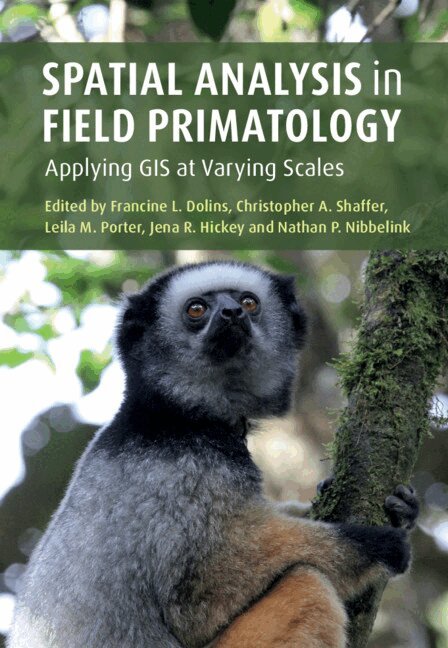
From foraging patterns in a single tree to social interactions across a home range, how primates use space is a key question in the field of primate behavioral ecology. Drawing on the latest advances in spatial analysis tools, this book offers practical guidance on applying geographic information systems (GIS) to central questions in primatology. An initial methodological section discusses niche modelling, home range analysis and agent-based modelling, with a focus on remote data collection. Research-based chapters demonstrate how ecologists apply this technology to a suite of topics including: calculating the intensity of use of both range and travel routes, assessing the impacts of logging, mining and hunting, and informing conservation strategies.
586 kr
Skickas inom 7-10 vardagar
From foraging patterns in a single tree to social interactions across a home range, how primates use space is a key question in the field of primate behavioral ecology. Drawing on the latest advances in spatial analysis tools, this book offers practical guidance on applying geographic information systems (GIS) to central questions in primatology. An initial methodological section discusses niche modelling, home range analysis and agent-based modelling, with a focus on remote data collection. Research-based chapters demonstrate how ecologists apply this technology to a suite of topics including: calculating the intensity of use of both range and travel routes, assessing the impacts of logging, mining and hunting, and informing conservation strategies.
2 101 kr
Skickas inom 10-15 vardagar
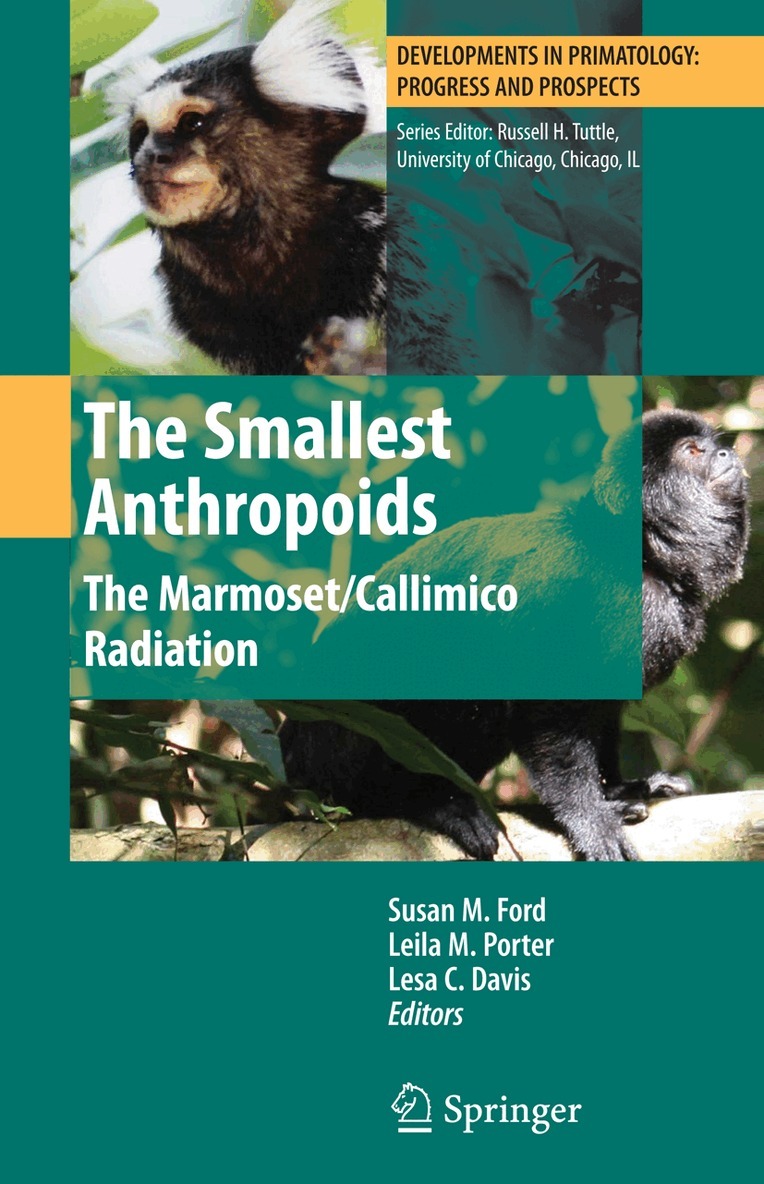
The marmosets and callimicos are diminutive monkeys from the Amazon basin and Atlantic Coastal Forest of South America. The marmosets are the smallest anthropoid primates in the world, ranging in size from approximately 100 to 350 g (Hershkovitz 1977; Soini 1988; Ford and Davis 1992; Araujo et al. 2000); calli- cos are not much bigger, at around 350-540 g (Ford and Davis 1992; Encarnacion and Heymann 1998; Garber and Leigh 2001). Overwhelming genetic evidence, from both nuclear and mitochondrial DNA, now indicates that these taxa represent a unified clade within the callitrichid radiation of New World monkeys, a finding that was unthinkable to all but a few geneticists a decade ago (see review in Cortes- Ortiz, this volume Chap. 2). With increasing evidence that the earliest anthropoids were themselves small bodied (under the 0. 8-1 kg threshold that marks all other living anthropoids; see Ross and Kay 2004), the ecology, behavior, reproductive stresses, and anatomical adaptations of the marmosets and callimicos provide the best living models with which to assess the types of adaptations that may have characterized early anthropoids.When Anthony Rylands' Marmosets and Tamarins: Systematics, Behaviour and Ecology was published in 1993, contributions focused almost entirely on tamarins due to the scarcity of data on marmoset behavior and the almost total lack of kno- edge about the enigmatic callimicos. Fortunately, this has changed (see Fig. 1).
2 101 kr
Skickas inom 10-15 vardagar
The marmosets and callimicos are diminutive monkeys from the Amazon basin and Atlantic Coastal Forest of South America. The marmosets are the smallest anthropoid primates in the world, ranging in size from approximately 100 to 350 g (Hershkovitz 1977; Soini 1988; Ford and Davis 1992; Araujo et al. 2000); calli- cos are not much bigger, at around 350-540 g (Ford and Davis 1992; Encarnacion and Heymann 1998; Garber and Leigh 2001). Overwhelming genetic evidence, from both nuclear and mitochondrial DNA, now indicates that these taxa represent a unified clade within the callitrichid radiation of New World monkeys, a finding that was unthinkable to all but a few geneticists a decade ago (see review in Cortes- Ortiz, this volume Chap. 2). With increasing evidence that the earliest anthropoids were themselves small bodied (under the 0. 8-1 kg threshold that marks all other living anthropoids; see Ross and Kay 2004), the ecology, behavior, reproductive stresses, and anatomical adaptations of the marmosets and callimicos provide the best living models with which to assess the types of adaptations that may have characterized early anthropoids.When Anthony Rylands' Marmosets and Tamarins: Systematics, Behaviour and Ecology was published in 1993, contributions focused almost entirely on tamarins due to the scarcity of data on marmoset behavior and the almost total lack of kno- edge about the enigmatic callimicos. Fortunately, this has changed (see Fig. 1).