Len Scales - Böcker
Visar alla böcker från författaren Len Scales. Handla med fri frakt och snabb leverans.
4 produkter
4 produkter
1 770 kr
Skickas inom 7-10 vardagar
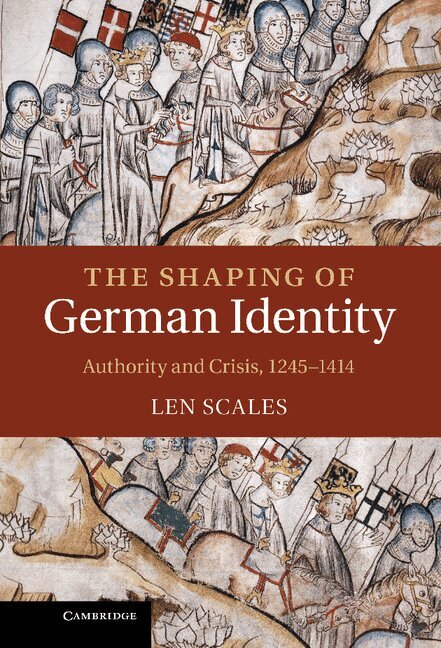
German identity began to take shape in the late Middle Ages during a period of political weakness and fragmentation for the Holy Roman Empire, the monarchy under which most Germans lived. Between the thirteenth and fifteenth centuries, the idea that there existed a single German people, with its own lands, language and character, became increasingly widespread, as was expressed in written works of the period. This book - the first on its subject in any language - poses a challenge to some dominant assumptions of current historical scholarship: that early European nation-making inevitably took place within the developing structures of the institutional state; and that, in the absence of such structural growth, the idea of a German nation was uniquely, radically and fatally retarded. In recounting the formation of German identity in the late Middle Ages, this book offers an important new perspective both on German history and on European nation-making.
550 kr
Skickas inom 7-10 vardagar
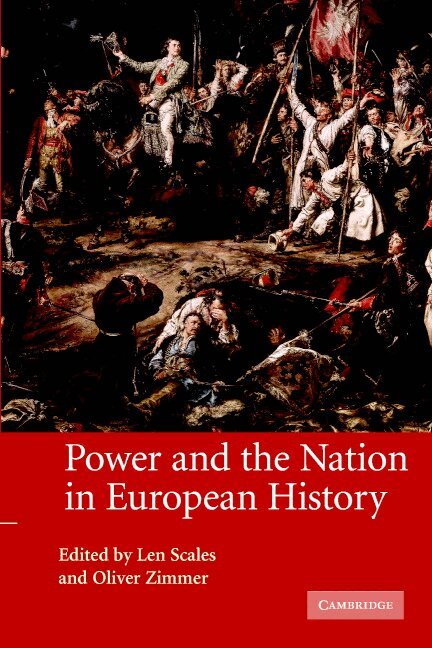
Few would doubt the central importance of the nation in the making and unmaking of modern political communities. The long history of 'the nation' as a concept and as a name for various sorts of 'imagined community' likewise commands such acceptance. But when did the nation first become a fundamental political factor? This is a question which has been, and continues to be, far more sharply contested. A deep rift still separates 'modernist' perspectives, which view the political nation as a phenomenon limited to modern, industrialised societies, from the views of scholars concerned with the pre-industrial world who insist, often vehemently, that nations were central to pre-modern political life also. This book engages with these questions by drawing on the expertise of leading medieval, early modern and modern historians.
1 485 kr
Skickas inom 7-10 vardagar
Few would doubt the central importance of the nation in the making and unmaking of modern political communities. The long history of 'the nation' as a concept and as a name for various sorts of 'imagined community' likewise commands such acceptance. But when did the nation first become a fundamental political factor? This is a question which has been, and continues to be, far more sharply contested. A deep rift still separates 'modernist' perspectives, which view the political nation as a phenomenon limited to modern, industrialised societies, from the views of scholars concerned with the pre-industrial world who insist, often vehemently, that nations were central to pre-modern political life also. This book engages with these questions by drawing on the expertise of leading medieval, early modern and modern historians.
550 kr
Skickas inom 7-10 vardagar
German identity began to take shape in the late Middle Ages during a period of political weakness and fragmentation for the Holy Roman Empire, the monarchy under which most Germans lived. Between the thirteenth and fifteenth centuries, the idea that there existed a single German people, with its own lands, language and character, became increasingly widespread, as was expressed in written works of the period. This book - the first on its subject in any language - poses a challenge to some dominant assumptions of current historical scholarship: that early European nation-making inevitably took place within the developing structures of the institutional state; and that, in the absence of such structural growth, the idea of a German nation was uniquely, radically and fatally retarded. In recounting the formation of German identity in the late Middle Ages, this book offers an important new perspective both on German history and on European nation-making.