• Fri frakt över 249 kr
  • •
  • Snabba leveranser
  • •
  • Billiga böcker
Kundservice

Du är på sajten för privatpersoner.

Företag, bibliotek eller offentlig verksamhet?

Du handlar på classic.bokus.com, där alla dina funktioner finns intakta.
Till classic.bokus.com
Bokus logotyp. Gå till startsidan.
  • Erbjudanden
  • Nyheter
  • Student
  • Topplistor
  • Barn & ungdom
  • Bokus Play
  • E-böcker
  • Pocketböcker
  • Spel & pussel

10% rabatt på allt med kod: NYSTART10 →

Sidfot

Mina sidor

    Hjälp

    • Kundservice
    • Vanliga frågor och svar
    • Frakt och leverans
    • Retur vid ångerrätt
    • Reklamera vara
    • Betalning
    • Köpvillkor
    • Allmänna villkor
    • Information om webbplatsens tillgänglighet

    Om Bokus

    • Om oss
    • Pressrum
    • För studenter
    • För företag
    • För bibliotek och offentlig verksamhet
    • För leverantörer
    • Hållbarhet

    Populärt

    • Aktuella erbjudanden
    • Presentkort
    • Studentlitteratur
    • Nya böcker
    • Topplistor
    • Signerade böcker
    • Engelska böcker

    Inspiration

    • Boktips
    • BookTok
    • Populära bokserier
    • Barnbokskaraktärer
    • Populära författare
    Logotyp för Bokus
    Följ oss på Facebook (extern länk)Följ oss på Instagram (extern länk)Följ oss på YouTube (extern länk)Följ oss på TikTok (extern länk)
    bokus @ CookiesAnpassa cookiesIntegritetspolicyKöpvillkor
    Till Citymail hemsida (extern länk)Till Budbee hemsida (extern länk)Till Postnord hemsida (extern länk)Till Schenker hemsida (extern länk)Till Early Bird hemsida (extern länk)Till Walleys hemsida (extern länk)
    1. Historia och arkeologi
    2. Historia
    3. Europas historia

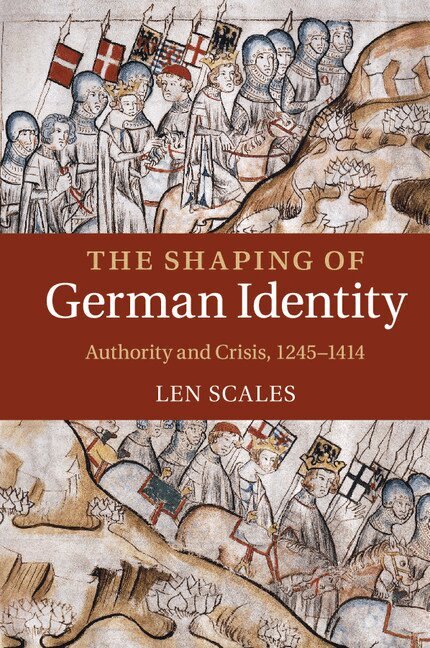
    The Shaping of German Identity

    Authority and Crisis, 1245-1414

    AvLen Scales

    Häftad, Engelska, 2015

    587 kr

    Beställningsvara. Skickas inom 10-15 vardagar. Fri frakt över 249 kr.

    Fler format och utgåvor

    Inbunden

    1 900 kr

    Beskrivning

    German identity began to take shape in the late Middle Ages during a period of political weakness and fragmentation for the Holy Roman Empire, the monarchy under which most Germans lived. Between the thirteenth and fifteenth centuries, the idea that there existed a single German people, with its own lands, language and character, became increasingly widespread, as was expressed in written works of the period. This book - the first on its subject in any language - poses a challenge to some dominant assumptions of current historical scholarship: that early European nation-making inevitably took place within the developing structures of the institutional state; and that, in the absence of such structural growth, the idea of a German nation was uniquely, radically and fatally retarded. In recounting the formation of German identity in the late Middle Ages, this book offers an important new perspective both on German history and on European nation-making.

    Produktinformation

    • Utgivningsdatum:2015-07-02
    • Mått:153 x 230 x 33 mm
    • Vikt:930 g
    • Format:Häftad
    • Språk:Engelska
    • Antal sidor:636
    • Förlag:Cambridge University Press
    • ISBN:9781107460348

    Utforska kategorier

    • Europas historia inom Historia och arkeologi

    Mer om författaren

    Len Scales is a Lecturer in the Department of History at Durham University. He has published widely both on late medieval German history and on the history of peoples and nations in medieval Europe. He is the editor (with Oliver Zimmer) of Power and the Nation in European History (Cambridge, 2005).

    Recensioner i media

    'This is a lucid and incisive analysis of late medieval German identity in its wider European context. Based on an impressive command of the sources, Len Scales argues that the very weakness of monarchy within the Holy Roman Empire accounts for the relative strength of national sentiment. His conclusions transform how we see the origins of modern European nations.' Peter H. Wilson, University of Hull

    Innehållsförteckning

    • Introduction: German questions; 1. Modern history: inventing the medieval German nation; 2. Ruled out: monarchy, government and 'state' in Germany; 3. Realm of imagination: communicating power after the Hohenstaufen; 4. Shades of a kingdom: in search of a German political community; 5. The matter of Rome: universalising political identities; 6. Roman empire, German nation: the German imperial tradition; 7. Trojans, Giants and other Germans: peoplehoods forgotten, remembered and relocated; 8. Rome's Barbarians: accounting for the Germans; 9. East: applying identities; 10. Being German (I): place and name; 11. Being German (II): language and locality; Conclusion: endings and beginnings; Bibliography.