Loren R. Graham - Böcker
Visar alla böcker från författaren Loren R. Graham. Handla med fri frakt och snabb leverans.
8 produkter
8 produkter
210 kr
Skickas inom 7-10 vardagar
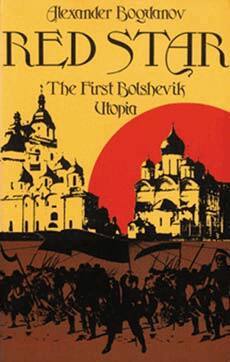
"[A] surprisingly moving story." —The New Yorker"Bogdanov's novels reveal a great deal about their fascinating author, about his time and, ironically, ours, and about the genre of utopia as well as his contribution to it." —Slavic Review"Bogdanov's imaginative predictions for his utopia are both technological and social . . . Even more farsighted are [his] anxious forebodings about the limits and costs of the utopian future." —Science Fiction Studies"The contemporary reader will marvel at [Bogdanov's] foresight: nuclear fusion and propulsion, atomic weaponry and fallout, computers, blood transfusions, and (almost) unisexuality." —ChoiceA communist society on Mars, the Russian revolution, and class struggle on two planets is the subject of this arresting science fiction novel by Alexander Bogdanov (1873–1928), one of the early organizers and prophets of the Russian Bolshevik party. The red star is Mars, but it is also the dream set to paper of the society that could emerge on earth after the dual victory of the socialist and scientific-technical revolutions. While portraying a harmonious and rational socialist society, Bogdanov sketches out the problems that will face industrialized nations, whether socialist or capitalist.
230 kr
Skickas inom 7-10 vardagar
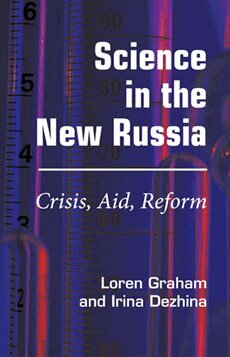
The Russian science establishment was one of the largest in the world, boasting many Nobel prizes, a world-leading space program, and famous schools in mathematics, physics, and other fields. However, when the Soviet Union collapsed in 1991, the major financial supports for the scientific community were eliminated, with resulting "brain drain." The subsequent expansion of capitalism and globalization revealed that Russian science was ill adapted to compete with other countries in high technology. Science in the New Russia tells the dramatic story of the near collapse of Russian science in the mid-1990s and of subsequent domestic and international efforts to reform and reenergize scientific activity in Russia.
434 kr
Skickas inom 10-15 vardagar
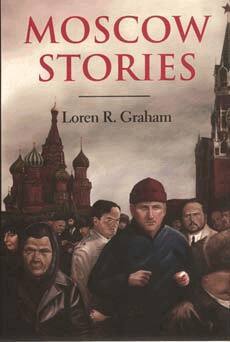
"Graham has brilliantly encapsulated and interwoven the major features of Soviet and post-Soviet history in his riveting stories. . . . a splendid and extraordinary work." —Edward Grant, author of God and Reason in the Middle Ages"A very lively read, indeed a real page turner . . . Graham's discussion of pressing ethical dilemmas displays a sureness of hand and a refreshing candor about his own struggles with the issues." —Susan Solomon, University of TorontoThe distinguished American historian of Russian and Soviet science Loren R. Graham recounts with warmth and wit his experiences during 45 years of traveling and researching in the Soviet Union and post-Soviet Russia, from 1960 to 2005. Present for many historic events during this period, Graham writes not as a political correspondent or an analyst, but as an ordinary American living through these years alongside Russian friends and critics. Graham befriended some of the leading scientists and politicians in Russia, but his most touching stories concern average Russians with whom he lived, worked, suffered, and exchanged views. Graham also writes of the ethical questions he confronted, such as the tension between independence of thought and political loyalty. Finally, he depicts the ways in which Russia has changed—visually, politically, and ideologically—during the last 15 years. These gripping, sometimes humorous, always deeply personal stories will engage and inform all readers with an interest in Russia during this tumultuous period of history.
489 kr
Skickas inom 3-6 vardagar
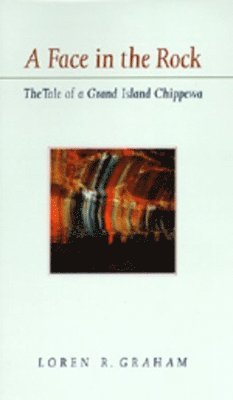
Eight miles long and four miles wide, Grand Island lies off the south shore of Lake Superior. It was once home to a sizable community of Chippewa Indians who lived in harmony with the land and with each other. Their tragic demise began early in the nineteenth century when their fellow tribesmen from the mainland goaded them into waging war against rival Sioux. The war party was decimated; only one young brave, Powers of the Air, lived to tell the story that celebrated the heroism of his band and formed the basis of the legend that survives today. Distinguished historian Loren R. Graham has spent more than forty years researching and reconstructing the poignant tale of Powers of the Air and his people. "A Face in the Rock" is an artful melding of human history and natural history; it is a fascinating narrative of the intimate relation between place and people. Powers of the Air lived to witness the desecration of Grand Island by the fur and logging industries, the Christianization of the tribe, and the near total loss of the Chippewa language, history, and culture.Graham charts the plight of the Chippewa as white culture steadily encroaches, forcing the native people off the island and dispersing their community on the mainland. The story ends with happier events of the past two decades, including the protection of Grand Island within the National Forest system, and the resurgence of Chippewa culture.
360 kr
Skickas inom 7-10 vardagar
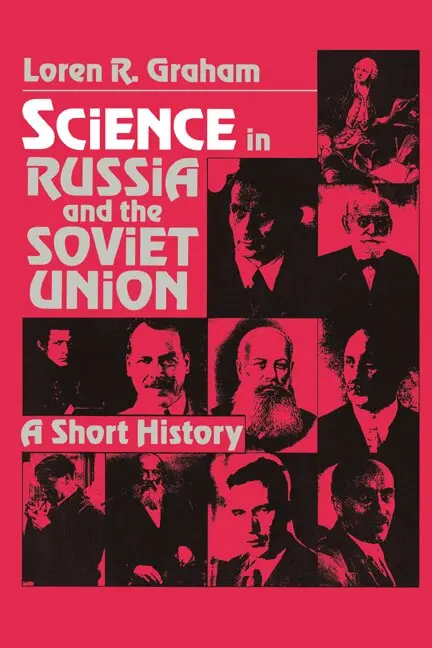
By the 1980s the Soviet scientific establishment had become the largest in the world, but very little of its history was known in the West. What has been needed for many years in order to fill that gap in our knowledge is a history of Russian and Soviet science written for the educated person who would like to read one book on the subject. This book has been written for that reader. The history of Russian and Soviet science is a story of remarkable achievements and frustrating failures. That history is presented here in a comprehensive form, and explained in terms of its social and political context. Major sections include the tsarist period, the impact of the Russian Revolution, the relationship between science and Soviet society, and the strengths and weaknesses of individual scientific disciplines. The book also discusses the changes brought to science in Russia and other republics by the collapse of communism in the late 1980s and early 1990s.
898 kr
Skickas inom 3-6 vardagar
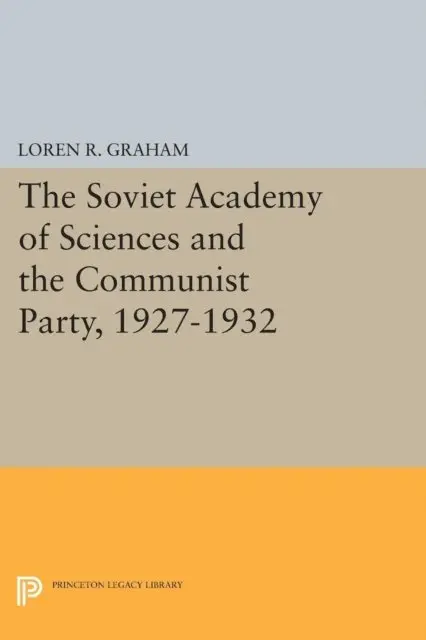
No other research organization dominates the field of science in its country to the degree that the Soviet Academy of Sciences does. The coming to power of the Bolsheviks in 1917 presented Russian science with a new governmental attitude toward the place of science in national life. The Soviet Union's first five-year plan, the period of this study, was the crucial period for the Academy. During this time the Academy was transformed. Between 1927 and 1932 important decisions were reached by Soviet leaders concerning the organization, control, and planning of science; the role of science in the national economy, the position of the individual scientist, and the nature of scientific research itself. Originally published in 1967. The Princeton Legacy Library uses the latest print-on-demand technology to again make available previously out-of-print books from the distinguished backlist of Princeton University Press. These editions preserve the original texts of these important books while presenting them in durable paperback and hardcover editions.The goal of the Princeton Legacy Library is to vastly increase access to the rich scholarly heritage found in the thousands of books published by Princeton University Press since its founding in 1905.
2 486 kr
Skickas inom 3-6 vardagar
No other research organization dominates the field of science in its country to the degree that the Soviet Academy of Sciences does. The coming to power of the Bolsheviks in 1917 presented Russian science with a new governmental attitude toward the place of science in national life. The Soviet Union's first five-year plan, the period of this study, was the crucial period for the Academy. During this time the Academy was transformed. Between 1927 and 1932 important decisions were reached by Soviet leaders concerning the organization, control, and planning of science; the role of science in the national economy, the position of the individual scientist, and the nature of scientific research itself. Originally published in 1967. The Princeton Legacy Library uses the latest print-on-demand technology to again make available previously out-of-print books from the distinguished backlist of Princeton University Press. These editions preserve the original texts of these important books while presenting them in durable paperback and hardcover editions.The goal of the Princeton Legacy Library is to vastly increase access to the rich scholarly heritage found in the thousands of books published by Princeton University Press since its founding in 1905.
What Have We Learned About Science and Technology from the Russian Experience?
Inbunden, Engelska, 1998
701 kr
Skickas inom 10-15 vardagar
At the time the Soviet Union broke apart in the late 1980's, it possessed the largest scientific community in the world. The rapid development, in just a few decades, of such an immense scientific establishment—in a social and economic environment strikingly different from the West—presents an unusual opportunity for the world's leading authority on Soviet science to examine how the Russian experience sheds light on the status and character of science and technology throughout the world.The book is organized around five questions, each given its own chapter: "Is Science a Social Construction?" "Are Science and Technology Westernizing Influences?" " How Robust Is Science Under Stress?" " How Willing Are Scientists to Reform Their Own Institutions?" and "Who Should Control Technology?"The author believes that the Russian example reveals in detail both the strengths and the weaknesses of social constructivism. Though many areas of Russian science show the unmistakable influence of social factors, the deviation of the Soviet Union from standard genetics for many years, followed by its eventual restoration, indicates the weakness of social constructivism and illustrates the relationship of science to reality. He further maintains that although science in Russia has been terribly abused, it nonetheless remains strong; it has proven to be much more resilient than most previous observers believed, and, furthermore, is not nearly as directly dependent on political freedom for its vitality as Western analysts maintained.In the final section, the author makes two strong claims. The first comes from an examination of the social constructivist thesis that science is formed by social influences. His conclusion is that Russian science has indeed been influenced in that country in distinct ways, but not always in a fashion that will please radical social constructivists. The second strong claim is that contrary to the view of many Western scholars that science can flourish only in conditions of nurturing freedom, science turns out to be remarkably robust, able to flourish in adverse conditions.