Louise McReynolds - Böcker
Visar alla böcker från författaren Louise McReynolds. Handla med fri frakt och snabb leverans.
8 produkter
8 produkter
1 087 kr
Kommande
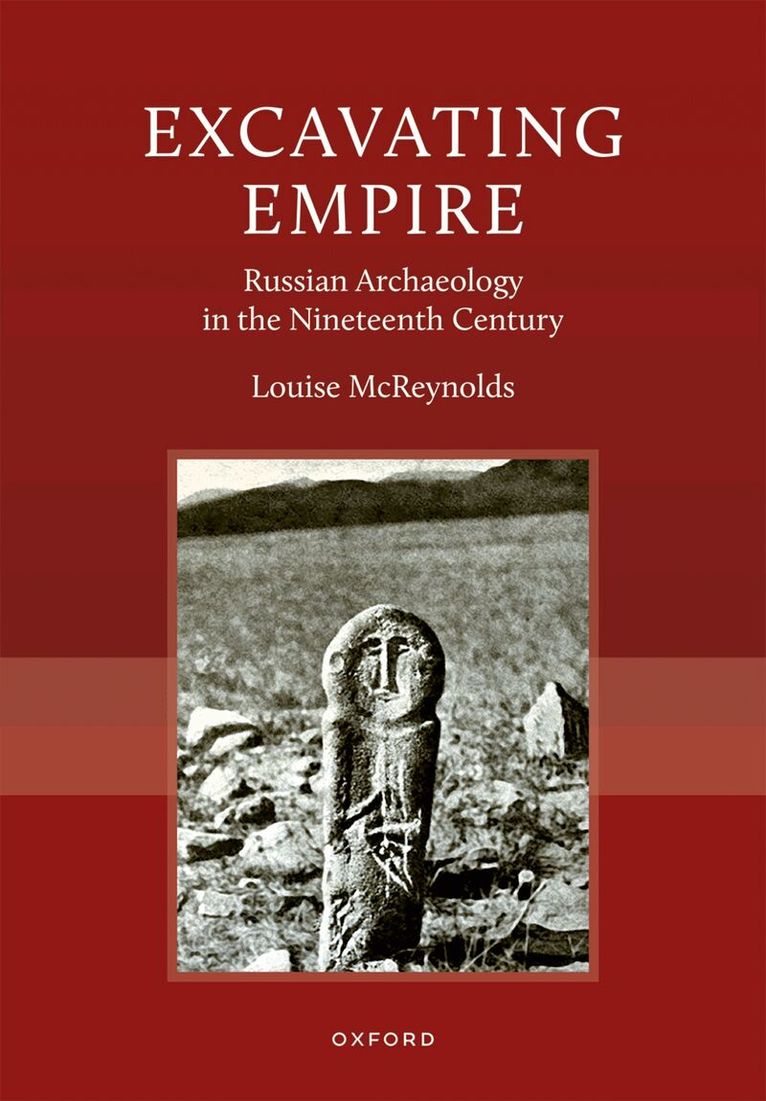
This book tells the story of imperial Russia's archeologists, the pioneering generations of men and women who took their trowels to the burial tumuli, Russia's kurgans, and went digging to unearth a tangible, identifiable past. Determined to establish professional standards, they were producing a new kind of knowledge, one with the potential to furnish insights necessary for an objective evaluation of their collective past. If these ambitious would-be scientists came up short on their ideals of objectivity, they succeeded admirably in inserting their endeavors into all the key issues that Russians were grappling with throughout their long 19th century. This happened because archeological artefacts have forever hinted at promises that they have never been able to keep. Their very materiality imbues those who discover them with the optimism that the past can be faithfully recreated from the bones of ancestors lying among the shards of ceramics and bits of tools and utensils that they had made for themselves. Archeology became a science of society that lay accessible beneath the topsoil or in the crumbling and forgotten ruins to all those who craved knowing more about the long-ago. But these objects are always themselves fated to the interpretations of the personalities who extricate them from the earth. Viewing excavations from these disparate gazes, this book puts the archeologists themselves front and center, quibbling with each other and challenging their Western counterparts. The archeologists themselves came from all social backgrounds, beginning with the antiquarians, noble elites who collected antiquities for their artistic values, with no thought to historical contextualization. Additionally, women, school teachers, and even political exiles all made momentous contributions. The enserfed peasanty likewise played their part, whether it was keeping the archeologists from excavating in lands to which they held the right to farm, or in the talented individuals being plucked from the village to make direct contributions. Reconstructing a woolly mammoth from bones washed up in a Siberian riverbed, and arguing for icons as evidence of social not just theological change, Russia's multi-ethnic archeologists excavated objects equally capable of producing a national as an imperial identity. Everything old became new again.
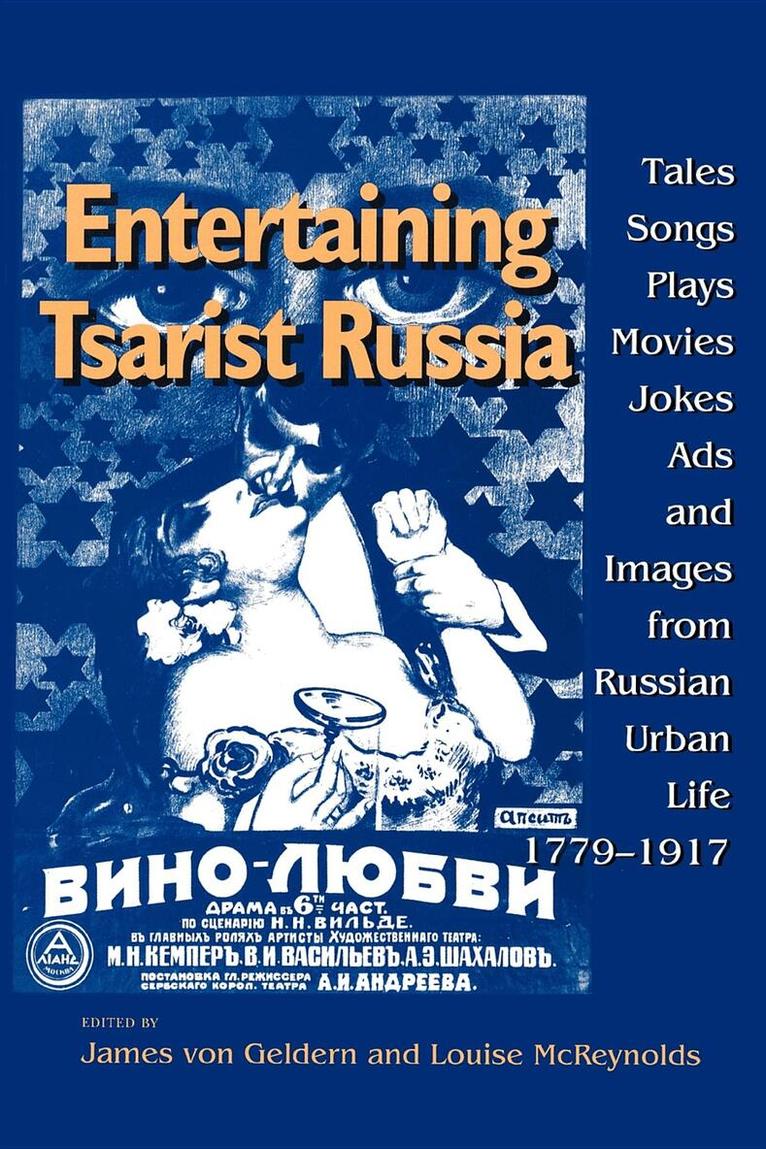
Entertaining Tsarist Russia
Tales, Songs, Plays, Movies, Jokes, Ads, and Images from Russian Urban Life, 1779–1917
Häftad, Engelska, 1998
377 kr
Skickas inom 10-15 vardagar
This anthology introduces readers to Tsarist Russia's emerging popular and commercial urban culture and the individuals and groups that produced and consumed it. The selections translated here illustrate in colorful detail how the experiences and the composition of Russian society and culture evolved from the late eighteenth century through the 1917 revolution, in response to economic, technological, and political changes. Fortunetelling and etiquette manuals, thieves' tales, children's literature, popular songs, war stories, women's novels, satires of life in America, and vaudeville skits are just a few of the genres represented.
477 kr
Skickas inom 7-10 vardagar
In this lively account of the rise of a commercial newspaper industry in imperial Russia, Louise McReynolds explores how the mass-circulation press created a forum for popular opinion advocating political change. From the Great Reforms of Tsar Alexander II in 1855 to the Bolsheviks' shut-down of the newspapers in 1917, she chronicles the exploits of publishers and editors, writers and readers. Arguing that this prosperous industry both expressed and shaped the development of ideas among new social groups, McReynolds provides insight into the growth in Russia of a fragile pluralism characteristic of modern societies. Her discussion of the relationship between communications and politics, which draws especially on Jurgen Habermas, combines a variety of interrelated ingredients: institutional histories of major newspapers, biographical sketches of journalists, the intellectual impact of the new language of newspaper journalism, the political ramifications of public opinion under the auspices of an autocratic government.Comparing the Russian press with independent commercial newspaper industries in the United States, England, and France, McReynolds examines the extent to which Russia was evolving according to Western political and socioeconomic patterns before the Bolshevik Revolution. Originally published in 1991. The Princeton Legacy Library uses the latest print-on-demand technology to again make available previously out-of-print books from the distinguished backlist of Princeton University Press. These editions preserve the original texts of these important books while presenting them in durable paperback and hardcover editions. The goal of the Princeton Legacy Library is to vastly increase access to the rich scholarly heritage found in the thousands of books published by Princeton University Press since its founding in 1905.
2 271 kr
Skickas inom 3-6 vardagar
In this lively account of the rise of a commercial newspaper industry in imperial Russia, Louise McReynolds explores how the mass-circulation press created a forum for popular opinion advocating political change. From the Great Reforms of Tsar Alexander II in 1855 to the Bolsheviks' shut-down of the newspapers in 1917, she chronicles the exploits of publishers and editors, writers and readers. Arguing that this prosperous industry both expressed and shaped the development of ideas among new social groups, McReynolds provides insight into the growth in Russia of a fragile pluralism characteristic of modern societies. Her discussion of the relationship between communications and politics, which draws especially on Jurgen Habermas, combines a variety of interrelated ingredients: institutional histories of major newspapers, biographical sketches of journalists, the intellectual impact of the new language of newspaper journalism, the political ramifications of public opinion under the auspices of an autocratic government.Comparing the Russian press with independent commercial newspaper industries in the United States, England, and France, McReynolds examines the extent to which Russia was evolving according to Western political and socioeconomic patterns before the Bolshevik Revolution. Originally published in 1991. The Princeton Legacy Library uses the latest print-on-demand technology to again make available previously out-of-print books from the distinguished backlist of Princeton University Press. These editions preserve the original texts of these important books while presenting them in durable paperback and hardcover editions. The goal of the Princeton Legacy Library is to vastly increase access to the rich scholarly heritage found in the thousands of books published by Princeton University Press since its founding in 1905.
830 kr
Skickas inom 10-15 vardagar
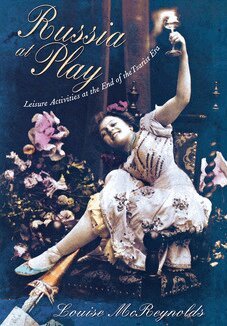
An athlete becomes a movie star; a waiter rises to manage a chain of nightclubs; a movie scenarist takes to writing restaurant reviews. Intrepid women hunt bears, drive in automobile races, and fly, first in balloons and then in airplanes. Sensational crimes jump from city streets onto the screen almost before the pistols have had a chance to cool. Paris in the Twenties? Fitzgerald's New York? Early Hollywood? No, tsarist Russia in the last decades before the Revolution.In Russia at Play, Louise McReynolds recreates a vibrant, rapidly changing culture in rich detail. Her account encompasses the "legitimate" stage, vaudeville, nightclubs, restaurants, sports, tourism, and the silent movie industry. McReynolds reveals a pluralist and dynamic society, and shows how the new icons of mass culture affected the subsequent gendering of identities.The rapid industrialization and urbanization of the late tsarist period spawned dramatic social changes—an urban middle class and a voracious consumer culture demanded new forms of entertainment. The result was the rapid incursion of commercial values into the arts and the athletic field and unprecedented degrees of social interaction in the new nightclubs, vaudeville houses, and cheap movie houses. Traditional rules of social conduct shifted to greater self-fulfillment and self-expression, values associated with the individualism and consumerism of liberal capitalism. Leisure-time activities, McReynolds finds, allowed Russians who partook of them to recreate themselves, to develop a modern identity that allowed for different senses of the self depending on the circumstances. The society that spawned these impulses would disappear in Russia for decades under the combined blows of revolution, civil war, and collectivization, but questions of personal identity are again high on the agenda as Russia makes the transition from a collectivist society to one in which the dominant ethos remains undefined.
514 kr
Skickas inom 10-15 vardagar
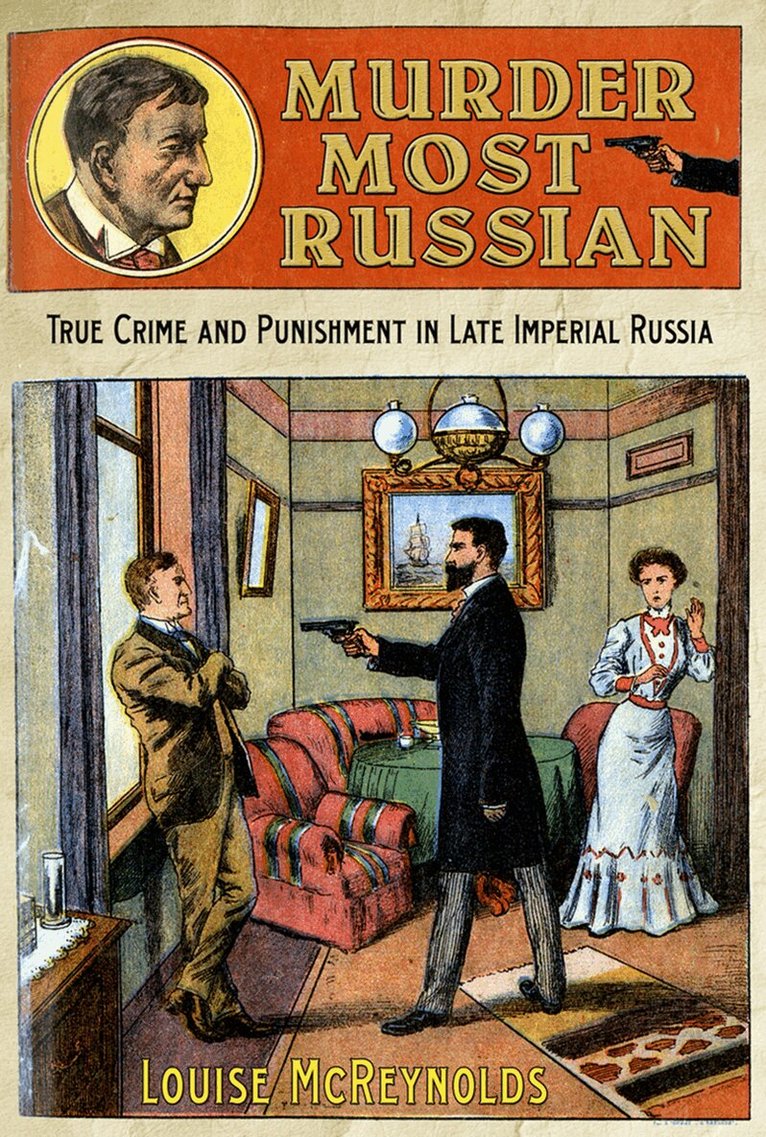
How a society defines crimes and prosecutes criminals illuminates its cultural values, social norms, and political expectations. In Murder Most Russian, Louise McReynolds draws on a fascinating series of murders and subsequent trials that took place in the wake of the 1864 legal reforms enacted by Tsar Alexander II. For the first time in Russian history, the accused were placed in the hands of juries of common citizens in courtrooms that were open to the press. Drawing on a wide array of sources, McReynolds reconstructs murders that gripped Russian society, from the case of Andrei Gilevich, who advertised for a personal secretary and beheaded the respondent as a way of perpetrating insurance fraud, to the beating death of Marianna Time at the hands of two young aristocrats who hoped to steal her diamond earrings.As McReynolds shows, newspapers covered such trials extensively, transforming the courtroom into the most public site in Russia for deliberation about legality and justice. To understand the cultural and social consequences of murder in late imperial Russia, she analyzes the discussions that arose among the emergent professional criminologists, defense attorneys, and expert forensic witnesses about what made a defendant's behavior "criminal." She also deftly connects real criminal trials to the burgeoning literary genre of crime fiction and fruitfully compares the Russian case to examples of crimes both from Western Europe and the United States in this period. Murder Most Russian will appeal not only to readers interested in Russian culture and true crime but also to historians who study criminology, urbanization, the role of the social sciences in forging the modern state, evolving notions of the self and the psyche, the instability of gender norms, and sensationalism in the modern media.
1 426 kr
Skickas inom 7-10 vardagar
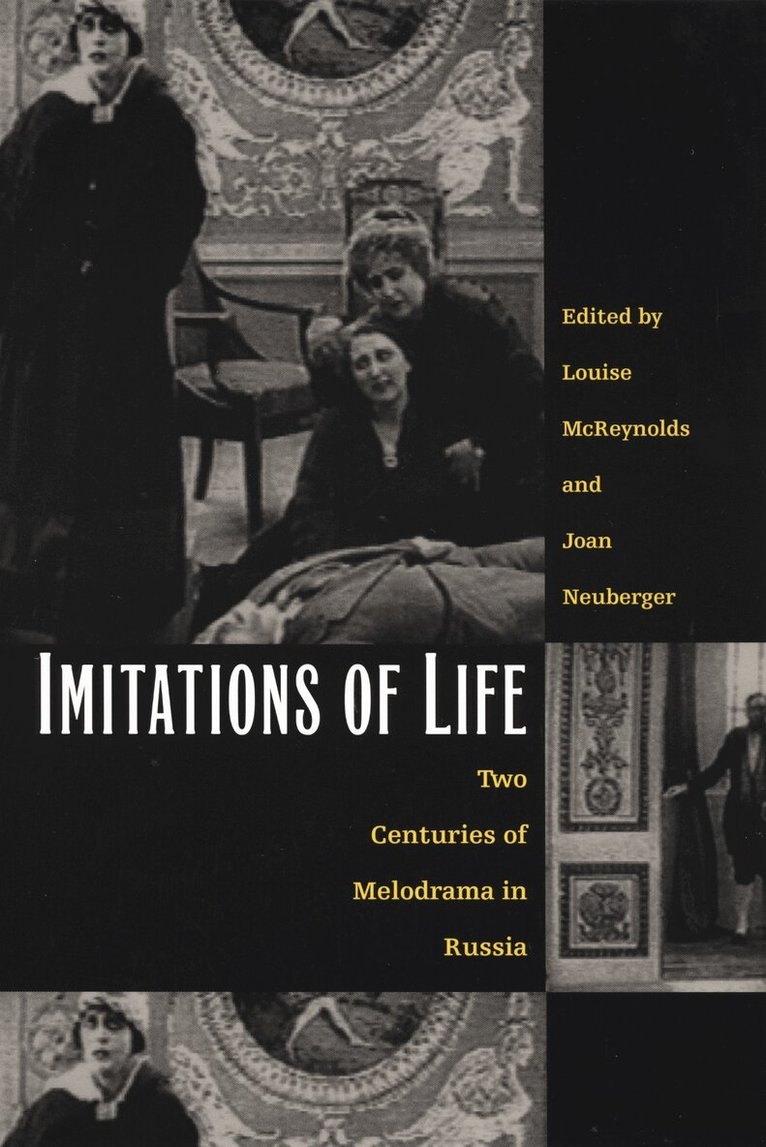
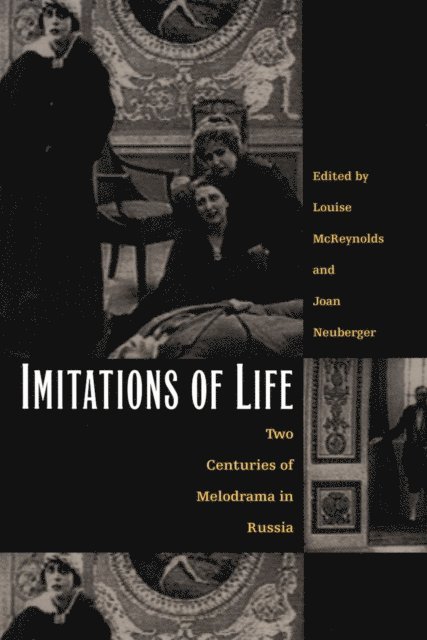
Imitations of Life views Russian melodrama from the eighteenth century to today as an unexpectedly hospitable forum for considering social issues. The contributors follow the evolution of the genre through a variety of cultural practices and changing political scenarios. They argue that Russian audiences have found a particular type of comfort in this mode of entertainment that invites them to respond emotionally rather than politically to social turmoil. Drawing on a wide variety of sources, including plays, lachrymose novels, popular movies, and even highly publicized funerals and political trials, the essays in Imitations of Life argue that melodrama has consistently offered models of behavior for times of transition, and that contemporary televised versions of melodrama continue to help Russians cope with national events that they understand implicitly but are not yet able to articulate. In contrast to previous studies, this collection argues for a reading that takes into account the subtle but pointed challenges to national politics and to gender and class hierarchies made in melodramatic works from both the nineteenth and twentieth centuries. Collectively, the contributors shift and cross borders, illustrating how the cultural dismissal of melodrama as fundamentally escapist and targeted primarily at the politically disenfranchised has subverted the drama’s own intrinsically subversive virtues. Imitations of Life will interest students and scholars of contemporary Russia, and Russian history, literature, and theater.Contributors. Otto Boele, Julie Buckler, Julie Cassiday, Susan Costanzo, Helena Goscilo, Beth Holmgren, Lars Lih, Louise McReynolds, Joan Neuberger, Alexander Prokhorov, Richard Stites
476 kr
Skickas inom 7-10 vardagar
Imitations of Life views Russian melodrama from the eighteenth century to today as an unexpectedly hospitable forum for considering social issues. The contributors follow the evolution of the genre through a variety of cultural practices and changing political scenarios. They argue that Russian audiences have found a particular type of comfort in this mode of entertainment that invites them to respond emotionally rather than politically to social turmoil. Drawing on a wide variety of sources, including plays, lachrymose novels, popular movies, and even highly publicized funerals and political trials, the essays in Imitations of Life argue that melodrama has consistently offered models of behavior for times of transition, and that contemporary televised versions of melodrama continue to help Russians cope with national events that they understand implicitly but are not yet able to articulate. In contrast to previous studies, this collection argues for a reading that takes into account the subtle but pointed challenges to national politics and to gender and class hierarchies made in melodramatic works from both the nineteenth and twentieth centuries. Collectively, the contributors shift and cross borders, illustrating how the cultural dismissal of melodrama as fundamentally escapist and targeted primarily at the politically disenfranchised has subverted the drama’s own intrinsically subversive virtues. Imitations of Life will interest students and scholars of contemporary Russia, and Russian history, literature, and theater.Contributors. Otto Boele, Julie Buckler, Julie Cassiday, Susan Costanzo, Helena Goscilo, Beth Holmgren, Lars Lih, Louise McReynolds, Joan Neuberger, Alexander Prokhorov, Richard Stites