Lucia Prauscello – författare
Visar alla böcker från författaren Lucia Prauscello. Handla med fri frakt och snabb leverans.
5 produkter
5 produkter
1 053 kr
Skickas inom 7-10 vardagar
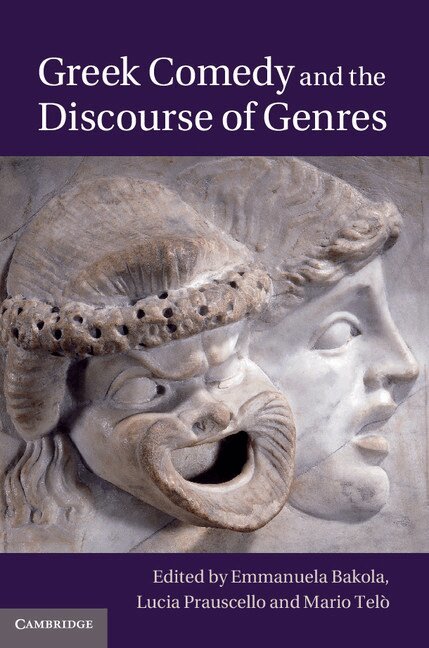
Recent scholarship has acknowledged that the intertextual discourse of ancient comedy with previous and contemporary literary traditions is not limited to tragedy. This book is a timely response to the more sophisticated and theory-grounded way of viewing comedy's interactions with its cultural and intellectual context. It shows that in the process of its self-definition, comedy emerges as voracious and multifarious with a wide spectrum of literary, sub-literary and paraliterary traditions, the engagement with which emerges as central to its projected literary identity and, subsequently, to the reception of the genre itself. Comedy's self-definition through generic discourse far transcends the (narrowly conceived) 'high-low' division of genres. This book explores ancient comedy's interactions with Homeric and Hesiodic epic, iambos, lyric, tragedy, the fable tradition, the ritual performances of the Greek polis, and its reception in Platonic writings and Alexandrian scholarship, within a unified interpretative framework.
1 245 kr
Tillfälligt slut
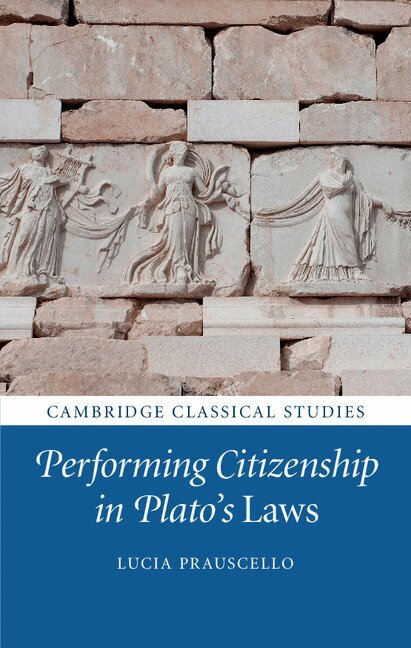
In the Laws, Plato theorizes citizenship as simultaneously a political, ethical, and aesthetic practice. His reflection on citizenship finds its roots in a descriptive psychology of human experience, with sentience and, above all, volition seen as the primary targets of a lifelong training in the values of citizenship. In the city of Magnesia described in the Laws erôs for civic virtue is presented as a motivational resource not only within the reach of the 'ordinary' citizen, but also factored by default into its educational system. Supporting a vision of 'perfect citizenship' based on an internalized obedience to the laws, and persuading the entire polity to consent willingly to it, requires an ideology that must be rhetorically all-inclusive. In this city 'ordinary' citizenship itself will be troped as a performative action: Magnesia's choral performances become a fundamental channel for shaping, feeling and communicating a strong sense of civic identity and unity.
428 kr
Skickas inom 7-10 vardagar
In the Laws, Plato theorizes citizenship as simultaneously a political, ethical, and aesthetic practice. His reflection on citizenship finds its roots in a descriptive psychology of human experience, with sentience and, above all, volition seen as the primary targets of a lifelong training in the values of citizenship. In the city of Magnesia described in the Laws erôs for civic virtue is presented as a motivational resource not only within the reach of the 'ordinary' citizen, but also factored by default into its educational system. Supporting a vision of 'perfect citizenship' based on an internalized obedience to the laws, and persuading the entire polity to consent willingly to it, requires an ideology that must be rhetorically all-inclusive. In this city 'ordinary' citizenship itself will be troped as a performative action: Magnesia's choral performances become a fundamental channel for shaping, feeling and communicating a strong sense of civic identity and unity.
584 kr
Skickas inom 7-10 vardagar
Recent scholarship has acknowledged that the intertextual discourse of ancient comedy with previous and contemporary literary traditions is not limited to tragedy. This book is a timely response to the more sophisticated and theory-grounded way of viewing comedy's interactions with its cultural and intellectual context. It shows that in the process of its self-definition, comedy emerges as voracious and multifarious with a wide spectrum of literary, sub-literary and paraliterary traditions, the engagement with which emerges as central to its projected literary identity and, subsequently, to the reception of the genre itself. Comedy's self-definition through generic discourse far transcends the (narrowly conceived) 'high-low' division of genres. This book explores ancient comedy's interactions with Homeric and Hesiodic epic, iambos, lyric, tragedy, the fable tradition, the ritual performances of the Greek polis, and its reception in Platonic writings and Alexandrian scholarship, within a unified interpretative framework.
1 814 kr
Skickas inom 3-6 vardagar
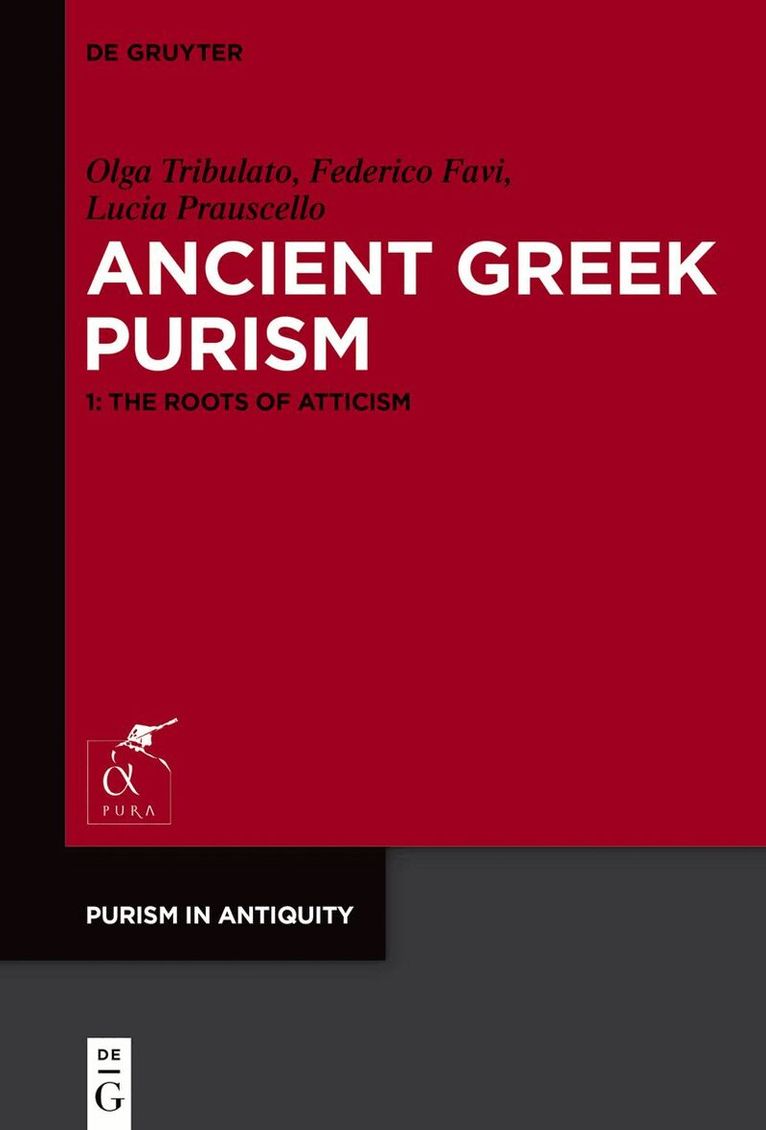
This volume is the first of four devoted to Atticism, a form of linguistic purism that sought to preserve the rules of the 5th-century Attic dialect against the evolution of Postclassical Greek. The series elucidates the origins and development of Atticist thought, as well as its impact, transmission, and legacy from the Byzantine Middle Ages to the Renaissance. Although Atticism flourished in the Imperial age, its roots are steeped in the previous centuries. This volume investigates the broad historical, cultural, and linguistic factors leading to the emergence of Attic as a prestige variety among the classical Greek dialects, the way Attic exclusivity was construed in Athenian literary sources, and how Hellenistic scholarship contributed to monumentalising Attic supremacy. Atticism can be regarded as the first example of an intellectual movement seeking to promote an extinct variety to the status of linguistic standard, reflecting an ideological and nostalgic view of identity. This volume traces the roots of this linguistic phenomenon back to factors at work in the construction of Hellenicity in the archaic and classical periods.