Luis de la Calle – författare
Visar alla böcker från författaren Luis de la Calle. Handla med fri frakt och snabb leverans.
4 produkter
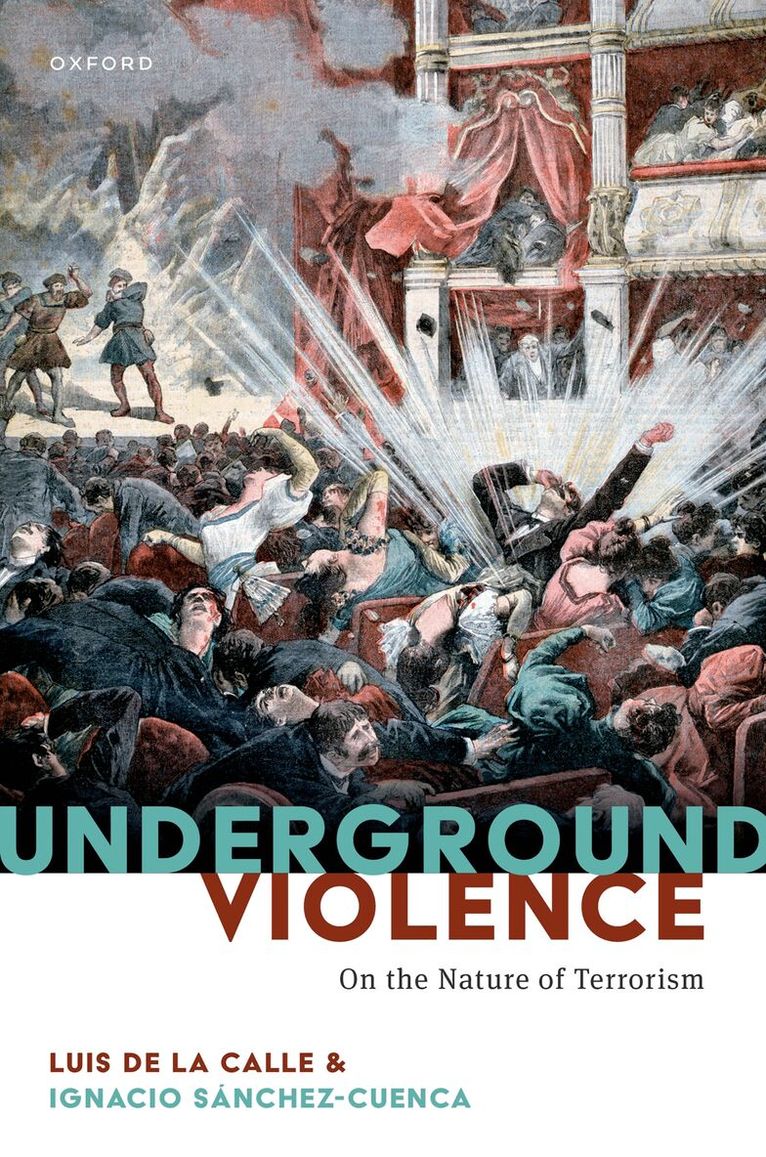
Underground Violence
On the Nature of Terrorism
Av Luis de la Calle, Ignacio Sánchez-Cuenca
Inbunden, 2024
1123 kr
Lägg i varukorg
What makes terrorism a unique form of political violence is its underground nature. According to the conceptualization of the phenomenon offered in this book, terrorism is the kind of violence carried out when the perpetrators lack territorial control. There is a strong link between terrorism and …
Underground Violence
On the Nature of Terrorism
Av Ignacio Sanchez-Cuenca, Luis de la Calle
E-bok, 2024
1155 kr
Lägg i varukorg
What makes terrorism a unique form of political violence is its underground nature. According to the conceptualization of the phenomenon offered in this book, terrorism is the kind of violence carried out when the perpetrators lack territorial control. There is a strong link between terrorism and …
Underground Violence
On the Nature of Terrorism
Av Ignacio Sanchez-Cuenca, Luis de la Calle
E-bok, 2024
1155 kr
Lägg i varukorg
What makes terrorism a unique form of political violence is its underground nature. According to the conceptualization of the phenomenon offered in this book, terrorism is the kind of violence carried out when the perpetrators lack territorial control. There is a strong link between terrorism and …
Nationalist Violence in Postwar Europe
Inbunden, 2015
1593 kr
Lägg i varukorg
This book argues that nationalist violence in developed countries is the product of unresponsive political elites and nationalists blocked from attracting supporters through legal channels. Political elites are prone to ignoring a regional polity when their clout in that region is negligible and …