Marco Bresadola – författare
Visar alla böcker från författaren Marco Bresadola. Handla med fri frakt och snabb leverans.
5 produkter
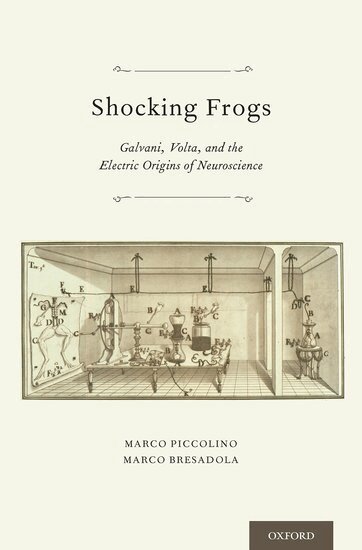
Shocking Frogs
Galvani, Volta, and the Electric Origins of Neuroscience
Av Marco Piccolino, Marco Bresadola
Inbunden, 2013
2031 kr
Lägg i varukorg
"... and still we could never suppose that fortune were to be so friendly to us, such as to allow us to be perhaps the first in handling, as it were, the electricity concealed in nerves, in extracting it from nerves, and, in some way, in putting it under everyone's eyes." With these words, Luigi …
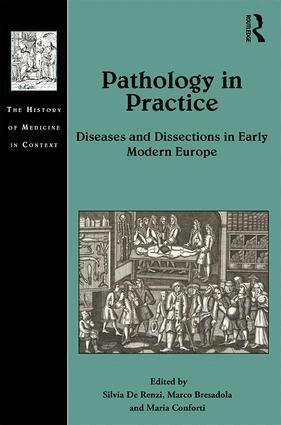
Pathology in Practice
Diseases and Dissections in Early Modern Europe
Av Silvia De Renzi, Marco Bresadola m. fl.
Häftad, 2019
728 kr
Lägg i varukorg
Post-mortems may have become a staple of our TV viewing, but the long history of this practice is still little known. This book provides a fresh account of the dissections that took place across early modern Europe on those who had died of a disease or in unclear circumstances. Drawing on different …
Pathology in Practice
Diseases and Dissections in Early Modern Europe
Av Maria Conforti, Marco Bresadola m. fl.
E-bok, 2017
856 kr
Lägg i varukorg
Post-mortems may have become a staple of our TV viewing, but the long history of this practice is still little known. This book provides a fresh account of the dissections that took place across early modern Europe on those who had died of a disease or in unclear circumstances. Drawing on different …
Pathology in Practice
Diseases and Dissections in Early Modern Europe
Av Maria Conforti, Marco Bresadola m. fl.
E-bok, 2017
838 kr
Lägg i varukorg
Post-mortems may have become a staple of our TV viewing, but the long history of this practice is still little known. This book provides a fresh account of the dissections that took place across early modern Europe on those who had died of a disease or in unclear circumstances. Drawing on different …
Pathology in Practice
Diseases and Dissections in Early Modern Europe
Av Silvia De Renzi, Marco Bresadola m. fl.
Inbunden, 2017
2591 kr
Lägg i varukorg
Post-mortems may have become a staple of our TV viewing, but the long history of this practice is still little known. This book provides a fresh account of the dissections that took place across early modern Europe on those who had died of a disease or in unclear circumstances. Drawing on different …