Silvia De Renzi – författare
Visar alla böcker från författaren Silvia De Renzi. Handla med fri frakt och snabb leverans.
4 produkter
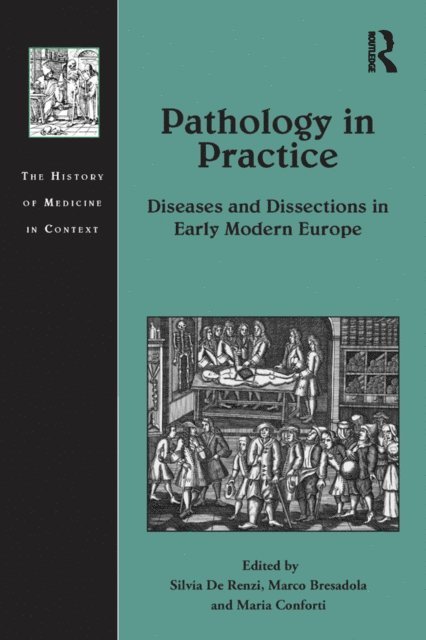
Pathology in Practice
Diseases and Dissections in Early Modern Europe
Av Silvia De Renzi, Marco Bresadola m. fl.
Häftad, 2019
728 kr
Lägg i varukorg
Post-mortems may have become a staple of our TV viewing, but the long history of this practice is still little known. This book provides a fresh account of the dissections that took place across early modern Europe on those who had died of a disease or in unclear circumstances. Drawing on different …
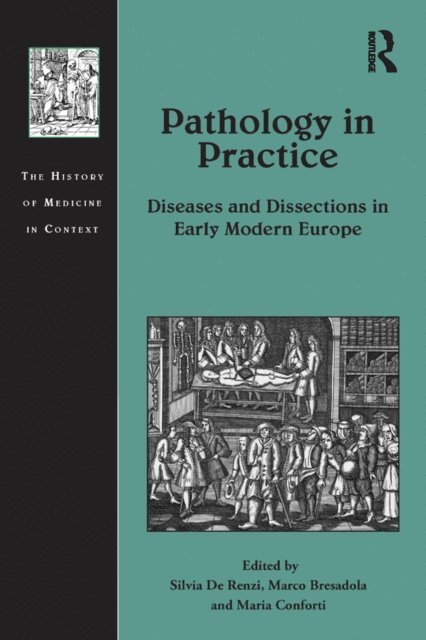
Pathology in Practice
Diseases and Dissections in Early Modern Europe
Av Maria Conforti, Marco Bresadola m. fl.
E-bok, 2017
856 kr
Lägg i varukorg
Post-mortems may have become a staple of our TV viewing, but the long history of this practice is still little known. This book provides a fresh account of the dissections that took place across early modern Europe on those who had died of a disease or in unclear circumstances. Drawing on different …
Pathology in Practice
Diseases and Dissections in Early Modern Europe
Av Maria Conforti, Marco Bresadola m. fl.
E-bok, 2017
838 kr
Lägg i varukorg
Post-mortems may have become a staple of our TV viewing, but the long history of this practice is still little known. This book provides a fresh account of the dissections that took place across early modern Europe on those who had died of a disease or in unclear circumstances. Drawing on different …
Pathology in Practice
Diseases and Dissections in Early Modern Europe
Av Silvia De Renzi, Marco Bresadola m. fl.
Inbunden, 2017
2591 kr
Lägg i varukorg
Post-mortems may have become a staple of our TV viewing, but the long history of this practice is still little known. This book provides a fresh account of the dissections that took place across early modern Europe on those who had died of a disease or in unclear circumstances. Drawing on different …