Margaret Bent - Böcker
Visar alla böcker från författaren Margaret Bent. Handla med fri frakt och snabb leverans.
7 produkter
7 produkter
1 054 kr
Skickas inom 5-8 vardagar
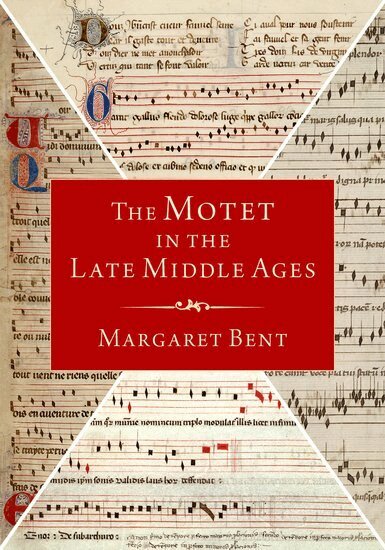
A unique capacity of measured polyphony is to give precisely fixed places not only to musical notes, but also to individual words in relation to them and each other. The Motet in the Late Middle Ages offers innovative approaches to the equal partnership of music and texts in motets of the fourteenth century and beyond, showcasing the imaginative opportunities afforded by this literal kind of intertextuality, and yielding a very different narrative from the common complaint that different simultaneous texts make motets incomprehensible. As leading musicologist Margaret Bent asserts, they simply require a different approach to preparation and listening.In this book, Bent examines the words and music of motets from many different angles: foundational verbal quotations and pre-existent chant excerpts and their contexts, citations both of words and music from other compositions, function, dating, structure, theory, and number symbolism. Individual studies of these original creations tease out a range of strategies, ingenuity, playfulness, striking juxtapositions, and even subversion. Half of the thirty-two chapters consist of new material; the other half are substantially revised and updated versions of previously published articles and chapters, organized into seven Parts. With new analyses of text and music together, new datings, new attributions, and new hypotheses about origins and interrelationships, Bent uncovers little-explored dimensions, provides a window into the craft and thought processes of medieval composers, and opens up many directions for future work.
Fauvel Studies
Allegory, Chronicle, Music and Image in Paris, Bibliothèque Nationale MS Français 146
Inbunden, Engelska, 1998
7 133 kr
Skickas inom 7-10 vardagar
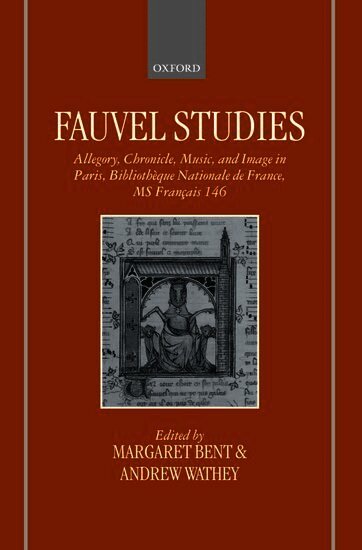
The manuscript Paris, Bibliothèque Nationale, fonds français 146 is an unparalleled witness to the politics, society, and culture of the French royal court in the early fourteenth century. It contains an interpolated version of the Roman de Fauvel, completed by Gervès du Bus in 1314, that uniquely combines the Old French text with music setting poetry in French and Latin, high-quality illuminations (including early depictions of the architecture of medieval Paris), and further literary elaborations and additions. The narrative finds a place within several literary traditions, serving as a satire on Enguerran de Marigny, a fallen minister of Philip IV (d. 1314), and also as admonition or advice for the new king Philip V (crowned 1317). Alongside the Roman de Fauvel, fr. 146 also includes French and Latin narrative dits (the latter edited here for the first time), the complete known works of Jehannot de Lescurel, and an important French verse chronicle. Fauvel's short refrains and chant pieces are also newly collected and catalogued.Leading medievalists and younger scholars from a wide range of fields have contributed to this exciting interdisciplinary venture. Their essays reveal the extraordinary range of material and contexts touched by Fauvel and its interpolations, adding to our understanding of political satire, of the processes of literary or musical composition, and of patronage in the medieval period, amongst numerous other topics, advancing knowledge and enriching contexts on many fronts.Generously illustrated, this volume includes essential new reference material for medievalists in political, social and urban history, art and architectural history, musicology, the history of the book and codicology, and medieval languages and literatures, principally Old French and Latin.
593 kr
Skickas inom 10-15 vardagar
The Speculum musicae of the early fourteenth century, with nearly half a million words, is by a long way the largest medieval treatise on music, and probably the most learned. Only the final two books are about music as commonly understood: the other five invite further work by students of scholastic philosophy, theology and mathematics. For nearly a century, its author has been known as Jacques de Liège or Jacobus Leodiensis. ’Jacobus’ is certain, fixed by an acrostic declared within the text; Liège is hypothetical, based on evidence shown here to be less than secure. The one complete manuscript, Paris BnF lat. 7207, thought by its editor to be Florentine, can now be shown on the basis of its miniatures by Cristoforo Cortese to be from the Veneto, datable c. 1434-40. New documentary evidence in an Italian inventory, also from the Veneto, describes a lost copy of the treatise dating from before 1419, older than the surviving manuscript, and identifies its author as ’Magister Jacobus de Ispania’. If this had been known eighty years ago, the Liège hypothesis would never have taken root. It invites a new look at the geography and influences that played into this central document of medieval music theory. The two new attributes of ’Magister’ and ’de Ispania’ (i.e. a foreigner) prompted an extensive search in published indexes for possible identities. Surprisingly few candidates of this name emerged, and only one in the right date range. It is here suggested that the author of the Speculum is either someone who left no paper trail or James of Spain, a nephew of Eleanor of Castile, wife of King Edward I, whose career is documented mostly in England. He was an illegitimate son of Eleanor’s older half-brother, the Infante Enrique of Castile. Documentary evidence shows that he was a wealthy and well-travelled royal prince who was also an Oxford magister. The book traces his career and the likelihood of his authorship of the Speculum musicae.
2 357 kr
Skickas inom 10-15 vardagar
Musica ficta is the practice of sharpening or flattening certain notes to avoid awkward intervals in medieval and Renaissance music. This collection gathers Margaret Bent's influential writings on this controversial subject from the past 30 years, along with an extensive author's introduction discussing the current state of scholarship and responding to critics. Also includes 25 musical examples.
747 kr
Skickas inom 10-15 vardagar
Musica ficta is the practice of sharpening or flattening certain notes to avoid awkward intervals in medieval and Renaissance music. This collection gathers Margaret Bent's influential writings on this controversial subject from the past 30 years, along with an extensive author's introduction discussing the current state of scholarship and responding to critics. Also includes 25 musical examples.
2 150 kr
Skickas inom 10-15 vardagar
The Speculum musicae of the early fourteenth century, with nearly half a million words, is by a long way the largest medieval treatise on music, and probably the most learned. Only the final two books are about music as commonly understood: the other five invite further work by students of scholastic philosophy, theology and mathematics. For nearly a century, its author has been known as Jacques de Liège or Jacobus Leodiensis. ’Jacobus’ is certain, fixed by an acrostic declared within the text; Liège is hypothetical, based on evidence shown here to be less than secure. The one complete manuscript, Paris BnF lat. 7207, thought by its editor to be Florentine, can now be shown on the basis of its miniatures by Cristoforo Cortese to be from the Veneto, datable c. 1434-40. New documentary evidence in an Italian inventory, also from the Veneto, describes a lost copy of the treatise dating from before 1419, older than the surviving manuscript, and identifies its author as ’Magister Jacobus de Ispania’. If this had been known eighty years ago, the Liège hypothesis would never have taken root. It invites a new look at the geography and influences that played into this central document of medieval music theory. The two new attributes of ’Magister’ and ’de Ispania’ (i.e. a foreigner) prompted an extensive search in published indexes for possible identities. Surprisingly few candidates of this name emerged, and only one in the right date range. It is here suggested that the author of the Speculum is either someone who left no paper trail or James of Spain, a nephew of Eleanor of Castile, wife of King Edward I, whose career is documented mostly in England. He was an illegitimate son of Eleanor’s older half-brother, the Infante Enrique of Castile. Documentary evidence shows that he was a wealthy and well-travelled royal prince who was also an Oxford magister. The book traces his career and the likelihood of his authorship of the Speculum musicae.
Del 23 - Studies in Medieval and Renaissance Music
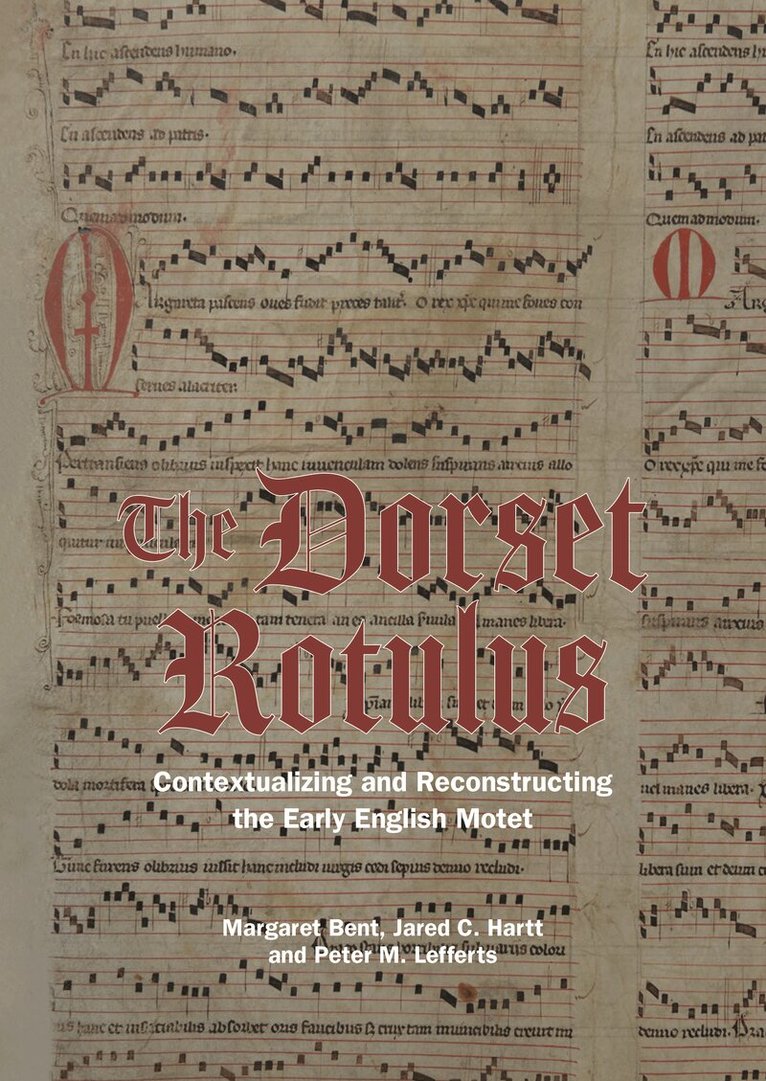
Dorset Rotulus
Contextualizing and Reconstructing the Early English Motet
Inbunden, Engelska, 2021
1 445 kr
Skickas inom 7-10 vardagar
The exciting discovery of new music from the Middle Ages sheds new light on knowledge of the medieval motet.From its origins in the thirteenth century, the Latin-texted motet in England and France became the most significant and diverse polyphonic genre of the fourteenth, a body of music important both for its texts and its variety of musical structures. However, although the motet in England plays a vital role in the music-historical narrative of the first decades of the 1300s, it has too often been overlooked in modern scholarship, due largely to its preservation in numerous but almost entirely fragmentary sources.In 2017, substantial new fragments of medieval polyphony came to light. They originated at the Benedictine monastery of Abbotsbury, a major institution located high above Chesil Beach on Dorset's Jurassic Coast. The two leaves once headed an imposing musical scroll, and preserve significant portions of four large-scale Latin-texted motets from early fourteenth-century England. Discovery of this source brings to the fore a massive seven-section motet on St Margaret, hitherto known only through highly fragmentary snippets of two of its four voices, as well as a unicum with extraordinary features addressed to the Virgin Mary and St Nicholas. When coupled with the remaining motets, one on the Ascension and the other on the Virgin Mary, the Dorset motets expand our understanding of how the English developed their own approaches to the genre, forging styles and techniques quite independently of the continental norms against which earlier scholarship has judged (and sometimes demeaned) them.This book introduces the manuscript and its provenance in Abbotsbury, relates it to other scrolls of late medieval music, contextualizes its motets within the larger corpus of contemporary Latin-texted motets, and analyses and reconstructs each of the motets, providing complete performable transcriptions of three of these compositions as well as three of its large-scale comparands. Spurred by the Dorset discovery, this monograph, the first in thirty-five years devoted to the medieval motet in England, offers a new evaluation of the richness of the English repertory in its own terms.