• Fri frakt över 249 kr
  • •
  • Snabba leveranser
  • •
  • Billiga böcker
Kundservice

Du är på sajten för privatpersoner.

Företag, bibliotek eller offentlig verksamhet?

Du handlar på classic.bokus.com, där alla dina funktioner finns intakta.
Till classic.bokus.com
Bokus logotyp. Gå till startsidan.
  • Erbjudanden
  • Nyheter
  • Student
  • Topplistor
  • Barn & ungdom
  • Bokus Play
  • E-böcker
  • Pocketböcker
  • Spel & pussel

10% rabatt på allt med kod: NYSTART10 →

Sidfot

Mina sidor

    Hjälp

    • Kundservice
    • Vanliga frågor och svar
    • Frakt och leverans
    • Retur vid ångerrätt
    • Reklamera vara
    • Betalning
    • Köpvillkor
    • Allmänna villkor
    • Information om webbplatsens tillgänglighet

    Om Bokus

    • Om oss
    • Pressrum
    • För studenter
    • För företag
    • För bibliotek och offentlig verksamhet
    • För leverantörer
    • Hållbarhet

    Populärt

    • Aktuella erbjudanden
    • Presentkort
    • Studentlitteratur
    • Nya böcker
    • Topplistor
    • Signerade böcker
    • Engelska böcker

    Inspiration

    • Boktips
    • BookTok
    • Populära bokserier
    • Barnbokskaraktärer
    • Populära författare
    Logotyp för Bokus
    Följ oss på Facebook (extern länk)Följ oss på Instagram (extern länk)Följ oss på YouTube (extern länk)Följ oss på TikTok (extern länk)
    bokus @ CookiesAnpassa cookiesIntegritetspolicyKöpvillkor
    Till Citymail hemsida (extern länk)Till Budbee hemsida (extern länk)Till Postnord hemsida (extern länk)Till Schenker hemsida (extern länk)Till Early Bird hemsida (extern länk)Till Walleys hemsida (extern länk)
    1. Kultur
    2. Musikböcker
    3. Musik: stilar och genrer
    4. Klassisk musik, konstmusik och orkestermusik

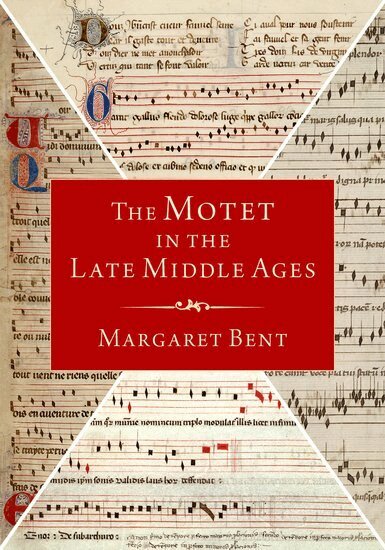
    The Motet in the Late Middle Ages

    AvMargaret Bent

    Inbunden, Engelska, 2024

    1 131 kr

    Beställningsvara. Skickas inom 5-8 vardagar. Fri frakt över 249 kr.

    Beskrivning

    A unique capacity of measured polyphony is to give precisely fixed places not only to musical notes, but also to individual words in relation to them and each other. The Motet in the Late Middle Ages offers innovative approaches to the equal partnership of music and texts in motets of the fourteenth century and beyond, showcasing the imaginative opportunities afforded by this literal kind of intertextuality, and yielding a very different narrative from the common complaint that different simultaneous texts make motets incomprehensible. As leading musicologist Margaret Bent asserts, they simply require a different approach to preparation and listening.In this book, Bent examines the words and music of motets from many different angles: foundational verbal quotations and pre-existent chant excerpts and their contexts, citations both of words and music from other compositions, function, dating, structure, theory, and number symbolism. Individual studies of these original creations tease out a range of strategies, ingenuity, playfulness, striking juxtapositions, and even subversion. Half of the thirty-two chapters consist of new material; the other half are substantially revised and updated versions of previously published articles and chapters, organized into seven Parts. With new analyses of text and music together, new datings, new attributions, and new hypotheses about origins and interrelationships, Bent uncovers little-explored dimensions, provides a window into the craft and thought processes of medieval composers, and opens up many directions for future work.

    Produktinformation

    • Utgivningsdatum:2024-02-01
    • Mått:185 x 241 x 81 mm
    • Vikt:1 497 g
    • Format:Inbunden
    • Språk:Engelska
    • Antal sidor:776
    • Förlag:OUP USA
    • ISBN:9780190063771

    Utforska kategorier

    • Klassisk musik, konstmusik och orkestermusik inom Kultur
    • Musikvetenskap inom Kultur

    Mer om författaren

    Margaret Bent is an emeritus Fellow of All Souls College, Oxford, and a Fellow of several international societies and academies. Between 1975 and 1992 she taught at Brandeis and Princeton universities and served as President of the American Musicological Society. Her numerous publications range over English and continental music, repertories, notation, and theory of the fourteenth to sixteenth centuries. Her editorial publications include critical editions of Dunstaple, Ciconia, English masses, and a Rossini opera. Her many honours include the C.B.E. and three honorary degrees. In 2018, she received the inaugural Adler prize of the International Musicological Society.

    Recensioner i media

    Bent's research on the motet has been fundamental to the fields of musicology and medieval studies, and it is a joy to see that work gathered into a single publication. The book is chronologically wide-ranging, covering the development of the genre from the fourteenth through the mid-fifteenth centuries, and geographically diverse, encompassing the motet in France and the Low Countries, England, Italy, with forays into eastern Europe and the Mediterranean region—an astonishing achievement.

    Innehållsförteckning

    • List of IllustrationsList of TablesList of Music ExamplesList of Sound ClipsList of AbbreviationsIntroduction PART I. COMPOSITIONAL TECHNIQUES1. Theoretical and Terminological Issues2. What is Isorhythm? PART II. THE MARIGNY MOTETS, BEYOND FAUVEL, AND VITRY3. Fauvel and Marigny: Which Came First?4. Tribum que non abhorruit/Quoniam secta latronum/Merito hec patimur and its 'Quotations'; and Garrit gallus/In novaAppendix: Commentary to Tribum/Quoniam; Commentary to Garrit/In nova5. Aman novi/Heu Fortuna/Heu me6. Floret/Florens: Intended for Fauvel?7. Related Manuscripts, Related Motets; Vitry8. Vos quid admiramini/Gratissima virginis species/Gaude gloriosa PART III. MACHAUT9. Words and Music in Machaut's Motet 910. Deception, Exegesis and Sounding Number in Machaut's Motet 1511. The 'Harmony' of the Machaut Mass12. Machaut's Motet 10 and its Interconnections13. Machaut's Motet 18: Bone pastor Guillerme/Bone pastor, qui pastores/Bone pastor14. Text-Music Relationships in Machaut's Motets 4 and 8 PART IV. MUSICORUM COLLEGIUM: THE MUSICIAN MOTETS15. Apollinis eclipsatur, its Progeny and their Sources16. Apollinis eclipsatur/Zodiacum signis/In omnem terram and Later Versions with Added PartsAppendix: Commentaries to Web Transcriptions for the Pieces with Multiple Sources17. Musicalis sciencia/Sciencie laudabili; the Musicians Named in Apollinis and Musicalis18. Musicorum collegio/In templo Dei/Auete19. Alma polis religio/Axe poli cum artica and its Named MusiciansAppendix: Variants to Ex. 19.1, Alma polis religio/Axe poli cum artica20. Sub arturo plebs/Fons citharizancium/In omnem terram and its MusiciansAppendix: Variants in Sub Arturo plebs21. Fragmentary Motets and Other Possibly Linked Compositions PART V. ENGLISH MOTETS C. 1400-142022. The Yoxford Manuscript and the Motet O amicus/Precursoris23. The Yoxford CredoAppendix: Notes to Credo Transcription24. Mayshuet and the Deo gratias Motets in the Old Hall Manuscript25. Old Hall, the Agincourt Motets, and Dunstaple PART VI. ITALIAN MOTETS26. The Fourteenth-Century Italian Motet27. The Motet Collection of San Lorenzo 2211 (SL2211) and the Composer Hubertus de Salinis28. The Motets of Johannes Ciconia29. Ciconia, Prosdocimus, and the Workings of Musical Grammar as Exemplified in O felix templum and O Padua PART VII. MUSIC FOR POPES AND THE COURTS OF BURGUNDY AND CYPRUS30. Early Papal MotetsAppendix: Music for Popes Clement VI to Eugene IV31. Trémoïlle RevisitedAppendix: Transcription of Incipits as Listed in the Trém Index32. Some Aspects of the Motets in the Cyprus ManuscriptAppendix: The Cyprus Motets BibliographyIndex of ManuscriptsIndex of CompositionsGeneral Index