Maria Mälksoo – författare
Visar alla böcker från författaren Maria Mälksoo. Handla med fri frakt och snabb leverans.
6 produkter
6 produkter
Politics of Becoming European
A study of Polish and Baltic Post-Cold War security imaginaries
Inbunden, Engelska, 2009
2 181 kr
Skickas inom 10-15 vardagar
This book weaves together perspectives drawn from critical international relations, anthropology and social theory in order to understand the Polish and Baltic post-Cold War politics of becoming European.Approaching the study of Europe’s eastern enlargement through a post-colonial critique, author Maria Mälksoo makes a convincing case for a rethinking of European identity. Drawing on the theorist Edward Said, she contends that studies of the European Union are marked by a prevailing Orientalism, rarely asking who has traditionally been able to define European identity, and whether this identity should be presented as an historical process rather than a static category. The central argument of this book is that the historical experience of being framed as simultaneously in Europe - and yet not quite in Europe – informs the current self-understandings and security imaginaries of Poland and the Baltic States. Exploring this existential condition of ‘liminal Europeaness’ among foreign and security policy-making elites, the book considers its effects on key security policy issues, including relations with Western Europe, Russia and the United States.Supported by solid empirical analyses, this book provides an innovative and interdisciplinary approach to the post-Cold War predicament of Poland and the Baltic States. It will be of interest to students and scholars of International Relations, European Studies, Social and Political Theory, and Anthropology.
Politics of Becoming European
A study of Polish and Baltic Post-Cold War security imaginaries
Häftad, Engelska, 2013
754 kr
Skickas inom 10-15 vardagar
This book weaves together perspectives drawn from critical international relations, anthropology and social theory in order to understand the Polish and Baltic post-Cold War politics of becoming European.Approaching the study of Europe’s eastern enlargement through a post-colonial critique, author Maria Mälksoo makes a convincing case for a rethinking of European identity. Drawing on the theorist Edward Said, she contends that studies of the European Union are marked by a prevailing Orientalism, rarely asking who has traditionally been able to define European identity, and whether this identity should be presented as an historical process rather than a static category. The central argument of this book is that the historical experience of being framed as simultaneously in Europe - and yet not quite in Europe – informs the current self-understandings and security imaginaries of Poland and the Baltic States. Exploring this existential condition of ‘liminal Europeaness’ among foreign and security policy-making elites, the book considers its effects on key security policy issues, including relations with Western Europe, Russia and the United States.Supported by solid empirical analyses, this book provides an innovative and interdisciplinary approach to the post-Cold War predicament of Poland and the Baltic States. It will be of interest to students and scholars of International Relations, European Studies, Social and Political Theory, and Anthropology.
686 kr
Skickas inom 7-10 vardagar
Katyn– the Soviet massacre of over 21,000 Polish prisoners in 1940 – has come to be remembered as Stalin’s emblematic mass murder, an event obscured by one of the most extensive cover-ups in history. Yet paradoxically, a majority of its victims perished far from the forest in western Russia that gives the tragedy its name. Their remains lie buried in killing fields throughout Russia, Ukraine and, most likely, Belarus. Today their ghosts haunt the cultural landscape of Eastern Europe.This book traces the legacy of Katyn through the interconnected memory cultures of seven countries: Belarus, Poland, Russia, Ukraine, and the Baltic States. It explores the meaning of Katyn as site and symbol, event and idea, fact and crypt. It shows how Katyn both incites nationalist sentiments in Eastern Europe and fosters an emerging cosmopolitan memory of Soviet terror. It also examines the strange impact of the 2010 plane crash that claimed the lives of Poland’s leaders en route to Katyn.Drawing on novels and films, debates and controversies, this book makes the case for a transnational study of cultural memory and navigates a contested past in a region that will define Europe’s future.
252 kr
Skickas inom 5-8 vardagar
Katyn– the Soviet massacre of over 21,000 Polish prisoners in 1940 – has come to be remembered as Stalin’s emblematic mass murder, an event obscured by one of the most extensive cover-ups in history. Yet paradoxically, a majority of its victims perished far from the forest in western Russia that gives the tragedy its name. Their remains lie buried in killing fields throughout Russia, Ukraine and, most likely, Belarus. Today their ghosts haunt the cultural landscape of Eastern Europe.This book traces the legacy of Katyn through the interconnected memory cultures of seven countries: Belarus, Poland, Russia, Ukraine, and the Baltic States. It explores the meaning of Katyn as site and symbol, event and idea, fact and crypt. It shows how Katyn both incites nationalist sentiments in Eastern Europe and fosters an emerging cosmopolitan memory of Soviet terror. It also examines the strange impact of the 2010 plane crash that claimed the lives of Poland’s leaders en route to Katyn.Drawing on novels and films, debates and controversies, this book makes the case for a transnational study of cultural memory and navigates a contested past in a region that will define Europe’s future.
1 245 kr
Skickas inom 10-15 vardagar
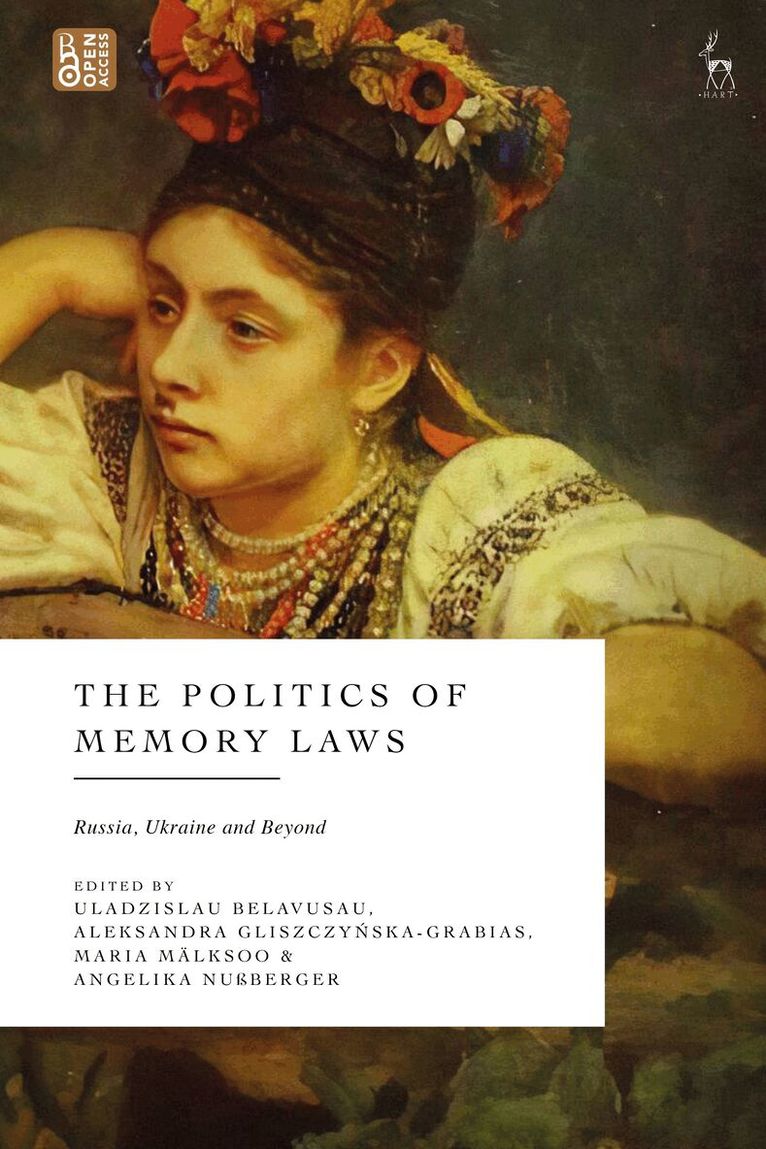
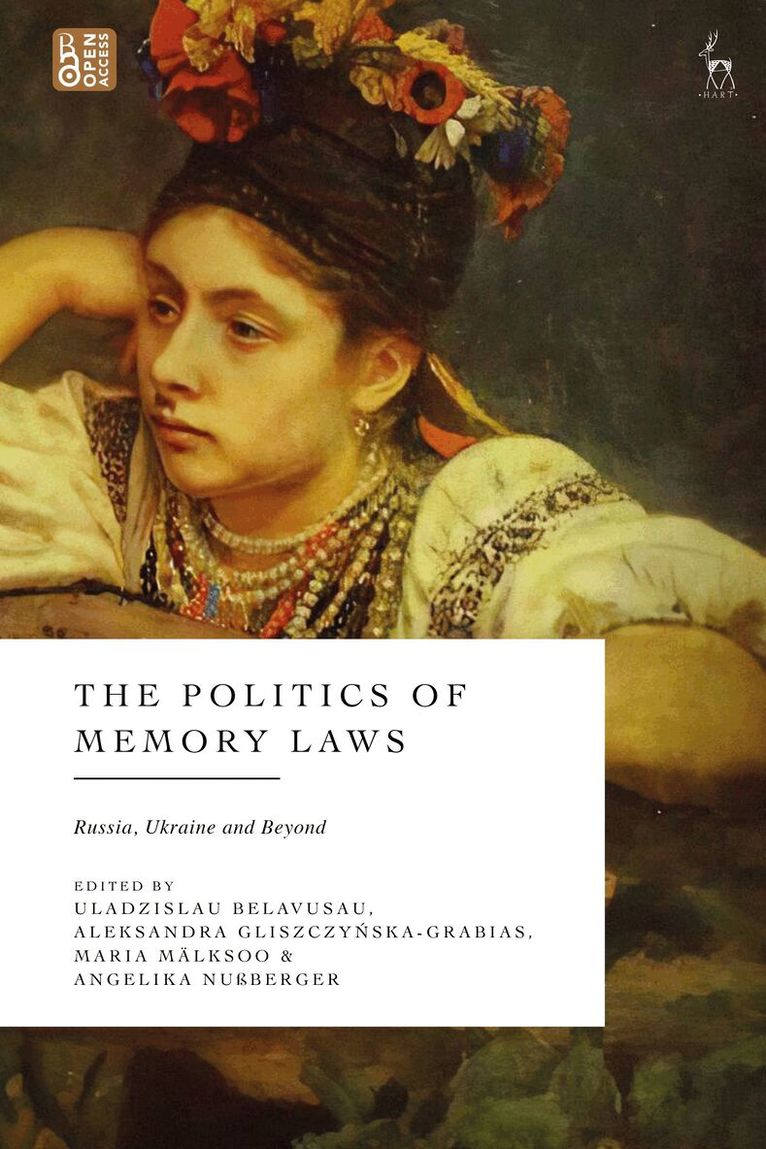
This open access book explores the political utility and consequences of memory laws with a focus on how militant memory laws frame, underpin and generate international conflicts.Proceeding from Russia’s ongoing aggression against Ukraine, this examination plots how memory laws have preceded, partially led to, and encouraged the outbreak of the war itself via Russian propaganda. It also offers a broader perspective looking at developments in the Baltic States, Belarus, Finland, Germany, Hungary, and Poland, as well as in European (Council of Europe and European Union) law. Bringing together scholars with diverse perspectives, this book provides both analysis and conceptual reflection for scholars assessing the politics of memory laws.The ebook editions of this book are available open access under a CC BY-NC-ND 4.0 licence on bloomsburycollections.com. Open Access was funded by the University of Copenhagen.
969 kr
Kommande