Mark Bassin – författare
Visar alla böcker från författaren Mark Bassin. Handla med fri frakt och snabb leverans.
15 produkter
15 produkter
Del 29 - Cambridge Studies in Historical Geography
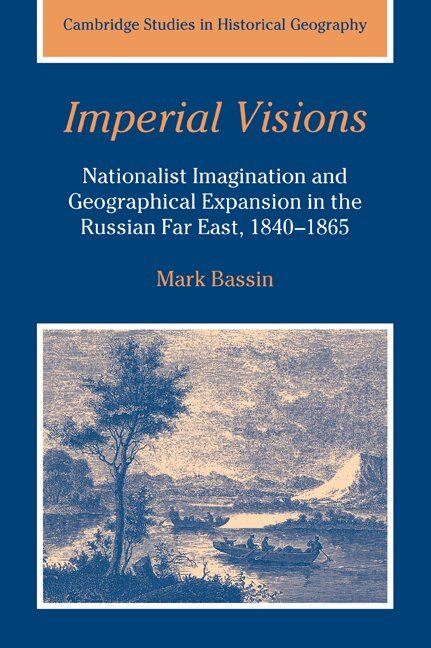
Imperial Visions
Nationalist Imagination and Geographical Expansion in the Russian Far East, 1840-1865
Häftad, Engelska, 2006
462 kr
Skickas inom 7-10 vardagar
In the middle of the nineteenth century, the Russian empire made a dramatic advance on the Pacific by annexing the vast regions of the Amur and Ussuri rivers. Although this remote realm was a virtual terra incognita for the Russian educated public, the acquisition of an 'Asian Mississippi' attracted great attention nonetheless, even stirring the dreams of Russia's most outstanding visionaries. Within a decade of its acquisition, however, the dreams were gone and the Amur region largely abandoned and forgotten. In an innovative examination of Russia's perceptions of the new territories in the Far East, Mark Bassin sets the Amur enigma squarely in the context of the Zeitgeist in Russia at the time. Imperial Visions demonstrates the fundamental importance of geographical imagination in the mentalité of imperial Russia. This 1999 work offers a truly novel perspective on the complex and ambivalent ideological relationship between Russian nationalism, geographical identity and imperial expansion.
Del 29 - Cambridge Studies in Historical Geography
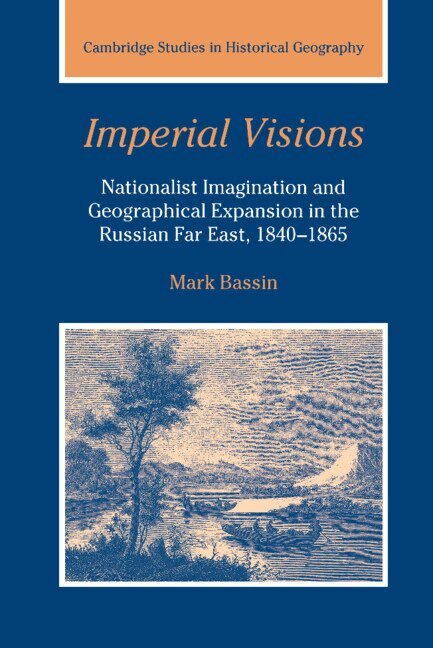
Imperial Visions
Nationalist Imagination and Geographical Expansion in the Russian Far East, 1840-1865
Inbunden, Engelska, 1999
1 678 kr
Skickas inom 7-10 vardagar
In the middle of the nineteenth century, the Russian empire made a dramatic advance on the Pacific by annexing the vast regions of the Amur and Ussuri rivers. Although this remote realm was a virtual terra incognita for the Russian educated public, the acquisition of an 'Asian Mississippi' attracted great attention nonetheless, even stirring the dreams of Russia's most outstanding visionaries. Within a decade of its acquisition, however, the dreams were gone and the Amur region largely abandoned and forgotten. In an innovative examination of Russia's perceptions of the new territories in the Far East, Mark Bassin sets the Amur enigma squarely in the context of the Zeitgeist in Russia at the time. Imperial Visions demonstrates the fundamental importance of geographical imagination in the mentalité of imperial Russia. This 1999 work offers a truly novel perspective on the complex and ambivalent ideological relationship between Russian nationalism, geographical identity and imperial expansion.
Inbunden, Engelska, 2016
1 638 kr
Skickas inom 10-15 vardagar
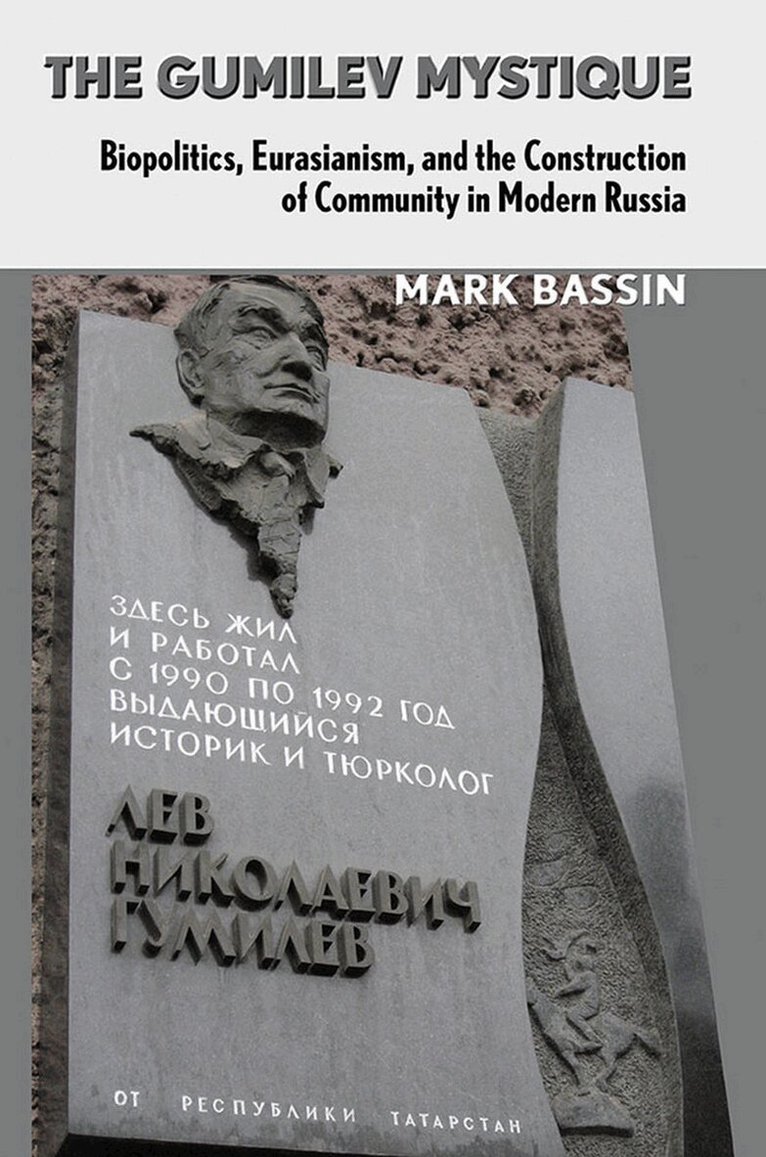
Since the collapse of the Soviet Union, the legacy of the historian, ethnographer, and geographer Lev Nikolaevich Gumilev (1912–1992) has attracted extraordinary interest in Russia and beyond. The son of two of modern Russia's greatest poets, Nikolai Gumilev and Anna Akhmatova, Gumilev spent thirteen years in Stalinist prison camps, and after his release in 1956 remained officially outcast and professionally shunned. Out of the tumult of perestroika, however, his writings began to attract attention and he himself became a well-known and popular figure. Despite his highly controversial (and often contradictory) views about the meaning of Russian history, the nature of ethnicity, and the dynamics of interethnic relations, Gumilev now enjoys a degree of admiration and adulation matched by few if any other public intellectual figures in the former Soviet Union. He is freely compared to Albert Einstein and Karl Marx, and his works today sell millions of copies and have been adopted as official textbooks in Russian high schools. Universities and mountain peaks alike are named in his honor, and a statue of him adorns a prominent thoroughfare in a major city. Leading politicians, President Vladimir Putin very much included, are unstinting in their deep appreciation for his legacy, and one of the most important foreign-policy projects of the Russian government today is clearly inspired by his particular vision of how the Eurasian peoples formed a historical community. In The Gumilev Mystique, Mark Bassin presents an analysis of this remarkable phenomenon. He investigates the complex structure of Gumilev's theories, revealing how they reflected and helped shape a variety of academic as well as political and social discourses in the USSR, and he traces how his authority has grown yet greater across the former Soviet Union. The themes he highlights while untangling Gumilev's complicated web of influence are critical to understanding the political, intellectual, and ethno-national dynamics of Russian society from the age of Stalin to the present day.
Häftad, Engelska, 2015
678 kr
Skickas inom 5-8 vardagar
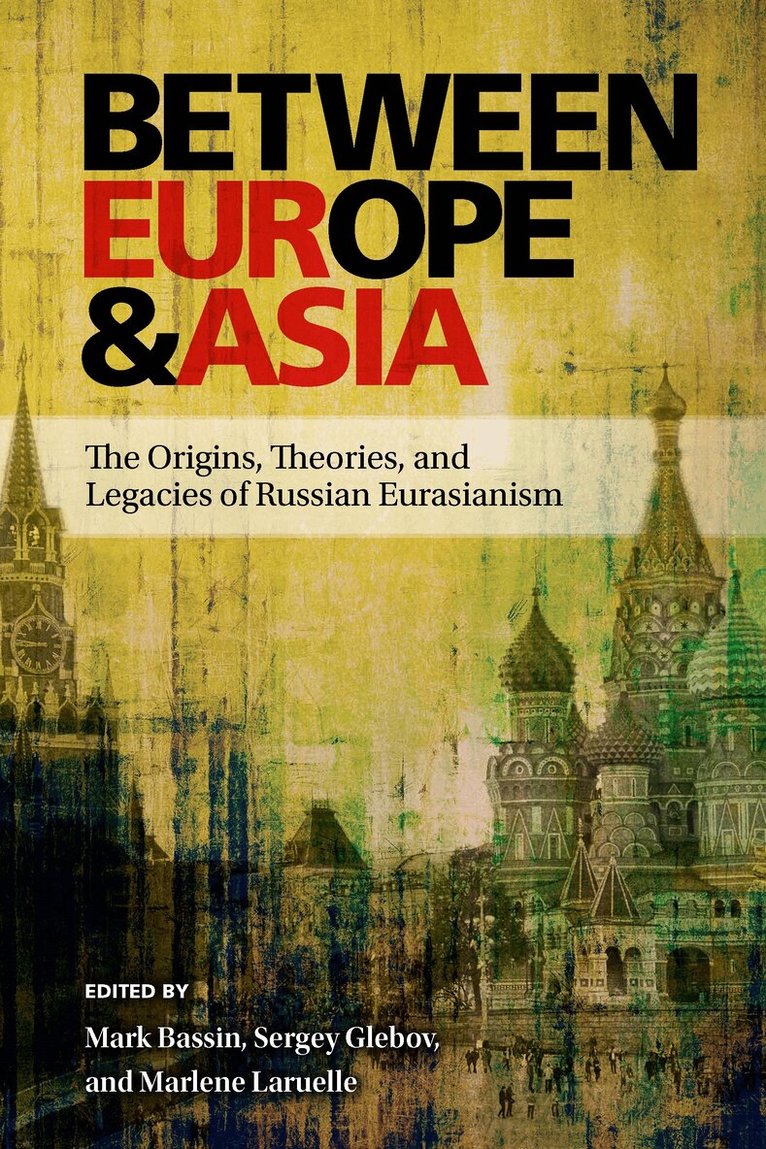
Between Europe and Asia analyzes the origins and development of Eurasianism, an intellectual movement that proclaimed the existence of Eurasia, a separate civilization coinciding with the former Russian Empire. The essays in the volume explore the historical roots, the heyday of the movement in the 1920s, and the afterlife of the movement in the Soviet and post-Soviet periods. The first study to offer a multifaceted account of Eurasianism in the twentieth century and to touch on the movement's intellectual entanglements with history, politics, literature, or geography, this book also explores Eurasianism's influences beyond Russia.The Eurasianists blended their search for a primordial essence of Russian culture with radicalism of Europe's interwar period. In reaction to the devastation and dislocation of the wars and revolutions, they celebrated the Orthodox Church and the Asian connections of Russian culture, while rejecting Western individualism and democracy. The movement sought to articulate a non-European, non-Western modernity, and to underscore Russia's role in the colonial world. As the authors demonstrate, Eurasianism was akin to many fascist movements in interwar Europe, and became one of the sources of the rhetoric of nationalist mobilization in Vladimir Putin's Russia. This book presents the rich history of the concept of Eurasianism, and how it developed over time to achieve its present form.
Inbunden, Engelska, 2010
485 kr
Skickas inom 10-15 vardagar
Exploring the creation, transformation, and imagination of Russian space as a lens through which to understand Russia's development over the centuries, this volume makes an important contribution to Russian studies and the "new spatial history." It considers aspects of the relationship between place and power in Russia from the local level to the national and from the eighteenth century through the present.Essays include: Melissa K. Stockdale, "What is a Fatherland? Changing Notions of Duty, Rights and Belonging in Russia"; Mark Bassin, "Nationhood, Natural Regions, Mestorazvitie: Environmental Discourses in Classic Eurasianism"; John Randolph, "Russian Route: The Politics of the Petersburg-Moscow Road, 1700-1800"; Richard Stites, "On the Dance Floor: Royal Power, Class, and Nationality in Servile Russia"; Patricia Herlihy, "Ab Oriente ad Ultimum Oriente: Eugen Scuyler, Russia and Central Asia"; Robert Argenbright, "Soviet Agitational Vehicles: Colonization from Place to Place"; Christopher Ely, "Street Space and Political Culture under Alexander II"; Sergei Zhuk, "Unmaking the Sacred Landscape of Orthodox Russia: Religious Pluralism, Identity Crisis, and Religious Politics on the Ukrainian Borderlands of the late Russian Empire"; Cathy A. Frierson, "Filling in the Map for Vologda's Post-Soviet Identity"; and Lisa A, "Kirschenbaum, Place, Memory and the Politics of Identity: Historical Buildings and Street Names in Leningrad-St. Petersburg."
Häftad, Engelska, 2018
317 kr
Skickas inom 10-15 vardagar
Exploring the creation, transformation, and imagination of Russian space as a lens through which to understand Russia's development over the centuries, this volume makes an important contribution to Russian studies and the "new spatial history." It considers aspects of the relationship between place and power in Russia from the local level to the national and from the eighteenth century through the present.Essays include: Melissa K. Stockdale, "What is a Fatherland? Changing Notions of Duty, Rights and Belonging in Russia"; Mark Bassin, "Nationhood, Natural Regions, Mestorazvitie: Environmental Discourses in Classic Eurasianism"; John Randolph, "Russian Route: The Politics of the Petersburg-Moscow Road, 1700-1800"; Richard Stites, "On the Dance Floor: Royal Power, Class, and Nationality in Servile Russia"; Patricia Herlihy, "Ab Oriente ad Ultimum Oriente: Eugen Scuyler, Russia and Central Asia"; Robert Argenbright, "Soviet Agitational Vehicles: Colonization from Place to Place"; Christopher Ely, "Street Space and Political Culture under Alexander II"; Sergei Zhuk, "Unmaking the Sacred Landscape of Orthodox Russia: Religious Pluralism, Identity Crisis, and Religious Politics on the Ukrainian Borderlands of the late Russian Empire"; Cathy A. Frierson, "Filling in the Map for Vologda's Post-Soviet Identity"; and Lisa A, "Kirschenbaum, Place, Memory and the Politics of Identity: Historical Buildings and Street Names in Leningrad-St. Petersburg."
Inbunden, Engelska, 2012
1 709 kr
Skickas inom 7-10 vardagar
Since the Soviet Union collapsed in 1991, questions of identity have dominated the culture not only of Russia, but of all the countries of the former Soviet bloc. This timely collection examines the ways in which cultural activities such as fiction, TV, cinema, architecture and exhibitions have addressed these questions and also describes other cultural flashpoints, from attitudes to language to the use of passports. It discusses definitions of political and cultural nationalism, as well as the myths, institutions and practices that moulded and expressed national identity. From post-Soviet recollections of food shortages to the attempts by officials to control popular religion, it analyses a variety of unexpected and compelling topics to offer fresh insights about this key area of world culture. Illustrated with numerous photographs, it presents the results of recent research in an accessible and lively way.
Häftad, Engelska, 2016
605 kr
Since the Soviet Union collapsed in 1991, questions of identity have dominated the culture not only of Russia, but of all the countries of the former Soviet bloc. This timely collection examines the ways in which cultural activities such as fiction, TV, cinema, architecture and exhibitions have addressed these questions and also describes other cultural flashpoints, from attitudes to language to the use of passports. It discusses definitions of political and cultural nationalism, as well as the myths, institutions and practices that moulded and expressed national identity. From post-Soviet recollections of food shortages to the attempts by officials to control popular religion, it analyses a variety of unexpected and compelling topics to offer fresh insights about this key area of world culture. Illustrated with numerous photographs, it presents the results of recent research in an accessible and lively way.
Inbunden, Engelska, 2016
1 504 kr
Skickas inom 10-15 vardagar
This book discusses the return of geopolitical ideas and doctrines to the post-Soviet space with special focus on the new phenomenon of digital geopolitics, which is an overarching term for different political practices including dissemination of geopolitical ideas online, using the internet by political figures and diplomats for legitimation and outreach activity, and viral spread of geopolitical memes. Different chapters explore the new possibilities and threats associated with this digitalization of geopolitical knowledge and practice. Our authors consider new spatial sensibilities and new identities of global as well as local Selves, the emergence of which is facilitated by the internet. They explore recent reconfigurations of the traditional imperial conundrum of center versus periphery. Developing Manuel Castells’ argument that social activism in the digital era is organized around cultural values, the essays discuss new geopolitical ideologies which aim to reinforce Russia’s spiritual sovereignty as a unique civilization, while at the same time seeking to rebrand Russia as a greater soft power by utilizing the Russian-speaking diaspora or employing traditionalist rhetoric. Great Power imagery, enemy-making, and visual mappings of Russia’s future territorial expansion are traditional means for the manipulation of imperial pleasures and geopolitical fears. In the age of new media, however, this is being done with greater subtlety by mobilizing the grassroots, contracting private information channels, and de-politicizing geopolitics. Given the political events of recent years, it is logical that the Ukrainian crisis should provide the thematic backdrop for most of the authors.
Häftad, Engelska, 2017
687 kr
Skickas inom 10-15 vardagar
This book discusses the return of geopolitical ideas and doctrines to the post-Soviet space with special focus on the new phenomenon of digital geopolitics, which is an overarching term for different political practices including dissemination of geopolitical ideas online, using the internet by political figures and diplomats for legitimation and outreach activity, and viral spread of geopolitical memes. Different chapters explore the new possibilities and threats associated with this digitalization of geopolitical knowledge and practice. Our authors consider new spatial sensibilities and new identities of global as well as local Selves, the emergence of which is facilitated by the internet. They explore recent reconfigurations of the traditional imperial conundrum of center versus periphery. Developing Manuel Castells’ argument that social activism in the digital era is organized around cultural values, the essays discuss new geopolitical ideologies which aim to reinforce Russia’s spiritual sovereignty as a unique civilization, while at the same time seeking to rebrand Russia as a greater soft power by utilizing the Russian-speaking diaspora or employing traditionalist rhetoric. Great Power imagery, enemy-making, and visual mappings of Russia’s future territorial expansion are traditional means for the manipulation of imperial pleasures and geopolitical fears. In the age of new media, however, this is being done with greater subtlety by mobilizing the grassroots, contracting private information channels, and de-politicizing geopolitics. Given the political events of recent years, it is logical that the Ukrainian crisis should provide the thematic backdrop for most of the authors.
Häftad, Engelska, 2016
339 kr
Skickas inom 5-8 vardagar
Since the collapse of the Soviet Union, the legacy of the historian, ethnographer, and geographer Lev Nikolaevich Gumilev (1912–1992) has attracted extraordinary interest in Russia and beyond. The son of two of modern Russia's greatest poets, Nikolai Gumilev and Anna Akhmatova, Gumilev spent thirteen years in Stalinist prison camps, and after his release in 1956 remained officially outcast and professionally shunned. Out of the tumult of perestroika, however, his writings began to attract attention and he himself became a well-known and popular figure. Despite his highly controversial (and often contradictory) views about the meaning of Russian history, the nature of ethnicity, and the dynamics of interethnic relations, Gumilev now enjoys a degree of admiration and adulation matched by few if any other public intellectual figures in the former Soviet Union. He is freely compared to Albert Einstein and Karl Marx, and his works today sell millions of copies and have been adopted as official textbooks in Russian high schools. Universities and mountain peaks alike are named in his honor, and a statue of him adorns a prominent thoroughfare in a major city. Leading politicians, President Vladimir Putin very much included, are unstinting in their deep appreciation for his legacy, and one of the most important foreign-policy projects of the Russian government today is clearly inspired by his particular vision of how the Eurasian peoples formed a historical community. In The Gumilev Mystique, Mark Bassin presents an analysis of this remarkable phenomenon. He investigates the complex structure of Gumilev's theories, revealing how they reflected and helped shape a variety of academic as well as political and social discourses in the USSR, and he traces how his authority has grown yet greater across the former Soviet Union. The themes he highlights while untangling Gumilev's complicated web of influence are critical to understanding the political, intellectual, and ethno-national dynamics of Russian society from the age of Stalin to the present day.
Inbunden, Engelska, 2017
1 919 kr
Skickas inom 10-15 vardagar
In the course of Vladimir Putin’s third presidential term, many of the doctrines and ideas associated with Eurasianism have moved to the center of public political discourses in Russia. Eurasianism, both Russian and non-Russian, is politically active —influential and contested— in debates about identity, popular culture or foreign policy narratives.Deploying a variety of theoretical frameworks and perspectives, the essays in this volume work together to shed light on both Eurasianism’s plasticity and contemporary weight, and examine how its tropes and discourses are appropriated, interpreted, modulated and deployed politically, by national groups, oppositional forces (left or right), prominent intellectuals, artists, and last but not least, government elites. In doing so, this collection addresses essential themes and questions currently shaping the Post-Soviet world and beyond.
Häftad, Engelska, 2017
690 kr
Skickas inom 10-15 vardagar
In the course of Vladimir Putin’s third presidential term, many of the doctrines and ideas associated with Eurasianism have moved to the center of public political discourses in Russia. Eurasianism, both Russian and non-Russian, is politically active —influential and contested— in debates about identity, popular culture or foreign policy narratives.Deploying a variety of theoretical frameworks and perspectives, the essays in this volume work together to shed light on both Eurasianism’s plasticity and contemporary weight, and examine how its tropes and discourses are appropriated, interpreted, modulated and deployed politically, by national groups, oppositional forces (left or right), prominent intellectuals, artists, and last but not least, government elites. In doing so, this collection addresses essential themes and questions currently shaping the Post-Soviet world and beyond.
E-bok
Engelska, 2017752 kr
Läs direkt efter köp
In the course of Vladimir Putin’s third presidential term, many of the doctrines and ideas associated with Eurasianism have moved to the center of public political discourses in Russia. Eurasianism, both Russian and non-Russian, is politically active —influential and contested— in debates about identity, popular culture or foreign policy narratives.Deploying a variety of theoretical frameworks and perspectives, the essays in this volume work together to shed light on both Eurasianism’s plasticity and contemporary weight, and examine how its tropes and discourses are appropriated, interpreted, modulated and deployed politically, by national groups, oppositional forces (left or right), prominent intellectuals, artists, and last but not least, government elites. In doing so, this collection addresses essential themes and questions currently shaping the Post-Soviet world and beyond.
Inbunden, Engelska, 2026
1 153 kr
Kommande
The end of what the GDR called “real existierender Sozialismus” in Europe at the beginning of the 1990s dramatically changed the geopolitical situation in Central and Eastern Europe. Five states ceased to exist, whereas 22 new states have been recognized, accompanied by a host of internationally unrecognized states. Nearly half a century of relative stability in Europe was replaced by volatility and insecurity.These geopolitical transformations were accompanied by a fundamental revalorization of political space and the rehabilitation of long-forgotten spatial symbolisms and geopolitical imaginations, from legacies of the Polish-Lithuanian Commonwealth, concepts of Mitteleuropa, the Saisonsstaaten of 1918, to neo-imperial concepts of the “Russian world” and pan-Turkic neo-Ottomanism. The Russian annexation of Crimea in 2014 and the full-scale assault on Ukraine in 2022 constitute a return of massive imperial violence, rhetorically justified by an intensely political rewriting of history, invoking the imperial past to justify aggression. Legacies of the historical past, which until recently were curiosities, little known beyond smaller groups of specialists, now formed a casus belli.The volume, addressing scholars and others concerned with today’s Europe, contains four sections: its opening section on imperial spaces engages Russia’s attempts at “renegotiate” the international political order, an end of liminality in a Russia which “knows no boundaries” (thus Putin). It is followed by a section on the construction of spatial identities on the basis of the Russian Federation leadership’s “renegoting” its liminality. Section three engages the repositioning of Eastern Europe in the wake of Russia’s departure from the international, rule-based legal order. The final section inquiries into the ideological underpinnings of “re-negotiated” geopolitical imaginaries of both perpetrators and victims of this re-imagination of empires.