• Fri frakt över 249 kr
  • •
  • Snabba leveranser
  • •
  • Billiga böcker
Kundservice

Du är på sajten för privatpersoner.

Företag, bibliotek eller offentlig verksamhet?

Du handlar på classic.bokus.com, där alla dina funktioner finns intakta.
Till classic.bokus.com
Bokus logotyp. Gå till startsidan.
  • Erbjudanden
  • Nyheter
  • Student
  • Topplistor
  • Barn & ungdom
  • Bokus Play
  • E-böcker
  • Pocketböcker
  • Spel & pussel

10% rabatt på allt med kod NYSTART10 →

Sidfot

Mina sidor

    Hjälp

    • Kundservice
    • Vanliga frågor och svar
    • Frakt och leverans
    • Retur vid ångerrätt
    • Reklamera vara
    • Betalning
    • Köpvillkor
    • Allmänna villkor
    • Information om webbplatsens tillgänglighet

    Om Bokus

    • Om oss
    • Pressrum
    • För studenter
    • För företag
    • För bibliotek och offentlig verksamhet
    • För leverantörer
    • Hållbarhet

    Populärt

    • Aktuella erbjudanden
    • Presentkort
    • Studentlitteratur
    • Nya böcker
    • Topplistor
    • Signerade böcker
    • Engelska böcker

    Inspiration

    • Boktips
    • BookTok
    • Populära bokserier
    • Barnbokskaraktärer
    • Populära författare
    Logotyp för Bokus
    Följ oss på Facebook (extern länk)Följ oss på Instagram (extern länk)Följ oss på YouTube (extern länk)Följ oss på TikTok (extern länk)
    bokus @ CookiesAnpassa cookiesIntegritetspolicyKöpvillkor
    Till Citymail hemsida (extern länk)Till Budbee hemsida (extern länk)Till Postnord hemsida (extern länk)Till Schenker hemsida (extern länk)Till Early Bird hemsida (extern länk)Till Walleys hemsida (extern länk)
    1. Samhälle och politik
    2. Politik och statsskick
    3. Internationella relationer

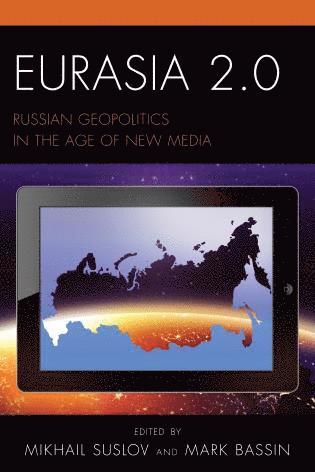
    Eurasia 2.0

    Russian Geopolitics in the Age of New Media

    AvMikhail Suslov,Mark Bassin

    Inbunden, Engelska, 2016

    Del i serien Russian, Eurasian, and Eastern European Politics

    1 534 kr

    Beställningsvara. Skickas inom 10-15 vardagar. Fri frakt över 249 kr.

    Beskrivning

    This book discusses the return of geopolitical ideas and doctrines to the post-Soviet space with special focus on the new phenomenon of digital geopolitics, which is an overarching term for different political practices including dissemination of geopolitical ideas online, using the internet by political figures and diplomats for legitimation and outreach activity, and viral spread of geopolitical memes. Different chapters explore the new possibilities and threats associated with this digitalization of geopolitical knowledge and practice. Our authors consider new spatial sensibilities and new identities of global as well as local Selves, the emergence of which is facilitated by the internet. They explore recent reconfigurations of the traditional imperial conundrum of center versus periphery. Developing Manuel Castells’ argument that social activism in the digital era is organized around cultural values, the essays discuss new geopolitical ideologies which aim to reinforce Russia’s spiritual sovereignty as a unique civilization, while at the same time seeking to rebrand Russia as a greater soft power by utilizing the Russian-speaking diaspora or employing traditionalist rhetoric. Great Power imagery, enemy-making, and visual mappings of Russia’s future territorial expansion are traditional means for the manipulation of imperial pleasures and geopolitical fears. In the age of new media, however, this is being done with greater subtlety by mobilizing the grassroots, contracting private information channels, and de-politicizing geopolitics. Given the political events of recent years, it is logical that the Ukrainian crisis should provide the thematic backdrop for most of the authors.

    Produktinformation

    • Utgivningsdatum:2016-03-17
    • Mått:161 x 239 x 32 mm
    • Vikt:753 g
    • Format:Inbunden
    • Språk:Engelska
    • Serie:Russian, Eurasian, and Eastern European Politics
    • Antal sidor:374
    • Förlag:Bloomsbury Publishing Plc
    • ISBN:9781498521413

    Utforska kategorier

    • Internationella relationer inom Samhälle och politik

    Mer om författaren

    Mark Bassinis Baltic Sea professor of the history of ideas in the Center for Baltic and East European Studies at Södertörn University in Stockholm.Mikhail Suslov is Marie Curie post-doctoral researcher at the Uppsala Center for Russian and Eurasian Studies, Uppsala University.

    Recensioner i media

    The Eurasia 2.0: Russian Geopolitics in the Age of New Media volume masterfully demonstrates that certain recurrent assumptions of geopolitics continue to be very relevant today, particularly when the issues of power and influence touch upon the questions of ideology, national character, and identity. Mikhail Suslov, Mark Bassin and all contributors to this excellent collection of essays go a long way towards uncovering the uneven and multifaceted character of changes in Russia and the politics of identity in Eurasia.... Overall, the book is an important, timely and relevant effort to understand the re-emerging concept of geopolitics in the age of new media. The amount of nuanced research in this volume is noteworthy.... Eurasia 2.0 is a valuable scholarly contribution, which provides a much-needed indication of the processes and challenges in Eurasia, and which will serve as a foundation for future projects.

    Innehållsförteckning

    • Chapter 1. Saara Ratilainen, Russian Digital Lifestyle Media and the Construction of Global SelvesChapter 2. Brigit Beumers, Crossing Borders/Road Movies in Russia: The Road to Nowhere? Destinations in Recent Russian Cinema Chapter 3. Galina Zvereva, Digital Storytelling on YouTube: The Geo-Political Factor in Russian Vernacular Regional IdentitiesChapter 4. Andrei Tsygankov, Uses of Eurasia: the Kremlin, the Eurasian Union, and the Izborsky Club Chapter 5. Marlène Laruelle, Digital Geopolitics Encapsulated. Geidar Dzhemal between Islamism, Occult Fascism and Eurasianism Chapter 6. Sirke Mäkinen, Russia as an alternative model: Geopolitical Representations and Russia’s Public Diplomacy—the Case of RossotrudnichestvoChapter 7. Hanna Smith, Putin’s Third Term and Russia as a Great PowerChapter 8. Fabian Linde, Future Empire: State-Sponsored Eurasian Identity Promotion Among Russian YouthChapter 9. Per-Arne Bodin, Russian Geopolitical Discourse: On Pseudomorphosis, Phantom Pains and SimulacraCh