Sergey Glebov - Böcker
Visar alla böcker från författaren Sergey Glebov. Handla med fri frakt och snabb leverans.
7 produkter
7 produkter
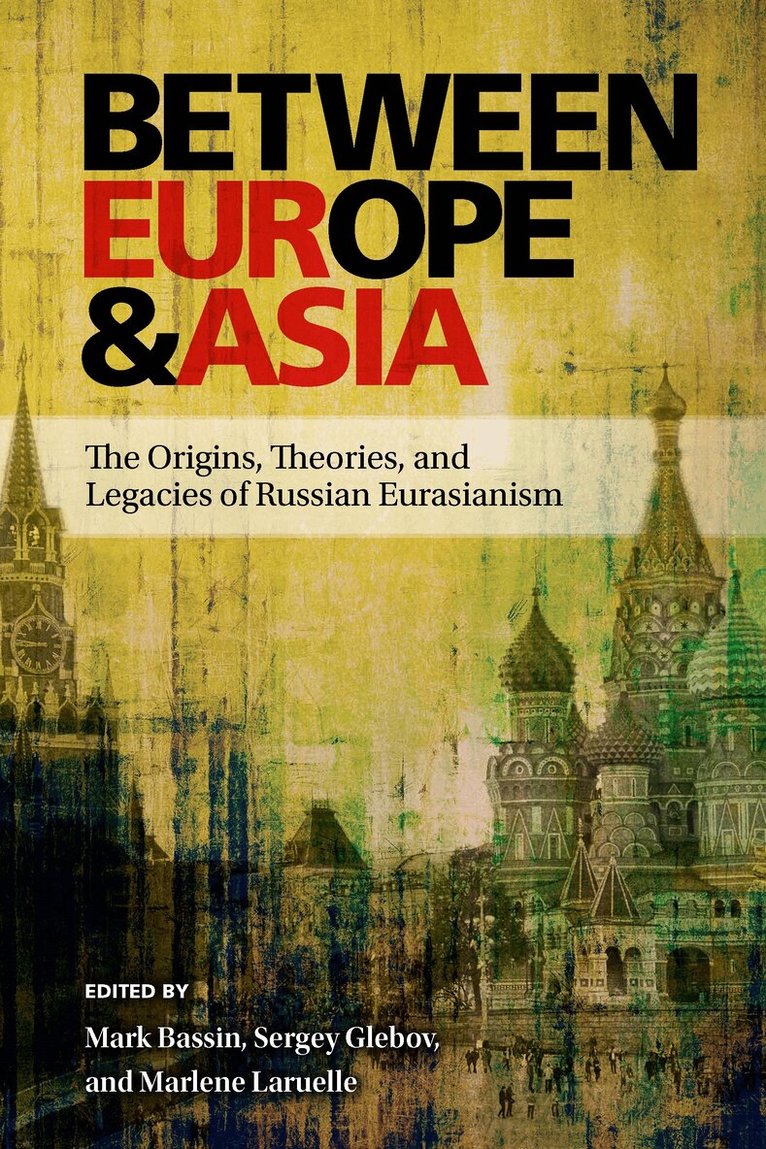
Between Europe and Asia
The Origins, Theories, and Legacies of Russian Eurasianism
Häftad, Engelska, 2015
666 kr
Skickas inom 7-10 vardagar
Between Europe and Asia analyzes the origins and development of Eurasianism, an intellectual movement that proclaimed the existence of Eurasia, a separate civilization coinciding with the former Russian Empire. The essays in the volume explore the historical roots, the heyday of the movement in the 1920s, and the afterlife of the movement in the Soviet and post-Soviet periods. The first study to offer a multifaceted account of Eurasianism in the twentieth century and to touch on the movement's intellectual entanglements with history, politics, literature, or geography, this book also explores Eurasianism's influences beyond Russia.The Eurasianists blended their search for a primordial essence of Russian culture with radicalism of Europe's interwar period. In reaction to the devastation and dislocation of the wars and revolutions, they celebrated the Orthodox Church and the Asian connections of Russian culture, while rejecting Western individualism and democracy. The movement sought to articulate a non-European, non-Western modernity, and to underscore Russia's role in the colonial world. As the authors demonstrate, Eurasianism was akin to many fascist movements in interwar Europe, and became one of the sources of the rhetoric of nationalist mobilization in Vladimir Putin's Russia. This book presents the rich history of the concept of Eurasianism, and how it developed over time to achieve its present form.
From Empire to Eurasia
Politics, Scholarship, and Ideology in Russian Eurasianism, 1920s–1930s
Inbunden, Engelska, 2017
1 571 kr
Skickas inom 10-15 vardagar
The Eurasianist movement was launched in the 1920s by a group of young Russian émigrés who had recently emerged from years of fighting and destruction. Drawing on the cultural fermentation of Russian modernism in the arts and literature, as well as in politics and scholarship, the movement sought to reimagine the former imperial space in the wake of Europe's Great War. The Eurasianists argued that as an heir to the nomadic empires of the steppes, Russia should follow a non-European path of development. In the context of rising Nazi and Soviet powers, the Eurasianists rejected liberal democracy and sought alternatives to Communism and capitalism. Deeply connected to the Russian cultural and scholarly milieus, Eurasianism played a role in the articulation of the structuralist paradigm in interwar Europe. However, the movement was not as homogenous as its name may suggest. Its founders disagreed on a range of issues and argued bitterly about what weight should be accorded to one or another idea in their overall conception of Eurasia. In this first English language history of the Eurasianist movement based on extensive archival research, Sergey Glebov offers a historically grounded critique of the concept of Eurasia by interrogating the context in which it was first used to describe the former Russian Empire. This definitive study will appeal to students and scholars of Russian and European history and culture.
From Empire to Eurasia
Politics, Scholarship, and Ideology in Russian Eurasianism, 1920s-1930s
Häftad, Engelska, 2017
504 kr
Skickas inom 10-15 vardagar
The Eurasianist movement was launched in the 1920s by a group of young Russian émigrés who had recently emerged from years of fighting and destruction. Drawing on the cultural fermentation of Russian modernism in the arts and literature, as well as in politics and scholarship, the movement sought to reimagine the former imperial space in the wake of Europe’s Great War. The Eurasianists argued that as an heir to the nomadic empires of the steppes, Russia should follow a non-European path of development. In the context of rising Nazi and Soviet powers, the Eurasianists rejected liberal democracy and sought alternatives to Communism and capitalism. Deeply connected to the Russian cultural and scholarly milieus, Eurasianism played a role in the articulation of the structuralist paradigm in interwar Europe. However, the movement was not as homogenous as its name may suggest. Its founders disagreed on a range of issues and argued bitterly about what weight should be accorded to one or another idea in their overall conception of Eurasia. In this first English language history of the Eurasianist movement based on extensive archival research, Sergey Glebov offers a historically grounded critique of the concept of Eurasia by interrogating the context in which it was first used to describe the former Russian Empire.
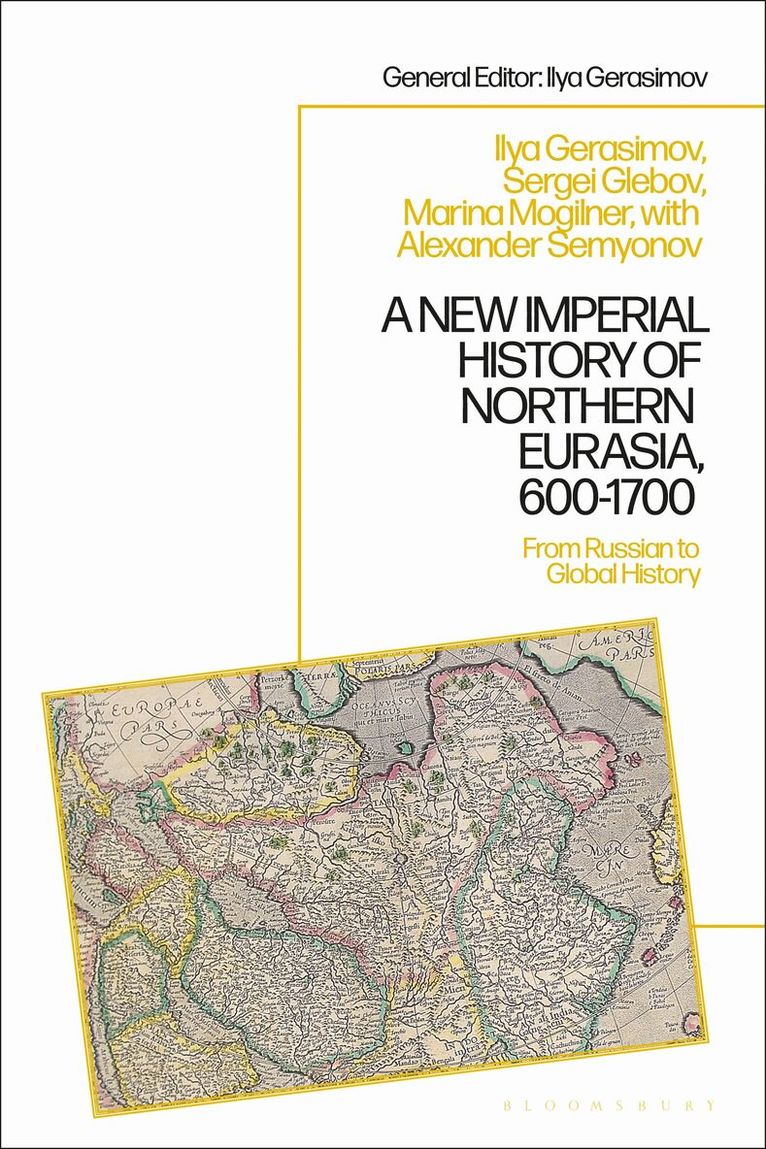
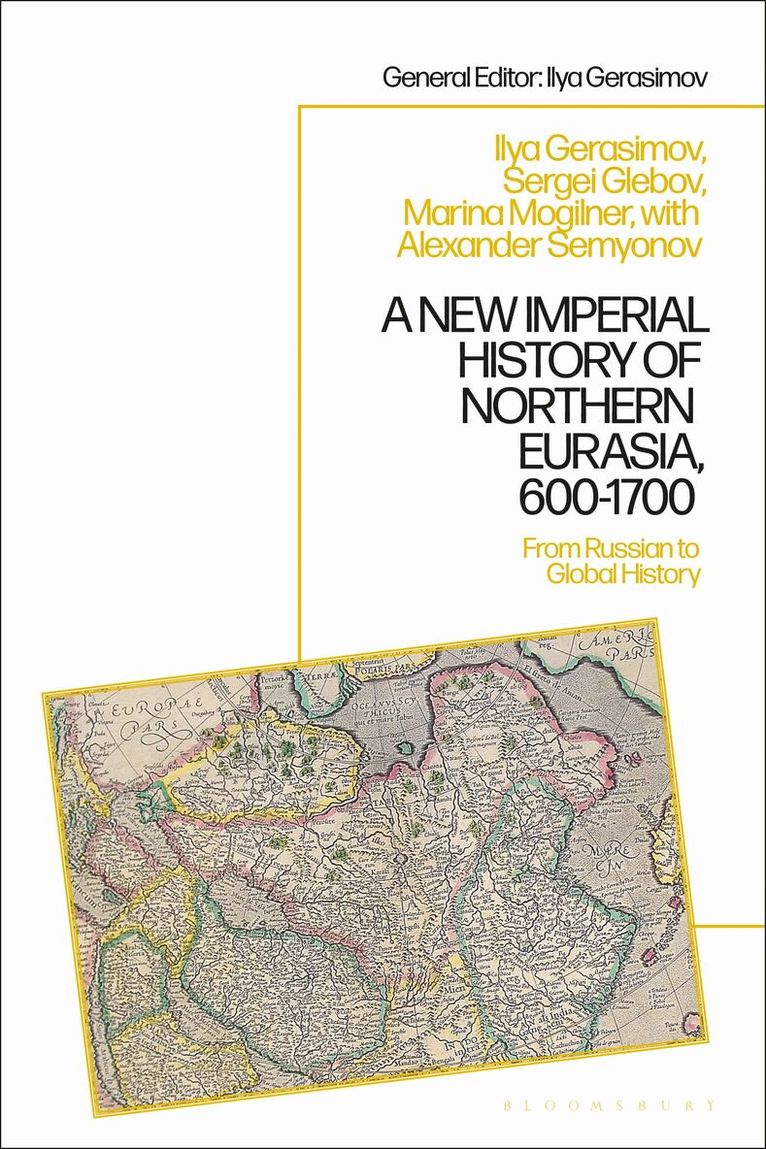
New Imperial History of Northern Eurasia, 600-1700
From Russian to Global History
Inbunden, Engelska, 2023
1 245 kr
Skickas inom 10-15 vardagar
A New Imperial History of Northern Eurasia, 600-1700 proposes a new language for studying and conceptualizing the spaces, societies, and institutions that existed on the territory of today’s Northern Eurasia. This is not the story of a certain present-day state or people evolving through consecutive historical stages. Rather, the book is a modern analytical approach to the problem of human diversity as a fundamental social condition. Through cooperation and confrontation, various attempts to manage diversity fostered processes of societal self-organization, as new ideas, practices, and institutions were developed virtually from scratch or radically altered. Essentially, this is the story of individuals and societies creatively responding to their natural and social environments in unique historical circumstances.This volume explores how the mutual interactions of several local socio-political arrangements, and attempts to integrate with one of the universal cultures of the time, caused a string of unintended consequences. As a result, the enormous landmass from the Carpathian Mountains in the west to the Pacific Ocean in the east, from the Polar Circle in the north to the steppe belt in the south was divided among several regional powers. Ultimately unable to overtake each other by military force, they were locked in a zero-sum game until the uneven development of modern state institutions tilted the balance in favor of one of them – Russia.
New Imperial History of Northern Eurasia, 600-1700
From Russian to Global History
Häftad, Engelska, 2025
406 kr
Skickas inom 10-15 vardagar
A New Imperial History of Northern Eurasia, 600-1700 proposes a new language for studying and conceptualizing the spaces, societies, and institutions that existed on the territory of today’s Northern Eurasia. This is not the story of a certain present-day state or people evolving through consecutive historical stages. Rather, the book is a modern analytical approach to the problem of human diversity as a fundamental social condition. Through cooperation and confrontation, various attempts to manage diversity fostered processes of societal self-organization, as new ideas, practices, and institutions were developed virtually from scratch or radically altered. Essentially, this is the story of individuals and societies creatively responding to their natural and social environments in unique historical circumstances.This volume explores how the mutual interactions of several local socio-political arrangements, and attempts to integrate with one of the universal cultures of the time, caused a string of unintended consequences. As a result, the enormous landmass from the Carpathian Mountains in the west to the Pacific Ocean in the east, from the Polar Circle in the north to the steppe belt in the south was divided among several regional powers. Ultimately unable to overtake each other by military force, they were locked in a zero-sum game until the uneven development of modern state institutions tilted the balance in favor of one of them – Russia.
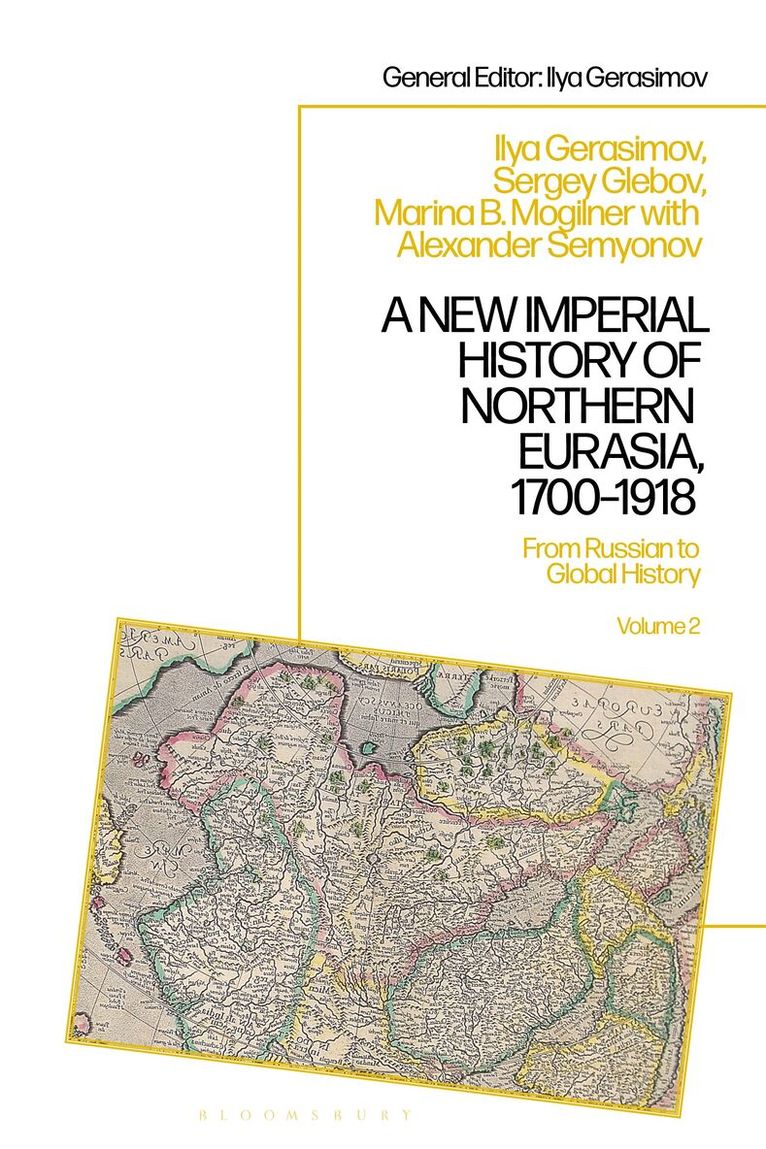
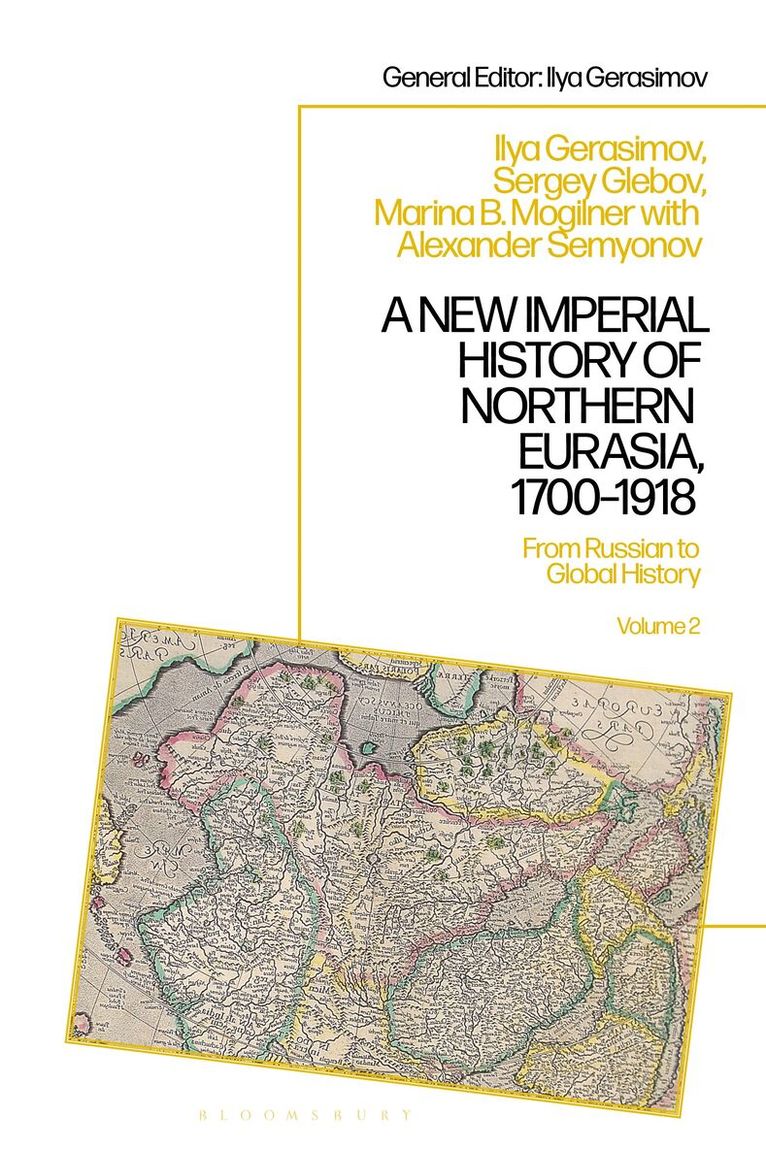
New Imperial History of Northern Eurasia, 1700-1918
From Russian to Global History
Häftad, Engelska, 2026
499 kr
Kommande
A New Imperial History of Northern Eurasia, 1700-1918 proposes a new language for studying and conceptualizing the spaces, societies, and institutions that existed on the territory of today’s Northern Eurasia, until recently part of the USSR. Traditional concepts and genealogies that frame human experience have to be avoided or reframed: this is not the story of a certain present-day state or people evolving through consecutive historical stages. Rather, the book’s point of departure is a modern analytical approach to the problem of human diversity as a fundamental social condition. In the form of cooperation and confrontation, various attempts to manage diversity fostered processes of societal self-organization, as new ideas, practices, and institutions were developed virtually from scratch or radically altered when borrowed. Essentially, this is the story of individuals and societies who creatively responded to their natural and social environments and sought answers to universal problems in unique historical circumstances.This volume, which brings together leading scholars from the United States and Russia, covers the period during which the enormous landmass from the Carpathian Mountains in the west to the Pacific Ocean in the east, from the Polar Circle in the north to the steppe belt in the south was put under the control of a single polity: the Russian Empire. Previously, the competing local scenarios of self-organization had taken specific political forms that suited them best. This book shows that the Russian Empire faced the daunting task of coordinating multifaceted diversity within a single political and legal body, under constantly changing domestic and international circumstances. The study reveals that, to this end, the imperial regime employed various means, from violence to science, from segregation to integration, and yet was still unable to block multiple political actors within the empire from advancing their own strategies of belonging, resistance, and participation.
New Imperial History of Northern Eurasia, 1700-1918
From Russian to Global History
Inbunden, Engelska, 2025
1 177 kr
Skickas inom 10-15 vardagar
A New Imperial History of Northern Eurasia, 1700-1918 proposes a new language for studying and conceptualizing the spaces, societies, and institutions that existed on the territory of today’s Northern Eurasia, until recently part of the USSR. Traditional concepts and genealogies that frame human experience have to be avoided or reframed: this is not the story of a certain present-day state or people evolving through consecutive historical stages. Rather, the book’s point of departure is a modern analytical approach to the problem of human diversity as a fundamental social condition. In the form of cooperation and confrontation, various attempts to manage diversity fostered processes of societal self-organization, as new ideas, practices, and institutions were developed virtually from scratch or radically altered when borrowed. Essentially, this is the story of individuals and societies who creatively responded to their natural and social environments and sought answers to universal problems in unique historical circumstances.This volume, which brings together leading scholars from the United States and Russia, covers the period during which the enormous landmass from the Carpathian Mountains in the west to the Pacific Ocean in the east, from the Polar Circle in the north to the steppe belt in the south was put under the control of a single polity: the Russian Empire. Previously, the competing local scenarios of self-organization had taken specific political forms that suited them best. This book shows that the Russian Empire faced the daunting task of coordinating multifaceted diversity within a single political and legal body, under constantly changing domestic and international circumstances. The study reveals that, to this end, the imperial regime employed various means, from violence to science, from segregation to integration, and yet was still unable to block multiple political actors within the empire from advancing their own strategies of belonging, resistance, and participation.