Mark Carey - Böcker
Visar alla böcker från författaren . Handla med fri frakt och snabb leverans.
10 produkter
10 produkter
1 585 kr
Skickas inom 3-6 vardagar
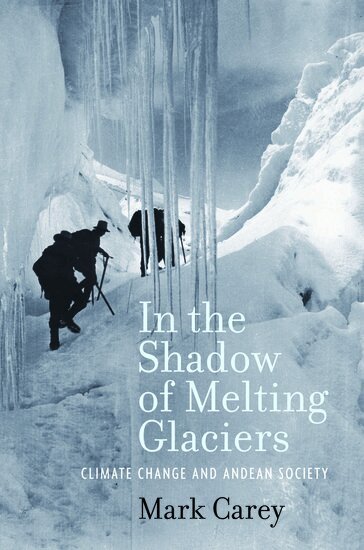
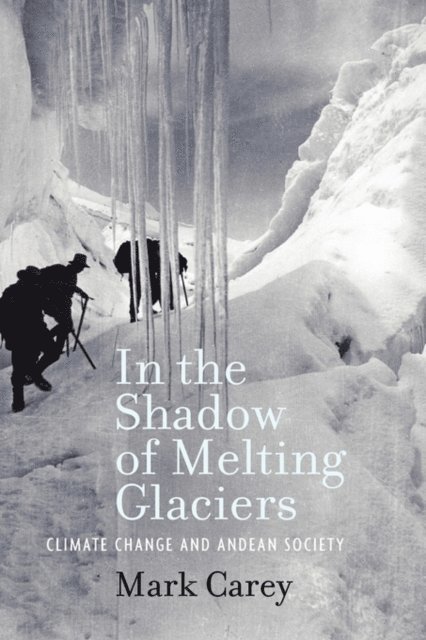
Climate change is producing profound changes globally. Yet we still know little about how it affects real people in real places on a daily basis because most of our knowledge comes from scientific studies that try to estimate impacts and project future climate scenarios. This book is different, illustrating in vivid detail how people in the Andes have grappled with the effects of climate change and ensuing natural disasters for more than half a century. In Peru's Cordillera Blanca mountain range, global climate change has generated the world's most deadly glacial lake outburst floods and glacier avalanches, killing 25,000 people since 1941. As survivors grieved, they formed community organizations to learn about precarious glacial lakes while they sent priests to the mountains, hoping that God could calm the increasingly hostile landscape. Meanwhile, Peruvian engineers working with miniscule budgets invented innovative strategies to drain dozens of the most unstable lakes that continue forming in the twenty first century.But adaptation to global climate change was never simply about engineering the Andes to eliminate environmental hazards. Local urban and rural populations, engineers, hydroelectric developers, irrigators, mountaineers, and policymakers all perceived and responded to glacier melting differently-based on their own view of an ideal Andean world. Disaster prevention projects involved debates about economic development, state authority, race relations, class divisions, cultural values, the evolution of science and technology, and shifting views of nature. Over time, the influx of new groups to manage the Andes helped transform glaciated mountains into commodities to consume. Locals lost power in the process and today comprise just one among many stakeholders in the high Andes-and perhaps the least powerful. Climate change transformed a region, triggering catastrophes while simultaneously jumpstarting modernization processes. This book's historical perspective illuminates these trends that would be ignored in any scientific projections about future climate scenarios.
374 kr
Skickas inom 5-8 vardagar
Climate change is producing profound changes globally. Yet we still know little about how it affects real people in real places on a daily basis because most of our knowledge comes from scientific studies that try to estimate impacts and project future climate scenarios. This book is different, illustrating in vivid detail how people in the Andes have grappled with the effects of climate change and ensuing natural disasters for more than half a century. In Peru's Cordillera Blanca mountain range, global climate change has generated the world's most deadly glacial lake outburst floods and glacier avalanches, killing 25,000 people since 1941. As survivors grieved, they formed community organizations to learn about precarious glacial lakes while they sent priests to the mountains, hoping that God could calm the increasingly hostile landscape. Meanwhile, Peruvian engineers working with miniscule budgets invented innovative strategies to drain dozens of the most unstable lakes that continue forming in the twenty first century.But adaptation to global climate change was never simply about engineering the Andes to eliminate environmental hazards. Local urban and rural populations, engineers, hydroelectric developers, irrigators, mountaineers, and policymakers all perceived and responded to glacier melting differently-based on their own view of an ideal Andean world. Disaster prevention projects involved debates about economic development, state authority, race relations, class divisions, cultural values, the evolution of science and technology, and shifting views of nature. Over time, the influx of new groups to manage the Andes helped transform glaciated mountains into commodities to consume. Locals lost power in the process and today comprise just one among many stakeholders in the high Andes-and perhaps the least powerful. Climate change transformed a region, triggering catastrophes while simultaneously jumpstarting modernization processes. This book's historical perspective illuminates these trends that would be ignored in any scientific projections about future climate scenarios.
1 172 kr
Skickas inom 7-10 vardagar
Until about twenty years ago, the consensus view on the cause of financial-system distress was fairly simple: a run on one bank could easily turn to a panic involving runs on all banks, destroying some and disrupting the financial system. Since then, however, a series of events—such as emerging-market debt crises, bond-market meltdowns, and the Long-Term Capital Management episode—has forced a rethinking of the risks facing financial institutions and the tools available to measure and manage these risks. The Risks of Financial Institutions examines the various risks affecting financial institutions and explores a variety of methods to help institutions and regulators more accurately measure and forecast risk. The contributors--from academic institutions, regulatory organizations, and banking--bring a wide range of perspectives and experience to the issue. The result is a volume that points a way forward to greater financial stability and better risk management of financial institutions.
256 kr
Skickas inom 3-6 vardagar
137 kr
Skickas inom 5-8 vardagar
391 kr
Skickas inom 5-8 vardagar
3 435 kr
Skickas inom 10-15 vardagar
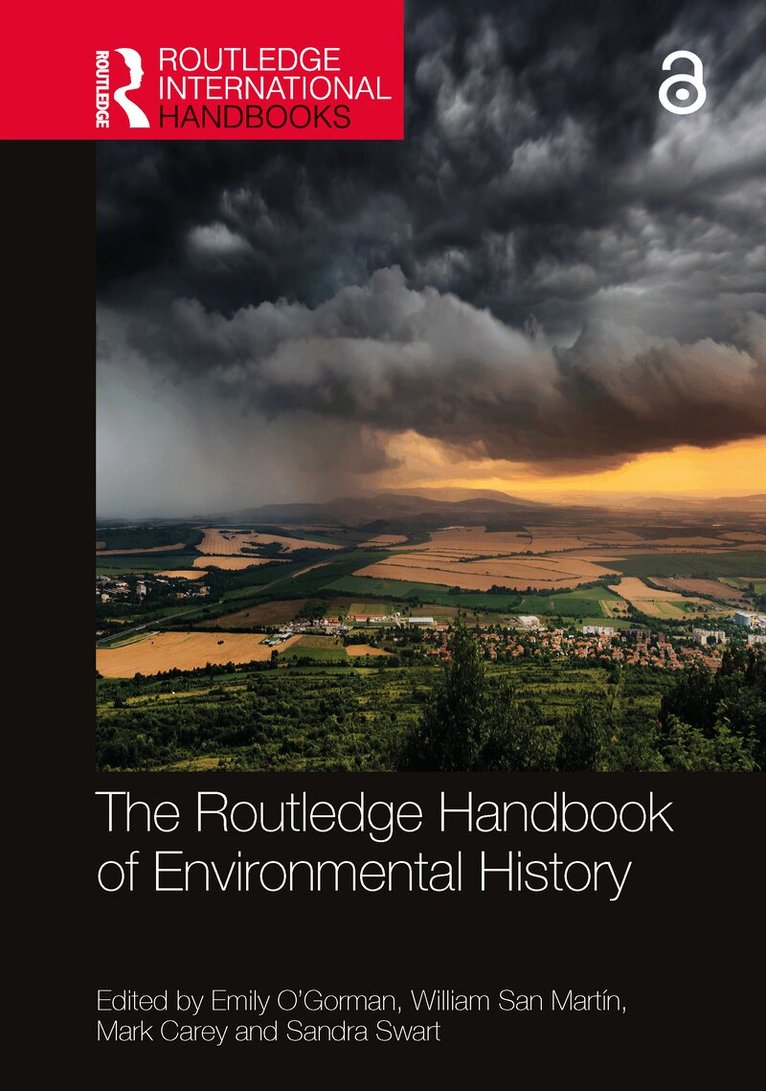
The Routledge Handbook of Environmental History presents a cutting-edge overview of the dynamic and ever-expanding field of environmental history. It addresses recent transformations in the field and responses to shifting scholarly, political, and environmental landscapes.The handbook fully and critically engages with recent exciting changes, contextualizes them within longer-term shifts in the field, and charts potential new directions for study. It focuses on five key areas:Theories and concepts related to changing considerations of social justice, including postcolonial, antiracist, and feminist approaches, and the field’s growing emphasis on multiple human voices and agencies.The roles of non-humans and the more-than-human in the telling of environmental histories, from animals and plants to insects as vectors of disease and the influences of water and ice, the changing theoretical approaches and the influence of concepts in related areas such as animal and discard studies.How changes in theories and concepts are shaping methods in environmental history and shifting approaches to traditional sources like archives and oral histories as well as experiments by practitioners with new methods and sources.Responses to a range of current complex problems, such as climate change, and how environmental historians can best help mitigate and resolve these problems.Diverse ways in which environmental historians disseminate their research within and beyond academia, including new modes of research dissemination, teaching, and engagements with stakeholders and the policy arena.This is an important resource for environmental historians, researchers and students in the related fields of political ecology, environmental studies, natural resources management and environmental planning.Chapters 9, 10 and 26 of this book are freely available as a downloadable Open Access PDF at http://www.taylorfrancis.com under a Creative Commons Attribution-Non Commercial-No Derivatives (CC-BY-NC-ND) 4.0 license.
721 kr
Skickas inom 10-15 vardagar
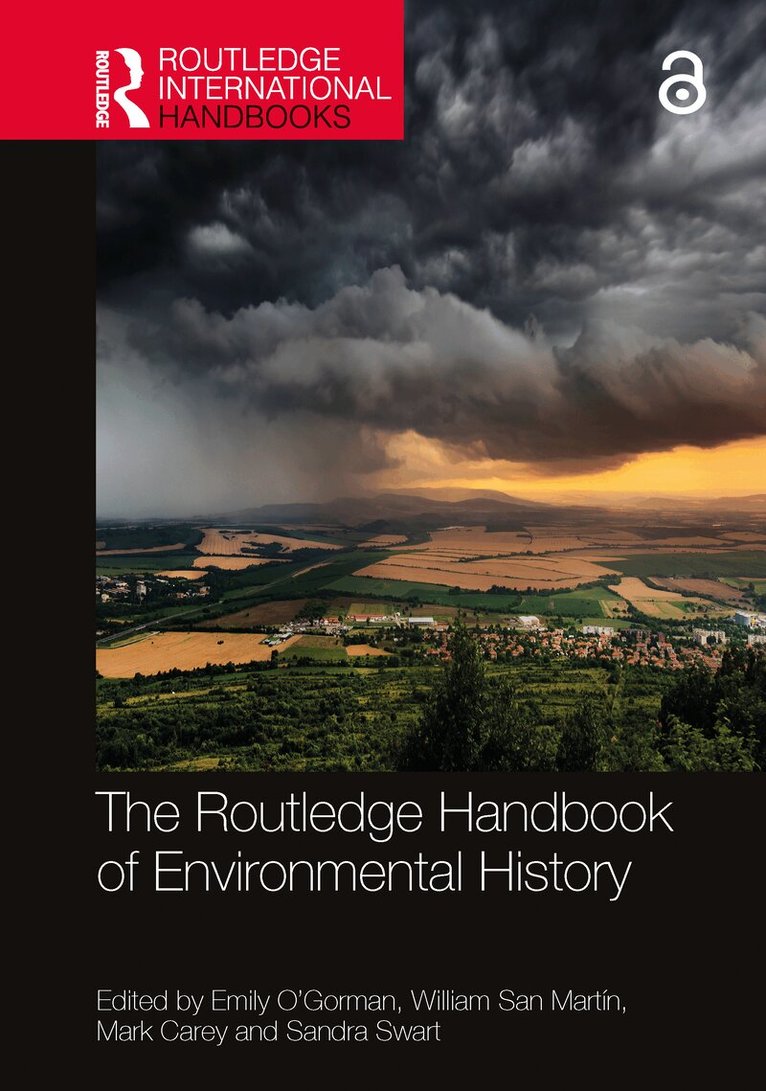
The Routledge Handbook of Environmental History presents a cutting-edge overview of the dynamic and ever-expanding field of environmental history. It addresses recent transformations in the field and responses to shifting scholarly, political, and environmental landscapes.The handbook fully and critically engages with recent exciting changes, contextualizes them within longer-term shifts in the field, and charts potential new directions for study. It focuses on five key areas:Theories and concepts related to changing considerations of social justice, including postcolonial, antiracist, and feminist approaches, and the field’s growing emphasis on multiple human voices and agencies.The roles of non-humans and the more-than-human in the telling of environmental histories, from animals and plants to insects as vectors of disease and the influences of water and ice, the changing theoretical approaches and the influence of concepts in related areas such as animal and discard studies.How changes in theories and concepts are shaping methods in environmental history and shifting approaches to traditional sources like archives and oral histories as well as experiments by practitioners with new methods and sources.Responses to a range of current complex problems, such as climate change, and how environmental historians can best help mitigate and resolve these problems.Diverse ways in which environmental historians disseminate their research within and beyond academia, including new modes of research dissemination, teaching, and engagements with stakeholders and the policy arena.This is an important resource for environmental historians, researchers and students in the related fields of political ecology, environmental studies, natural resources management and environmental planning.Chapters 9, 10 and 26 of this book are freely available as a downloadable Open Access PDF at http://www.taylorfrancis.com under a Creative Commons Attribution-Non Commercial-No Derivatives (CC-BY-NC-ND) 4.0 license.
1 705 kr
Skickas inom 7-10 vardagar
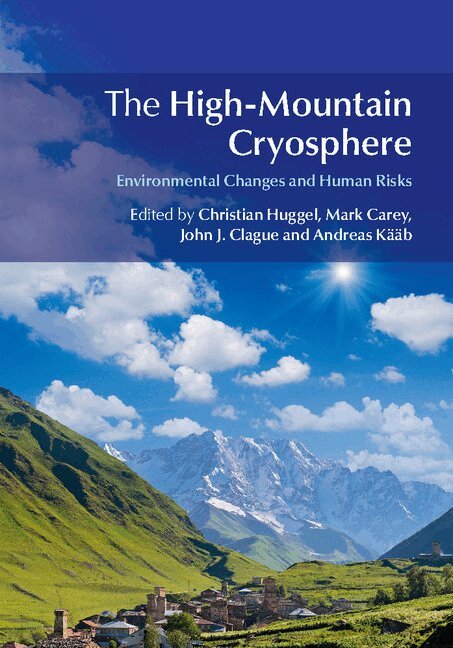
This edited volume, showcasing cutting-edge research, addresses two primary questions - what are the main drivers of change in high-mountains and what are the risks implied by these changes? From a physical perspective, it examines the complex interplay between climate and the high-mountain cryosphere, with further chapters covering tectonics, volcano-ice interactions, hydrology, slope stability, erosion, ecosystems, and glacier- and snow-related hazards. Societal dimensions, both global and local, of high-mountain cryospheric change are also explored. The book offers unique perspectives on high-mountain cultures, livelihoods, governance and natural resources management, focusing on how global change influences societies and how people respond to climate-induced cryospheric changes. An invaluable reference for researchers and professionals in cryospheric science, geomorphology, climatology, environmental studies and human geography, this volume will also be of interest to practitioners working in global change and risk, including NGOs and policy advisors.
687 kr
Skickas inom 7-10 vardagar
This edited volume, showcasing cutting-edge research, addresses two primary questions - what are the main drivers of change in high-mountains and what are the risks implied by these changes? From a physical perspective, it examines the complex interplay between climate and the high-mountain cryosphere, with further chapters covering tectonics, volcano-ice interactions, hydrology, slope stability, erosion, ecosystems, and glacier- and snow-related hazards. Societal dimensions, both global and local, of high-mountain cryospheric change are also explored. The book offers unique perspectives on high-mountain cultures, livelihoods, governance and natural resources management, focusing on how global change influences societies and how people respond to climate-induced cryospheric changes. An invaluable reference for researchers and professionals in cryospheric science, geomorphology, climatology, environmental studies and human geography, this volume will also be of interest to practitioners working in global change and risk, including NGOs and policy advisors.