Mark Jay Mirsky – författare
Visar alla böcker från författaren Mark Jay Mirsky. Handla med fri frakt och snabb leverans.
7 produkter
7 produkter
Häftad, Engelska, 1998
584 kr
Skickas inom 5-8 vardagar
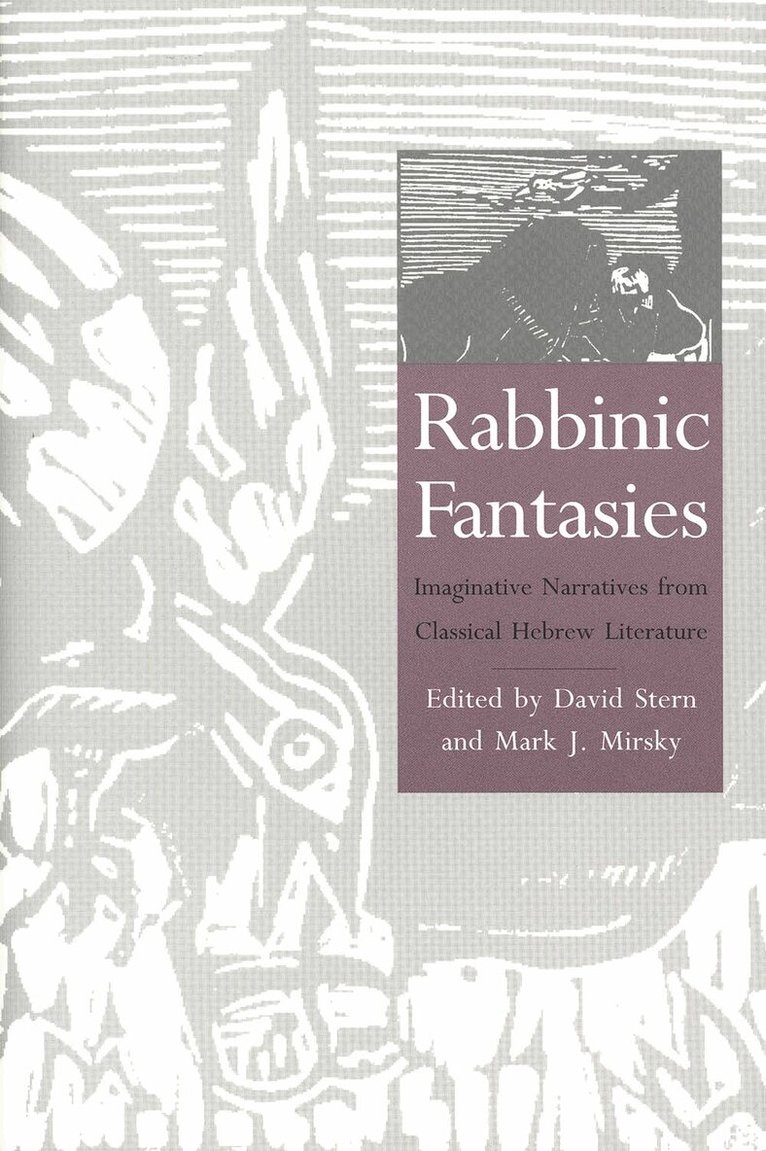
This remarkable anthology of sixteen narratives from ancient and medieval Hebrew texts opens a new window onto the Jewish imagination. Presenting the captivating world of rabbinic storytelling, it reveals facets of the Jewish experience and tradition that would otherwise have remained unknown and examines the surprisingly deep connection between the values of classical Judaism and the art of imaginative narrative writing. Virtually all the narratives appear here in English for the first time. Sometimes pious, sometimes playful, and sometimes almost scandalous, they are each accompanied by an introduction and notes. The selections are framed by essays by David Stern and Mark Jay Mirsky that examine the various moods and forms in which the rabbinic imagination found expression and explore the impact that this unique form of narrative has had on modern fiction. The translations are by Norman Bronznick, Yaakov Elman, Michal Govrin, Arthur Green, Martha Himmelfarb, Ivan Marcus, Mark Jay Mirsky, Joel Rosenberg, David Ruderman, Raymond Scheindlin, David Stern, and Avi Weinstein.Yale Judaica Series
Häftad, Engelska, 1999
255 kr
Skickas inom 5-8 vardagar
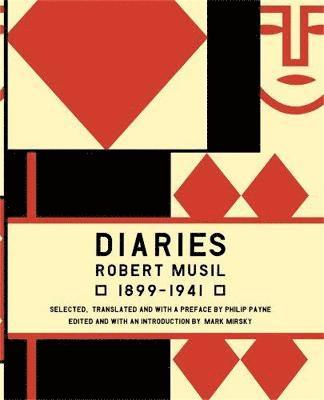
Robert Musil is ranked alongside Marcel Proust and James Joyce for his monumental, unfinished novel, The Man Without Qualities. His Diaries, a distillation of forty-three years of material, are valuable in a number of ways: as a first-hand historical document of life in twentieth-century central Europe, as a kind of unwitting autobiography of a great novelist, and as a writer's notebook that details the moods of artistic adventure.Readers will gain keen insights into Musil's passage from scientist, to soldier, to novelist, in honest passages that reveal the man in all his humour, ambition, frustration, and transcendence.
Inbunden, Engelska, 2013
981 kr
Skickas inom 10-15 vardagar
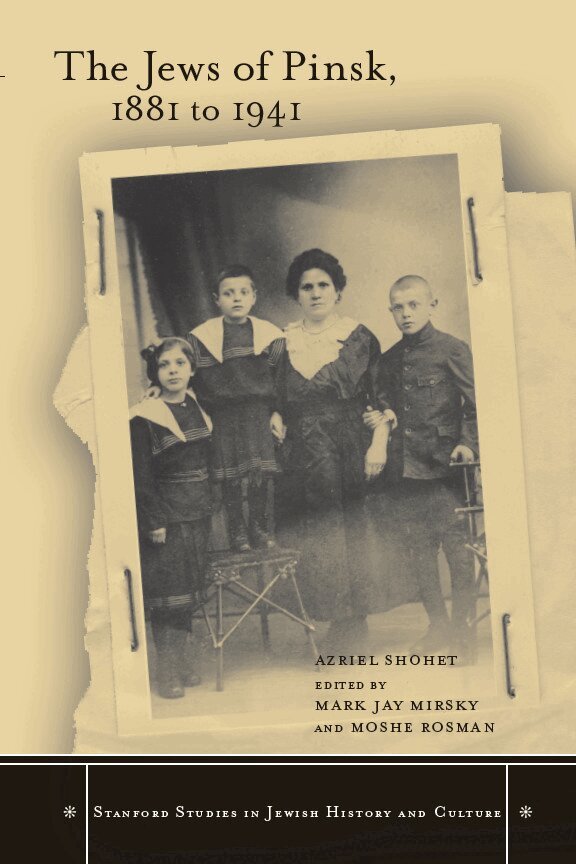
The Jews of Pinsk is the most detailed and comprehensive history of a single Jewish community in any language. This second portion of this study focuses on Pinsk's turbulent final sixty years, showing the reality of life in this important, and in many ways representative, Eastern European Jewish community. From the 1905 Russian revolution through World War One and the long prologue to the Holocaust, the sweep of world history and the fate of this dynamic center of Jewish life were intertwined. Pinsk's role in the bloody aftermath of World War One is still the subject of scholarly debates: the murder of 35 Jewish men from Pinsk, many from its educated elite, provoked the American and British leaders to send emissaries to Pinsk. Shohet argues that the executions were a deliberate ploy by the Polish military and government to intimidate the Jewish population of the new Poland. Despite an increasingly hostile Polish state, Pinsk's Jews managed to maintain their community through the 1920s and 30s—until World War Two brought a grim Soviet interregnum succeeded by the entry of the Nazis on July 4th, 1941.For the first volume of this two-volume collection, see The Jews of Pinsk, 1506-1880 at www.sup.org/book.cgi?id=1442.
E-bok
Engelska, 20131 108 kr
Läs direkt efter köp
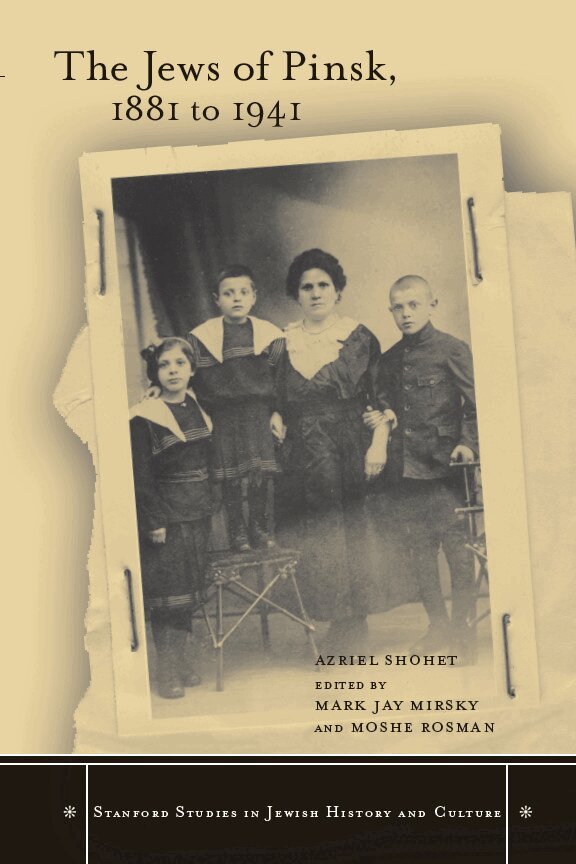
The Jews of Pinsk is the most detailed and comprehensive history of a single Jewish community in any language. This second portion of this study focuses on Pinsk's turbulent final sixty years, showing the reality of life in this important, and in many ways representative, Eastern European Jewish community. From the 1905 Russian revolution through World War One and the long prologue to the Holocaust, the sweep of world history and the fate of this dynamic center of Jewish life were intertwined. Pinsk's role in the bloody aftermath of World War One is still the subject of scholarly debates: the murder of 35 Jewish men from Pinsk, many from its educated elite, provoked the American and British leaders to send emissaries to Pinsk. Shohet argues that the executions were a deliberate ploy by the Polish military and government to intimidate the Jewish population of the new Poland. Despite an increasingly hostile Polish state, Pinsk's Jews managed to maintain their community through the 1920s and 30s—until World War Two brought a grim Soviet interregnum succeeded by the entry of the Nazis on July 4th, 1941.For the first volume of this two-volume collection, see The Jews of Pinsk, 1506-1880 at www.sup.org/book.cgi?id=1442.
Häftad, Engelska
227 kr
Skickas inom 3-6 vardagar
Häftad, Engelska
216 kr
Skickas inom 3-6 vardagar
E-bok
Engelska, 20111 578 kr
Läs direkt efter köp
The Drama in Shakespeare''s Sonnets: "A Satire to Decay" is a work of detective scholarship. Unable to believe that England''s great dramatist would publish a sequence of sonnets without a plot, Mark Jay Mirsky, novelist, playwright, and professor of English, proposes a solution to a riddle that has frustrated scholars and poets alike. Arguing that the Sonnets are not just a "higgledy piggledy" collection of poems but were put in order by Shakespeare himself, and drawing on the insights of several of the Sonnets'' foremost contemporary scholars, Mirsky examines the Sonnets poem by poem to ask what is the story of the whole.Mirsky takes Shakespeare at his own word in Sonnet 100, where the poet, tongue in cheek, advises his lover to regard "time''s spoils"–in this case, "any wrinkle graven" in his cheek–as but "a satire to decay." The comfort is obviously double-edged, but it can also be read as a mirror of Shakespeare''s "satire" on himself, as if to praise his own wrinkles, and reflects the poet''s intention in assembling the Sonnets to satirize the playwright''s own "decay" as a man and a lover.In a parody of sonnet sequences written by his fellow poets Spenser and Daniel, Shakespeare''s mordant wit conceals a bitter laugh at his own romantic life. The Drama in Shakespeare''s Sonnets demonstrates the playwright''s wish to capture the drama of the sexual betrayal as he experienced it in a triangle of friendship and eroticism with a man and a woman. It is a plot, however, that the playwright does not want to advertise too widely and conceals in the 1609 Quarto from all but a very few. Despite Shakespeare''s moments of despair at his male friend''s betrayal and the poet''s cursing at the sexual promiscuity of the so-called Dark Lady, The Drama in Shakespeare''s Sonnets sees the whole as a "satire" by Shakespeare and, particularly when read with the poem that accompanied it in the 1609 printing, "A Lover''s Complaint," as a laughing meditation on the irrepressible joy of sexual life