Marten Seppel - Böcker
Visar alla böcker från författaren Marten Seppel. Handla med fri frakt och snabb leverans.
3 produkter
3 produkter
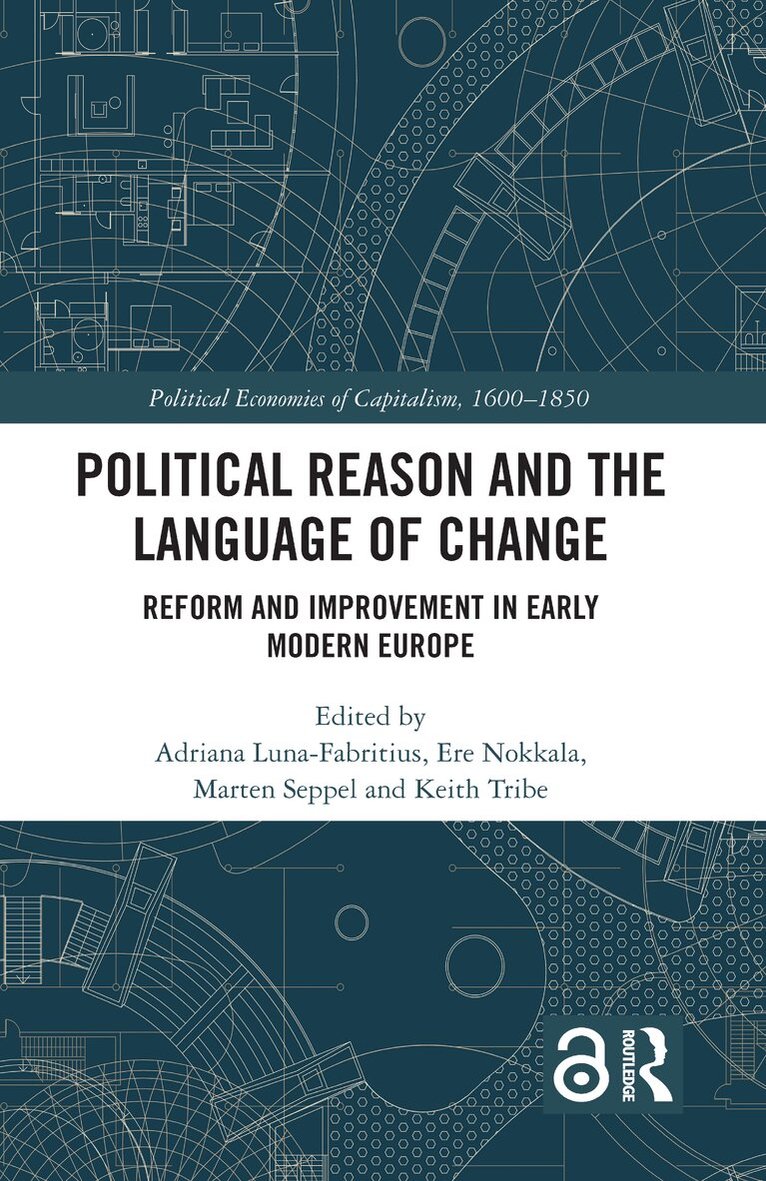
Political Reason and the Language of Change
Reform and Improvement in Early Modern Europe
Inbunden, Engelska, 2022
2 166 kr
Skickas inom 10-15 vardagar
This collection of essays re-examines ideas of change and movements for change in early modern Europe without presuming that "progressive" change was the outcome of "reforms"."Reform" today implies rational, incremental change to public institutions and procedures. "Improvement" has a more general application, emphasising the positive outcome to which "reform" is oriented. But the language of reform is today used of historical personalities and movements that did not themselves use the term, and who in many cases were not necessarily seeking the progressive change that we would understand today. The activities of "reform" were embedded in contemporary politics, and while "improvement" was part of a contemporary vocabulary, its real presence has been obscured by the range of natural languages in which it was expressed. Contributors to this volume seek to establish what was meant by contemporary usage. Bringing together scholars of Russia, Southern, Western, Central and Northern Europe, this collection sheds new light on both common and divergent features of a political process too often treated as a uniform movement towards modernity.This volume is a useful resource for students and scholars interested in Enlightenment studies, intellectual history, and conceptual history in early modern Europe.The Open Access version of this book, available at http://www.taylorfrancis.com, has been made available under a Creative Commons Attribution-Non Commercial-No Derivatives (CC-BY-NC-ND) 4.0 license.
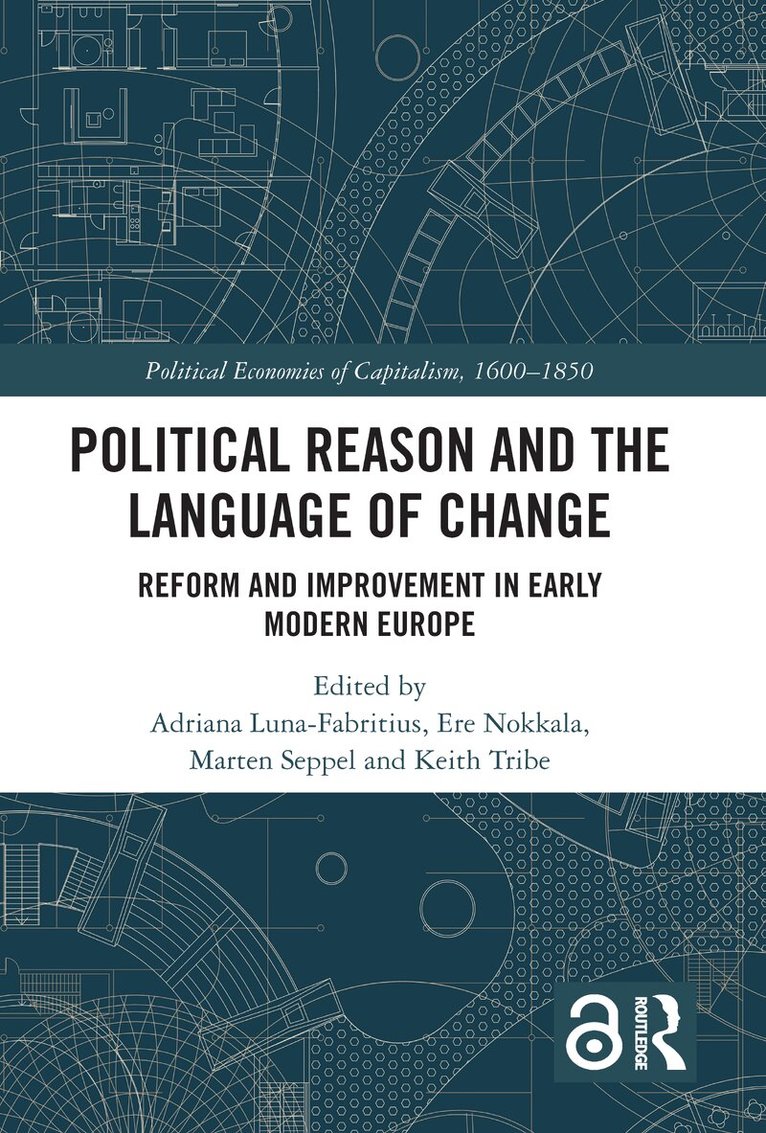
Political Reason and the Language of Change
Reform and Improvement in Early Modern Europe
Häftad, Engelska, 2024
598 kr
Skickas inom 10-15 vardagar
This collection of essays re-examines ideas of change and movements for change in early modern Europe without presuming that "progressive" change was the outcome of "reforms"."Reform" today implies rational, incremental change to public institutions and procedures. "Improvement" has a more general application, emphasising the positive outcome to which "reform" is oriented. But the language of reform is today used of historical personalities and movements that did not themselves use the term, and who in many cases were not necessarily seeking the progressive change that we would understand today. The activities of "reform" were embedded in contemporary politics, and while "improvement" was part of a contemporary vocabulary, its real presence has been obscured by the range of natural languages in which it was expressed. Contributors to this volume seek to establish what was meant by contemporary usage. Bringing together scholars of Russia, Southern, Western, Central and Northern Europe, this collection sheds new light on both common and divergent features of a political process too often treated as a uniform movement towards modernity.This volume is a useful resource for students and scholars interested in Enlightenment studies, intellectual history, and conceptual history in early modern Europe.The Open Access version of this book, available at http://www.taylorfrancis.com, has been made available under a Creative Commons Attribution-Non Commercial-No Derivatives (CC-BY-NC-ND) 4.0 license.
Del 10 - People, Markets, Goods: Economies and Societies in History
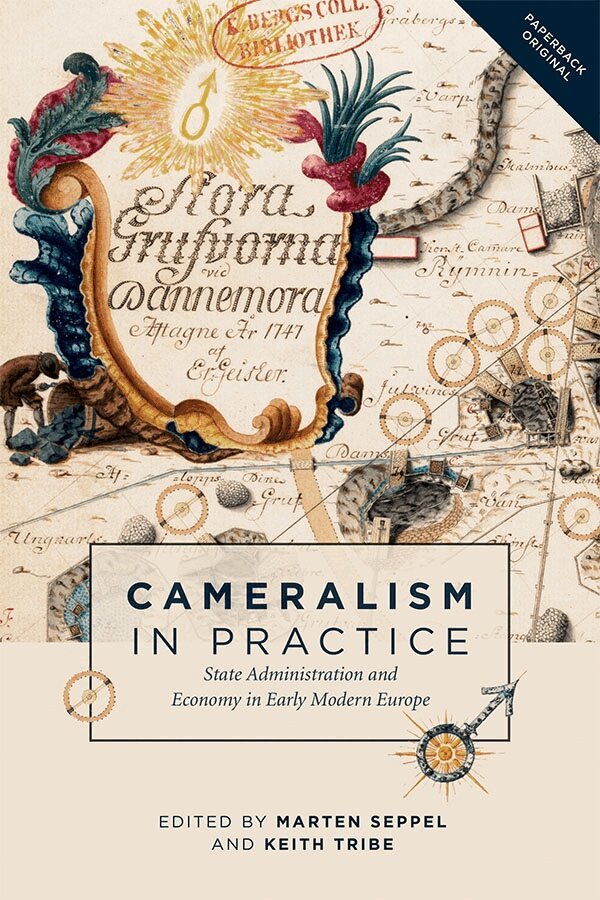
Cameralism in Practice
State Administration and Economy in Early Modern Europe
Häftad, Engelska, 2017
330 kr
Skickas
The first book that acknowledges cameralism as a European rather than just a German historical phenomenon.This book discusses the impact of cameralism on the practices of governance, early modern state-building and economy in seventeenth- and eighteenth-century Europe. It argues that the cameralist conception of state and economy - aform of 'science' of government dedicated to reforming society while promoting economic development, and often associated mainly with Prussia - had significant impact far beyond Germany and Austria. In fact, its influence spread into Denmark, Sweden, Russia, Portugal, Northern Italy and other parts of Europe. In this volume, an international set of experts discusses administrative practices and policies in relation to population, forestry, proto-industry,trade, mining affairs, education, police regulation, and insurance. The book will appeal to early modernists, economic historians and historians of economic thought.MARTEN SEPPEL is Associate Professor of Early ModernHistory at the University of Tartu, Estonia. He holds an MPhil from the University of Cambridge. KEITH TRIBE has a PhD from the University of Cambridge and taught at the University of Keele (UK) from 1976 to 2002, retiring as Reader in Economics. He is now working as a highly regarded professional translator and independent scholar. Forthcoming work includes a new translation of Max Weber, Economy and Society Part One (Harvard University Press, 2018). His publications include Strategies of Economic Order (CUP, 1995/2007); The Economy of the Word. Language, History, and Economics (OUP, 2015); and (edited with Pat Hudson) The Contradictions of Capital in the Twenty-First Century (Agenda, 2016).Contributors: ROGER BARTLETT, ALEXANDRE MENDES CUNHA, HANS FRAMBACH, GUILLAUME GARNER, LARS MAGNUSSON, INGRID MARKUSSEN, FRANK OBERHOLZNER, GÖRAN RYDÉN, MARTEN SEPPEL, KEITH TRIBE, PAUL WARDE