Mary C. Erler - Böcker
Visar alla böcker från författaren Mary C. Erler. Handla med fri frakt och snabb leverans.
8 produkter
8 produkter
Del 46 - Cambridge Studies in Medieval Literature
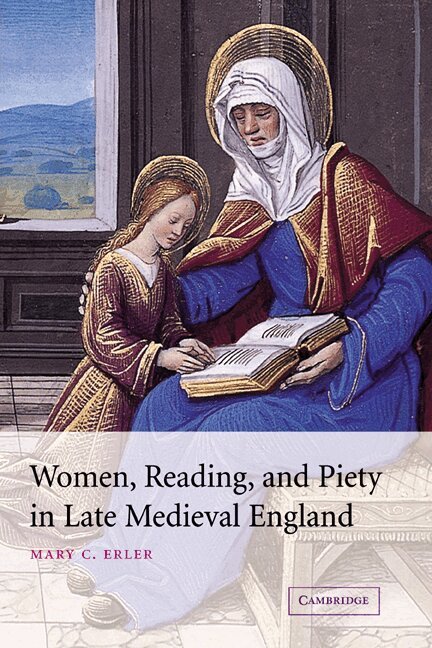
Women, Reading, and Piety in Late Medieval England
Häftad, Engelska, 2006
644 kr
Skickas inom 7-10 vardagar
Women, Reading, and Piety in Late Medieval England traces networks of female book ownership and exchange which have so far been obscure, and shows how women were responsible for both owning and circulating devotional books. In seven narratives of individual women who lived between 1350 and 1550, Mary Erler illustrates the ways in which women read and the routes by which they passed books from hand to hand. These stories are prefaced by an overview of nuns' reading and their surviving books, and are followed by a survey of women who owned the first printed books in England. An appendix lists a number of books not previously attributed to religious women's ownership. Erler's narratives also provide studies of female friendship, since they situate women's reading in a network of family and social connections. The book uses bibliography to explore social and intellectual history.
Del 46 - Cambridge Studies in Medieval Literature
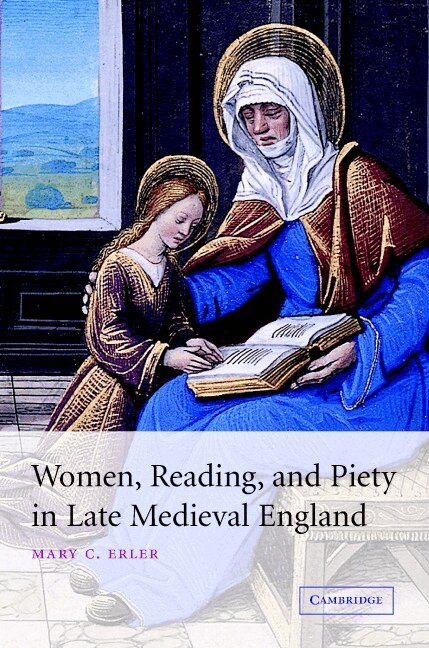
Women, Reading, and Piety in Late Medieval England
Inbunden, Engelska, 2002
1 537 kr
Skickas inom 7-10 vardagar
Women, Reading, and Piety in Late Medieval England traces networks of female book ownership and exchange which have so far been obscure, and shows how women were responsible for both owning and circulating devotional books. In seven narratives of individual women who lived between 1350 and 1550, Mary Erler illustrates the ways in which women read and the routes by which they passed books from hand to hand. These stories are prefaced by an overview of nuns' reading and their surviving books, and are followed by a survey of women who owned the first printed books in England. An appendix lists a number of books not previously attributed to religious women's ownership. Erler's narratives also provide studies of female friendship, since they situate women's reading in a network of family and social connections. The book uses bibliography to explore social and intellectual history.
1 143 kr
Skickas inom 10-15 vardagar
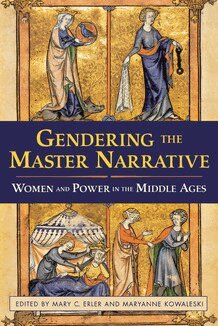
Gendering the Master Narrative asks whether a female tradition of power might have existed distinct from the male one, and how such a tradition might have been transmitted. It describes women's progress toward power as a push-pull movement, showing how practices and institutions that ostensibly enabled women in the Middle Ages could sometimes erode their authority as well.This book provides a much-needed theoretical and historical reassessment of medieval women's power. It updates the conclusions from the editors' essential volume on that topic, Women and Power in the Middle Ages, which was published in 1988 and altered the prevailing view of female subservience by correcting the nearly ubiquitous equation of "power" with "public authority." Most scholars now accept a broader definition of power based on the interactions between men and women.In their Introduction, Mary C. Erler and Maryanne Kowaleski survey the directions in which the study of medieval women's agency has developed in the past fifteen years. Like its predecessor, this volume is richly interdisciplinary. It contains essays by highly regarded scholars of history, literature, and art history, and features seventeen black-and-white illustrations and two maps.
361 kr
Skickas inom 10-15 vardagar
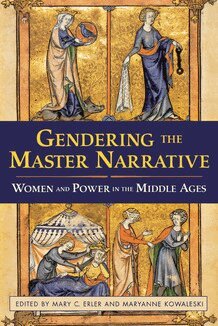
Gendering the Master Narrative asks whether a female tradition of power might have existed distinct from the male one, and how such a tradition might have been transmitted. It describes women's progress toward power as a push-pull movement, showing how practices and institutions that ostensibly enabled women in the Middle Ages could sometimes erode their authority as well.This book provides a much-needed theoretical and historical reassessment of medieval women's power. It updates the conclusions from the editors' essential volume on that topic, Women and Power in the Middle Ages, which was published in 1988 and altered the prevailing view of female subservience by correcting the nearly ubiquitous equation of "power" with "public authority." Most scholars now accept a broader definition of power based on the interactions between men and women.In their Introduction, Mary C. Erler and Maryanne Kowaleski survey the directions in which the study of medieval women's agency has developed in the past fifteen years. Like its predecessor, this volume is richly interdisciplinary. It contains essays by highly regarded scholars of history, literature, and art history, and features seventeen black-and-white illustrations and two maps.
241 kr
Skickas inom 10-15 vardagar
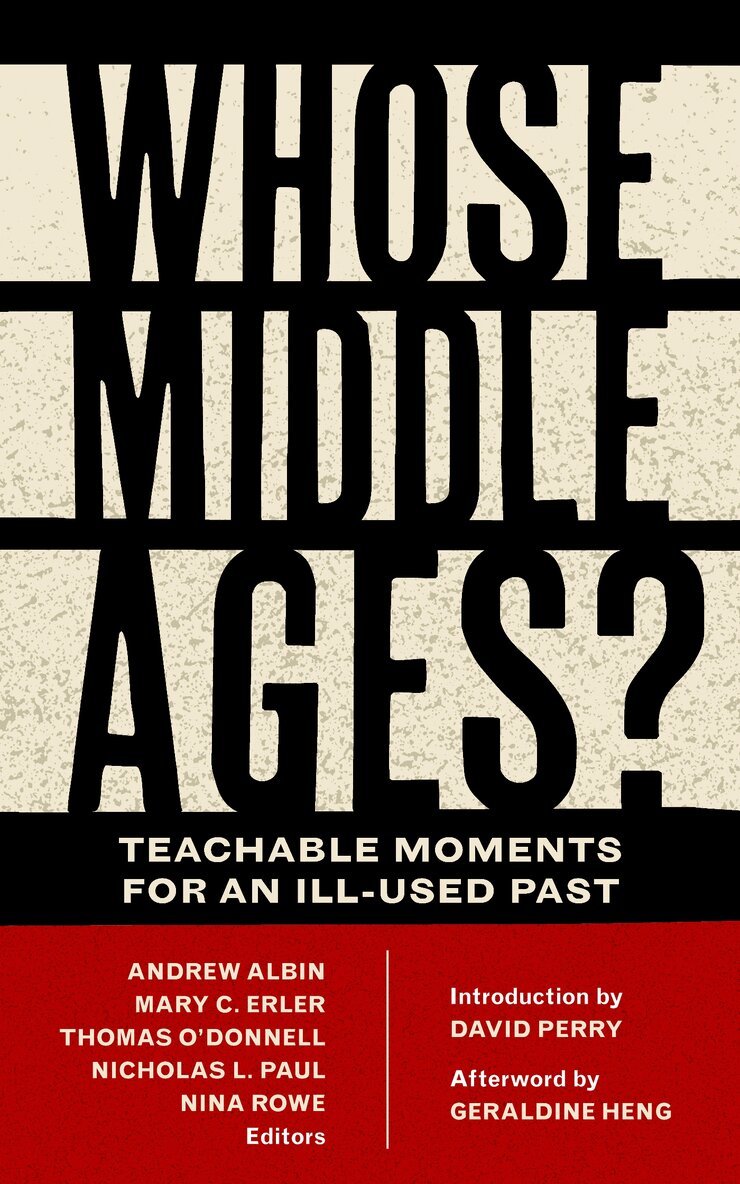
Whose Middle Ages? is an interdisciplinary collection of short, accessible essays intended for the nonspecialist reader and ideal for teaching at an undergraduate level. Each of twenty-two essays takes up an area where digging for meaning in the medieval past has brought something distorted back into the present: in our popular entertainment; in our news, our politics, and our propaganda; and in subtler ways that inform how we think about our histories, our countries, and ourselves. Each author looks to a history that has refused to remain past and uses the tools of the academy to read and re-read familiar stories, objects, symbols, and myths.Whose Middle Ages? gives nonspecialists access to the richness of our historical knowledge while debunking damaging misconceptions about the medieval past. Myths about the medieval period are especially beloved among the globally resurgent far right, from crusading emblems on the shields borne by alt-right demonstrators to the on-screen image of a purely white European populace defended from actors of color by Internet trolls. This collection attacks these myths directly by insisting that readers encounter the relics of the Middle Ages on their own terms.Each essay uses its author's academic research as a point of entry and takes care to explain how the author knows what she or he knows and what kinds of tools, bodies of evidence, and theoretical lenses allow scholars to write with certainty about elements of the past to a level of detail that might seem unattainable. By demystifying the methods of scholarly inquiry, Whose Middle Ages? serves as an antidote not only to the far right's errors of fact and interpretation but also to its assault on scholarship and expertise as valid means for the acquisition of knowledge.
859 kr
Skickas inom 10-15 vardagar
Whose Middle Ages? is an interdisciplinary collection of short, accessible essays intended for the nonspecialist reader and ideal for teaching at an undergraduate level. Each of twenty-two essays takes up an area where digging for meaning in the medieval past has brought something distorted back into the present: in our popular entertainment; in our news, our politics, and our propaganda; and in subtler ways that inform how we think about our histories, our countries, and ourselves. Each author looks to a history that has refused to remain past and uses the tools of the academy to read and re-read familiar stories, objects, symbols, and myths.Whose Middle Ages? gives nonspecialists access to the richness of our historical knowledge while debunking damaging misconceptions about the medieval past. Myths about the medieval period are especially beloved among the globally resurgent far right, from crusading emblems on the shields borne by alt-right demonstrators to the on-screen image of a purely white European populace defended from actors of color by Internet trolls. This collection attacks these myths directly by insisting that readers encounter the relics of the Middle Ages on their own terms.Each essay uses its author's academic research as a point of entry and takes care to explain how the author knows what she or he knows and what kinds of tools, bodies of evidence, and theoretical lenses allow scholars to write with certainty about elements of the past to a level of detail that might seem unattainable. By demystifying the methods of scholarly inquiry, Whose Middle Ages? serves as an antidote not only to the far right's errors of fact and interpretation but also to its assault on scholarship and expertise as valid means for the acquisition of knowledge.
1 371 kr
Skickas inom 7-10 vardagar
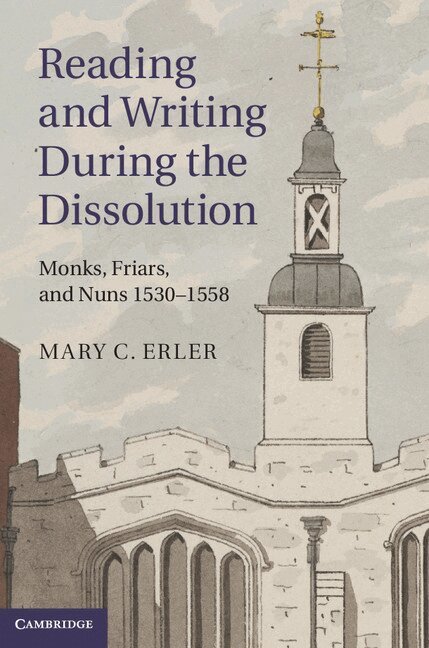
In the years from 1534, when Henry VIII became head of the English church until the end of Mary Tudor's reign in 1558, the forms of English religious life evolved quickly and in complex ways. At the heart of these changes stood the country's professed religious men and women, whose institutional homes were closed between 1535 and 1540. Records of their reading and writing offer a remarkable view of these turbulent times. The responses to religious change of friars, anchorites, monks and nuns from London and the surrounding regions are shown through chronicles, devotional texts, and letters. What becomes apparent is the variety of positions that English religious men and women took up at the Reformation and the accommodations that they reached, both spiritual and practical. Of particular interest are the extraordinary letters of Margaret Vernon, head of four nunneries and personal friend of Thomas Cromwell.
493 kr
Skickas inom 7-10 vardagar
In the years from 1534, when Henry VIII became head of the English church until the end of Mary Tudor's reign in 1558, the forms of English religious life evolved quickly and in complex ways. At the heart of these changes stood the country's professed religious men and women, whose institutional homes were closed between 1535 and 1540. Records of their reading and writing offer a remarkable view of these turbulent times. The responses to religious change of friars, anchorites, monks and nuns from London and the surrounding regions are shown through chronicles, devotional texts, and letters. What becomes apparent is the variety of positions that English religious men and women took up at the Reformation and the accommodations that they reached, both spiritual and practical. Of particular interest are the extraordinary letters of Margaret Vernon, head of four nunneries and personal friend of Thomas Cromwell.