Maryanne Kowaleski - Böcker
Visar alla böcker från författaren Maryanne Kowaleski. Handla med fri frakt och snabb leverans.
13 produkter
13 produkter
577 kr
Skickas inom 7-10 vardagar
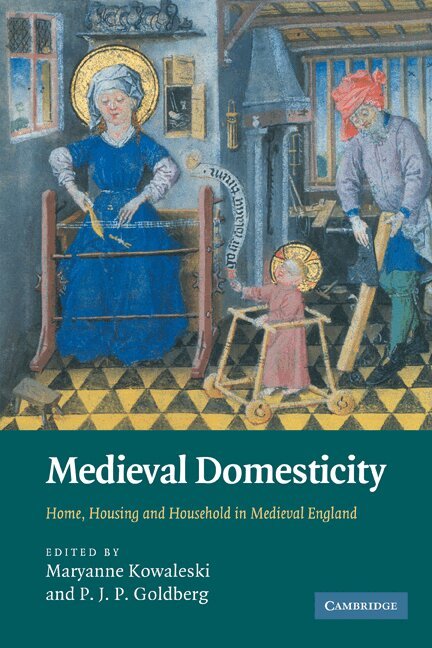
What did 'home' mean to men and women in the period 1200-1500? This volume explores the many cultural, material and ideological dimensions of the concept of domesticity. Leading scholars examine not only the material cultures of domesticity, gender, and power relations within the household, but also how they were envisioned in texts, images, objects and architecture. Many of the essays argue that England witnessed the emergence of a distinctive bourgeois ideology of domesticity during the late Middle Ages. But the volume also contends that, although the world of the great lord was far removed from that of the artisan or peasant, these social groups all occupied physical structures that constituted homes in which people were drawn together by ties of kinship, service or neighbourliness. This pioneering study will appeal to scholars of medieval English society, literature and culture.
1 702 kr
Skickas inom 7-10 vardagar
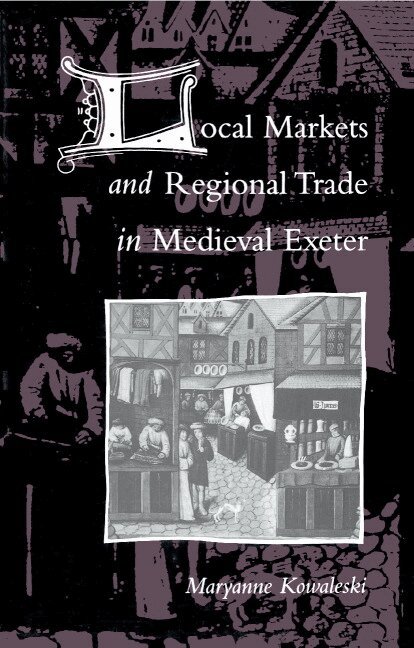
This book examines the vital role of market towns in the medieval economy. It focuses on Exeter, and on how it served as an important link in a marketing chain that connected local, regional, and overseas trade. Although small by most standards (the population stood at around 3,100 in 1377), Exeter was the largest town in south-western England and had long played a central role in the marketing hierarchy of the region. Its functions can be illustrated through prosopographical analysis, a methodology which creates 'collective biographies' of specific groups of traders, thereby revealing the identity - status, occupation, residence - of buyers and sellers, the goods they exchanged, where they traded, and how they marketed their goods. Such an approach also helps to characterise the town's regional networks of trade and hinterland.
441 kr
Skickas inom 7-10 vardagar
This book examines the vital role of market towns in the medieval economy. It focuses on Exeter, and on how it served as an important link in a marketing chain that connected local, regional, and overseas trade. Although small by most standards (the population stood at around 3,100 in 1377), Exeter was the largest town in south-western England and had long played a central role in the marketing hierarchy of the region. Its functions can be illustrated through prosopographical analysis, a methodology which creates 'collective biographies' of specific groups of traders, thereby revealing the identity - status, occupation, residence - of buyers and sellers, the goods they exchanged, where they traded, and how they marketed their goods. Such an approach also helps to characterise the town's regional networks of trade and hinterland.
1 282 kr
Skickas inom 7-10 vardagar
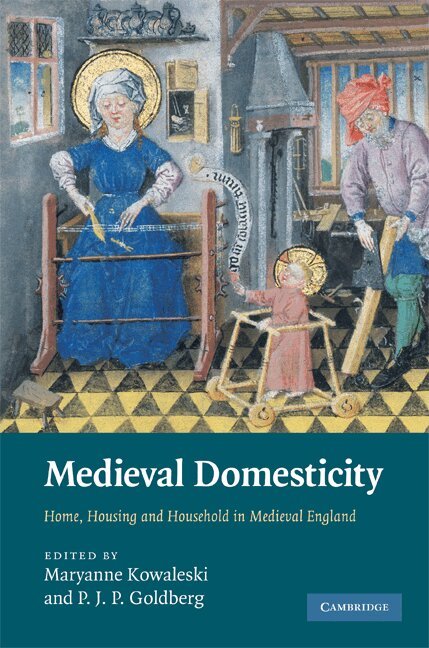
What did 'home' mean to men and women in the period 1200-1500? This volume explores the many cultural, material and ideological dimensions of the concept of domesticity. Leading scholars examine not only the material cultures of domesticity, gender, and power relations within the household, but also how they were envisioned in texts, images, objects and architecture. Many of the essays argue that England witnessed the emergence of a distinctive bourgeois ideology of domesticity during the late Middle Ages. But the volume also contends that, although the world of the great lord was far removed from that of the artisan or peasant, these social groups all occupied physical structures that constituted homes in which people were drawn together by ties of kinship, service or neighbourliness. This pioneering study will appeal to scholars of medieval English society, literature and culture.
1 139 kr
Skickas inom 10-15 vardagar
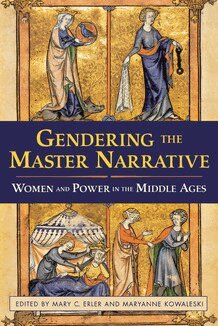
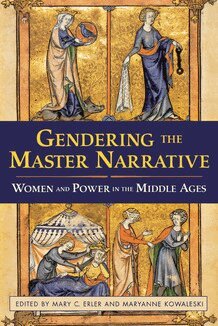
Gendering the Master Narrative asks whether a female tradition of power might have existed distinct from the male one, and how such a tradition might have been transmitted. It describes women's progress toward power as a push-pull movement, showing how practices and institutions that ostensibly enabled women in the Middle Ages could sometimes erode their authority as well.This book provides a much-needed theoretical and historical reassessment of medieval women's power. It updates the conclusions from the editors' essential volume on that topic, Women and Power in the Middle Ages, which was published in 1988 and altered the prevailing view of female subservience by correcting the nearly ubiquitous equation of "power" with "public authority." Most scholars now accept a broader definition of power based on the interactions between men and women.In their Introduction, Mary C. Erler and Maryanne Kowaleski survey the directions in which the study of medieval women's agency has developed in the past fifteen years. Like its predecessor, this volume is richly interdisciplinary. It contains essays by highly regarded scholars of history, literature, and art history, and features seventeen black-and-white illustrations and two maps.
359 kr
Skickas inom 10-15 vardagar
Gendering the Master Narrative asks whether a female tradition of power might have existed distinct from the male one, and how such a tradition might have been transmitted. It describes women's progress toward power as a push-pull movement, showing how practices and institutions that ostensibly enabled women in the Middle Ages could sometimes erode their authority as well.This book provides a much-needed theoretical and historical reassessment of medieval women's power. It updates the conclusions from the editors' essential volume on that topic, Women and Power in the Middle Ages, which was published in 1988 and altered the prevailing view of female subservience by correcting the nearly ubiquitous equation of "power" with "public authority." Most scholars now accept a broader definition of power based on the interactions between men and women.In their Introduction, Mary C. Erler and Maryanne Kowaleski survey the directions in which the study of medieval women's agency has developed in the past fifteen years. Like its predecessor, this volume is richly interdisciplinary. It contains essays by highly regarded scholars of history, literature, and art history, and features seventeen black-and-white illustrations and two maps.
487 kr
Skickas inom 5-8 vardagar
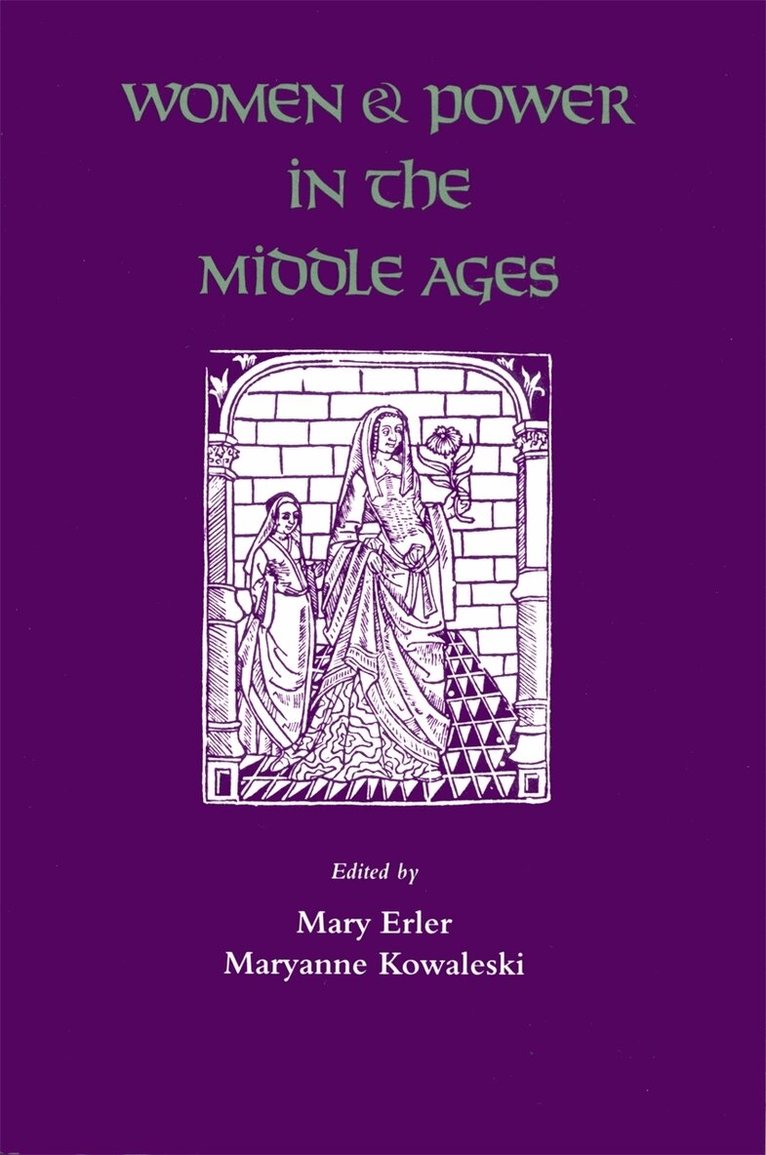
Power in medieval society has traditionally been ascribed to figures of public authority—violent knights and conflicting sovereigns who altered the surface of civic life through the exercise of law and force. The wives and consorts of these powerful men have generally been viewed as decorative attendants, while common women were presumed to have had no power or consequence.Reassessing the conventional definition of power that has shaped such portrayals, Women and Power in the Middle Ages reveals the varied manifestations of female power in the medieval household and community—from the cultural power wielded by the wives of Venetian patriarchs to the economic power of English peasant women and the religious power of female saints. Among the specific topics addresses are Griselda's manipulation of silence as power in Chaucer's "The Clerk's Tale"; the extensive networks of influence devised by Lady Honor Lisle; and the role of medieval women book owners as arbiters of lay piety and ambassadors of culture. In every case, the essays seek to transcend simple polarities of public and private, male and female, in order to provide a more realistic analysis of the workings of power in feudal society.
Del 36 - Devon and Cornwall Record Society
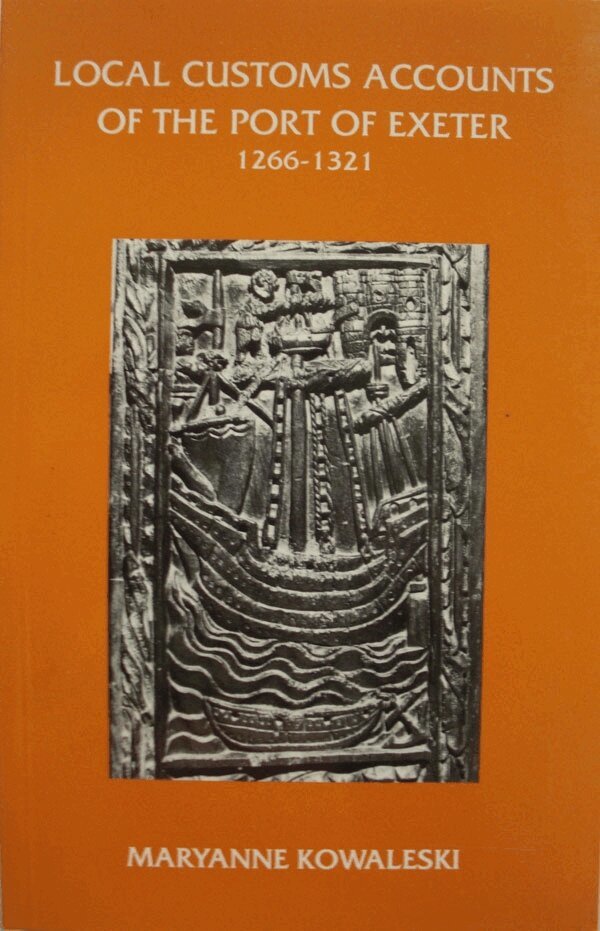
Local Customs Accounts of the Port of Exeter 1266-1321
Häftad, Engelska, 1993
319 kr
Skickas inom 7-10 vardagar
Exeter possesses the best series of local customs accounts from medieval England, beginning in 1266 and surviving for almost 70 per cent of the years up to 1498. They are also far more complete than other local accounts: listing ships' names, home ports, shipmasters and dates of arrival, as well as the importers and their cargoes. Equally remarkable is their focus on coastal as well as overseas traffic, unlike the better known national customs accounts which recorded only overseas trade. From the Exeter accounts we can follow the movements of foreign and domestic shipping, grain imports during the great Famine of 1315-17, and the identity of the merchants, shipmasters and marinerswho carried on the various kinds of trade.Dr Kowaleski's introduction provides the first detailed account of the port of Exeter and its activities during this period, followed by a complete translation of the surviving accounts from 1266 to 1321. The book also includes a specimen Latin account, a glossary of weights and measures, map, and full indexes.
Del 44 - Devon and Cornwall Record Society
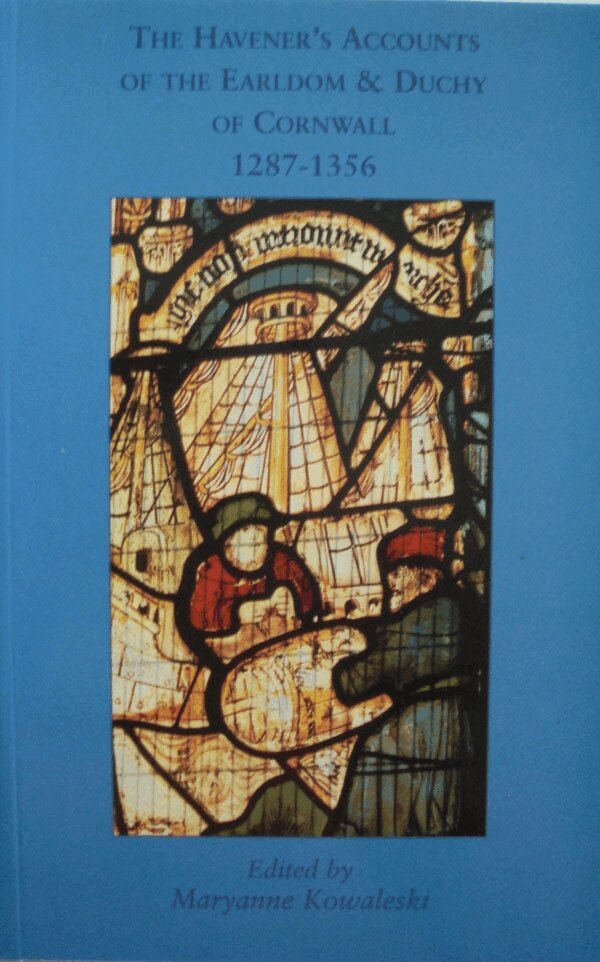
HavenerÆs Accounts of the Earldom and Duchy of Cornwall, 1287-1356
Häftad, Engelska, 2001
319 kr
Skickas inom 7-10 vardagar
From at least the mid-thirteenth century, the Earl of Cornwall, the wealthiest and most politically powerful lord in the county, employed a special official - called the havener - to supervise the administration of his maritime profits in the county. When the Duchy of Cornwall was created in 1337, the havener's duties were expanded, and he was made a permanent salaried official. The office of havener, for which there was no parallel in medieval Britain, allowed the duchy to manage and exploit its maritime properties and prerogatives in a particularly efficient manner. The accounts of the havener record this management, and survive in summary from the late thirteenth century, but in more detailed, separate accounts from the early fourteenth century. In focusing on the seventy years from 1287 to 1356, this edition allows readers to trace the impact on Cornwall of such major events as the Hundred Years War (begun in 1337) and the devastating plague of the Black Death in 1348-9. The annual accounts of the havener also offer a wealth of information on the development and prosperity of individual ports, including Plymouth, on fishing and the fish trade, on piracy and privateering, on shipwrecks and 'royal' fish such as whale and porpoise, and on the overseas trade in wine, tin, hides and other goods. Particularly fascinating are the glimpses we can see of the Spanish, French, Irish and English traders, shipmasters, and fishers who visited Cornish shores, and the insights we gain about the people of medieval Cornwall - merchants, fishers, mariners, wreckers, pirates and even peasants - who made their living from the sea.
479 kr
Skickas inom 7-10 vardagar
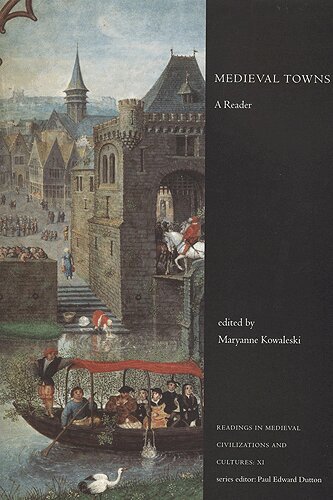
This exciting new collection of documents from across Europe gives a fresh perspective and sharp taste of everyday life in a medieval town. The sources range from the standard chronicles and charters to the less often viewed accounts of marriage disputes, urban women, families, the environment, the dangers of town life, and civic ritual. Deliberately wide-ranging, these sources acknowledge the contributions of other disciplines-such as archaeology, architecture, demography, law, and environmental studies-to our understanding of urban life in the Middle Ages. Towns from Spain to Germany to Russia are covered, while the focus is on the more urbanized regions of medieval Europe, particularly Italy, the Low Countries, France, and England. In all, 150 primary sources are included, 35 of which are translated for this volume from Latin, Old French, Anglo-Norman, Franco-Venetian, medieval Danish, and other languages.
1 329 kr
Skickas inom 7-10 vardagar
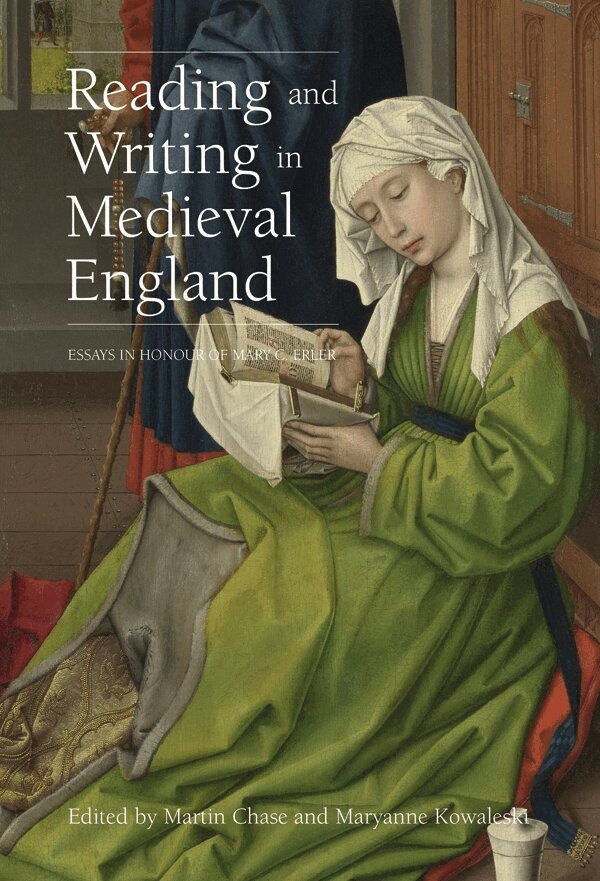
Essays discussing the medieval book, its owners and its readers.Reading, writing, sharing texts, and book ownership in the fifteenth and sixteenth centuries, and how they fostered social and intellectual links and networks between individuals, particularly among women: these are subjects whichthe pioneering work of Mary C. Erler has done so much to illuminate. The essays here, in this volume in her honour, build on her scholarship, engaging with Professor Erler's characteristic use of bibliography in the service of biography by investigating how the physical object of the book can enlighten our understanding of medieval readers and writers. They analyze, for example, what "reading" means in terms of the act itself (and the accessories, such asbookmarks, that helped to set the stage for reading), whether done aloud or silently, in such different venues as an aristocratic court, bourgeois household, village community, and monastic cloister. They also consider the culture of medieval reading practices, especially those of women, across social classes, and in terms of the transition between the pre- and post-Reformation periods; the fluidity of genre boundaries; and changes in devotional reading and writing in this liminal period. A wide variety of genres are covered, including secular romance, devotional texts, schoolbooks, and the illustrated Old Testament preface to the famous Queen Mary Psalter, which recasts the story and image of ancient Israelites to suit elite readerly taste.MARTIN CHASE is Professor of English and Medieval Studies at Fordham University; MARYANNE KOWALESKI is Joseph Fitzpatrick S.J. Distinguished Professor of History and Medieval Studies at Fordham University.CONTRIBUTORS: Allison Alberts, Caroline M. Barron, Heather Blatt, Martin Chase, Joyce Coleman, Sheila Lindenbaum, Joel T. Rosenthal, Michael G. Sargent, Kathryn A. Smith.
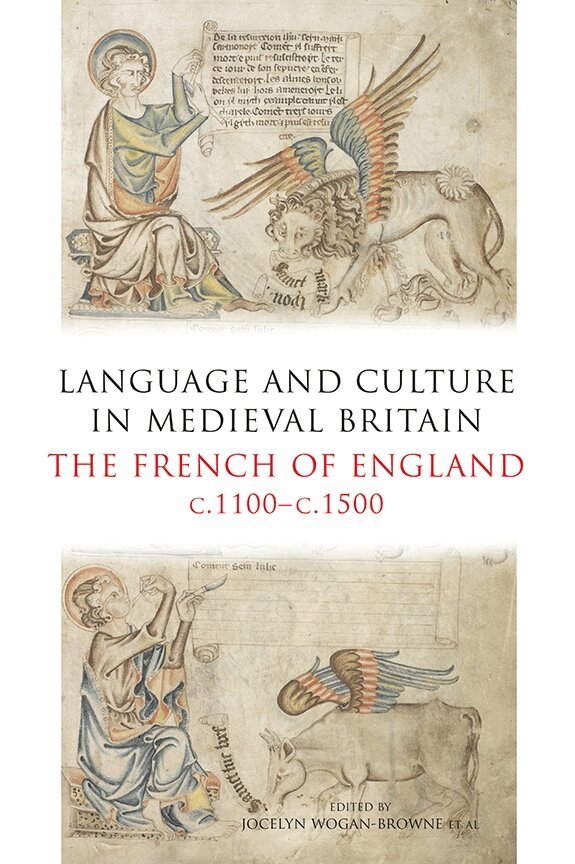
Language and Culture in Medieval Britain
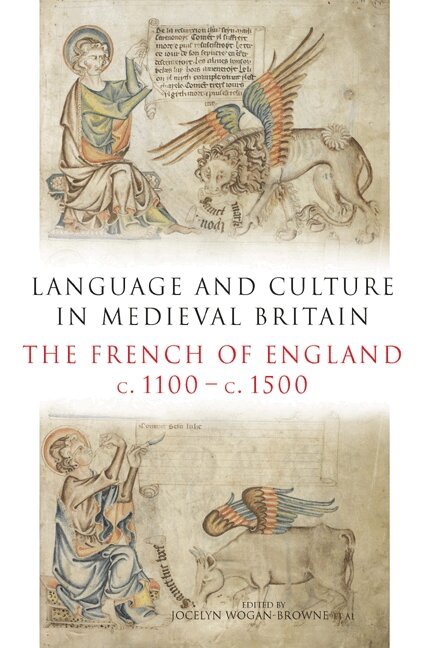
The French of England, c.1100-c.1500
Inbunden, Engelska, 2009
828 kr
Skickas inom 10-15 vardagar
Groundbreaking surveys of the complex interrelationship between the languages of English and French in medieval Britain.With co-editors: CAROLYN COLLETTE, MARYANNE KOWALESKI, LINNE MOONEY, AD PUTTER, and DAVID TROTTEREngland was more widely and enduringly francophone in the middle ages than many standard accounts of its history, culture and language allow. The development of French in England, whether known as "Anglo-Norman" or "Anglo-French", is deeply interwoven both with medieval English and with the spectrum of Frenches, insular and continental, used withinand outside the realm. As the language of nearly a thousand literary texts, of much administration, and of many professions and occupations, the French of England needs more attention than it has so far received. The essaysin this volume form a new cultural history focussed round, but not confined to, the presence and interactions of French speakers, writers, readers, texts and documents in England from the eleventh to the later fifteenth century.Taking the French of England into account does not simply add new material to our existing narratives of medieval English culture, but changes them, restoring a multi-vocal, multi-cultural medieval England in all its complexity, and opening up fresh agendas for study and exploration.Contributors: HENRY BAINTON, MICHAEL BENNETT, JULIA BOFFEY, RICHARD BRITNELL, CAROLYN COLLETTE, GODFRIED CROENEN, HELEN DEEMING, STEPHANIE DOWNES, MARTHA DRIVER, MONICA H. GREEN, RICHARD INGHAM, REBECCA JUNE, MARYANNE KOWALESKI, PIERRE KUNSTMANN, FRANCOISE H. M. LE SAUX, SERGE LUSIGNAN, TIM WILLIAM MACHAN, JULIA MARVIN, BRIAN MERRILEES, RUTH NISSE, MARILYN OLIVA, W. MARK ORMROD, HEATHER PAGAN, LAURIE POSTLEWATE, JEAN-PASCAL POUZET, AD PUTTER, GEOFF RECTOR, DELBERT RUSSELL, THEA SUMMERFIELD, ANDREW TAYLOR, DAVID TROTTER, ELIZABETH M. TYLER, NICHOLAS WATSON, JOCELYN WOGAN-BROWNE, ROBERT F. YEAGER
544 kr
Skickas inom 5-8 vardagar
Groundbreaking surveys of the complex interrelationship between the languages of English and French in medieval Britain.With co-editors: CAROLYN COLLETTE, MARYANNE KOWALESKI, LINNE MOONEY, AD PUTTER, and DAVID TROTTEREngland was more widely and enduringly francophone in the Middle Ages than our now standard accounts of its history, culture and language allow. The French of England (also known as Anglo-Norman and Anglo-French) is the language of nearly a thousand literary texts, of much administration, and of many professions and occupations. English literary, linguistic and documentary history is deeply interwoven both with a continually evolving spectrum of Frenches used within and outside the realm, and cannot be fully grasped in isolation.The essays in this volume open up andbegin writing a new cultural history focussed on, but not confined to, the presence and interactions of francophone speakers, writers, readers, texts and documents in England from the eleventh to the later fifteenth centuries. They return us to a newly-alive, multi-vocal, complexly multi-cultural medieval England, in which the use of French and its interrelations with English and other languages involve many diverse groups of people. The volume's size testifies to the significance of England's francophone culture, while its chronological range shows the need for revision across the whole span of our existing narratives about medieval English linguistic and cultural history..Contributors: HENRY BAINTON, MICHAEL BENNETT, JULIA BOFFEY, RICHARD BRITNELL, CAROLYN COLLETTE, GODFRIED CROENEN, HELEN DEEMING, STEPHANIE DOWNES, MARTHA DRIVER, MONICA H. GREEN, RICHARD INGHAM, REBECCA JUNE, MARYANNE KOWALESKI, PIERRE KUNSTMANN, FRANCOISE H. M. LE SAUX, SERGE LUSIGNAN, TIM WILLIAM MACHAN, JULIA MARVIN, BRIAN MERRILEES, RUTH NISSE, MARILYN OLIVA, W. MARK ORMROD, HEATHER PAGAN, LAURIE POSTLEWATE, JEAN-PASCAL POUZET, AD PUTTER, GEOFFRECTOR, DELBERT RUSSELL, THEA SUMMERFIELD, ANDREW TAYLOR, DAVID TROTTER, ELIZABETH M. TYLER, NICHOLAS WATSON, JOCELYN WOGAN-BROWNE, ROBERT F. YEAGER