• Fri frakt över 249 kr
  • •
  • Snabba leveranser
  • •
  • Billiga böcker
Kundservice

Du är på sajten för privatpersoner.

Företag, bibliotek eller offentlig verksamhet?

Du handlar på classic.bokus.com, där alla dina funktioner finns intakta.
Till classic.bokus.com
Bokus logotyp. Gå till startsidan.
  • Erbjudanden
  • Nyheter
  • Student
  • Topplistor
  • Barn & ungdom
  • Bokus Play
  • E-böcker
  • Pocketböcker
  • Spel & pussel

10% studentrabatt med kod TERM26

Sidfot

Mina sidor

    Hjälp

    • Kundservice
    • Vanliga frågor och svar
    • Frakt och leverans
    • Retur vid ångerrätt
    • Reklamera vara
    • Betalning
    • Köpvillkor
    • Allmänna villkor
    • Information om webbplatsens tillgänglighet

    Om Bokus

    • Om oss
    • Pressrum
    • För studenter
    • För företag
    • För bibliotek och offentlig verksamhet
    • För leverantörer
    • Hållbarhet

    Populärt

    • Aktuella erbjudanden
    • Presentkort
    • Studentlitteratur
    • Nya böcker
    • Topplistor
    • Signerade böcker
    • Engelska böcker

    Inspiration

    • Boktips
    • BookTok
    • Populära bokserier
    • Barnbokskaraktärer
    • Populära författare
    Logotyp för Bokus
    Följ oss på Facebook (extern länk)Följ oss på Instagram (extern länk)Följ oss på YouTube (extern länk)Följ oss på TikTok (extern länk)
    bokus @ CookiesAnpassa cookiesIntegritetspolicyKöpvillkor
    Till Citymail hemsida (extern länk)Till Budbee hemsida (extern länk)Till Postnord hemsida (extern länk)Till Schenker hemsida (extern länk)Till Early Bird hemsida (extern länk)Till Walleys hemsida (extern länk)
    1. Samhälle och politik
    2. Samhälle och kultur
    3. Sociala grupper och identitet
    4. Genusvetenskap

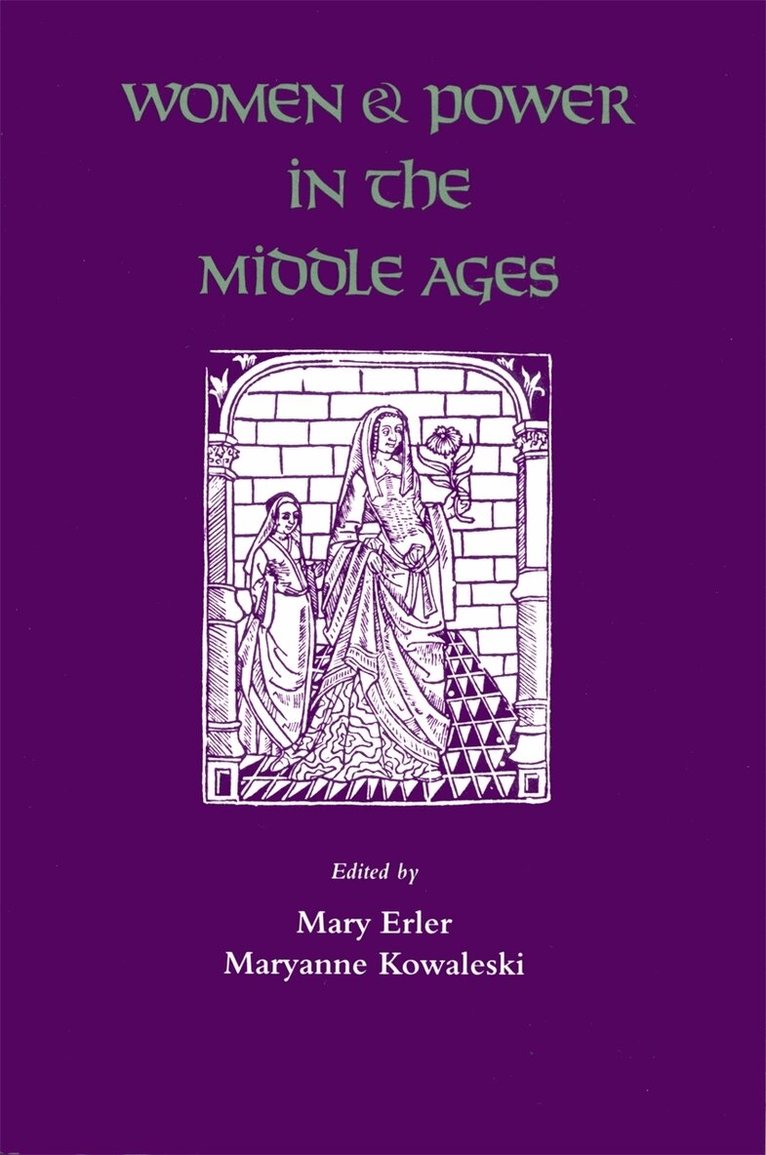
    Women and Power in the Middle Ages

    AvMary Erler,Maryanne Kowaleski

    Häftad, Engelska, 2004

    496 kr

    Beställningsvara. Skickas inom 5-8 vardagar. Fri frakt över 249 kr.

    Beskrivning

    Power in medieval society has traditionally been ascribed to figures of public authority—violent knights and conflicting sovereigns who altered the surface of civic life through the exercise of law and force. The wives and consorts of these powerful men have generally been viewed as decorative attendants, while common women were presumed to have had no power or consequence.Reassessing the conventional definition of power that has shaped such portrayals, Women and Power in the Middle Ages reveals the varied manifestations of female power in the medieval household and community—from the cultural power wielded by the wives of Venetian patriarchs to the economic power of English peasant women and the religious power of female saints. Among the specific topics addresses are Griselda's manipulation of silence as power in Chaucer's "The Clerk's Tale"; the extensive networks of influence devised by Lady Honor Lisle; and the role of medieval women book owners as arbiters of lay piety and ambassadors of culture. In every case, the essays seek to transcend simple polarities of public and private, male and female, in order to provide a more realistic analysis of the workings of power in feudal society.

    Produktinformation

    • Utgivningsdatum:2004-08-17
    • Mått:159 x 241 x 19 mm
    • Vikt:426 g
    • Format:Häftad
    • Språk:Engelska
    • Antal sidor:288
    • Förlag:University of Georgia Press
    • ISBN:9780820323817

    Utforska kategorier

    • Genusvetenskap inom Samhälle och politik

    Mer om författaren

    Mary Erler (Editor) MARY ERLER is a professor of English at Fordham University. Her books includeRecords of Early English Drama: Ecclesiastical London and Women, Reading, and Piety in Late Medieval England.Maryanne Kowaleski (Editor) MARYANNE KOWALESKI, who also teaches at Fordham, is the Joseph Fitzpatrick S.J. Distinguished Professor and Director of Medieval Studies. Her books include Local Markets and Regional Trade in Medieval Exeter and Medieval Towns: A Reader.

    Recensioner i media

    According to evidence presented in the articles, medieval women were empowered by a wide variety of means—family connections, networks of patronage and friendship, widowhood, noble birth, gift-giving—but were never granted authority, that is, power that was publicly legitimated. The authors use an excellent range of sources, such as letters, wills, seals, court records, hagiography, literature by both women and men, and guild records. Many of the essays complement each other nicely by allowing the reader to compare the experiences of rural and urban women, or of peasants and nobles. Most also explore questions that use gender as a category of analysis, comparing female and male networks of influence, methods of telling stories, or concepts of the family. The authors are all well-known authorities in their fields, presenting their most current research.