Mary Floyd-Wilson - Böcker
Visar alla böcker från författaren Mary Floyd-Wilson. Handla med fri frakt och snabb leverans.
8 produkter
8 produkter
1 442 kr
Skickas inom 5-8 vardagar
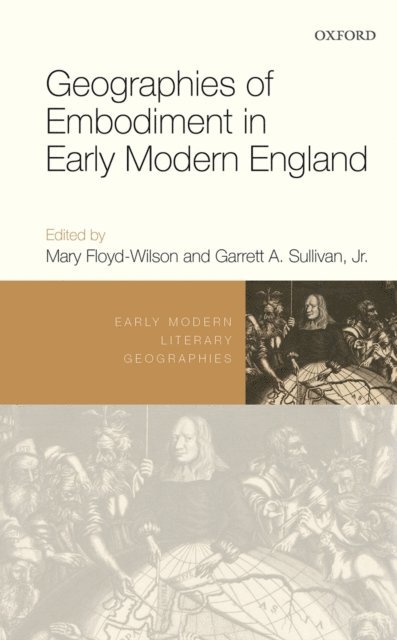
Geographies of Embodiment in Early Modern England gathers essays from prominent scholars of English Renaissance literature and history who have made substantial contributions to the study of early modern embodiment, historical phenomenology, affect, cognition, memory, and natural philosophy. It provides new interpretations of the geographic dimensions of early modern embodiment, emphasizing the transactional and dynamic aspects of the relationship between body and world. The geographies of embodiment encompass both cognitive processes and cosmic environments, and inner emotional states as well as affective landscapes. Rather than always being territorialized onto individual bodies, ideas about early modern embodiment are varied both in their scope and in terms of their representation. Reflecting this variety, this volume offers up a range of inquiries into how early modern writers accounted for the exchanges between the microcosm and macrocosm. It engages with Gail Kern Paster's groundbreaking scholarship on embodiment, humoralism, the passions, and historical phenomenology throughout, and offers new readings of Edmund Spenser, William Shakespeare, Thomas Nashe, John Milton, and others. Contributions consider the epistemiologies of navigation and cartography, the significance of geohumoralism, the ethics of self-mastery, theories of early modern cosmology, the construction of place memory, and perceptions of an animate spirit world.
629 kr
Skickas inom 7-10 vardagar
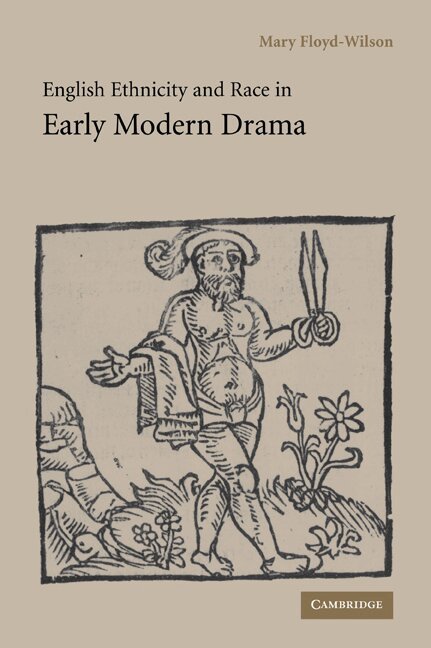
In English Ethnicity and Race in Early Modern Drama, first published in 2003, Mary Floyd-Wilson outlines what we might call 'scientific' conceptions of racial and ethnic differences in sixteenth- and seventeenth-century English writing. Drawing on classical and contemporary medical texts, histories and cosmographies, Floyd-Wilson demonstrates that Renaissance understandings of racial and ethnic identities contradicted many modern stereotypes concerning difference. Southerners, Africans, in particular, were identified as dispassionate, cool-tempered and wise, whereas the more northern English were understood to be unruly, impressionable and slow-witted. Concerned with the unflattering and constraining implications of this classically derived knowledge, English writers laboured to reinvent ethnology to their own advantage - a labour that paved the way for the invention of more familiar racial ideas. Floyd-Wilson highlights these English revisionary efforts in her surprising and transformational readings of the period's drama, including Marlowe's Tamburlaine, Jonson's The Masque of Blackness and Shakespeare's Othello and Cymbeline.
1 431 kr
Skickas inom 7-10 vardagar
In English Ethnicity and Race in Early Modern Drama, first published in 2003, Mary Floyd-Wilson outlines what we might call 'scientific' conceptions of racial and ethnic differences in sixteenth- and seventeenth-century English writing. Drawing on classical and contemporary medical texts, histories and cosmographies, Floyd-Wilson demonstrates that Renaissance understandings of racial and ethnic identities contradicted many modern stereotypes concerning difference. Southerners, Africans, in particular, were identified as dispassionate, cool-tempered and wise, whereas the more northern English were understood to be unruly, impressionable and slow-witted. Concerned with the unflattering and constraining implications of this classically derived knowledge, English writers laboured to reinvent ethnology to their own advantage - a labour that paved the way for the invention of more familiar racial ideas. Floyd-Wilson highlights these English revisionary efforts in her surprising and transformational readings of the period's drama, including Marlowe's Tamburlaine, Jonson's The Masque of Blackness and Shakespeare's Othello and Cymbeline.
420 kr
Skickas inom 10-15 vardagar
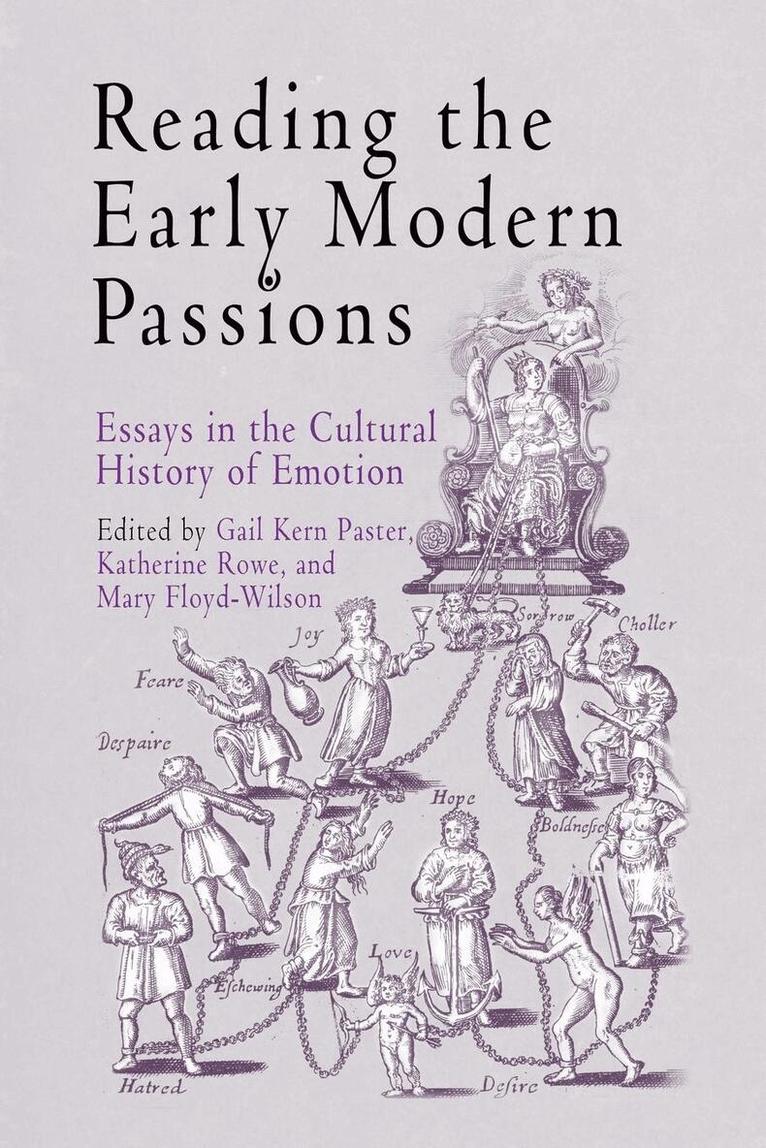
How translatable is the language of the emotions across cultures and time? What connotations of particular emotions, strongly felt in the early modern period, have faded or shifted completely in our own? If Western culture has traditionally held emotion to be hostile to reason and the production of scientific knowledge, why and how have the passions been lauded as windows to higher truths? Assessing the changing discourses of feeling and their relevance to the cultural history of affect, Reading the Early Modern Passions offers fourteen interdisciplinary essays on the meanings and representations of the emotional universe of Renaissance Europe in literature, music, and art.Many in the early modern era were preoccupied by the relation of passion to action and believed the passions to be a natural force requiring stringent mental and physical disciplines. In speaking to the question of the historicity and variability of emotions within individuals, several of these essays investigate specific emotions, such as sadness, courage, and fear. Other essays turn to emotions spread throughout society by contemporary events, such as a ruler's death, the outbreak of war, or religious schism, and discuss how such emotions have widespread consequences in both social practice and theory.Addressing anxieties about the power of emotions; their relation to the public good; their centrality in promoting or disturbing an individual's relation to God, to monarch, and to fellow human beings, the authors also look at the ways emotion serves as a marker or determinant of gender, ethnicity, and humanity. Contributors to the volume include Zirka Filipczak, Victoria Kahn, Michael Schoenfeldt, Bruce Smith, Richard Strier, and Gary Tomlinson.
1 371 kr
Skickas inom 7-10 vardagar
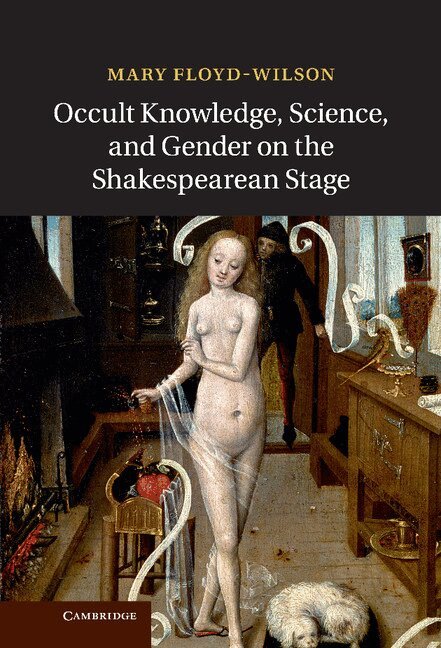
Belief in spirits, demons and the occult was commonplace in the early modern period, as was the view that these forces could be used to manipulate nature and produce new knowledge. In this groundbreaking study, Mary Floyd-Wilson explores these beliefs in relation to women and scientific knowledge, arguing that the early modern English understood their emotions and behavior to be influenced by hidden sympathies and antipathies in the natural world. Focusing on Twelfth Night, Arden of Faversham, A Warning for Fair Women, All's Well That Ends Well, The Changeling and The Duchess of Malfi, she demonstrates how these plays stage questions about whether women have privileged access to nature's secrets and whether their bodies possess hidden occult qualities. Discussing the relationship between scientific discourse and the occult, she goes on to argue that as experiential evidence gained scientific ground, women's presumed intimacy with nature's secrets was either diminished or demonized.
493 kr
Skickas inom 7-10 vardagar
Belief in spirits, demons and the occult was commonplace in the early modern period, as was the view that these forces could be used to manipulate nature and produce new knowledge. In this groundbreaking study, Mary Floyd-Wilson explores these beliefs in relation to women and scientific knowledge, arguing that the early modern English understood their emotions and behavior to be influenced by hidden sympathies and antipathies in the natural world. Focusing on Twelfth Night, Arden of Faversham, A Warning for Fair Women, All's Well That Ends Well, The Changeling and The Duchess of Malfi, she demonstrates how these plays stage questions about whether women have privileged access to nature's secrets and whether their bodies possess hidden occult qualities. Discussing the relationship between scientific discourse and the occult, she goes on to argue that as experiential evidence gained scientific ground, women's presumed intimacy with nature's secrets was either diminished or demonized.
1 508 kr
Skickas inom 10-15 vardagar
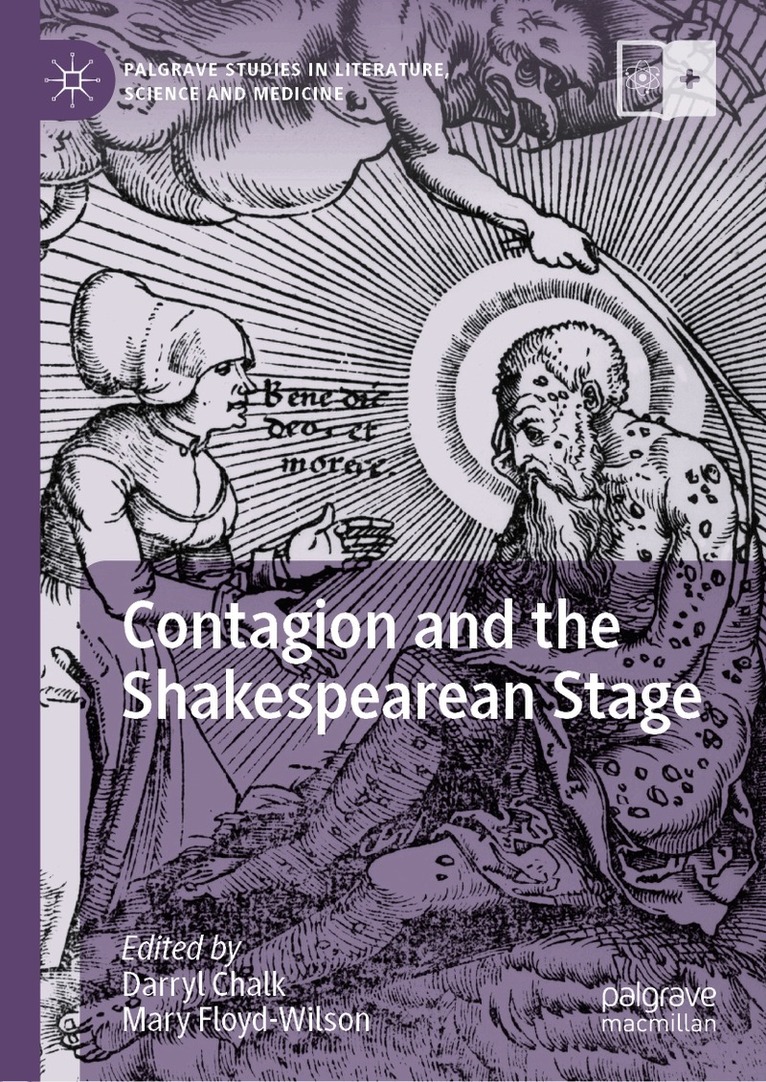
This collection of essays considers what constituted contagion in the minds of early moderns in the absence of modern germ theory.
1 508 kr
Skickas inom 10-15 vardagar
This collection of essays considers what constituted contagion in the minds of early moderns in the absence of modern germ theory.