Mary Margaret McCabe - Böcker
Visar alla böcker från författaren Mary Margaret McCabe. Handla med fri frakt och snabb leverans.
7 produkter
7 produkter
1 653 kr
Skickas inom 5-8 vardagar
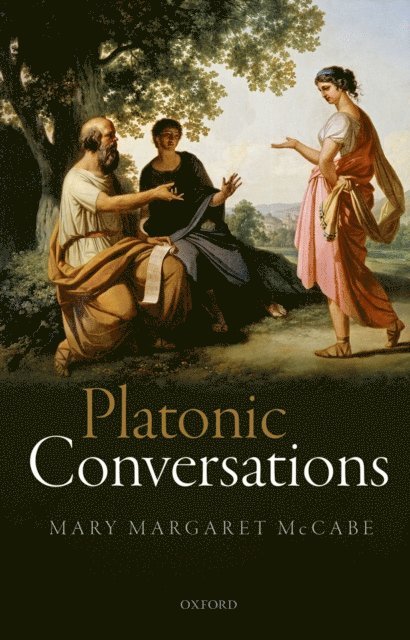
M. M. McCabe presents a selection of her essays which explore the ways in which the Platonic method of conversation may inform how we understand both the Platonic dialogues and the work of his predecessors and his successors. The centrality of conversation to philosophical method is taken here to account both for how we should read the ancients and for the connections between argument, knowledge, and virtue in the texts in question. The book argues that we should attend, consequently, to the reflective dimension of reading and thought; and that this reflection explains both how we should think about the conditions for perception and knowledge, and how those conditions, in turn, inform the theories of value of both Plato and Aristotle.
560 kr
Skickas inom 7-10 vardagar
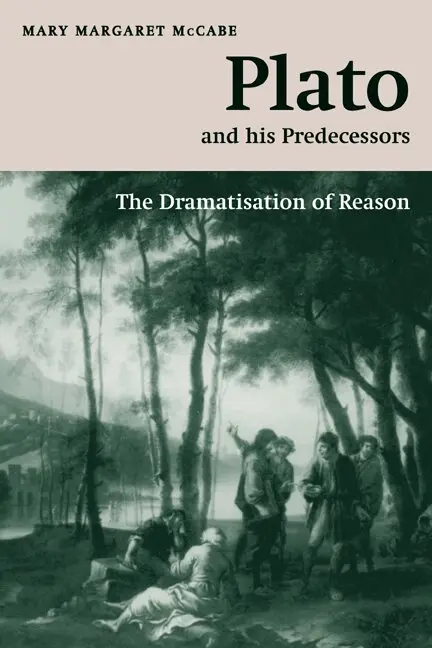
How does Plato view his philosophical antecedents? Plato and his Predecessors considers how Plato represents his philosophical predecessors in a late quartet of dialogues: the Theaetetus, the Sophist, the Politicus and the Philebus. Why is it that the sophist Protagoras, or the monist Parmenides, or the advocate of flux, Heraclitus, are so important in these dialogues? And why are they represented as such shadowy figures, barely present at their own refutations? The explanation, the author argues, is a complex one involving both the reflective relation between Plato's dramatic technique and his philosophical purposes, and the very nature of his late philosophical views. For in these encounters with his predecessors we see Plato develop a new account of the principles of reason, against those who would deny them, and forge a fresh view of the best life - the life of the philosopher.
1 324 kr
Skickas inom 7-10 vardagar
Given its brevity, Plato's Meno covers an astonishingly wide array of topics: politics, education, virtue, definition, philosophical method, mathematics, the nature and acquisition of knowledge and immortality. Its treatment of these, though profound, is tantalisingly short, leaving the reader with many unresolved questions. This book confronts the dialogue's many enigmas and attempts to solve them in a way that is both lucid and sympathetic to Plato's philosophy. Reading the dialogue as a whole, it explains how different arguments are related to one another and how the interplay between characters is connected to the philosophical content of the work. In a new departure, this book's exploration focuses primarily on the content and coherence of the dialogue in its own right and not merely in the context of other dialogues, making it required reading for all students of Plato, be they from the world of classics or philosophy.
1 245 kr
Skickas inom 7-10 vardagar
How does Plato view his philosophical antecedents? Plato and his Predecessors considers how Plato represents his philosophical predecessors in a late quartet of dialogues: the Theaetetus, the Sophist, the Politicus and the Philebus. Why is it that the sophist Protagoras, or the monist Parmenides, or the advocate of flux, Heraclitus, are so important in these dialogues? And why are they represented as such shadowy figures, barely present at their own refutations? The explanation, the author argues, is a complex one involving both the reflective relation between Plato's dramatic technique and his philosophical purposes, and the very nature of his late philosophical views. For in these encounters with his predecessors we see Plato develop a new account of the principles of reason, against those who would deny them, and forge a fresh view of the best life - the life of the philosopher.
596 kr
Skickas inom 7-10 vardagar
Contradicting the long-held belief that Aristotle was the first to discuss individuation systematically, Mary Margaret McCabe argues that Plato was concerned with what makes something a something and that he solved the problem in a radically different way than did Aristotle. McCabe explores the centrality of individuation to Plato's thinking, from the Parmenides to the Politicus, illuminating Plato's later metaphysics in an exciting new way. Tradition associates Plato with the contrast between the particulars of the sensible world and transcendent forms, and supposes that therein lies the center of Plato's metaphysical universe. McCabe rebuts this view, arguing that Plato's thinking about individuals--which informs all his thought--comes to focus on the tension between "generous" or complex individuals and "austere" or simple individuals. In dialogues such as the Theaetetus and the Timaeus Plato repeatedly poses the question of individuation but cannot provide an answer. Later, in the Sophist, the Philebus, and the Politicus, Plato devises what McCabe calls the "mesh of identity," an account of how individuals may be identified relative to each other.The mesh of identity, however, fails to explain satisfactorily how individuals are unified or made coherent. McCabe asserts that individuation may be absolute--and she questions philosophy's longtime reliance on Aristotle's solution.
1 459 kr
Skickas
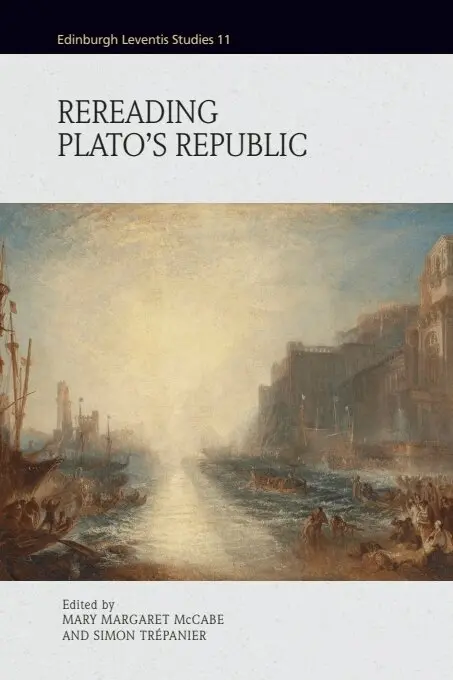
Plato's Republic is the master's masterpiece; but how to go about interpreting it is still disputed. Indeed, it may be a masterpiece just because how to understand it is fiercely controversial. This collection of 24 original essays by an international mix of junior and senior scholars reconsiders the Republic as a written text and rethinks its philosophical legacy. The volume seeks to explore how the Republic goes about doing philosophy with its reader without importing assumptions as to what counts as a philosophy and what does not, what should be kept and what discarded. The working assumption for uniting these different aspects is that 'Plato writes nothing in vain'. To that end, much can be learned by studying how its sections can take on different meanings between a first and subsequent re-reading.
1 618 kr
Skickas inom 5-8 vardagar
Perception and its puzzles have given rise to philosophical reflection from antiquity to recent times: What do we perceive? How do we talk about what we perceive? What is the nature of our subjective experience? How can we talk about our subjective experience? In this book a distinguished group of philosophers addresses questions like these by drawing on historical and contemporary sources, illuminating the intersections between historical and contemporary philosophical discussion. They ask about the way things look; about how we can perceive a particular object (and no other); about self-perception; and about the nature and explanation of our phenomenal experience, and our talk about it. The book provides important new work in a central philosophical area.