Matilda Holmes – författare
Visar alla böcker från författaren Matilda Holmes. Handla med fri frakt och snabb leverans.
4 produkter
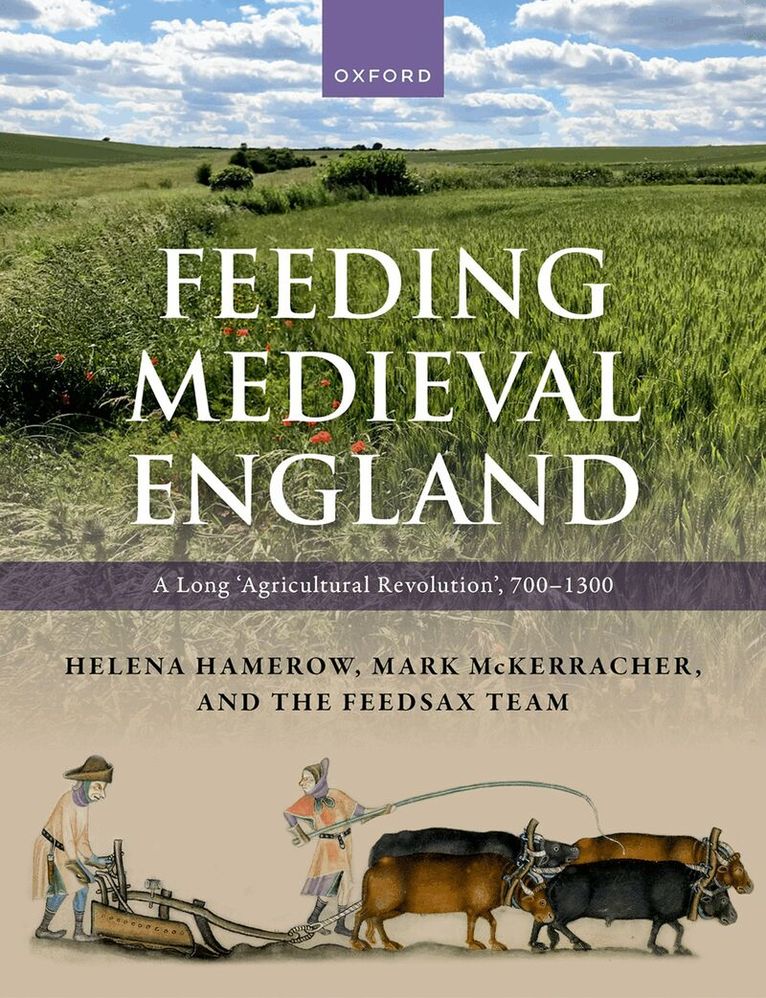
Feeding Medieval England
A Long ‘Agricultural Revolution’, 700–1300
Av Helena Hamerow, Amy Bogaard m. fl.
Inbunden, 2025
1669 kr
Lägg i varukorg
This is an open access title available under the terms of a CC BY-NC-ND 4.0 International license. It is free to read at on Oxford Academic and offered as a free PDF download from OUP and selected open access locations.The population of England grew steeply in the Middle Ages, especially between …
Feeding Medieval England
A Long 'Agricultural Revolution', 700-1300
Av Richard Thomas, Elizabeth Stroud m. fl.
E-bok, 2025
1275 kr
Lägg i varukorg
This is an open access title available under the terms of a CC BY-NC-ND 4.0 International license. It is free to read at on Oxford Academic and offered as a free PDF download from OUP and selected open access locations. The population of England grew steeply in the Middle Ages, especially between …
Feeding Medieval England
A Long 'Agricultural Revolution', 700-1300
Av Richard Thomas, Elizabeth Stroud m. fl.
E-bok, 2025
1303 kr
Lägg i varukorg
This is an open access title available under the terms of a CC BY-NC-ND 4.0 International license. It is free to read at on Oxford Academic and offered as a free PDF download from OUP and selected open access locations. The population of England grew steeply in the Middle Ages, especially between …
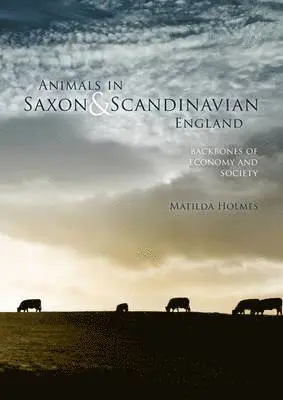
Animals in Saxon and Scandinavian England
Häftad, 2014
481 kr
Lägg i varukorg
In this book an analysis of over 300 animal bone assemblages from English Saxon and Scandinavian sites is presented. The data set is summarised in extensive tables for use as comparanda for future archaeozoological studies.Animals in Saxon and Scandinavian England takes as its core four broad areas …