Matthew Innes - Böcker
Visar alla böcker från författaren Matthew Innes. Handla med fri frakt och snabb leverans.
9 produkter
9 produkter
Introduction to Early Medieval Western Europe, 300–900
The Sword, the Plough and the Book
Inbunden, Engelska, 2007
2 153 kr
Skickas inom 10-15 vardagar
'Matthew Innes' new survey fills a nagging void for teachers of early medieval history ...' - John McCulloh, Kansas State University."Innes has done early medieval scholarship a great service. By surveying and synthesising recent research covering such a long period, his book will help others to connect the dots and draw conclusions of their own... This is a very important book... an excellent resource for teachers and students." - Warren C. Brown, English Historical ReviewSurveying the period of European history, 300–900 AD, this comprehensive and stimulating textbook is the first to present the last twenty-five years of research in an accessible manner for undergraduate students. It is unique in combining an account of the historical background of the period with discussion of the social, economic, cultural and political structures of the societies within it.Introduction to Early Medieval Western Europe, 300–900 includes:chapter summaries and chronologieskey topic essays discussing archaeological or documentary evidencemaps plus supporting illustrations from archaeological and historical findsbibliographical essays which discuss available sources and further reading, introducing teachers and students to specialist literaturea comprehensive index.Key topics discussed are:why the Roman Empire broke down so irrevocably in Western Europehow it came to be replaced by radically different political systemswhy the city-based state structure of antiquity was replaced how and why the division between civilians and the military broke down the conversion of Western Europe to Christianity and the establishment of the church as the central social institution what made Western Europe's experience so distinctive in this period.
Introduction to Early Medieval Western Europe, 300–900
The Sword, the Plough and the Book
Häftad, Engelska, 2007
650 kr
Skickas inom 10-15 vardagar
'Matthew Innes' new survey fills a nagging void for teachers of early medieval history ...' - John McCulloh, Kansas State University."Innes has done early medieval scholarship a great service. By surveying and synthesising recent research covering such a long period, his book will help others to connect the dots and draw conclusions of their own... This is a very important book... an excellent resource for teachers and students." - Warren C. Brown, English Historical ReviewSurveying the period of European history, 300–900 AD, this comprehensive and stimulating textbook is the first to present the last twenty-five years of research in an accessible manner for undergraduate students. It is unique in combining an account of the historical background of the period with discussion of the social, economic, cultural and political structures of the societies within it.Introduction to Early Medieval Western Europe, 300–900 includes:chapter summaries and chronologieskey topic essays discussing archaeological or documentary evidencemaps plus supporting illustrations from archaeological and historical findsbibliographical essays which discuss available sources and further reading, introducing teachers and students to specialist literaturea comprehensive index.Key topics discussed are:why the Roman Empire broke down so irrevocably in Western Europehow it came to be replaced by radically different political systemswhy the city-based state structure of antiquity was replaced how and why the division between civilians and the military broke down the conversion of Western Europe to Christianity and the establishment of the church as the central social institution what made Western Europe's experience so distinctive in this period.
Del 47 - Cambridge Studies in Medieval Life and Thought: Fourth Series
State and Society in the Early Middle Ages
The Middle Rhine Valley, 400-1000
Häftad, Engelska, 2006
645 kr
Skickas inom 7-10 vardagar
This book, first published in 2000, is a pioneering study of politics and society in the early Middle Ages. Whereas it is widely believed that the source materials for early medieval Europe are too sparse to allow sustained study of the workings of social and political relationships on the ground, this book focuses on a uniquely well-documented area to investigate the basis of power. Topics covered include the foundation of monasteries, their relationship with the laity, and their role as social centres; the significance of urbanism; the control of land, the development of property rights and the organization of states; community, kinship and lordship; justice and dispute settlement; the uses of the written word; violence and the feud; and the development of political structures from the Roman empire to the high Middle Ages.
1 350 kr
Skickas inom 7-10 vardagar
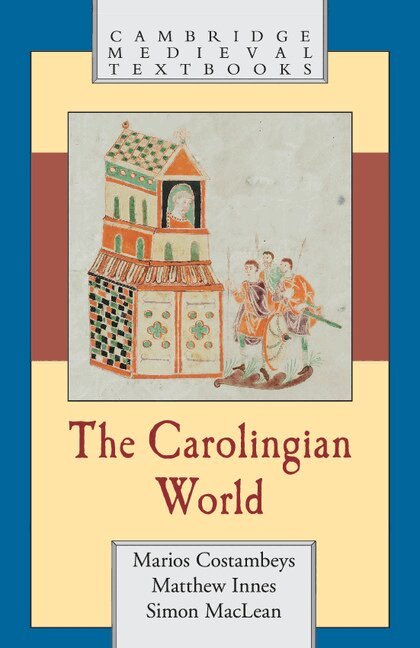
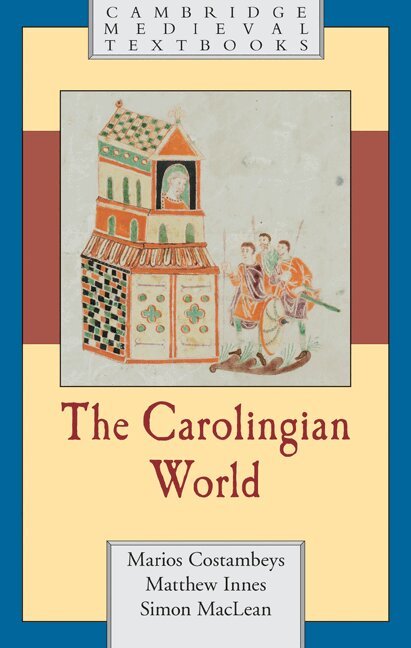
At its height, the Carolingian empire spanned a million square kilometres of western Europe - from the English Channel to central Italy and northern Spain, and from the Atlantic to the fringes of modern Hungary, Poland and the Czech Republic. As the largest political unit for centuries, the empire dominated the region and left an enduring legacy for European culture. This comprehensive survey traces this great empire's history, from its origins around 700, with the rise to dominance of the Carolingian dynasty, through its expansion by ruthless military conquest and political manoeuvring in the eighth century, to the struggle to hold the empire together in the ninth. It places the complex political narrative in context, giving equal consideration to vital themes such as beliefs, peasant society, aristocratic culture and the economy. Accessibly written and authoritative, this book offers distinctive perspectives on a formative period in European history.
422 kr
Skickas inom 7-10 vardagar
At its height, the Carolingian empire spanned a million square kilometres of western Europe - from the English Channel to central Italy and northern Spain, and from the Atlantic to the fringes of modern Hungary, Poland and the Czech Republic. As the largest political unit for centuries, the empire dominated the region and left an enduring legacy for European culture. This comprehensive survey traces this great empire's history, from its origins around 700, with the rise to dominance of the Carolingian dynasty, through its expansion by ruthless military conquest and political manoeuvring in the eighth century, to the struggle to hold the empire together in the ninth. It places the complex political narrative in context, giving equal consideration to vital themes such as beliefs, peasant society, aristocratic culture and the economy. Accessibly written and authoritative, this book offers distinctive perspectives on a formative period in European history.
Del 47 - Cambridge Studies in Medieval Life and Thought: Fourth Series
State and Society in the Early Middle Ages
The Middle Rhine Valley, 400-1000
Inbunden, Engelska, 2000
1 648 kr
Skickas inom 7-10 vardagar
This book, first published in 2000, is a pioneering study of politics and society in the early Middle Ages. Whereas it is widely believed that the source materials for early medieval Europe are too sparse to allow sustained study of the workings of social and political relationships on the ground, this book focuses on a uniquely well-documented area to investigate the basis of power. Topics covered include the foundation of monasteries, their relationship with the laity, and their role as social centres; the significance of urbanism; the control of land, the development of property rights and the organization of states; community, kinship and lordship; justice and dispute settlement; the uses of the written word; violence and the feud; and the development of political structures from the Roman empire to the high Middle Ages.
1 282 kr
Skickas inom 7-10 vardagar
This volume investigates the ways in which people in western Europe between the fall of Rome and the twelfth century used the past: to legitimate the present, to understand current events, and as a source of identity. Each essay examines the mechanisms by which ideas about the past were subtly (and sometimes not so subtly) reshaped for present purposes. As well as written histories, also discussed are saints' lives, law codes, buildings, Biblical commentary, monastic foundations, canon law and oral traditions. The book thus has important implications for how historians use these sources as evidence: they emerge as representations of the past made for very special reasons, often by interested parties. This was the first volume to be devoted fully to these themes, and as such it makes a significant contribution to our understanding of the role of the past within early medieval societies.
577 kr
Skickas inom 7-10 vardagar
This volume investigates the ways in which people in western Europe between the fall of Rome and the twelfth century used the past: to legitimate the present, to understand current events, and as a source of identity. Each essay examines the mechanisms by which ideas about the past were subtly (and sometimes not so subtly) reshaped for present purposes. As well as written histories, also discussed are saints' lives, law codes, buildings, Biblical commentary, monastic foundations, canon law and oral traditions. The book thus has important implications for how historians use these sources as evidence: they emerge as representations of the past made for very special reasons, often by interested parties. This was the first volume to be devoted fully to these themes, and as such it makes a significant contribution to our understanding of the role of the past within early medieval societies.
1 485 kr
Skickas inom 7-10 vardagar
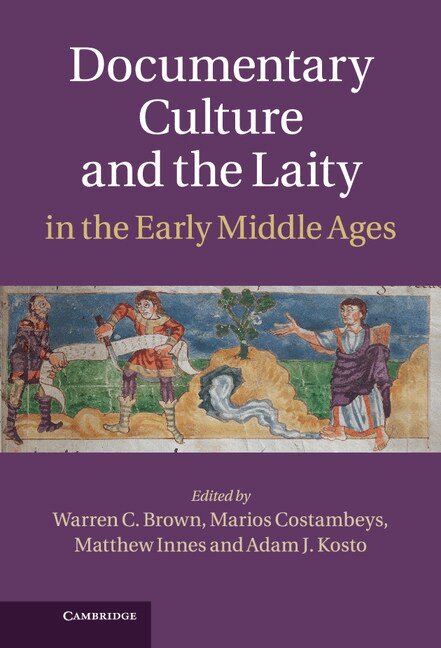
Many more documents survive from the early Middle Ages than from the Roman Empire. Although ecclesiastical archives may account for the dramatic increase in the number of surviving documents, this new investigation reveals the scale and spread of documentary culture beyond the Church. The contributors explore the nature of the surviving documentation without preconceptions to show that we cannot infer changing documentary practices from patterns of survival. Throughout Late Antiquity and the early Middle Ages - from North Africa, Egypt, Italy, Francia and Spain to Anglo-Saxon England - people at all social levels, whether laity or clergy, landowners or tenants, farmers or royal functionaries, needed, used and kept documents. The story of documentary culture in the early medieval world emerges not as one of its capture by the Church, but rather of a response adopted by those who needed documents, as they reacted to a changing legal, social and institutional landscape.