Matthew Loftus – författare
Visar alla böcker från författaren . Handla med fri frakt och snabb leverans.
4 produkter
4 produkter
Häftad, Engelska, 2026
271 kr
Skickas inom 3-6 vardagar
E-bok
Engelska, 2026198 kr
Läs direkt efter köp
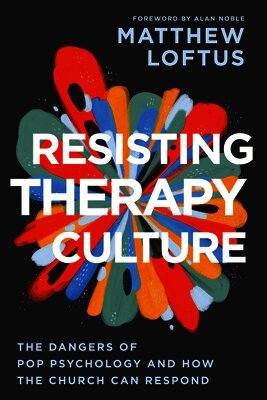
Let Churches Be Churches and Therapists Be TherapistsWe live in an age where "e;therapy culture"e; dominates our cultural milieu. Everywhere we look, therapeutic language and psychological concepts are popularized, misapplied,and lose their medical significance. Therapy and psychiatry are good practices, but when people begin to filter everything in life through a therapeutic lens, it becomes harmful rather than helpful. The church is not immune to this phenomenon. Increasingly, people's expectations of the church and its leaders are viewed through the lens of psychological health and wellness. In this book, Matthew Loftus unpacks how this kind of "e;therapy culture"e; can distort the Christian life. He argues that the church cannot do for people what therapy and psychiatry are designed to do. While church should be a place of healing and love for people who are suffering from mental illness, churches and their leaders should focus on what they are called to do: bringing people together to worship God. What you'll get with Resisting Therapy Culture:- An understanding of the role of the church in supporting people through mental health struggles- A deeper appreciation for the expertise and value of mental health professionals- Insight into how both therapy and the church can be good for Christians' spiritual and mental health in their own intended ways- Encouragement for church leaders to renew their focus on leading people in worshipThis book is an invitation for church leaders to focus on what the church does best. As Loftus explains, "e;People will live healthier lives when churches and therapists are working well, but the two do not have the same mission, methods, mandates, or measures of success. . . . Both should do the very best that they can in the sphere of work that God has assigned."e;
Häftad, Engelska, 2024
113 kr
Skickas inom 5-8 vardagar
How can we live well with tech, without it becoming our master?These days, the heady promises of Silicon Valley seem suspect: the internet didn’t bring all of humanity together; neither did smartphones or social media. We have long since stopped associating tech with utopian visions of global harmony, instead blaming it for distraction, polarization, addictions to porn and gambling, the trivialization of culture, loss of privacy and work-life balance, and fears that automation may push millions out of a job. Advances in artificial intelligence seem poised to bring us to the next technological watershed. It’s a good time to ask how we can learn to live well with tech, and how we might push back against technologies that shape humans in anti-human ways.On this theme:Find out why computers can’t do math and humans can.When parenting from prison, a little tech can make a big difference.Glucose monitoring systems transform life for children with diabetes.Should ChatGPT write sermons and prayers?From scrolls to scrolling, tech has changed the way Jewish people read scriptureWill AI bring the end of the world, or is it already here?An intentional community tries to be intentional about personal technology.Our struggle with technology goes back to the Tower of Babel in Genesis.A farmer praises a simple piece of technology – the rock bar.Also in this issue:A photo essay about children on the frontlines in UkraineA philosopher’s proposal for a gift economyThe winners of the 2024 Rhina Espaillat Poetry AwardInsights from Gerard Manley Hopkins, E. F. Schumacher, Antoine de Saint-Exupéry, Jean-Pierre Dupuy, and Hannah ArendtReviews of Birding to Change the World, The Heaven & Earth Grocery Store, and All Things Are Too SmallPlough Quarterly features stories, ideas, and culture for people eager to apply their faith to the challenges we face. Each issue includes in-depth articles, interviews, poetry, book reviews, and art.
Del 8 - Plough Quarterly No. 8
Plough Quarterly No. 8
Who Is My Neighbor
Häftad, Engelska, 2016
102 kr
Tillfälligt slut
From Jordan to Germany, the influx of refugees is straining goodwill to the breaking point. This issue of Plough Quarterly focuses on the second half of Jesus’ Great Commandment: Love your neighbor as yourself. We found love of neighbor demonstrated by Christians and Muslims in ISIS-controlled Syria, and by volunteers who continue to welcome refugees despite growing public hostility.Here in election-year America, how do we as citizens live out love of neighbor in relation to immigrants? To the unborn threatened by abortion, and to their mothers? To prisoners, especially those held in solitary confinement for unconscionable terms and those on death row? To the victims of crime, and to the law enforcement officers charged with keeping the peace? To our youth, who are the ones most gravely harmed by our culture’s gender confusion?On all these fronts and many others, love of neighbor makes claims on us. But shouldn’t it start within the fellowship of believers, the church? When this happens, we can bear one another’s burdens – for example, those of the soldier returning from war, or the coworker battling an addiction.Perspectives from Navid Kermani, Neil Shigley, Denise Uwimana, Gerhard Lohfink, Michael Yandell, Teresa of Ávila, C.S. Lewis, John Stott, Matthew Loftus, Nathaniel Peters, Eberhard Arnold, Richard J. Foster, and Annemarie Wächter are sure to stimulate reflection and discussion. Then there’s new poetry by Laurie Klein, book reviews, a children’s story by Laura E. Richards, and world-class art by Dean Mitchell, Aristarkh Lentulov, Alex Vogel, Michael D. Fay, Paula Modersohn-Becker, Marc Chagall, Vasilij Ivanovic Surikov, and Sekino Jun’ichirō.Plough Quarterly features stories, ideas, and culture for people eager to put their faith into action. Each issue brings you in-depth articles, interviews, poetry, book reviews, and art to help you put Jesus’ message into practice and find common cause with others.