Matthew V. Novenson – författare
Visar alla böcker från författaren Matthew V. Novenson. Handla med fri frakt och snabb leverans.
7 produkter
7 produkter
415 kr
Skickas inom 5-8 vardagar
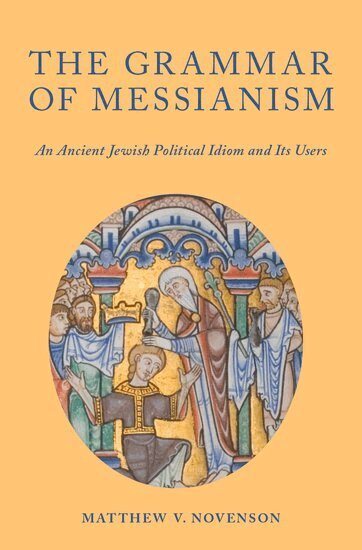
Messianism is one of the great themes in intellectual history. But because it has done so much important ideological work for the people who have written about it, the historical roots of the discourse have been obscured from view. What did it mean to talk about "messiahs" in the ancient world, before the idea of messianism became a philosophical juggernaut, dictating the terms for all subsequent discussion of the topic? In this book, Matthew V. Novenson offers a revisionist account of messianism in antiquity. He shows that, for the ancient Jews and Christians who used the term, a messiah was not an article of faith but a manner of speaking. It was a scriptural figure of speech, one among numerous others, useful for thinking about kinds of political order: present or future, real or ideal, monarchic or theocratic, dynastic or charismatic, and other variations besides. The early Christians famously seized upon the title "messiah" (in Greek, "Christ") for their founding hero and molded the sense of the term in certain ways; but, Novenson shows, this is just what all ancient messiah texts do, each in its own way. If we hope to understand the ancient texts about messiahs (from Deutero-Isaiah to the Parables of Enoch, from the Qumran Community Rule to the Gospel of John, from the Pseudo-Clementines to Sefer Zerubbabel), we must learn to think not in terms of a world-historical idea but of a language game, of so many creative reuses of an archaic Israelite idiom. In The Grammar of Messianism, Novenson demonstrates the possibility and the benefit of thinking of messianism in this way.
1 217 kr
Skickas inom 5-8 vardagar
Messianism is one of the great themes in intellectual history. But for precisely this reason, because it has done so much important ideological work for the people who have written about it, the historical roots of the discourse itself have been obscured from view. What did it mean to talk about "messiahs" in the ancient world, before the idea of messianism became a philosophical juggernaut, dictating the terms for all subsequent discussion of the topic? In this book, Matthew V. Novenson gives a revisionist account of messianism in antiquity. He shows that, for the ancient Jews and Christians who used the term, a messiah was not an article of faith but a manner of speaking. It was a scriptural figure of speech, one among numerous others, useful for thinking kinds of political order: present or future, real or ideal, monarchic or theocratic, dynastic or charismatic, and other variations beside. The early Christians famously seized upon the title "messiah" (in Greek, "Christ") for their founding hero and thus molded the sense of the term in certain ways, but, Novenson shows, this is nothing other than what all ancient messiah texts do, each in its own way. If we hope to understand the ancient texts about messiahs (from Deutero-Isaiah to the Parables of Enoch, from the Qumran Community Rule to the Gospel of John, from the Pseudo-Clementines to Sefer Zerubbabel), then we must learn to think in terms not of a world-historical idea but of a language game, of so many creative reuses of an archaic Israelite idiom. In The Grammar of Messianism, Novenson demonstrates the possibility and the benefit of thinking of messianism in this way.
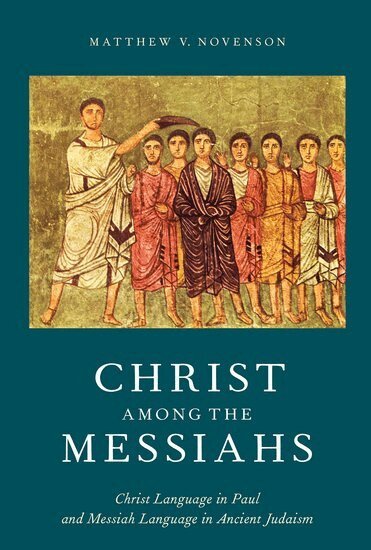
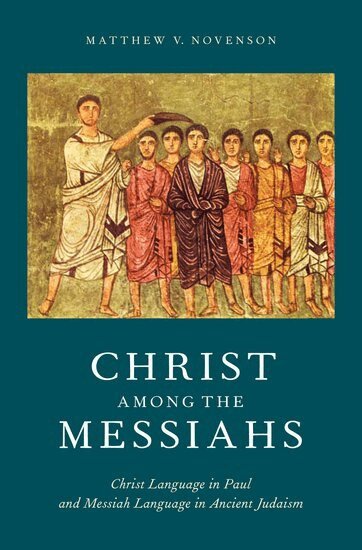
Christ among the Messiahs
Christ Language in Paul and Messiah Language in Ancient Judaism
Häftad, Engelska, 2015
472 kr
Skickas inom 5-8 vardagar
Recent scholarship on ancient Judaism, finding only scattered references to messiahs in Hellenistic- and Roman-period texts, has generally concluded that the word ''messiah'' did not mean anything determinate in antiquity. Meanwhile, interpreters of Paul, faced with his several hundred uses of the Greek word for ''messiah,'' have concluded that christos in Paul does not bear its conventional sense. Against this curious consensus, Matthew V. Novenson argues in Christ among the Messiahs that all contemporary uses of such language, Paul's included, must be taken as evidence for its range of meaning. In other words, early Jewish messiah language is the kind of thing of which Paul's Christ language is an example. Looking at the modern problem of Christ and Paul, Novenson shows how the scholarly discussion of christos in Paul has often been a cipher for other, more urgent interpretive disputes. He then traces the rise and fall of ''the messianic idea'' in Jewish studies and gives an alternative account of early Jewish messiah language: the convention worked because there existed both an accessible pool of linguistic resources and a community of competent language users. Whereas it is commonly objected that the normal rules for understanding christos do not apply in the case of Paul since he uses the word as a name rather than a title, Novenson shows that christos in Paul is neither a name nor a title but rather a Greek honorific, like Epiphanes or Augustus. Focusing on several set phrases that have been taken as evidence that Paul either did or did not use christos in its conventional sense, Novenson concludes that the question cannot be settled at the level of formal grammar. Examining nine passages in which Paul comments on how he means the word christos, Novenson shows that they do all that we normally expect any text to do to count as a messiah text. Contrary to much recent research, he argues that Christ language in Paul is itself primary evidence for messiah language in ancient Judaism.
2 720 kr
Skickas inom 3-6 vardagar
The Oxford Handbook of Pauline Studies brings together a diverse international group of experts on the apostle Paul. It examines the authentic texts from his own hand, other ancient texts falsely attributed to him, the numerous early Christian legends about him, and the many meanings that have been and still are made of these texts to give a twenty-first century snapshot of Pauline Studies.Divided into five key sections, the Handbook begins by examining Paul the person - a largely biographical sketching of the life of Paul himself to the limited extent that it is possible to do so. It moves on to explore Paul in context and Pauline Literature, looking in detail at the letters, manuscripts, and canons that constitute most of our extant evidence for the apostle. Part Four uses a number of classic motifs to describe what modern experts describe as 'Pauline Theology', and Part Five considers the many productive reading strategies with which recent interpreters have made meaning of the letters of Paul. It is demonstrated that 'reading Paul' is not, and never has been, just one thing. It has always been a matter of the particular questions and interests that the reader brings to these very generative texts.The Oxford Handbook of Pauline Studies thoroughly surveys the state of Pauline studies today, paying particular attention to theory and method in interpretation. It considers traditional approaches alongside recent approaches to Paul, including gender, race and ethnicity, and material culture. Brought together, the chapters are an ideal resource for teachers and students of Paul and his letters.
Christ among the Messiahs
Christ Language in Paul and Messiah Language in Ancient Judaism
Inbunden, Engelska, 2012
1 339 kr
Skickas inom 5-8 vardagar
Recent scholarship on ancient Judaism, finding only scattered references to messiahs in Hellenistic- and Roman-period texts, has generally concluded that the word ''messiah'' did not mean anything determinate in antiquity. Meanwhile, interpreters of Paul, faced with his several hundred uses of the Greek word for ''messiah,'' have concluded that ''christos'' in Paul does not bear its conventional sense. Against this curious consensus, Matthew Novenson argues in Christ among the Messiahs that all contemporary uses of such language, Paul's included, must be taken as evidence for its range of meaning. In other words, early Jewish messiah language is the kind of thing of which Paul's Christ language is an example. Looking at the modern problem of Christ and Paul, Novenson shows how the scholarly discussion of ''christos'' in Paul has often been a cipher for other, more urgent interpretive disputes. He then traces the rise and fall of ''the messianic idea'' in Jewish studies and gives an alternative account of early Jewish messiah language: the convention worked because there existed both an accessible pool of linguistic resources and a community of competent language users. Whereas it is commonly objected that the normal rules for understanding ''christos'' do not apply in the case of Paul since he uses the word as a name rather than a title, Novenson shows that "christos" in Paul is neither a name nor a title but rather a Greek honorific, like Epiphanes or Augustus. Focusing on several set phrases that have been taken as evidence that Paul either did or did not use ''christos'' in its conventional sense, Novenson concludes that the question cannot be settled at the level of formal grammar. Examining nine passages in which Paul comments on how he means the word ''christos,'' he shows that they do all that we normally expect any text to do to count as a messiah text. Contrary to much recent research, he argues that Christ language in Paul is itself primary evidence for messiah language in ancient Judaism.
369 kr
Skickas
372 kr
Skickas inom 7-10 vardagar
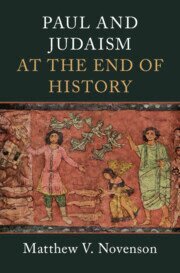
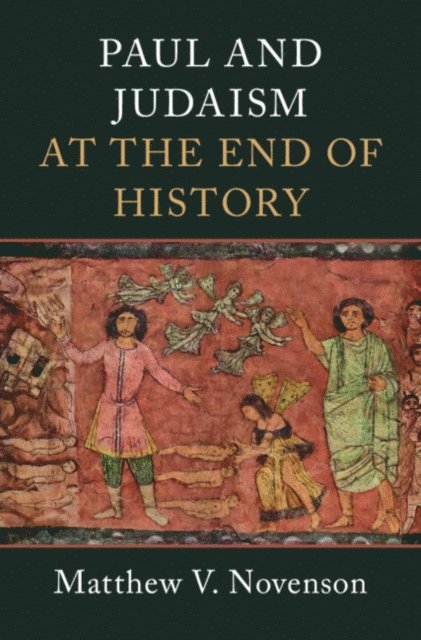
The apostle Paul was a Jew. He was born, lived, undertook his apostolic work, and died within the milieu of ancient Judaism. And yet, many readers have found, and continue to find, Paul's thought so radical, so Christian, even so anti-Jewish – despite the fact that it, too, is Jewish through and through. This paradox, and the question how we are to explain it, are the foci of Matthew Novenson's groundbreaking book. The solution, says the author, lies in Paul's particular understanding of time. This too is altogether Jewish, with the twist that Paul sees the end of history as present, not future. In the wake of Christ's resurrection, Jews are perfected in righteousness and – like the angels – enabled to live forever, in fulfilment of God's ancient promises to the patriarchs. What is more, gentiles are included in the same pneumatic existence promised to the Jews. This peculiar combination of ethnicity and eschatology yields something that looks not quite like Judaism or Christianity as we are used to thinking of them.