Megan Bryson - Böcker
Visar alla böcker från författaren Megan Bryson. Handla med fri frakt och snabb leverans.
4 produkter
4 produkter
1 107 kr
Skickas inom 7-10 vardagar
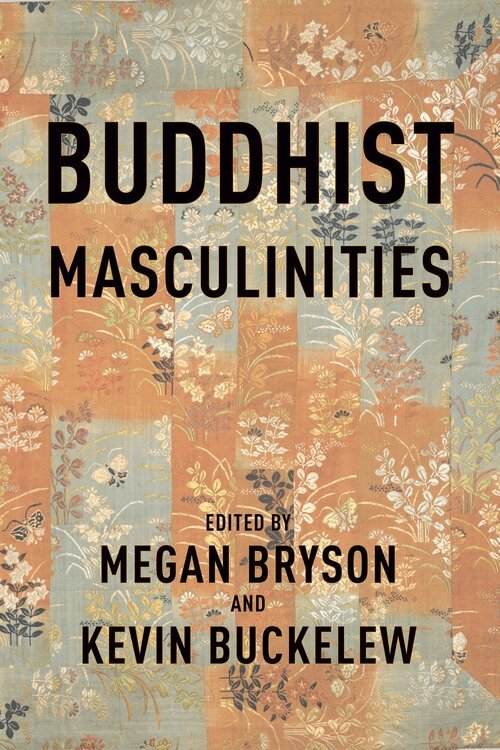
While early Buddhists hailed their religion’s founder for opening a path to enlightenment, they also exalted him as the paragon of masculinity. According to Buddhist scriptures, the Buddha’s body boasts thirty-two physical features, including lionlike jaws, thighs like a royal stag, broad shoulders, and a deep, resonant voice, that distinguish him from ordinary men. As Buddhism spread throughout Asia and around the world, the Buddha remained an exemplary man, but Buddhists in other times and places developed their own understandings of what it meant to be masculine.This transdisciplinary book brings together essays that explore the variety and diversity of Buddhist masculinities, from early India to the contemporary United States and from bodhisattva-kings to martial monks. Buddhist Masculinities adopts the methods of religious studies, anthropology, art history, textual-historical studies, and cultural studies to explore texts, images, films, media, and embodiments of masculinity across the Buddhist world, past and present. It turns scholarly attention to normative forms of masculinity that usually go unmarked and unstudied precisely because they are “normal,” illuminating the religious and cultural processes that construct Buddhist masculinities. Engaging with contemporary issues of gender identity, intersectionality, and sexual ethics, Buddhist Masculinities ushers in a new era for the study of Buddhism and gender.
282 kr
Skickas inom 7-10 vardagar
While early Buddhists hailed their religion’s founder for opening a path to enlightenment, they also exalted him as the paragon of masculinity. According to Buddhist scriptures, the Buddha’s body boasts thirty-two physical features, including lionlike jaws, thighs like a royal stag, broad shoulders, and a deep, resonant voice, that distinguish him from ordinary men. As Buddhism spread throughout Asia and around the world, the Buddha remained an exemplary man, but Buddhists in other times and places developed their own understandings of what it meant to be masculine.This transdisciplinary book brings together essays that explore the variety and diversity of Buddhist masculinities, from early India to the contemporary United States and from bodhisattva-kings to martial monks. Buddhist Masculinities adopts the methods of religious studies, anthropology, art history, textual-historical studies, and cultural studies to explore texts, images, films, media, and embodiments of masculinity across the Buddhist world, past and present. It turns scholarly attention to normative forms of masculinity that usually go unmarked and unstudied precisely because they are “normal,” illuminating the religious and cultural processes that construct Buddhist masculinities. Engaging with contemporary issues of gender identity, intersectionality, and sexual ethics, Buddhist Masculinities ushers in a new era for the study of Buddhism and gender.
741 kr
Skickas inom 7-10 vardagar
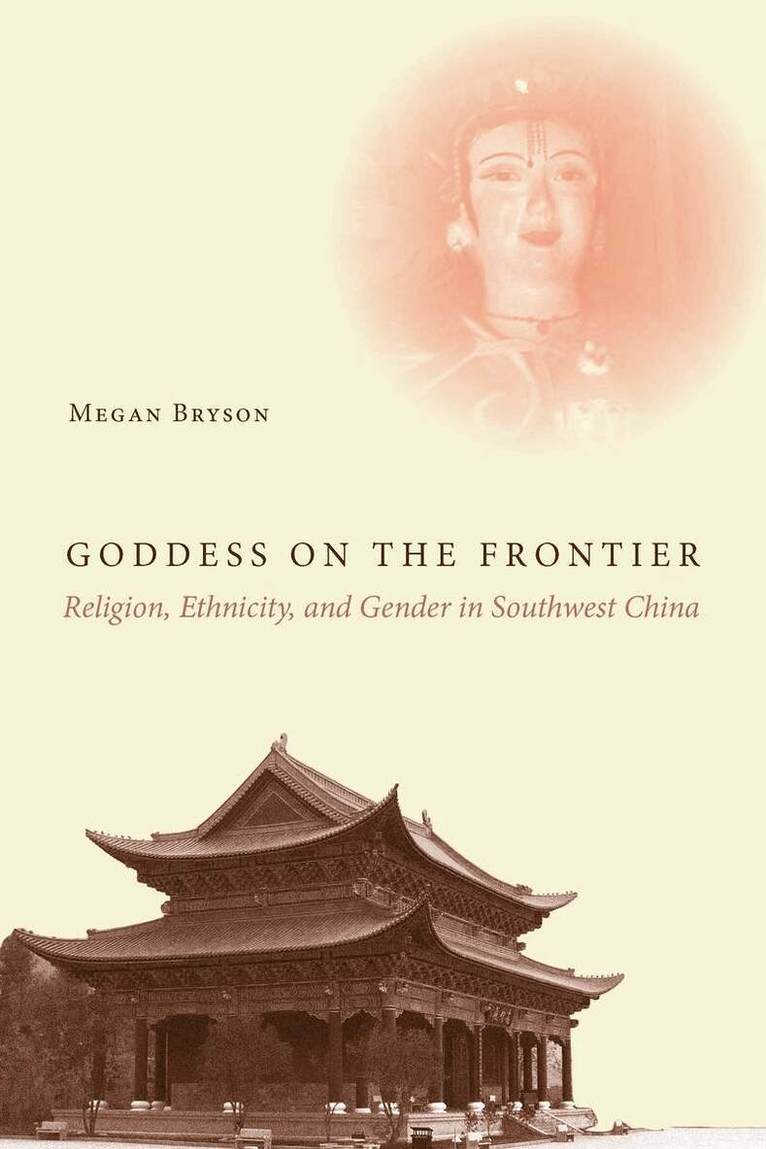
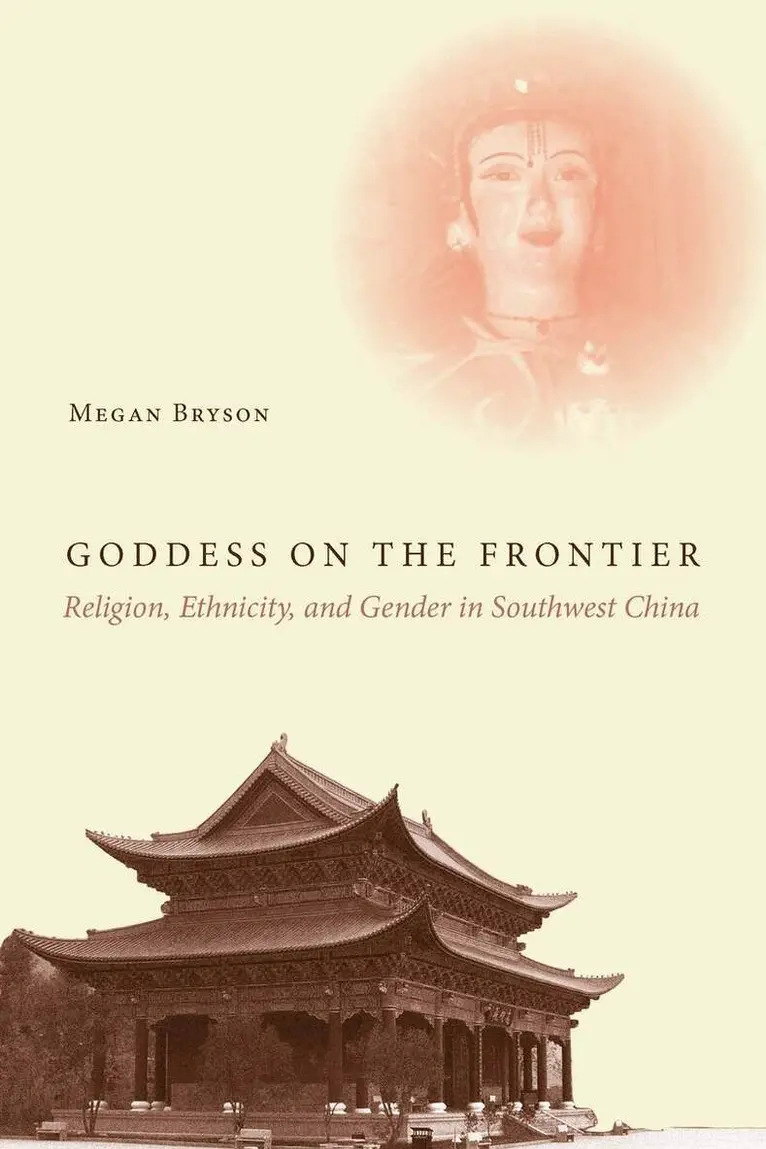
Dali is a small region on a high plateau in Southeast Asia. Its main deity, Baijie, has assumed several gendered forms throughout the area's history: Buddhist goddess, the mother of Dali's founder, a widowed martyr, and a village divinity. What accounts for so many different incarnations of a local deity? Goddess on the Frontier argues that Dali's encounters with forces beyond region and nation have influenced the goddess's transformations. Dali sits at the cultural crossroads of Southeast Asia, India, and Tibet; it has been claimed by different countries but is currently part of Yunnan Province in Southwest China. Megan Bryson incorporates historical-textual studies, art history, and ethnography in her book to argue that Baijie provided a regional identity that enabled Dali to position itself geopolitically and historically. In doing so, Bryson provides a case study of how people craft local identities out of disparate cultural elements and how these local identities transform over time in relation to larger historical changes—including the increasing presence of the Chinese state.
767 kr
Skickas inom 7-10 vardagar
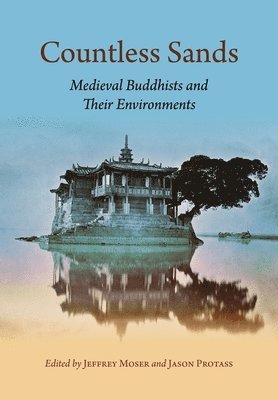
Countless Sands presents engaging analyses of the diverse relationships between Buddhism and the environment that existed in medieval Asia. Recent years have witnessed a surge in publications across the humanities that advance powerful ethical and political arguments to account for the human failure to respond effectively to global climate change. While the contributors to this volume are attuned to this challenge, rather than present explicit political arguments, they pursue a subtler effort to historicize the environment as a site and subject of Buddhist practice while providing research grounded in rigorous analysis of complex and fragmentary sources. The volume thereby mitigates against the Orientalist, East-West binaries that have long informed the invocation of Buddhism in Euro-American environmental discourses. As the chapters collectively demonstrate, there was no singular, consistently "Buddhist" understanding of the natural world, but innumerable, varied engagements preserved in discrete texts, images, and artifacts. We title the volume Countless Sands to echo the Buddhist metaphor of "sands of the Ganges" that implies an uncountable number. Through specific case studies, the authors consider such questions as: How did premodern Buddhists understand what we today call "the environment"? How did they think about their earth? How, when, and where did the various processes of the earth actually impinge on the practices of historical Buddhists? What kinds of "environmental imaginations" informed specific Buddhist practices? In so doing, the authors explore the connections between the ways in which historical Buddhist communities interacted with their environments and how they understood those environments. In the broader field of Buddhist studies, Countless Sands contributes to ongoing efforts to expand the locus of inquiry from textually based investigations of Buddhist doctrine to a broader examination of the complex and varied place of Buddhism in the lives of historical communities. The book furthers this broader process by casting it in environmental terms and will engage readers looking for models of thought-provoking historical analysis on environmental themes.